










The first ten minutes of a job often set the pace for the rest of the day. If you are moving boxes to reach a tool case, climbing into the load area for sealant, or unloading materials just to find a cable drum, the van layout is working against you. The false floor vs bulkhead storage decision comes down to where you need access, what you carry, and how often the load changes.
Both systems can make a working van more organised. They do very different jobs, though. A false floor creates secure storage beneath a raised load deck, while bulkhead storage puts regularly used items near the cab end of the load space. Choosing the right one can save time at every call-out without sacrificing the carrying space your work depends on.
What a false floor does in a working van
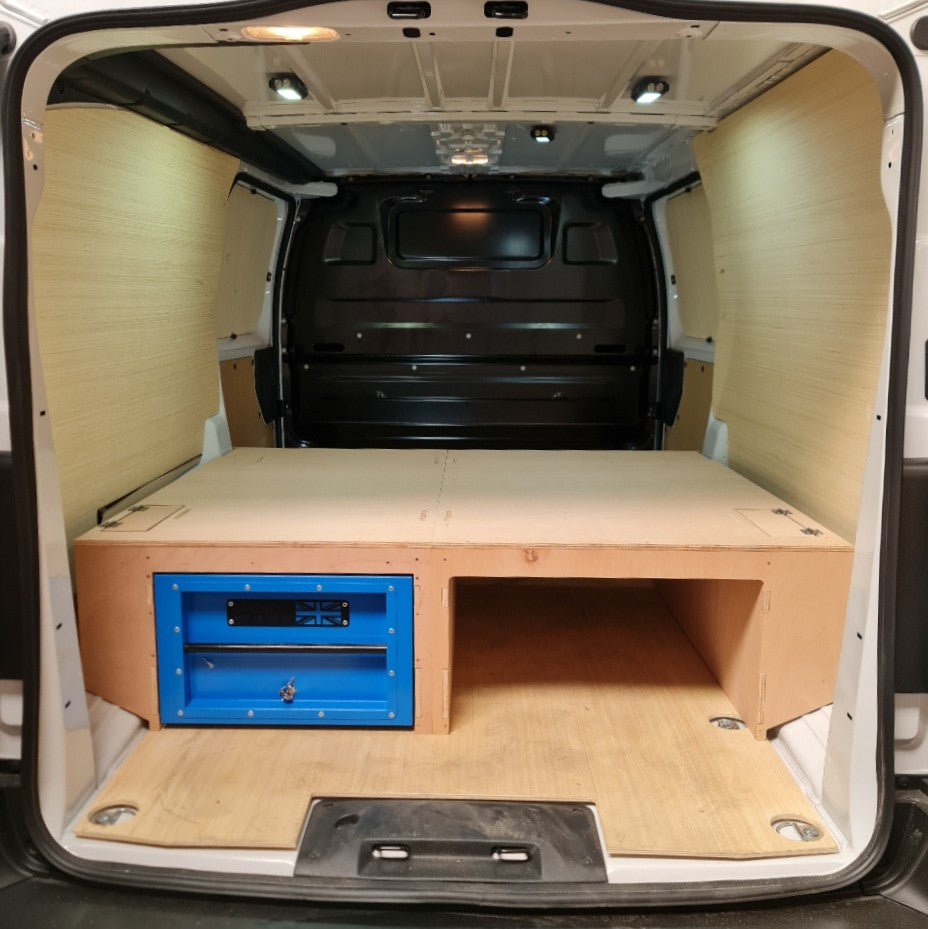
A false floor is a raised platform fitted over the van floor, usually incorporating long pull-out drawers. It turns the space below the deck into organised, accessible storage for tools, fittings and equipment. The top surface remains available for larger materials, toolboxes or job-specific loads.
For many trades, its main advantage is controlled access. Rather than stacking cases behind one another, you can pull out a drawer and see its contents from the rear or side of the van, depending on the layout. That is useful for electricians carrying testers, fixings and cable accessories, or for plumbers who need an orderly supply of fittings, valves and hand tools.
A false floor also helps protect expensive kit from view. Tools are kept lower down and out of the immediate line of sight when the rear doors are opened. The flat deck above gives the load area a cleaner starting point for every job.
There is a trade-off. Raising the floor reduces usable internal height. If you regularly carry tall boilers, sheet goods, stacked boxes or bulky equipment, that lost height needs proper consideration. Drawers also work best when their contents are planned. Filling them with loose, heavy items without trays, dividers or sensible weight distribution makes day-to-day use less efficient.
Best uses for false-floor drawers
False floors suit vans that carry a consistent core tool kit alongside changing materials. They are particularly practical where valuable tools need to stay in the vehicle and where keeping the main load area clear matters.
They can be a strong choice for maintenance engineers, installers, electricians, plumbers and fitters whose equipment is often case-based or easy to separate into categories. A well-planned drawer can hold the items used on every job, leaving the deck free for the materials needed that day.
They are less straightforward for a van used mainly for oversized, awkward or very heavy loads. In that case, preserving maximum floor-to-roof height and open floor space may be the priority.
False floor vs bulkhead storage for quick access
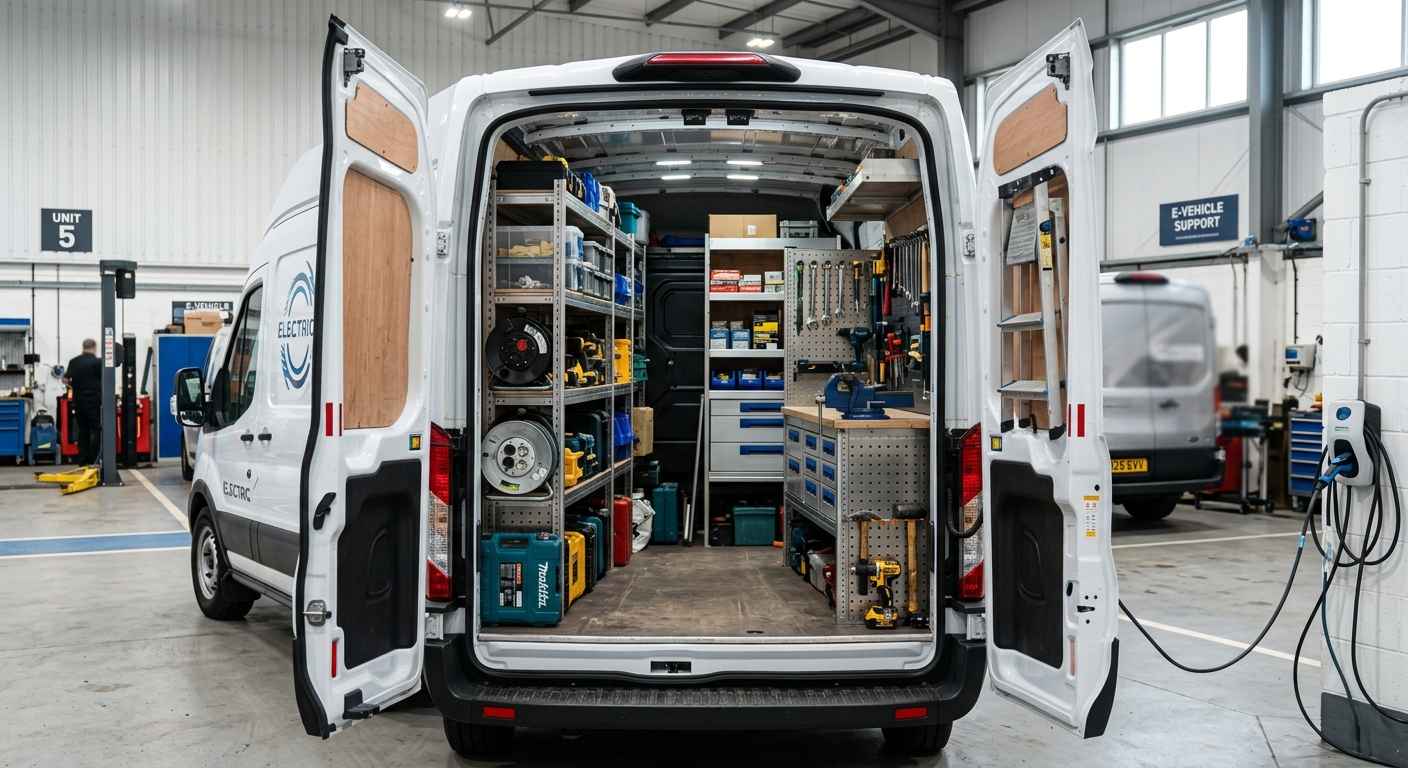
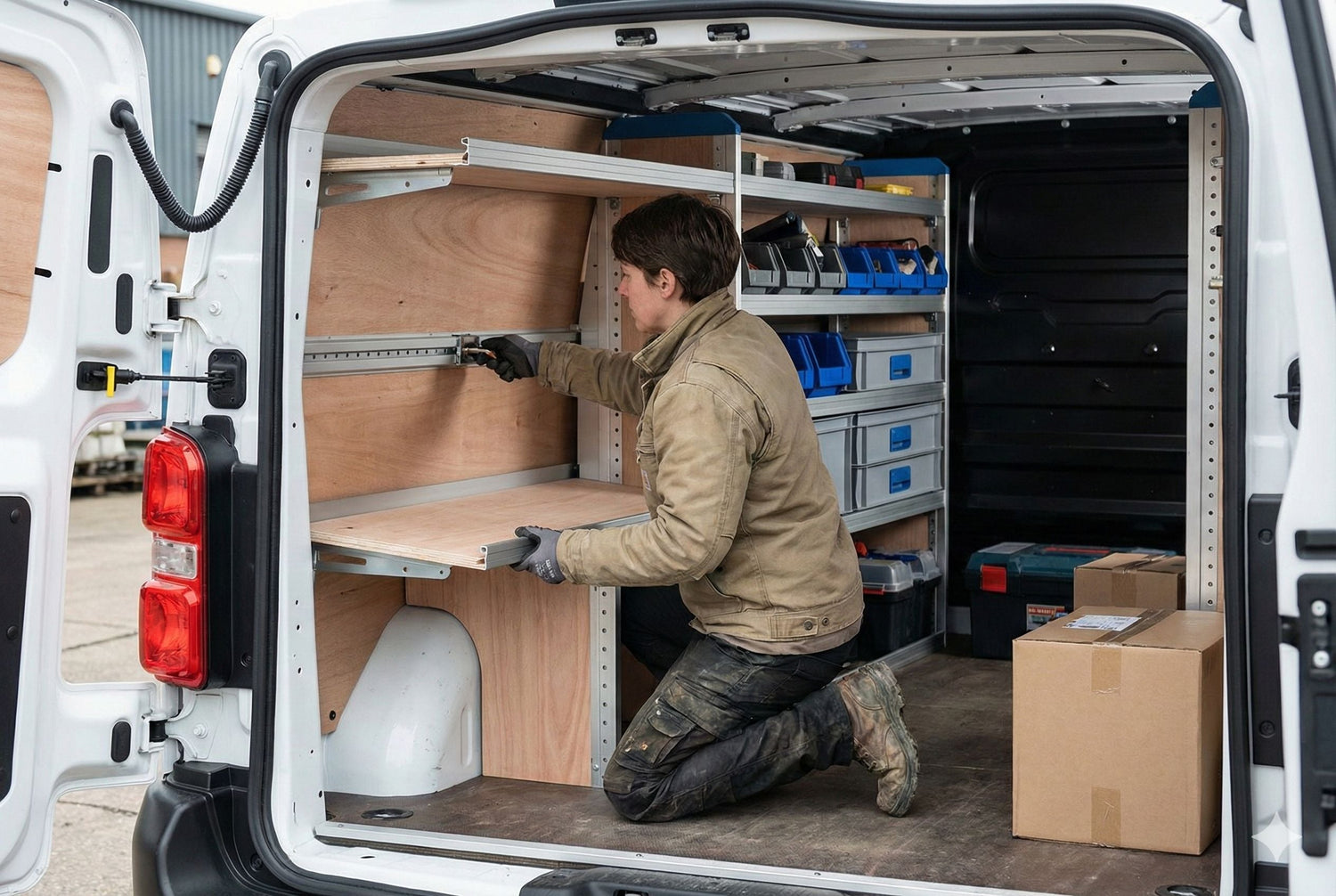
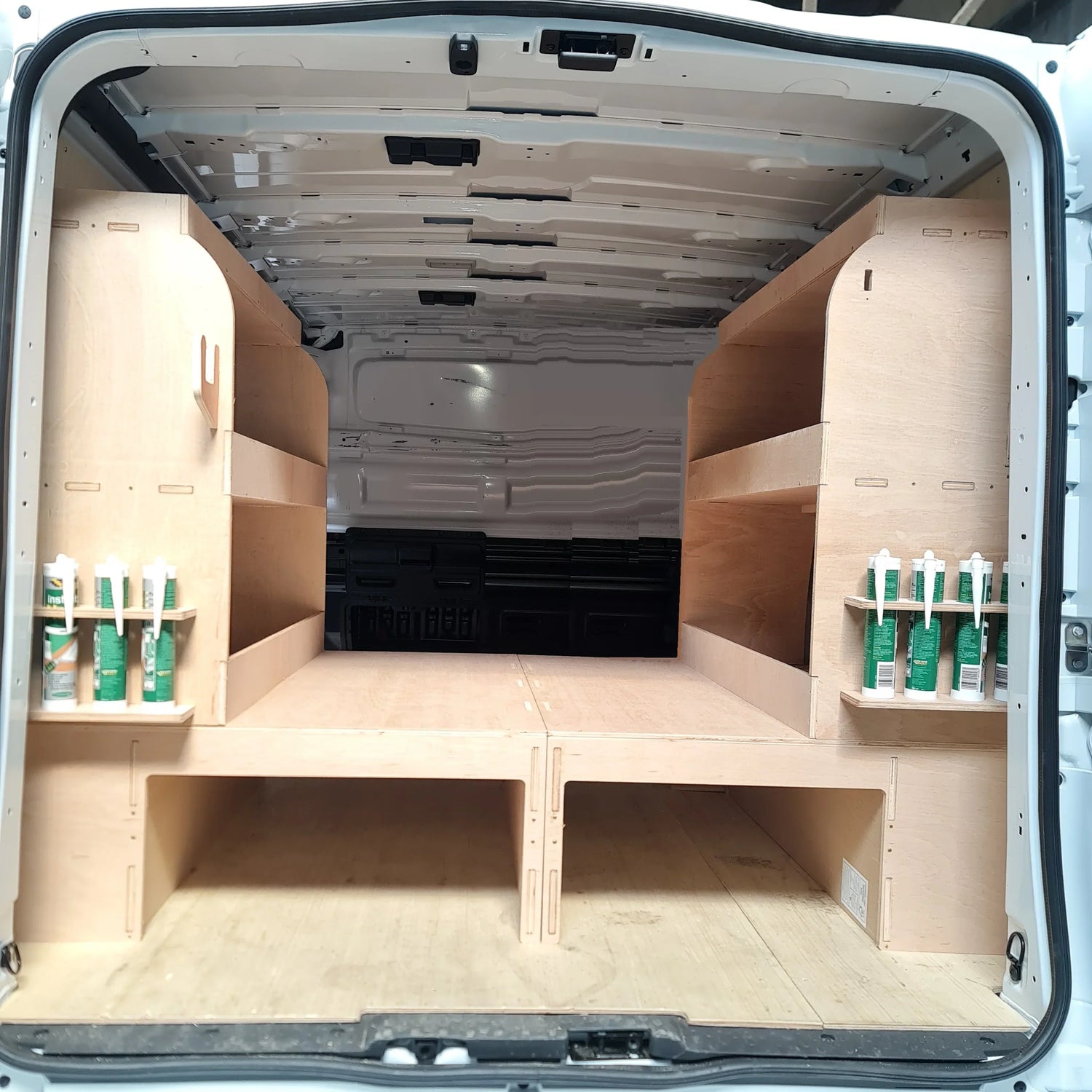
Bulkhead storage uses the area against the partition behind the seats. Depending on the system, it may be shelves, racks, holders or organisers for items that need to be reached quickly when the rear or side door is open. It makes use of a part of the van that can otherwise become a dumping ground for loose consumables.
The biggest benefit is speed. A sealant holder, wipe dispenser, glove box organiser, small-parts rack or shelf near the bulkhead keeps everyday supplies in a known place. You are not opening drawers for every small item, and you are not searching through boxes after each job.
For tradespeople making several short stops each day, that access can matter more than maximum hidden capacity. A decorator may want tapes, fillers and consumables ready to hand. A service engineer may need wipes, PPE, labels and small components close to the door. Bulkhead storage keeps these frequent-use items at a comfortable, visible height.
Its limitation is capacity. The bulkhead area is narrow, and it can become cluttered if it is expected to carry every tool and material. It is best treated as a working zone for essentials, not as the entire storage plan. Poorly positioned bulkhead storage can also interfere with longer loads or make it harder to stack materials securely.
Best uses for bulkhead storage
Bulkhead storage works well when your van needs clear zones. Put high-frequency consumables and small equipment near the bulkhead, then keep larger cases, stock and materials in the remaining load space. This is a practical approach for mixed-use vans where the job load changes regularly.
It is also a sensible first improvement if your current setup is basic and you want to reduce clutter without changing the floor layout. Vehicle-specific racking and storage options are worth checking carefully, as door positions, wheel arches and available load length vary between van models and body lengths.
Which option protects your tools better?
A false floor generally offers better discretion for valuable tools because drawers conceal the contents below the deck. It also prevents tool cases from sliding around the open load area when packed correctly. For trades carrying a large amount of portable power tools, this can make the van easier to secure and easier to unload at the end of a shift.
Bulkhead storage protects tools through organisation rather than concealment. Items are held off the floor, separated and less likely to be buried under materials. It is ideal for lighter equipment and consumables, but it is not usually the first choice for storing a full set of larger power tools.
The best protection comes from matching the storage to the item. Heavy cases belong low down. Frequently used small items should be visible and restrained. Long materials need a clear route through the load area. If a system makes you compromise on any of those points, it is not the right layout for your work.
Consider payload and daily loading
Storage itself adds weight, and a fully equipped van can reach its payload limit sooner than expected. Before choosing a false floor, account for the unit, tools, stock, fuel, passengers and any materials you commonly carry. The same principle applies to bulkhead racking, even though it may appear lighter and less intrusive.
Think about loading order too. If the van is loaded from the rear with bulky materials first, bulkhead storage may be harder to reach later in the day. If you return to the van repeatedly for small parts, a drawer system alone may feel slower than a bulkhead organiser for those essentials.
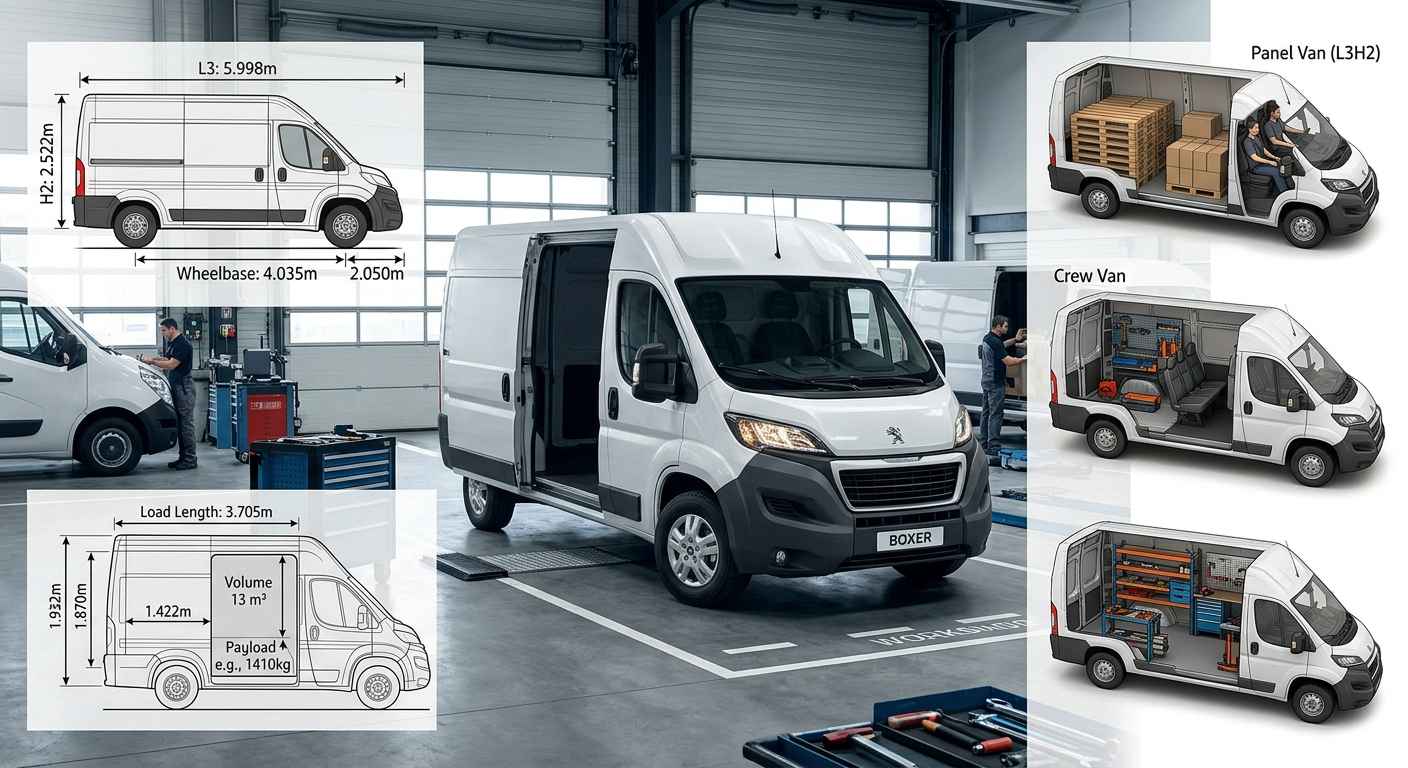
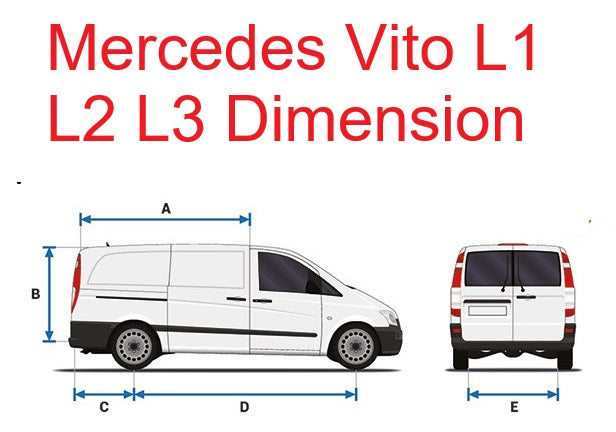
Measure the working space, not just the empty load area. Check the height of your tallest regular load, the length of pipe or trim you transport, and whether side-door access is part of your routine. Model-specific products help make the most of the available space, but fitment should always be confirmed for your exact van model, year and body length.
The practical answer is often both
For many working vans, false floor vs bulkhead storage is not an either-or decision. The most productive setup uses each area for what it does best. False-floor drawers can store tool cases, valuable equipment and organised stock below the deck. Bulkhead storage can hold gloves, wipes, sealants, fittings and the small items used several times a day.
This combination keeps the centre of the load area clearer for materials while reducing the number of times you need to move one thing to reach another. It also gives the van a repeatable layout, which is especially useful for small teams and fleet vehicles where more than one person may use the same vehicle.
Start by looking at the items you touch every day, then the items you need once or twice a week, then the bulky loads that define your available space. That simple exercise usually makes the right storage layout clear. When every item has a sensible place, your van stops being a box on wheels and starts supporting the way you work.