










When you are carrying reels of cable, testers, fixings, trunking fittings, power tools and paperwork in the same van, a basic shelf and a few boxes stop being enough very quickly. The best van racking for electricians is the setup that keeps every item easy to reach, secure in transit and organised in a way that matches how you actually work.
That matters more than most electricians realise at first. A van is not just transport. It is your stores, your tool room and, on plenty of jobs, your first workspace of the day. If you lose ten minutes on every call looking for a hole saw, a connector box or the right drill bit, that wasted time adds up across the week.
What makes the best van racking for electricians?
The right answer is rarely the biggest racking kit you can fit in the back. For electrical work, good van racking needs to balance tool storage, small-parts organisation and clear floor space. Electricians often carry a wide mix of items - from bulky combi drills and breakers to tiny consumables that are useless if they get mixed together.
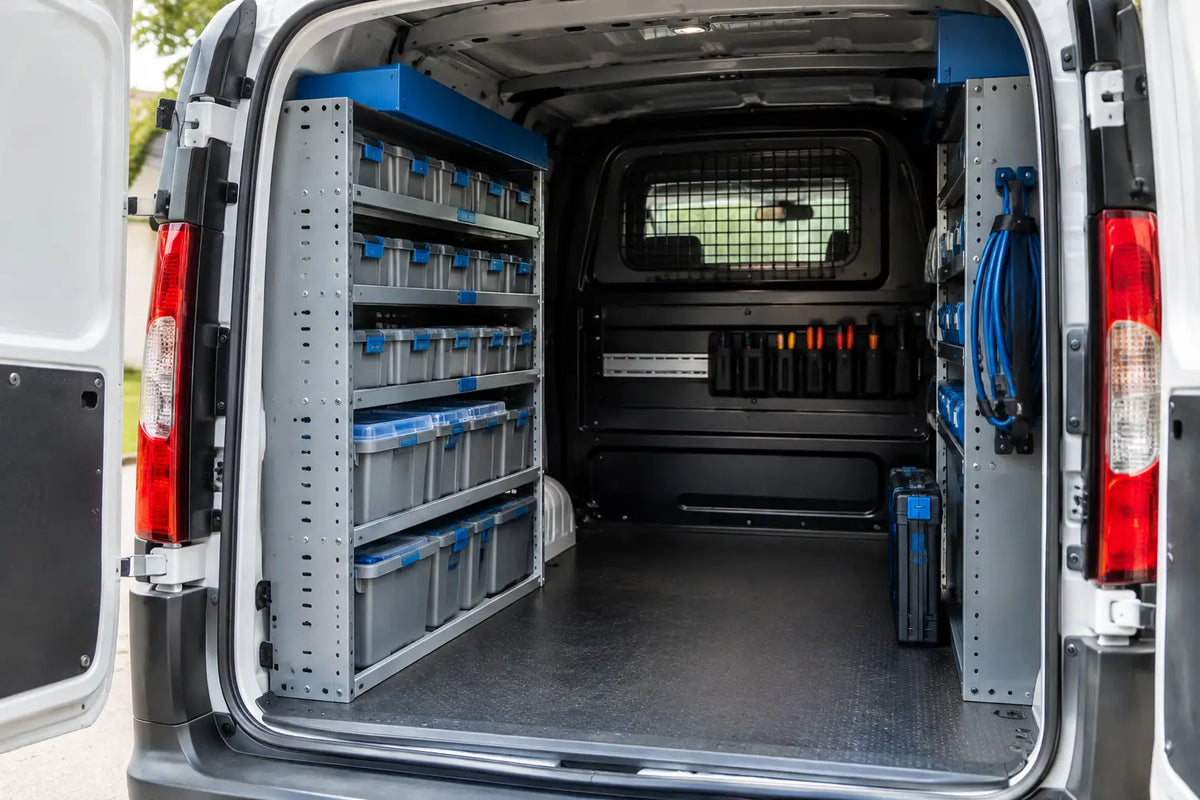
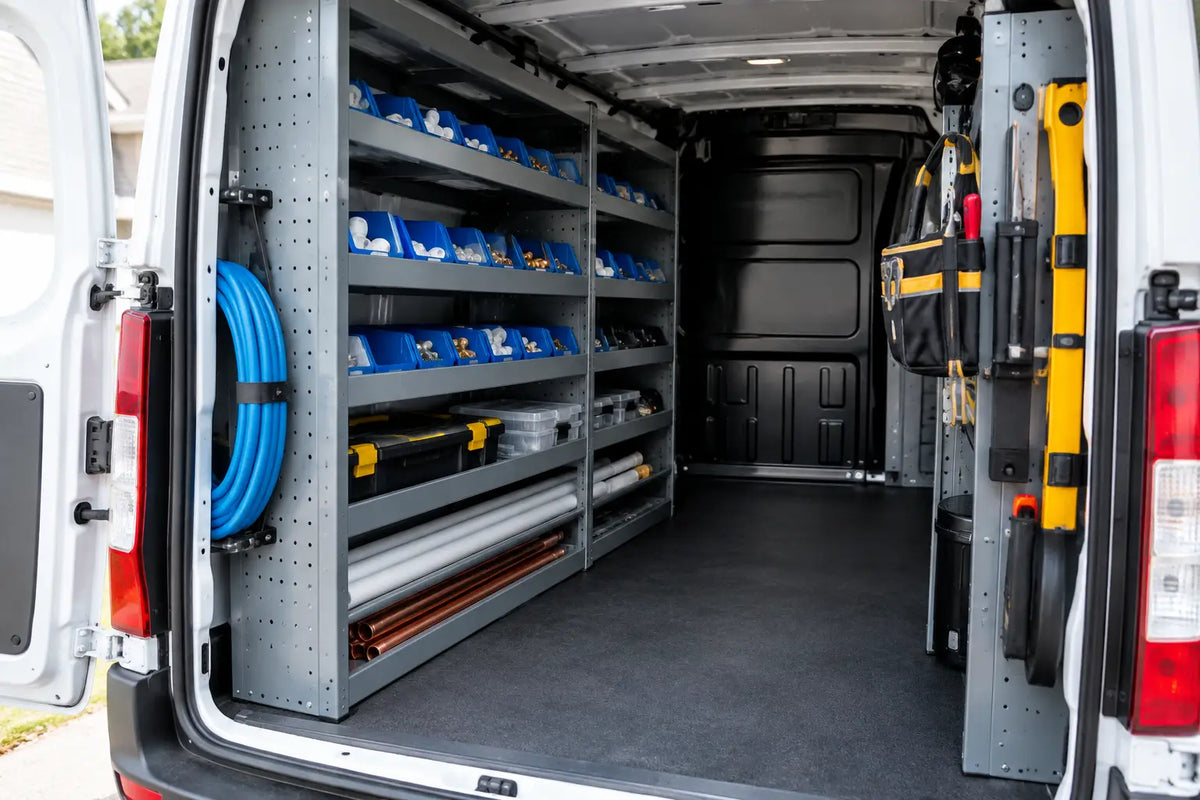
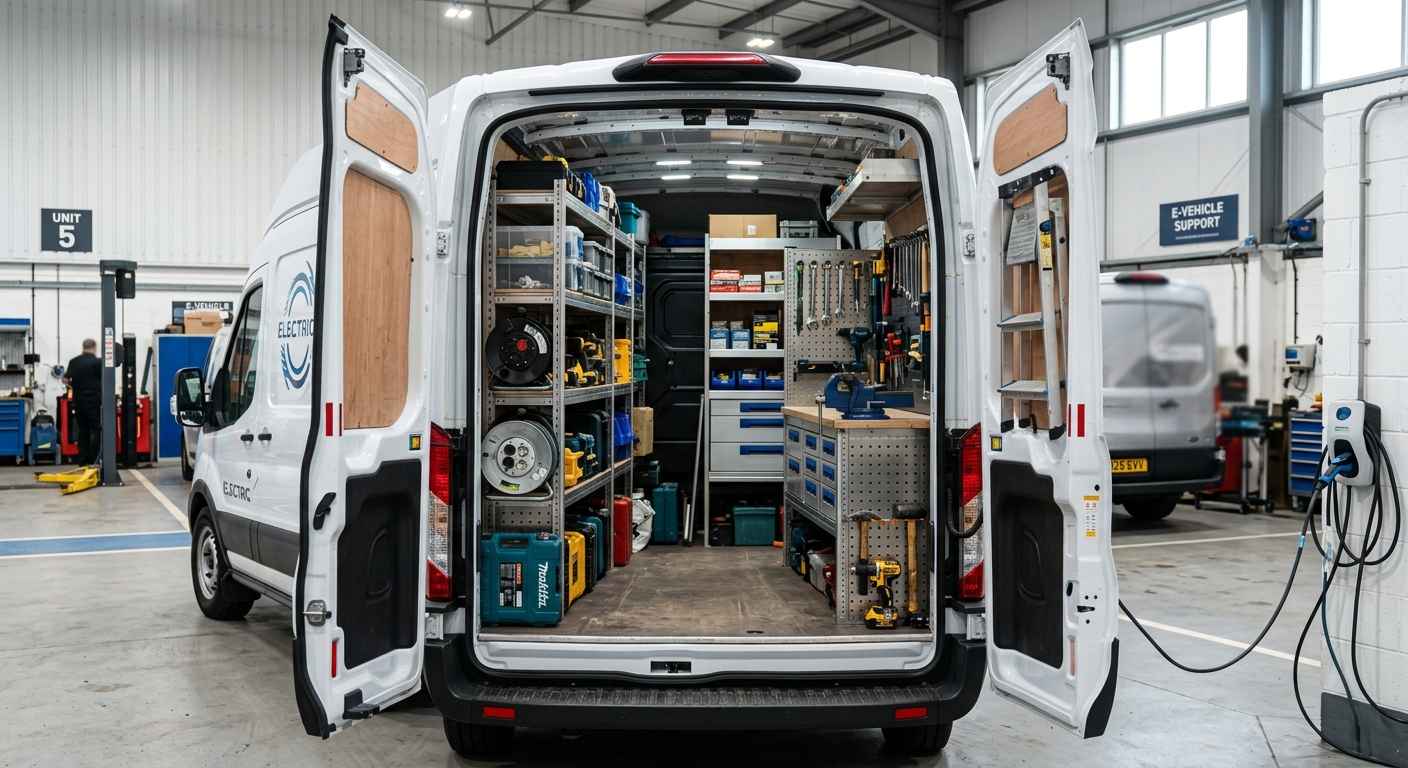
A useful setup usually starts with shelving that gives you clear zones. One section should deal with hand tools and power tools. Another should hold fittings, screws, clips, glands and connectors in bins or cases. A third area should support larger job items such as cable reels, conduit accessories, site gear or testing equipment. If everything lands in one open bay, the van looks tidy for a day and then falls apart.
Accessibility matters just as much as capacity. Deep shelves can store more, but if you have to unload three cases to reach one meter or inspection light, the layout is working against you. For electricians doing multiple stops, a shallower, better-organised system often beats one that simply claims maximum storage.
The layout electricians usually need
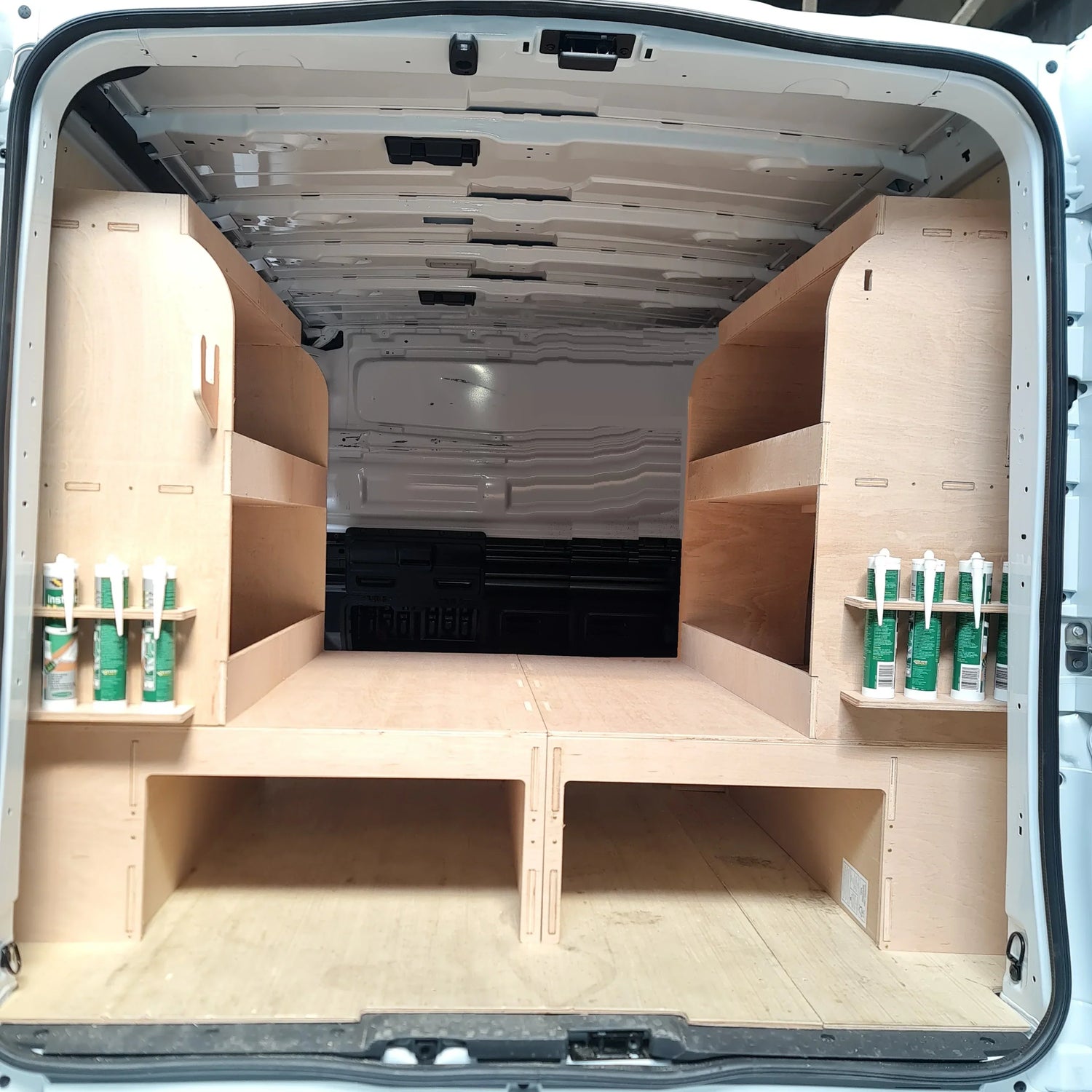
Most electricians do best with a side-wall racking layout rather than filling both sides of the van straight away. Leaving a usable central walkway gives you space for ladders, trunking lengths, cable drums or larger materials when needed. It also makes the van easier to load on busy days.
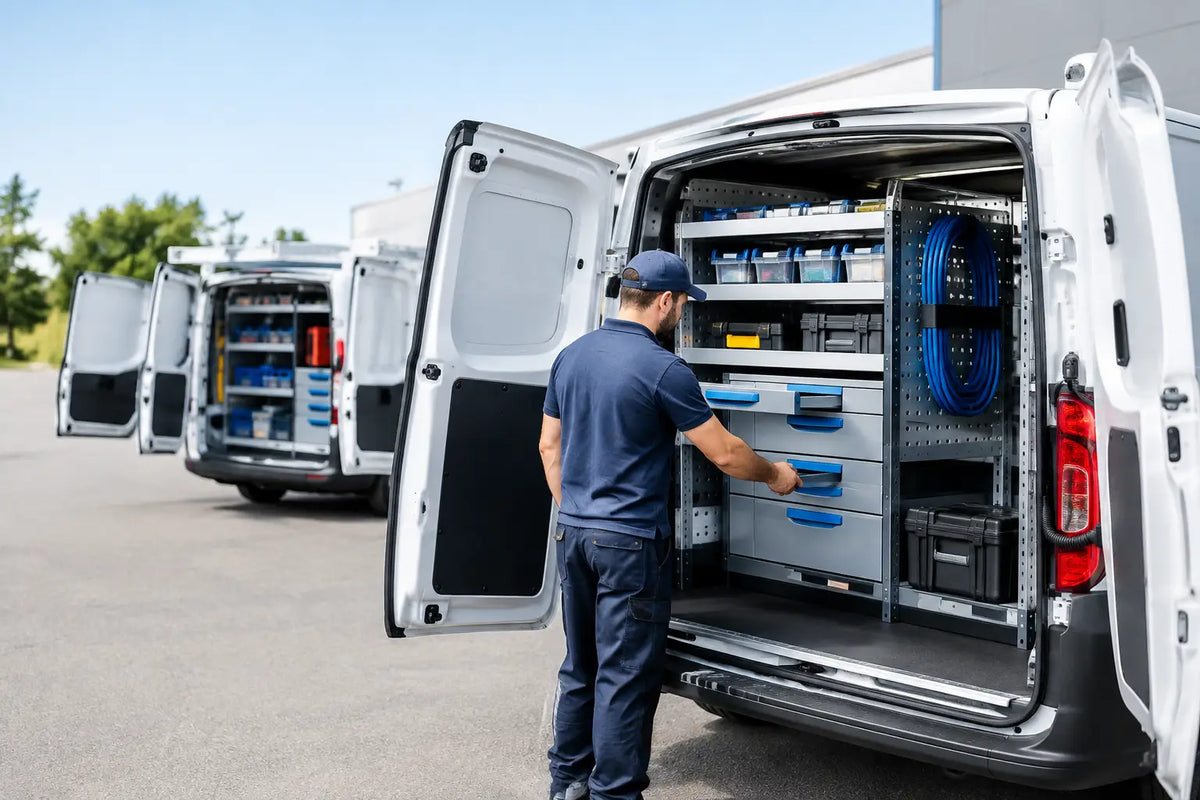
Near the side door, it makes sense to keep the gear you use most often. That usually means testers, screwdrivers, pliers, cutters, tape, fixings and a core set of power tools. Items for occasional use can sit further back. It sounds obvious, but this is where many vans go wrong - the van gets arranged by shelf size rather than by daily routine.
A rear-door access section is useful for heavier kit and larger cases. If you regularly carry breakers, SDS drills, vacs or crimping equipment, storing them low and near the back reduces lifting awkwardly over other shelves. Lower storage also helps with weight distribution and keeps the van feeling more stable on the road.
Shelving, bins and false floors - what actually helps
For electricians, fixed shelving on its own is only half the job. Small-parts storage is what makes the system work day to day. Open shelves become cluttered quickly when every fitting, screw tub and connector packet is stacked on top of another.
Plastic bins, compartment trays and dedicated organisers make a bigger difference than many buyers expect. They give every part a place, which means faster loading in the morning and faster packing away at the end of the day. They also make stock checks easier, so you can see when you are low on consumables before a job catches you out.
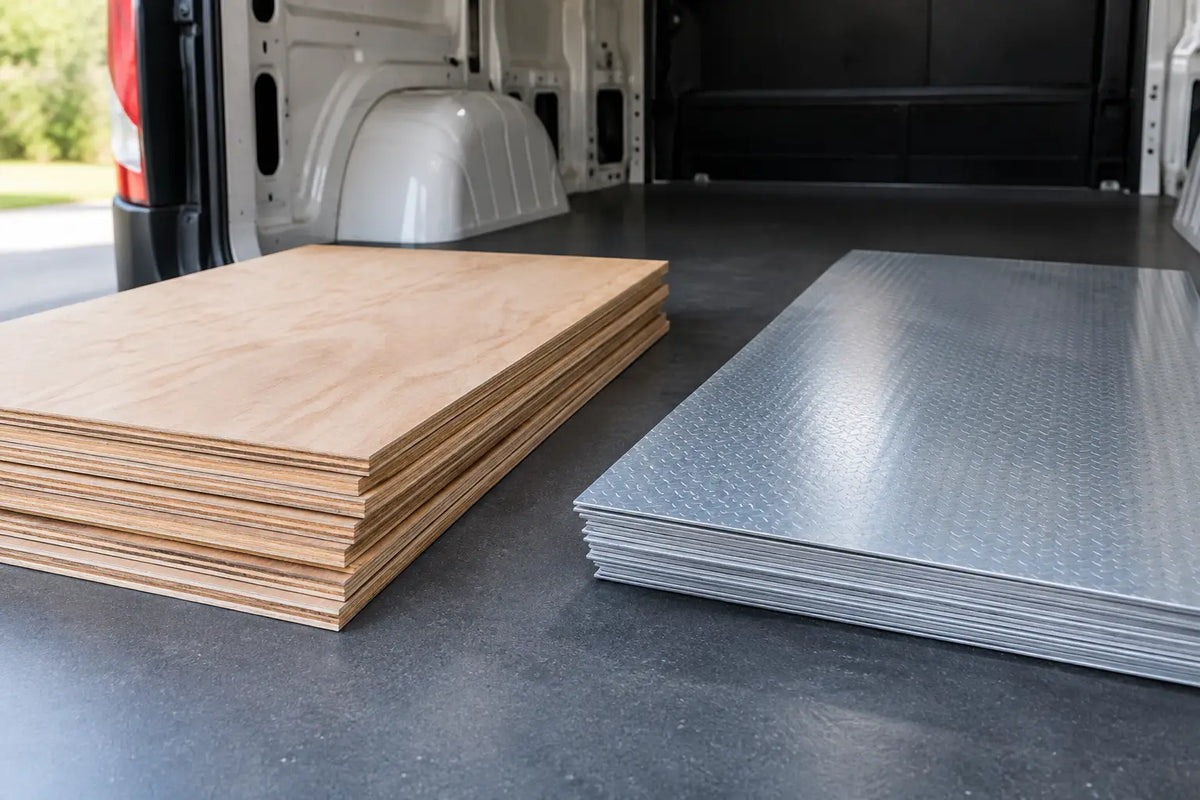
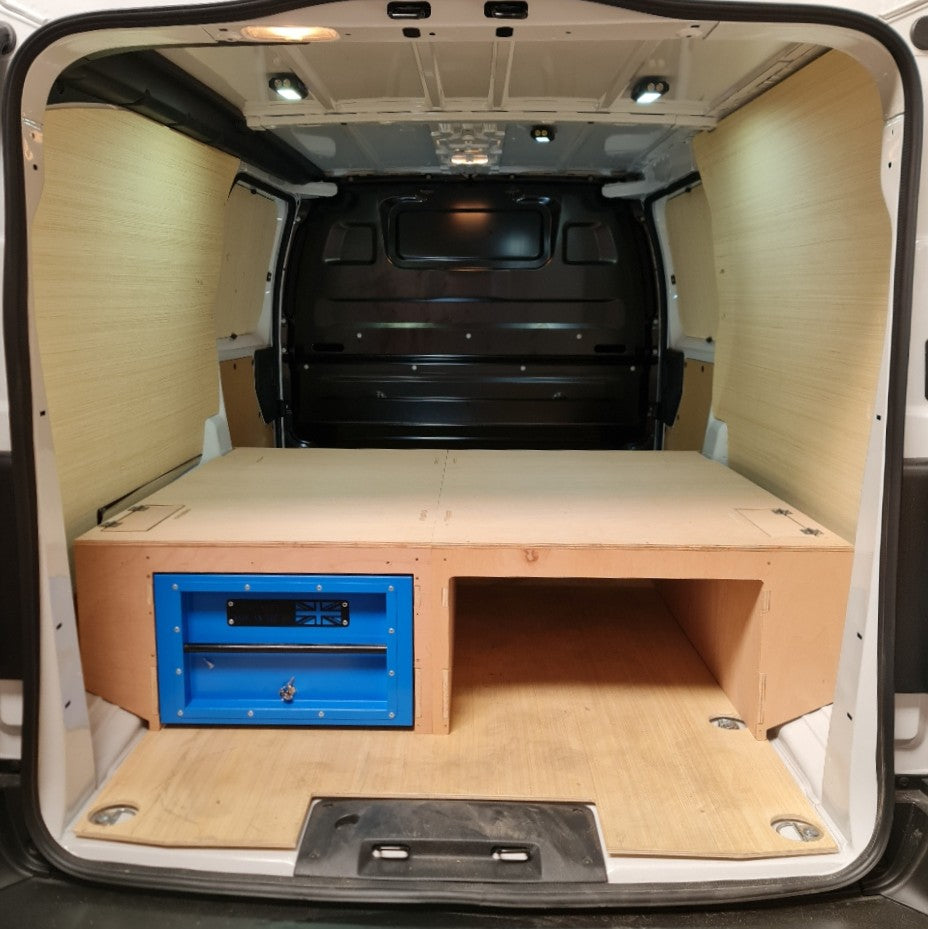
False floors are worth considering if you carry longer items or want cleaner separation between stock and tools. They can be especially useful for storing cable rods, conduit, trunking lengths, steps or sheets of protective covering without taking up valuable shelf space. For electricians who switch between domestic, commercial and maintenance work, that extra hidden storage can keep the main van area far more usable.
Choosing racking by the type of electrical work you do
Not every electrician needs the same setup. That is where buying purely on price or shelf count can be a mistake.
If you are mainly doing domestic installs and maintenance, your van probably needs quick access to hand tools, testers, drill sets, fittings and small boxed stock. A shelving and bin-led setup works well here, with enough open floor for the occasional larger item.
If you handle commercial fit-outs or first-fix work, bulk storage becomes more important. You may need room for larger quantities of cable, containment accessories, site equipment and longer materials. In that case, a more open layout with selective shelving often works better than a tightly packed racking system.
If your work is service and call-out based, speed is everything. You want a layout that lets you open one door and grab the most-used kit immediately. Compact, high-frequency storage near the door is usually the winning option. Every extra minute saved on each job improves your day and makes the van earn its keep.
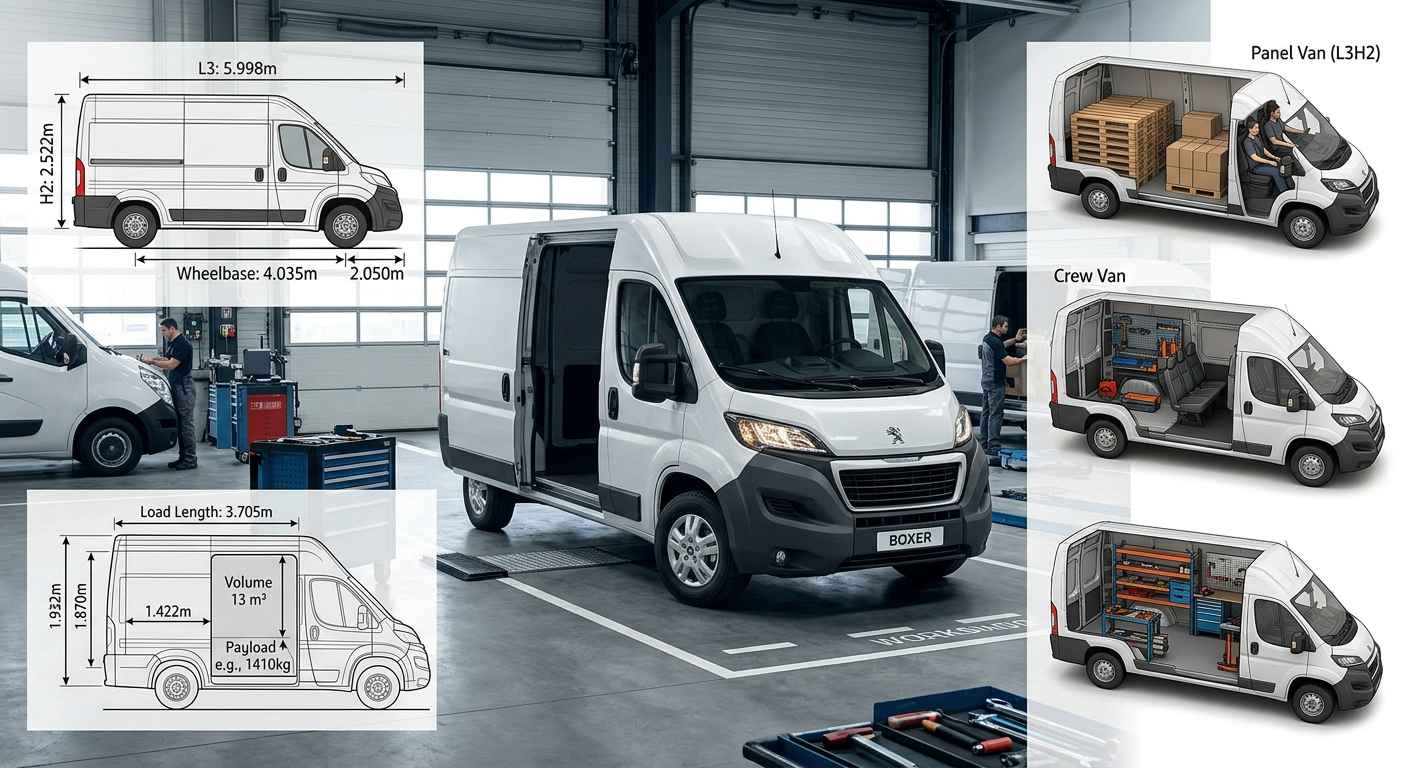
Best van racking for electricians by van size
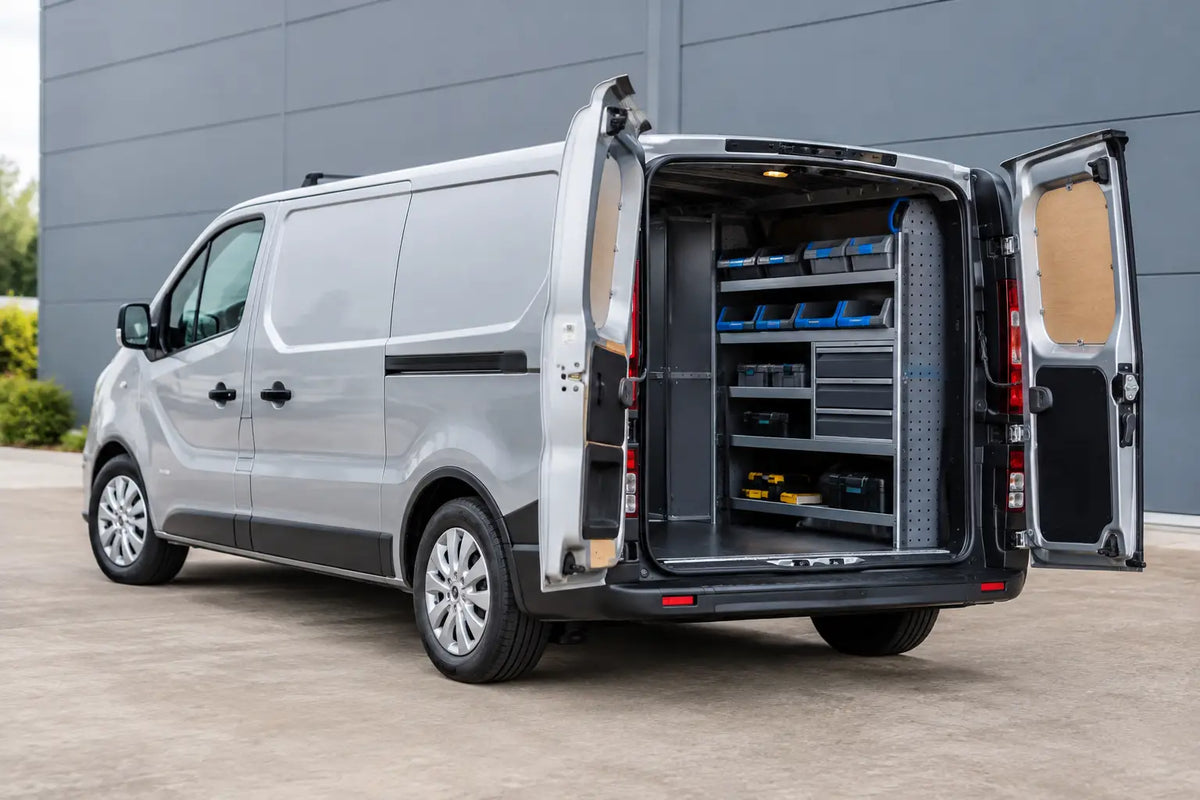
Smaller vans need discipline. In compact models such as the Ford Transit Custom, Volkswagen Transporter or Vauxhall Vivaro, overfilling one side with deep shelving can leave the van cramped and awkward. Electricians using medium vans often get better results from a vehicle-specific side racking system combined with a false floor and a few carefully chosen accessories.
Larger vans give you more freedom, but they also make it easier to waste space. In bigger models, it is tempting to install more shelving than you need. That can reduce flexibility when a job requires larger stock or awkward materials. Good racking should improve the van, not turn it into a fixed cupboard that cannot adapt.
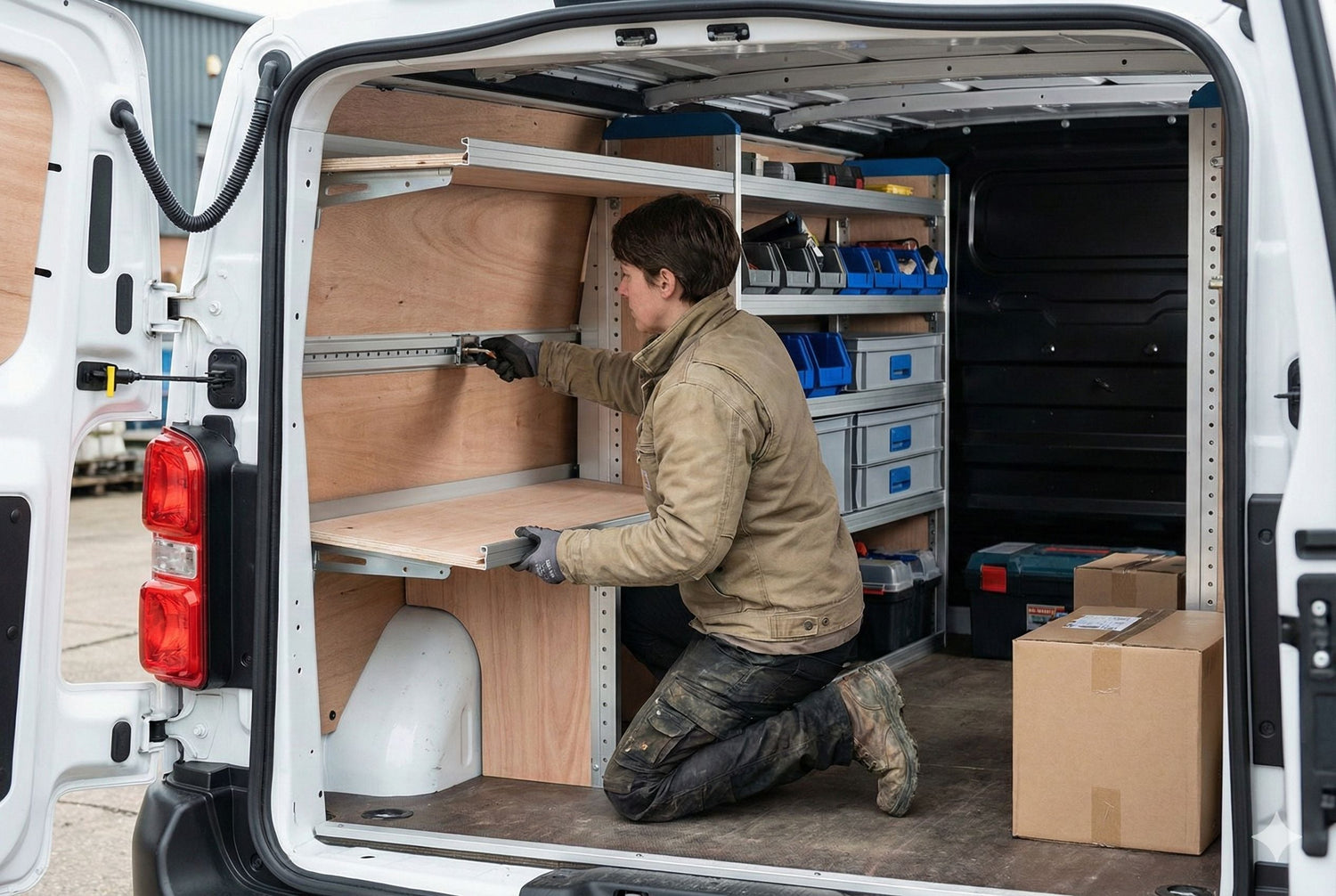
This is why model-specific systems are usually the smarter choice. A racking kit designed around your exact van shape makes better use of curves, height and load area dimensions. It also tends to fit more cleanly and feel more secure once installed, which matters when the van is being worked hard every day.
Practical features worth paying for
Durability should be near the top of the list. Electrical work means regular loading, unloading and moving between jobs, so racking takes knocks. Sturdy shelving, solid fixings and well-made bins pay for themselves over time because they stay usable instead of rattling loose or cracking under load.
A wipe-clean finish is another practical advantage. Vans get dusty, especially when electrical work overlaps with chasing, drilling or general site conditions. Easy-clean surfaces help keep the van looking professional and prevent dirt from building up around smaller items.
Accessory compatibility is also worth checking. Extras such as glove box organisers, sealant holders, paper roll holders and dispensers for wipes can sound secondary, but they make a working van more efficient. The best systems are not only about shelves. They support how tradespeople actually operate through the day.
Common mistakes when buying electrician van racking
One common mistake is chasing maximum storage and ignoring workflow. If the van is packed wall to wall but everyday items are hard to reach, the setup is not doing its job.
Another is forgetting future changes. Many electricians expand the amount of stock they carry over time, especially if they move into broader maintenance work or start taking on larger jobs. A layout with some flexibility is usually better than one that only suits your current routine.
There is also the issue of installation. Cheap universal systems can look good on paper, but if they are awkward to fit or do not sit properly in the van, that value disappears quickly. A well-designed system that fits the vehicle properly tends to save time and frustration from the start.
How to choose the right setup without overthinking it
Start with what you use every day, not what you might carry once a month. Think about your core tools, your most common consumables and the larger items that need regular space. That gives you a realistic picture of the storage mix you need.
Then look at your van size and working style. If you are in and out of the van all day, easy access matters more than maximum shelf depth. If you carry varied materials across different jobs, keep more open floor area. If stock control is a constant headache, focus on bins and organisers rather than adding another plain shelf.
Finally, buy for the vehicle, not just the trade. The best van racking for electricians is not one generic answer. It is the system that fits your van properly, supports your workload and stands up to daily use. That is why businesses such as CNC Work focus on vehicle-specific storage options rather than one-size-fits-all solutions.
A well-planned van setup does more than tidy the back doors. It helps you work faster, protect your tools, carry stock with less hassle and turn up looking organised from the first job to the last.