



You notice poor van organisation at the worst possible moment - when the bit you need is under a pile of fittings, the sealant has rolled to the side door, and the customer is already watching the clock. That is why volkswagen transporter van organisation matters. A Transporter is a strong working van, but without the right layout it quickly turns into wasted minutes, damaged tools and jobs that take longer than they should.
The good news is that the Transporter lends itself well to a proper working setup. Whether you run a T5, T6 or T6.1, the shape is practical, the load area is usable, and there is enough flexibility to build a van around the way you actually work. The trick is not filling it with random storage. It is choosing a setup that suits your trade, your stock and how often you need access to each item.
What good volkswagen transporter van organisation looks like
A well-organised Transporter should do three jobs at once. It should keep tools secure in transit, make daily kit easy to reach, and leave enough open floor space to carry larger items when needed. If one of those is missing, the setup usually starts working against you.
For most tradespeople, the biggest mistake is treating the van like a general storage box. Heavy power tools get mixed with fixings, loose consumables slide across the floor, and every shelf ends up carrying a bit of everything. It feels manageable for a week or two, then the van becomes harder to use every day.
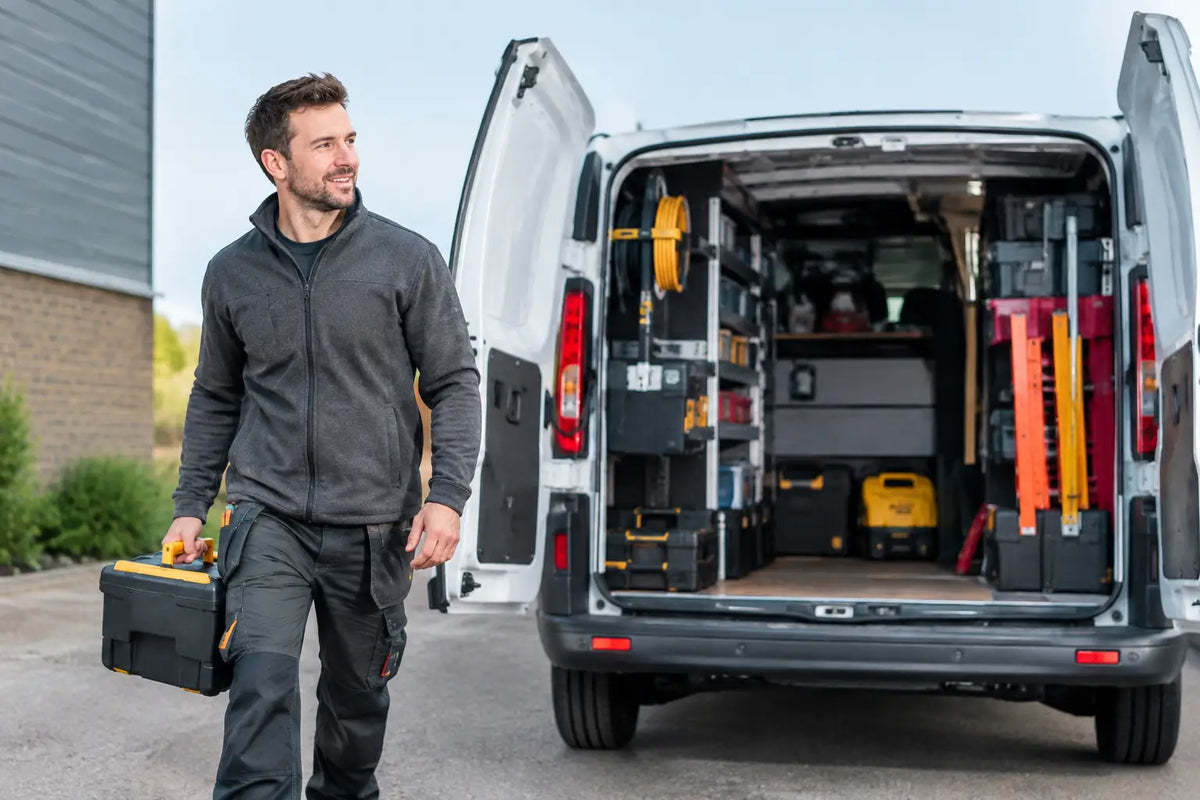
A better approach is to divide the load area into clear zones. Frequently used items should sit closest to the side or rear doors. Smaller consumables need contained storage rather than open shelf space. Larger tools and awkward kit need a fixed place so they are not shifted around every time something else goes in. Once each category has a home, the van becomes quicker to work from and easier to keep tidy.
Start with your working pattern, not the accessories
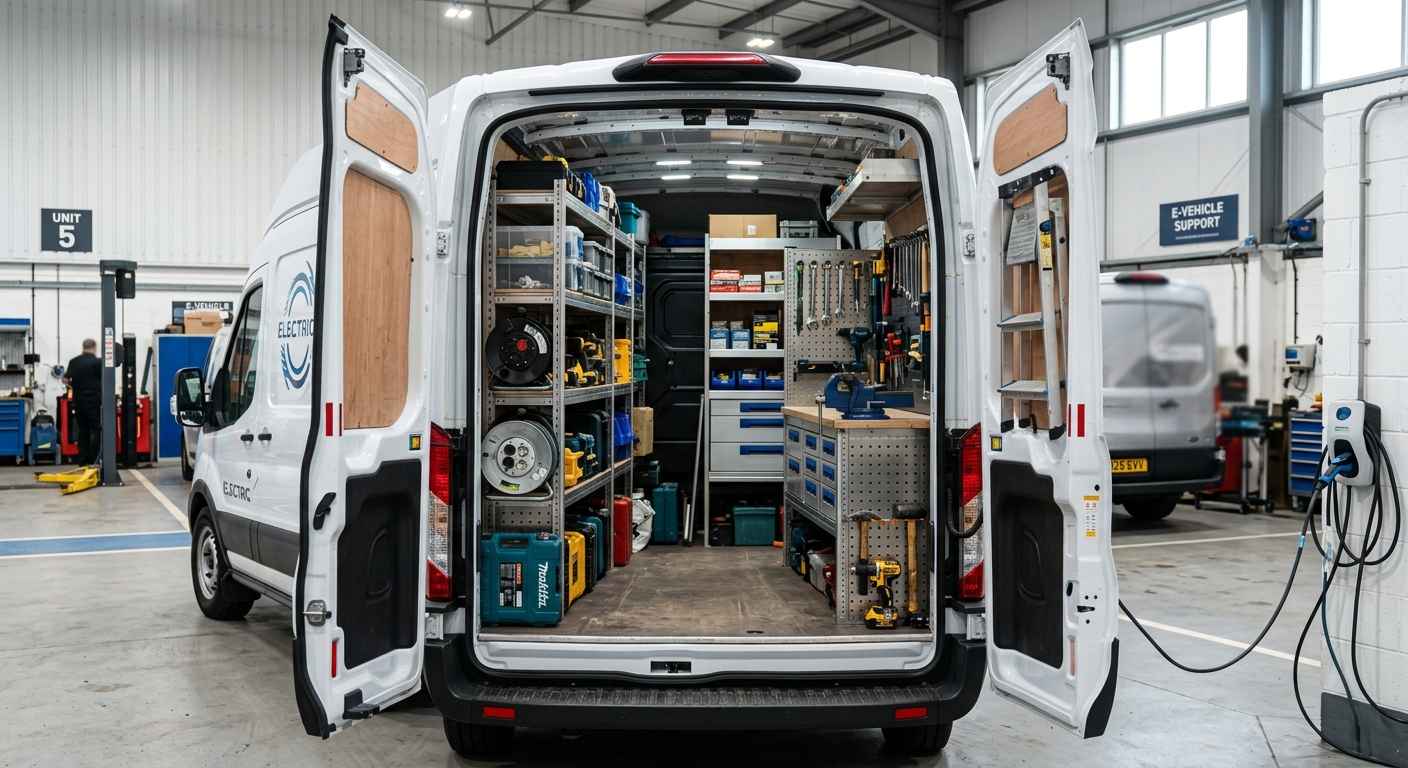
Before buying shelves, drawers or a false floor, look at how the van is used across a normal week. An electrician carrying testers, fixings, reels, conduit fittings and hand tools will need a different layout from a plumber with pipe fittings, sealants, presses and boxed stock. A decorator may want long, open sections for sheets, dust control gear and step-up equipment. A service engineer may need a mobile workshop with bench space and small-parts storage.
That is why there is no single best setup for every Volkswagen Transporter. It depends on what you carry, how often you restock, and whether the van doubles as a delivery vehicle or stays fully fitted out all week. If you regularly move bulky materials, overfitting the van with shelving can become a problem. If your work relies on lots of small parts, not having enough compartmental storage costs time every day.
In practical terms, start by asking three questions. What do you reach for on nearly every job? What must stay protected? And what only needs occasional access? That simple check usually tells you where your shelves, bins and floor space should go.
Shelving makes the biggest difference
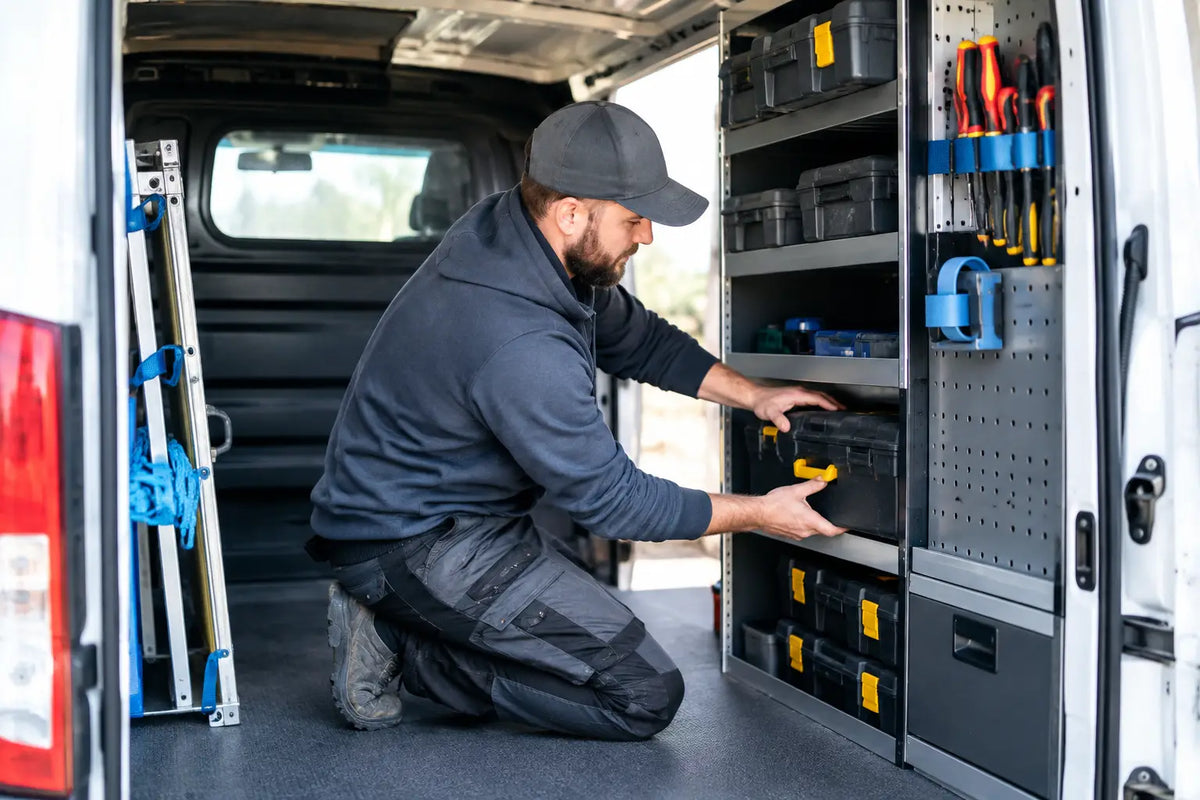
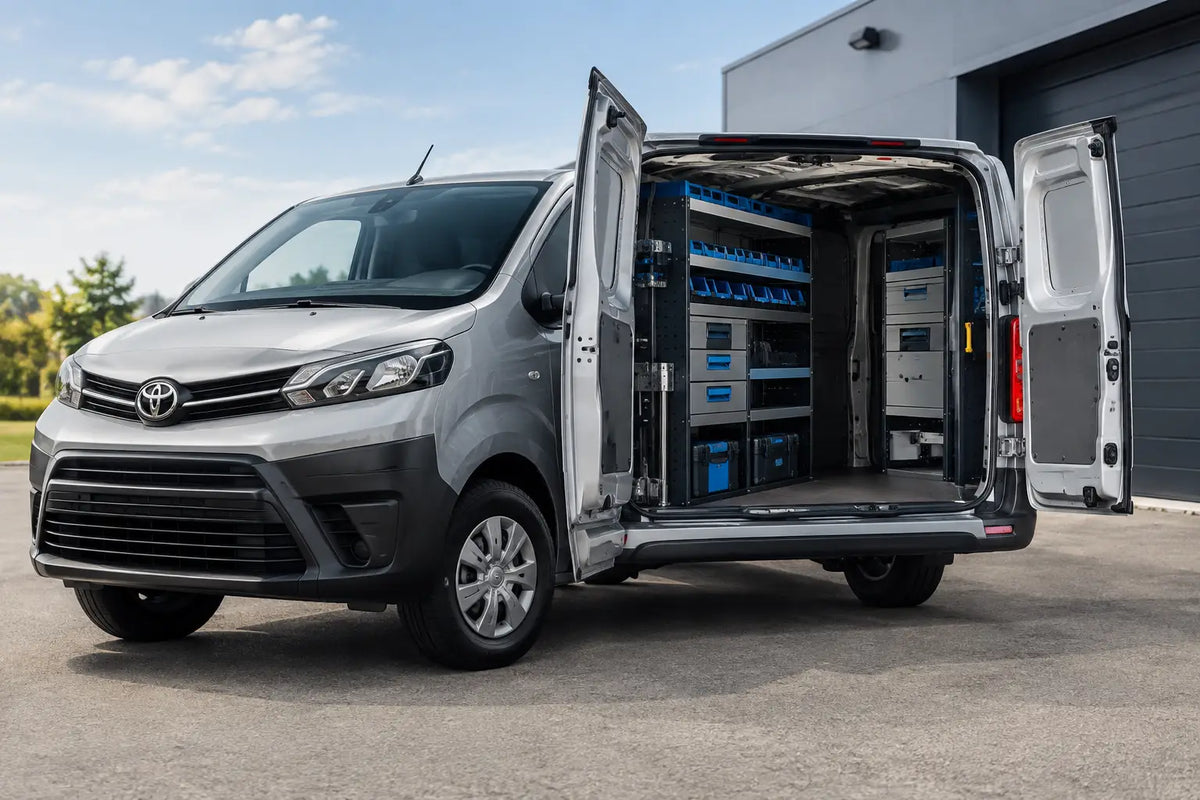
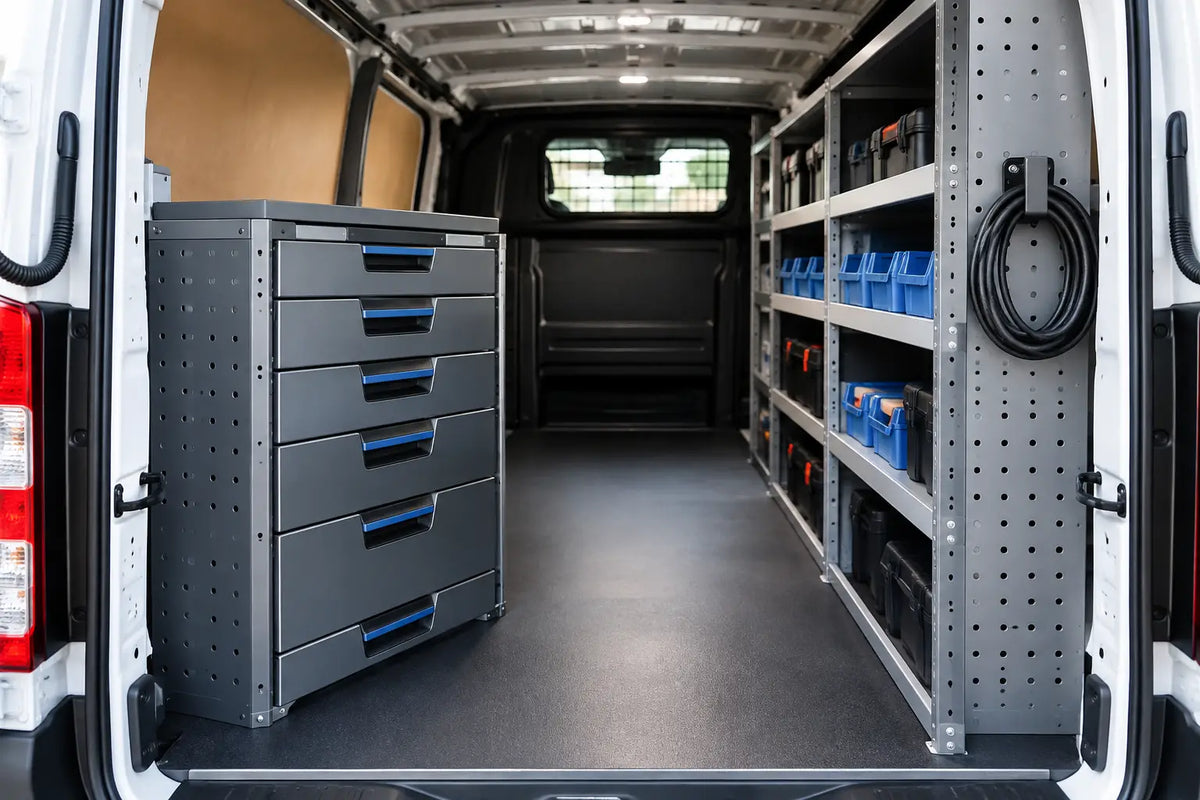
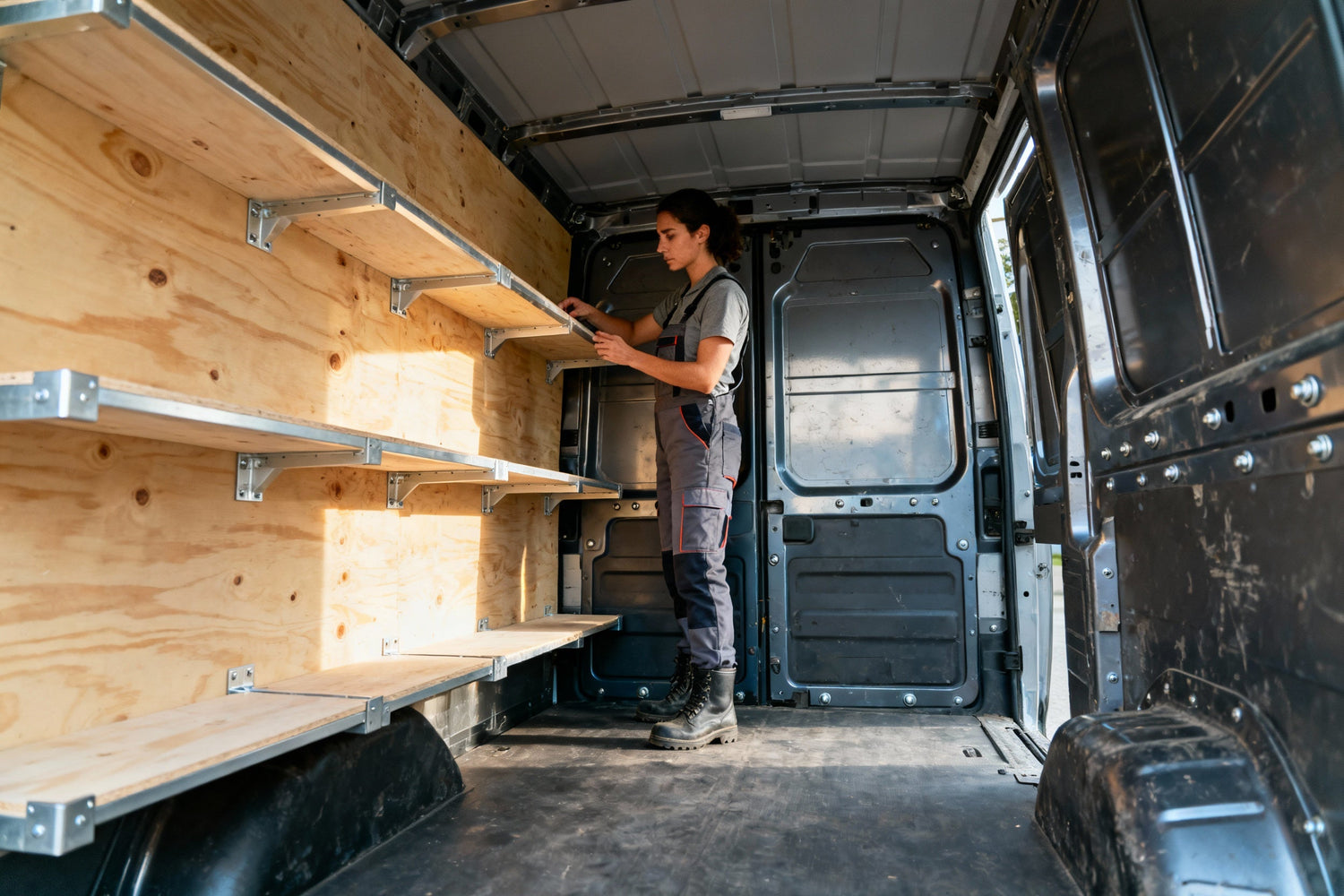
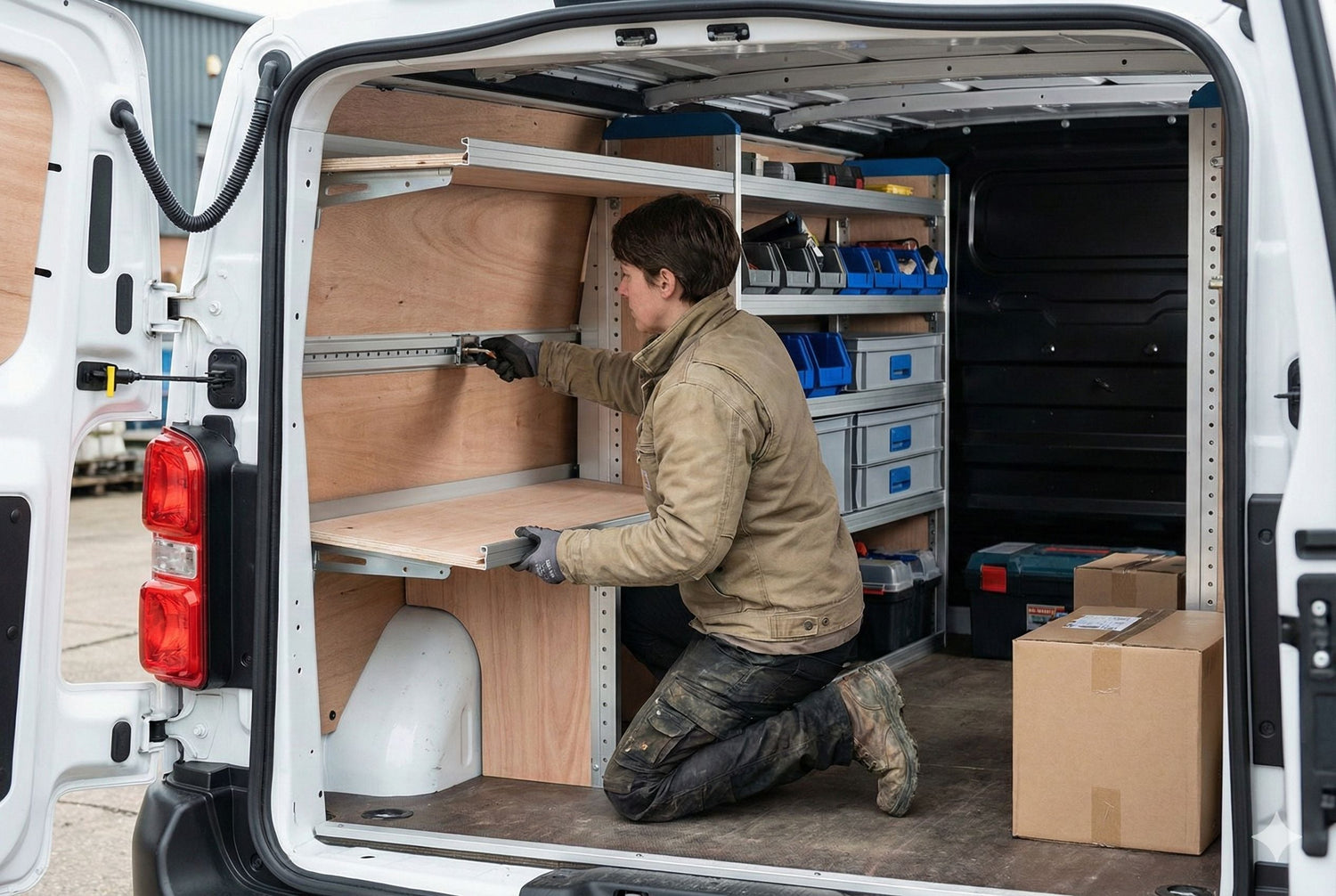
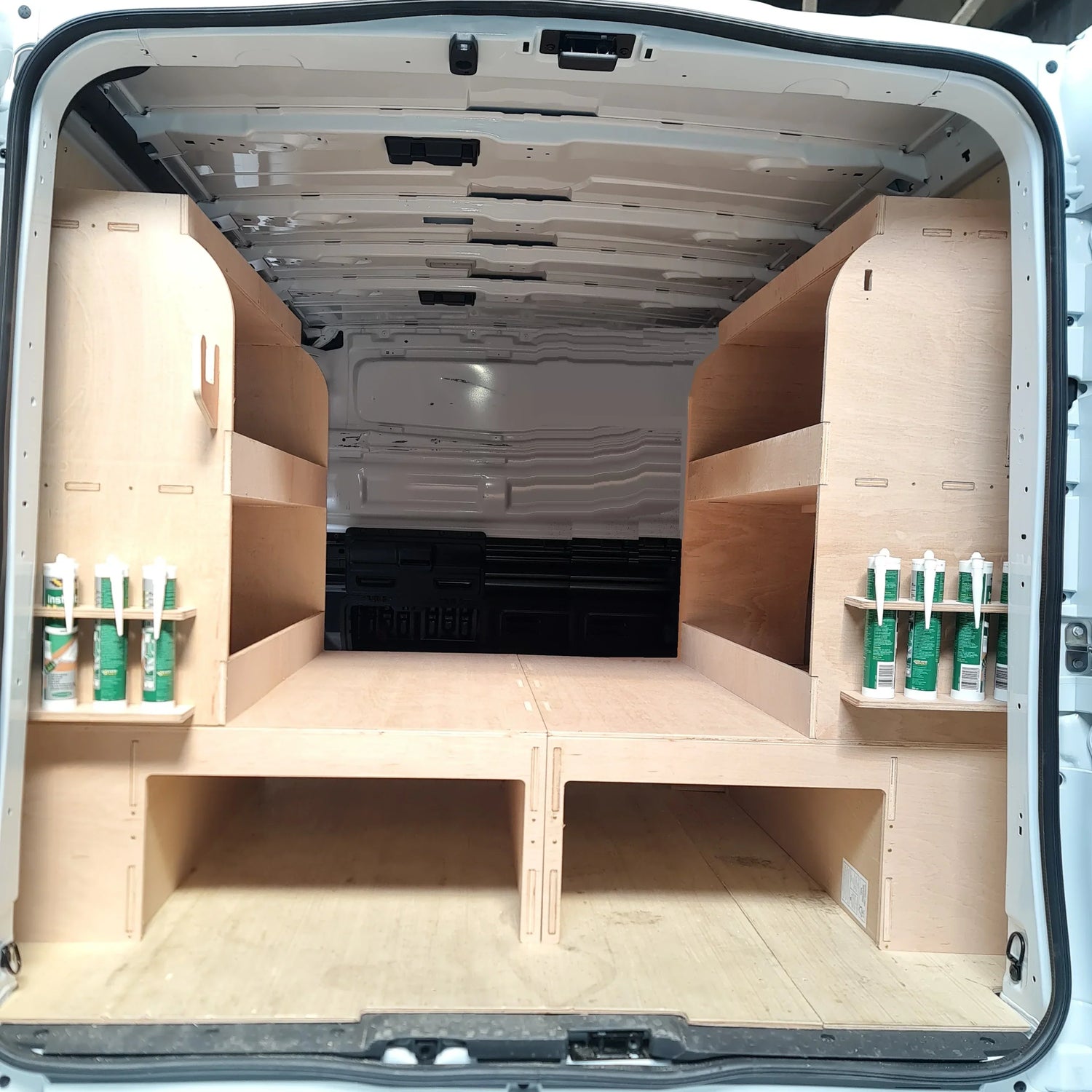
For most Transporter owners, fixed shelving is the backbone of good organisation. It gets tools and parts up off the floor, gives you visible storage, and turns wasted wall space into working space. On a Volkswagen Transporter, side-mounted shelving is often the best first upgrade because it leaves the centre clear for larger items.
Open shelving works well for cases, boxed items and grab-and-go tools. The problem is that very small consumables can disappear into the gaps unless they are stored in bins or compartment trays. That is where a more workshop-style setup helps. If you carry screws, clips, connectors, seals or fittings, combining shelves with labelled storage boxes makes the whole van easier to manage.
The key is not simply adding as many shelves as possible. Shelf depth and spacing matter. Too deep, and items get buried at the back. Too shallow, and you lose useful capacity. Good shelving should match the size of the equipment you actually carry, not just fill the side of the van.
False floors and drawers are worth it for some trades
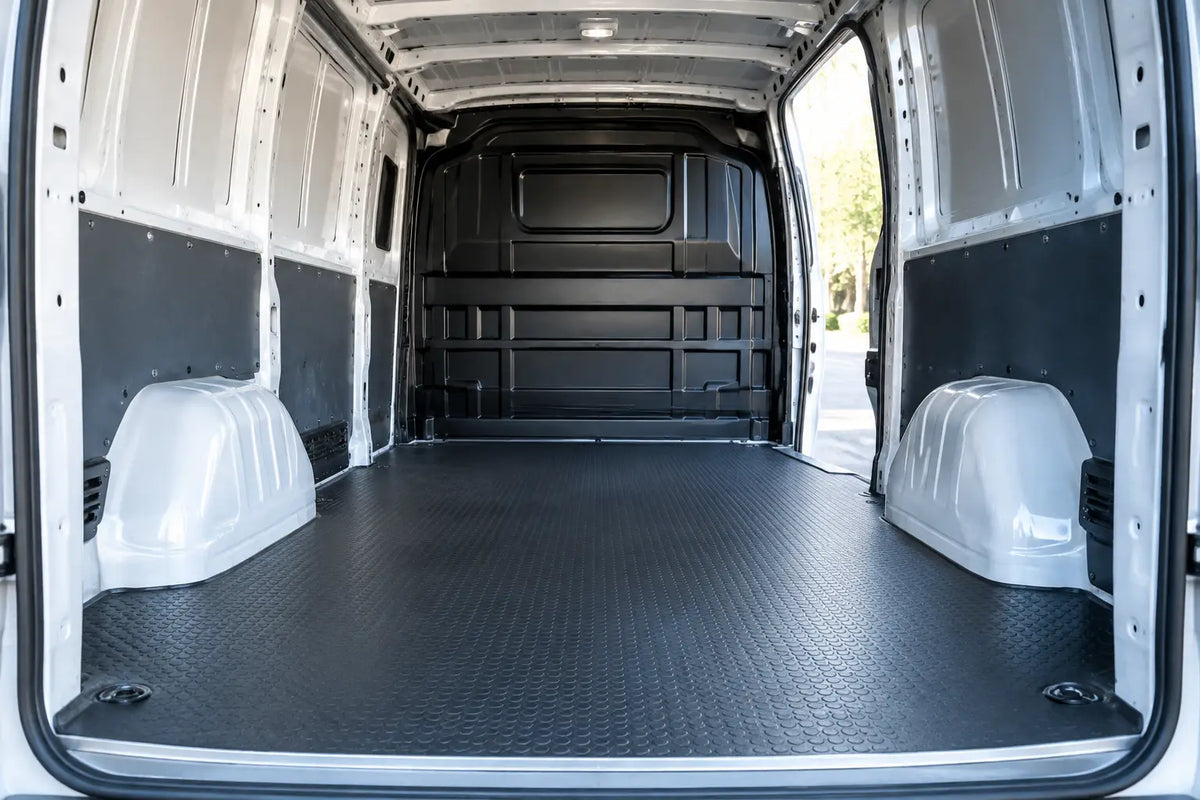
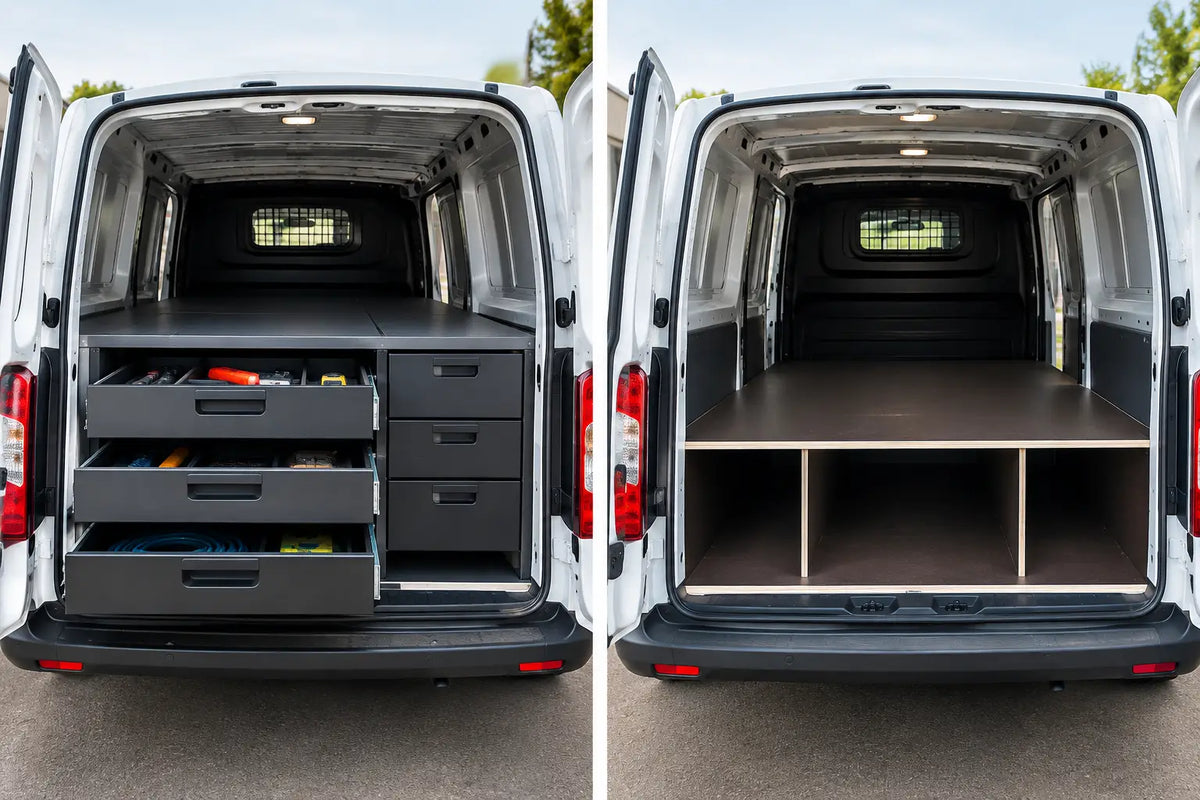
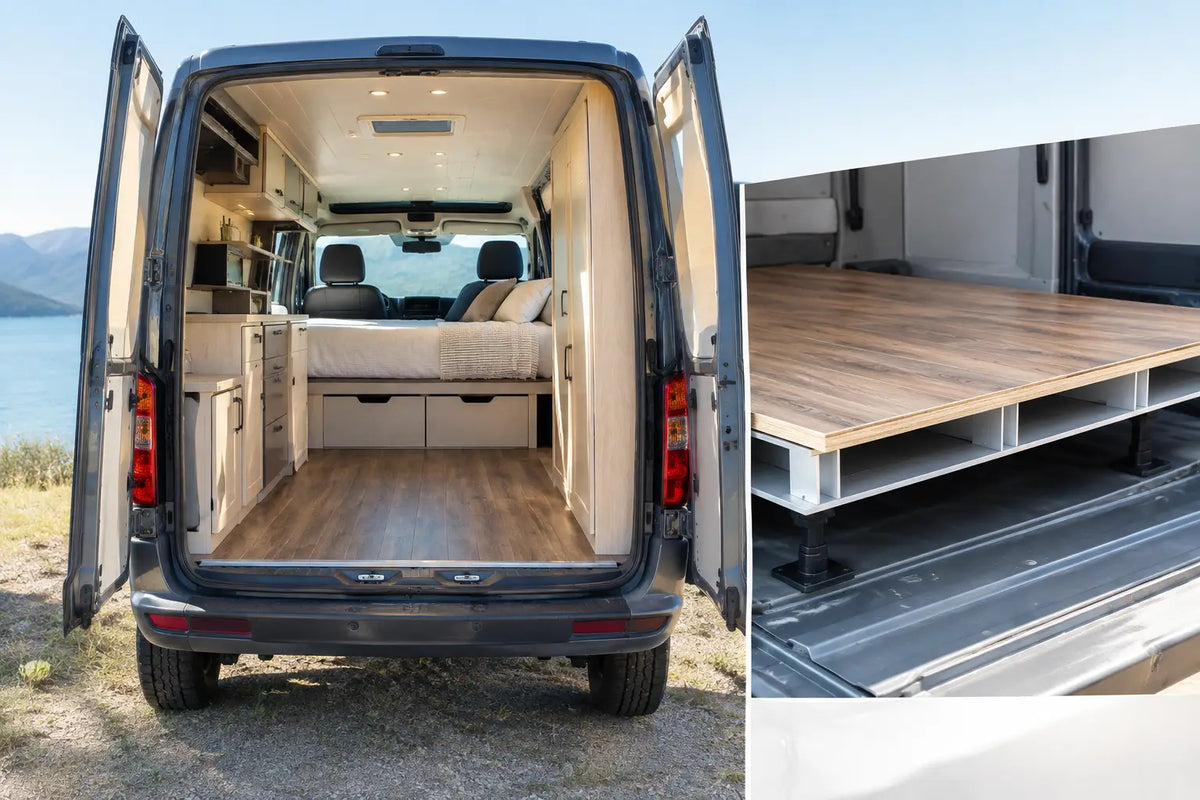
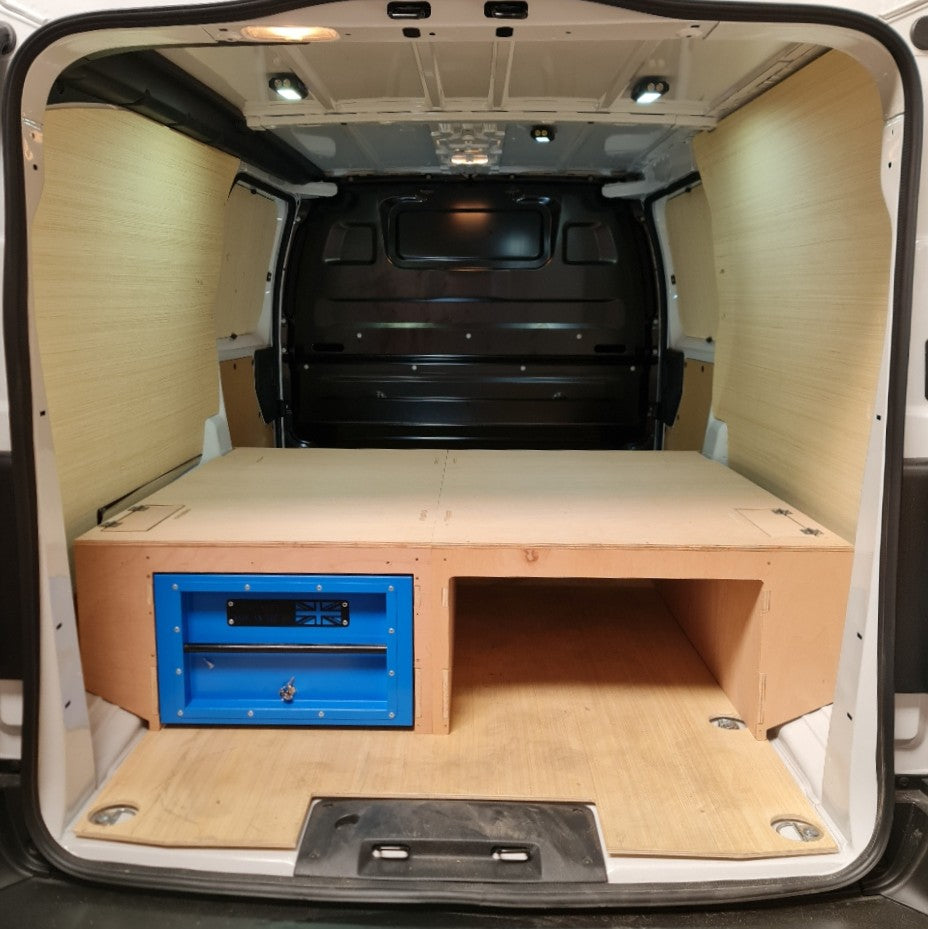
A false floor can transform a Transporter if you carry expensive kit, long tools or stock that needs to stay out of sight. It adds a secure lower layer for storage while keeping the top area free for day-to-day work. For fitters, engineers and contractors who want the van to feel more like a mobile workshop, this setup is especially useful.
There is a trade-off, though. A false floor raises the load height and reduces total vertical space. If you often move taller items or large equipment, that may not suit your working day. In those cases, side shelving alone may be the better balance.
Drawers are one of the best ways to store smaller equipment without creating clutter. Instead of stacking boxes or rummaging through tubs, you can separate parts by job type, size or frequency of use. They also help protect stock from damage and keep the van looking more professional when you open the doors on site.
Don’t ignore the small accessories
The bigger storage units get most of the attention, but the smaller accessories often have the biggest effect on day-to-day efficiency. Wipe holders, glove box organisers, sealant tube racks, paper roll holders and bin storage all stop the usual mess building up in the cab and load area.
This matters because clutter spreads fast in a working van. A few loose cartridges, an open box of screws and a dirty packet of wipes can make an organised setup look scruffy by midweek. Smaller accessories give those everyday items a proper place, which helps the whole system stay usable.
If your van is customer-facing, that also affects how you come across. A clean, organised Transporter gives a better impression than one packed floor to roof with loose gear. It is not about appearance for its own sake. It shows that you run a tidy operation and that your time on site is under control.
Weight, security and access all need balancing
The best Volkswagen Transporter van organisation is not just about fitting more in. It has to work safely as well. Heavy items should sit low and be secured properly. Frequently used tools should be reachable without climbing into the van every time. Expensive gear should not be visible from outside.
This is where layout planning matters more than people expect. A poor setup can put too much weight on one side, make access awkward, or leave tools free to move under braking. A good one supports safer driving and reduces wear on both the van and the equipment inside.
Think about door access too. If most of your tools are used from the pavement side, the side door should give quick access to them. If you mainly work from the rear, your most-used equipment should not be buried halfway down the van. Every extra movement adds up across a week.
A smarter layout usually pays for itself
Plenty of tradespeople put off upgrading their van because they see it as a cost rather than a working improvement. In reality, a better setup often pays back through time saved, stock protected and fewer replacement purchases. If you stop losing fixings, stop damaging tools and stop wasting ten minutes per job searching for basic kit, the numbers start making sense quickly.
It also helps with restocking. When you can see what you have, you buy more accurately. When each item has a place, it is obvious what needs replacing. That means less overbuying, fewer forgotten consumables and fewer wasted trips to merchants.
For businesses running more than one van, standardising the layout can be even more valuable. Drivers know where everything goes, replacement stock is easier to manage, and the vans present a more consistent standard across the fleet.
Choosing the right system for your Transporter
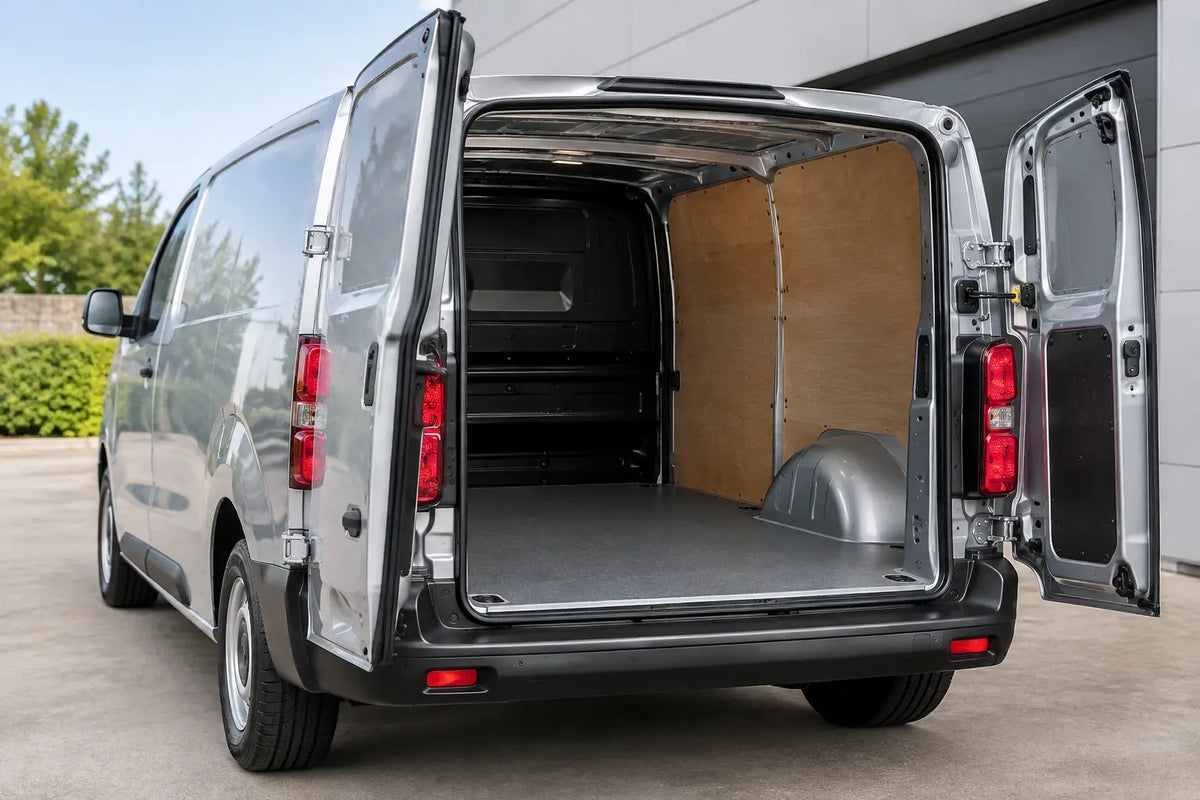
The right answer is usually a model-specific system that fits the Volkswagen Transporter properly rather than a mix of universal bits that never quite sit right. A fitted setup makes better use of space, looks cleaner, and is usually simpler to install. It also avoids the usual problems of awkward gaps, wasted corners and shelves that do not line up with the van’s shape.
If you use your Transporter hard every day, durability matters as much as layout. Strong shelving, sensible compartment sizes and secure fixing points are worth more than flashy extras. What matters is that the system keeps working after months of site use, loading and unloading.
That is also why many tradespeople buy from specialists who understand working vans rather than general storage sellers. A supplier focused on practical van setups, such as Vanshelves, is more likely to offer solutions built around real trade use rather than generic storage ideas.
A well-organised Transporter does not just look better when the doors open. It helps you start earlier, pack up faster and work with less hassle in between. If your van is where your day begins and ends, getting the organisation right is one of the simplest ways to make every job run better.