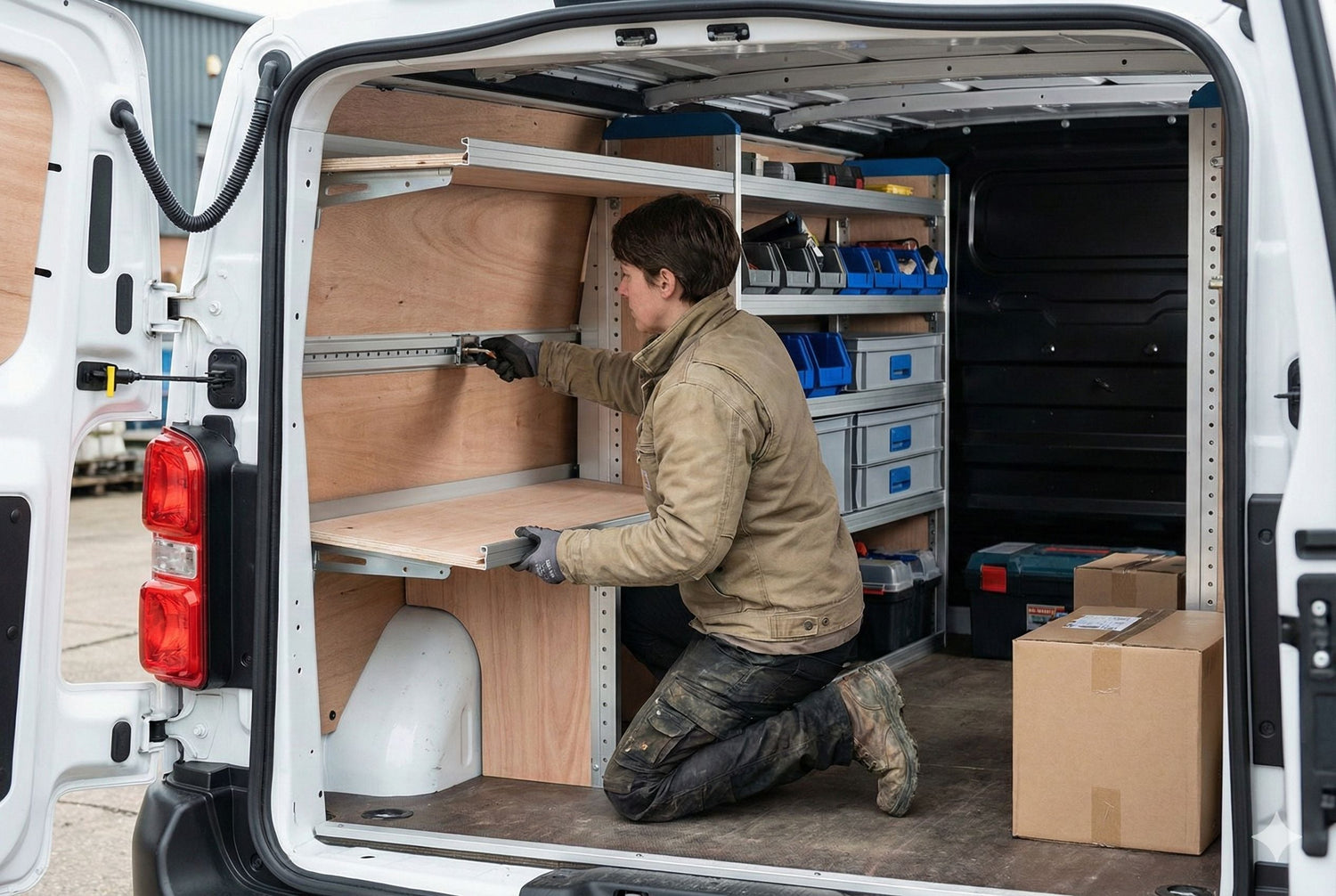











A plumber’s van does not stay tidy by accident. Between copper pipe, fittings, sealants, power tools, fixings and emergency call-out kit, the load builds up quickly - and when everything is stacked on the floor, every job starts slower than it should. The best van shelving for plumbers is the setup that keeps stock visible, tools easy to reach and heavier items stored safely without wasting payload or working space.
That sounds simple, but the right answer depends on how you work. A domestic maintenance plumber needs a different van layout from a heating engineer carrying larger tools, test equipment and bulky parts. The aim is not just to fit more in. It is to make the van work like a mobile workshop, so you spend less time searching and more time getting through the job list.
What makes the best van shelving for plumbers?
Good shelving for plumbing work needs to handle variety. You are rarely carrying one type of item. You have long materials, small consumables, hand tools, boxed fittings, sealants, drills, pipe slices, testing gear and probably a few parts left over from the previous day. If the shelving only works for one category, it will become cluttered fast.
The best systems usually combine open shelves for quick access, compartment storage for small items and enough flexibility to separate clean stock from used tools. Deep shelves can be useful for larger boxes and cases, but if everything disappears to the back, you lose the benefit. For most plumbers, a mix of shelf depths works better than making the whole van one size fits all.
Strength matters as well. Shelving takes daily knocks from toolboxes, cylinders, fittings and movement on the road. A flimsy setup might look acceptable on day one but loosen over time, especially if the van is working hard across multiple jobs per day. A properly built racking system should feel like part of the van, not an afterthought bolted in for appearances.
The layout matters more than the shelf count
One of the most common mistakes is choosing shelving by how much it holds on paper, rather than how it works in practice. More shelves are not automatically better. If they are too close together, tool cases will not fit. If they are too high, you will not use them properly. If they block floor space, loading larger items becomes a nuisance.
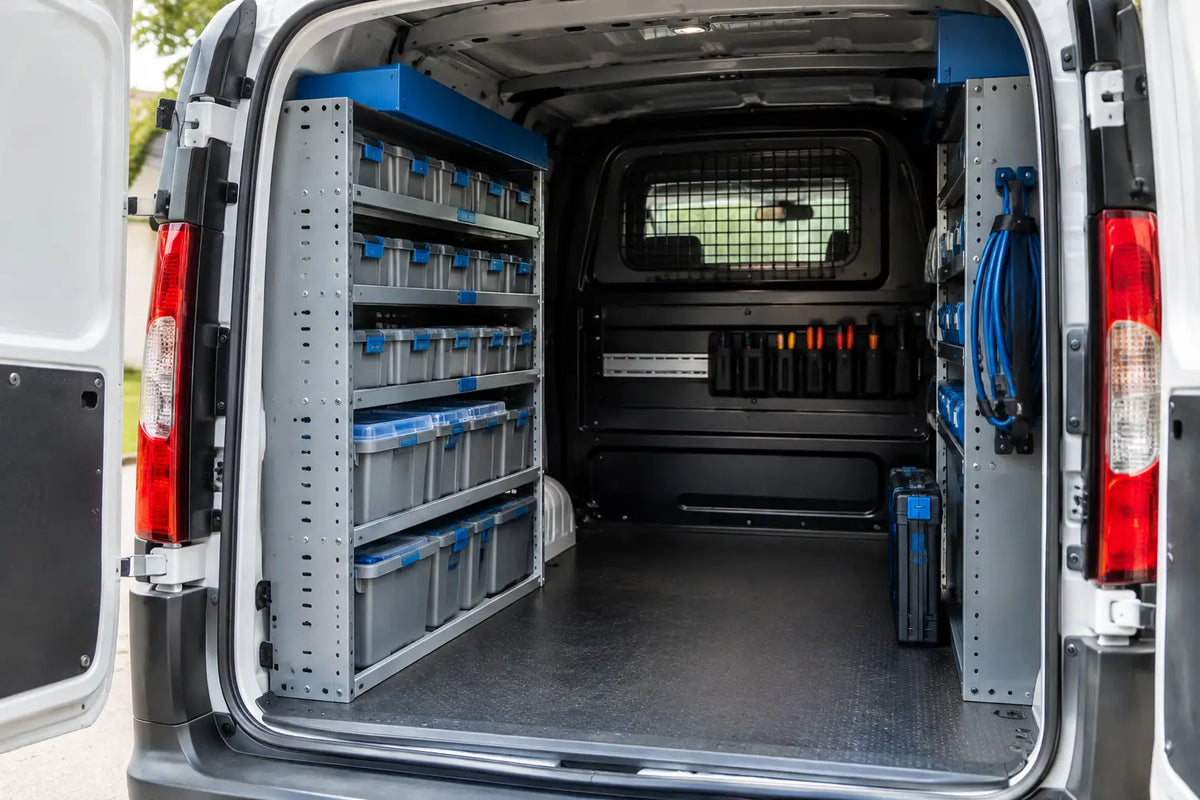
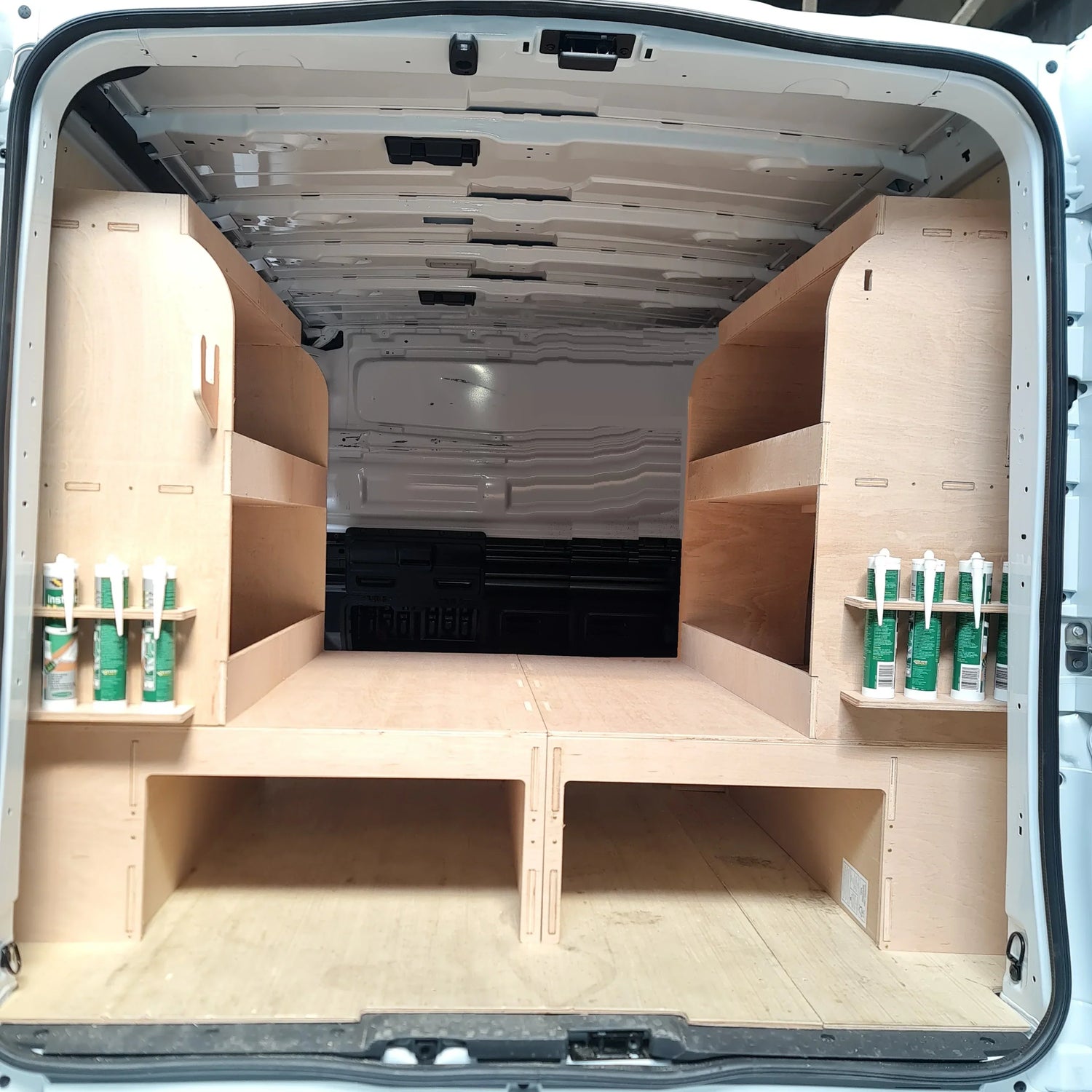
For plumbers, side shelving often works best when it leaves a clear central aisle and usable floor area. That gives you room for bigger items such as boilers, radiators, cylinders, waste pipe or packed orders without turning the back of the van into a squeeze. If your work includes installations as well as repairs, this balance becomes even more important.
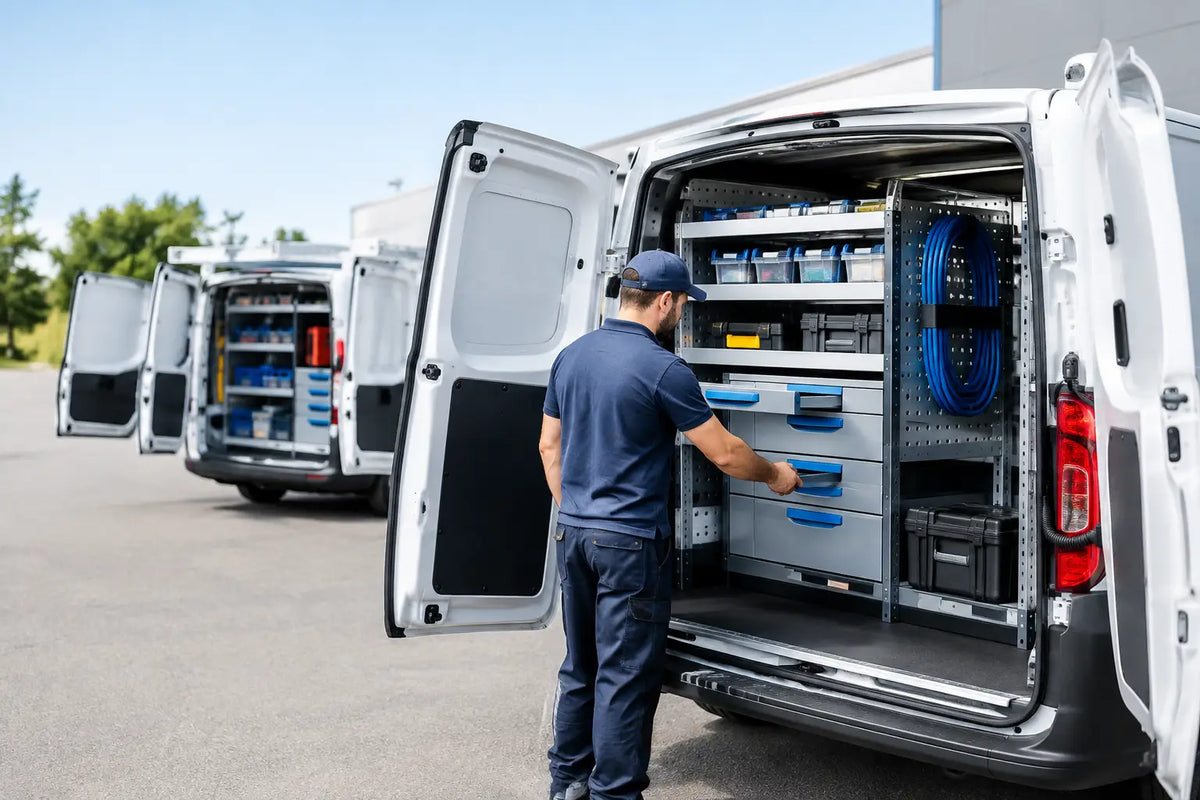
Rear access is another factor. Many plumbers work from the back doors first, especially on fast jobs where they need grab-and-go access to the core kit. In that case, frequently used tools and consumables should be positioned at the rear end of the shelving, not buried near the bulkhead. Less-used stock can sit further forward.
Choosing shelving around your type of plumbing work
Not every plumbing van carries the same load, so the best setup depends on the kind of work you do most days.
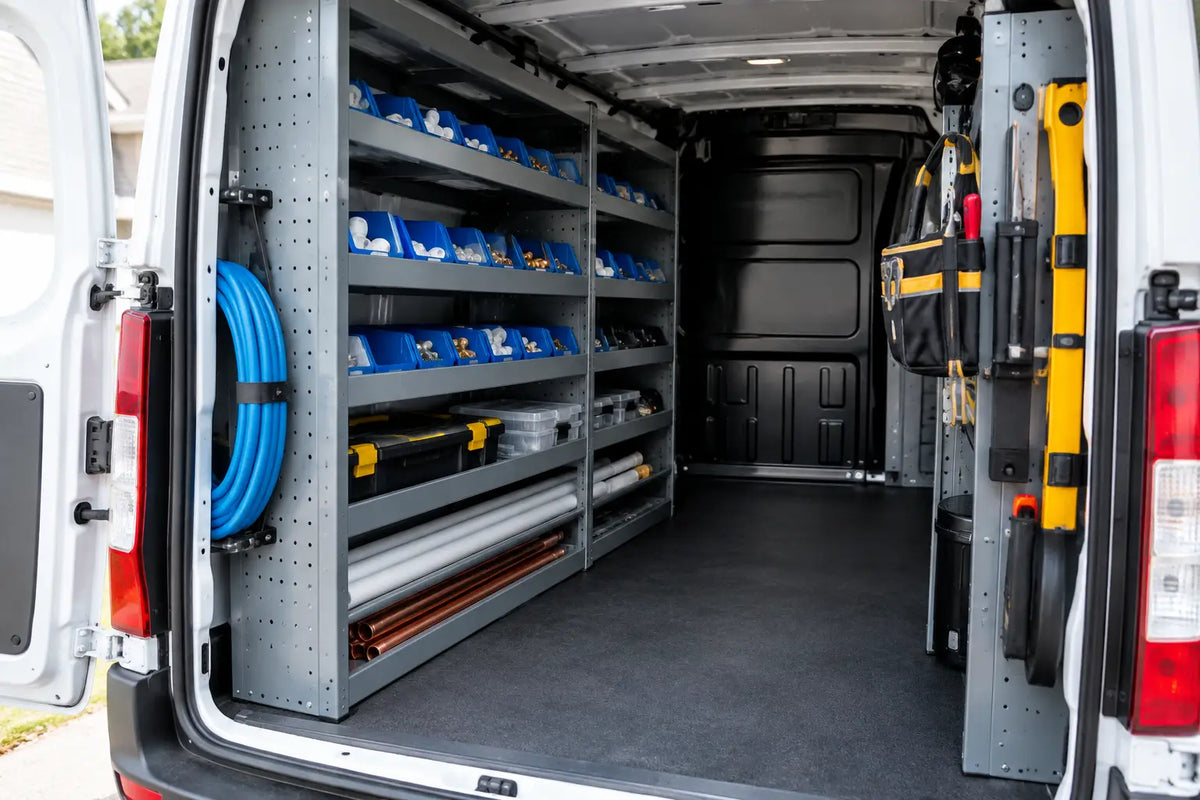
A maintenance plumber usually benefits from shelving with plenty of small-part organisation. Compression fittings, olives, valves, tap connectors, washers, screws and consumables can easily turn into a mess without dedicated compartments. Open shelving combined with storage bins or integrated boxes tends to work well here because it keeps common stock visible and easy to top up.
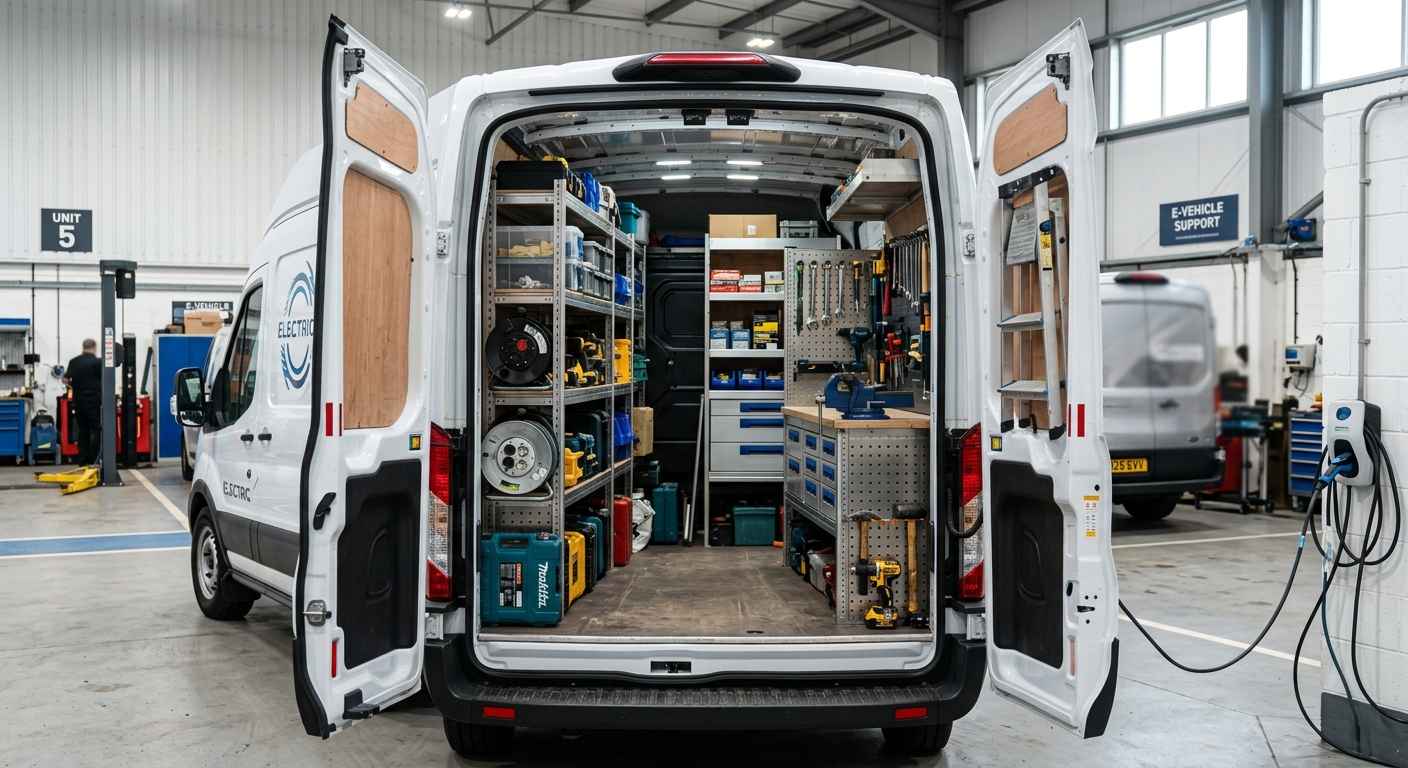
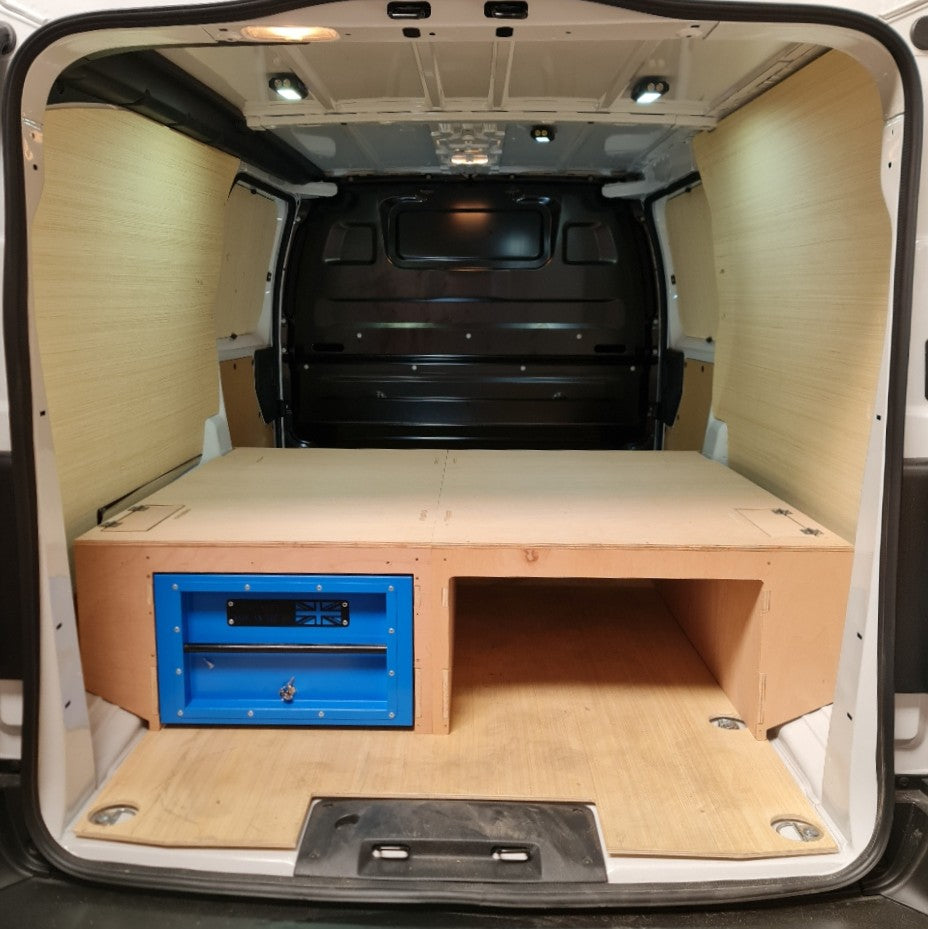
A heating engineer may need a stronger focus on tool storage, boxed components and room for larger diagnostic equipment. In that case, fewer but sturdier shelves can make more sense than lots of small sections. You may also need a false floor or additional lower storage to keep expensive gear secure while leaving the upper sections clear for daily-use parts.
If you handle bathroom installations or larger refurb work, flexibility becomes the priority. You need shelving that stores hand tools and fittings neatly, but still leaves enough open space for adhesives, pipe lengths, waste fittings and larger delivered items. This is where a vehicle-specific setup earns its keep, because generic shelving often wastes awkward spaces around wheel arches and door openings.
Van-specific shelving beats generic fitting
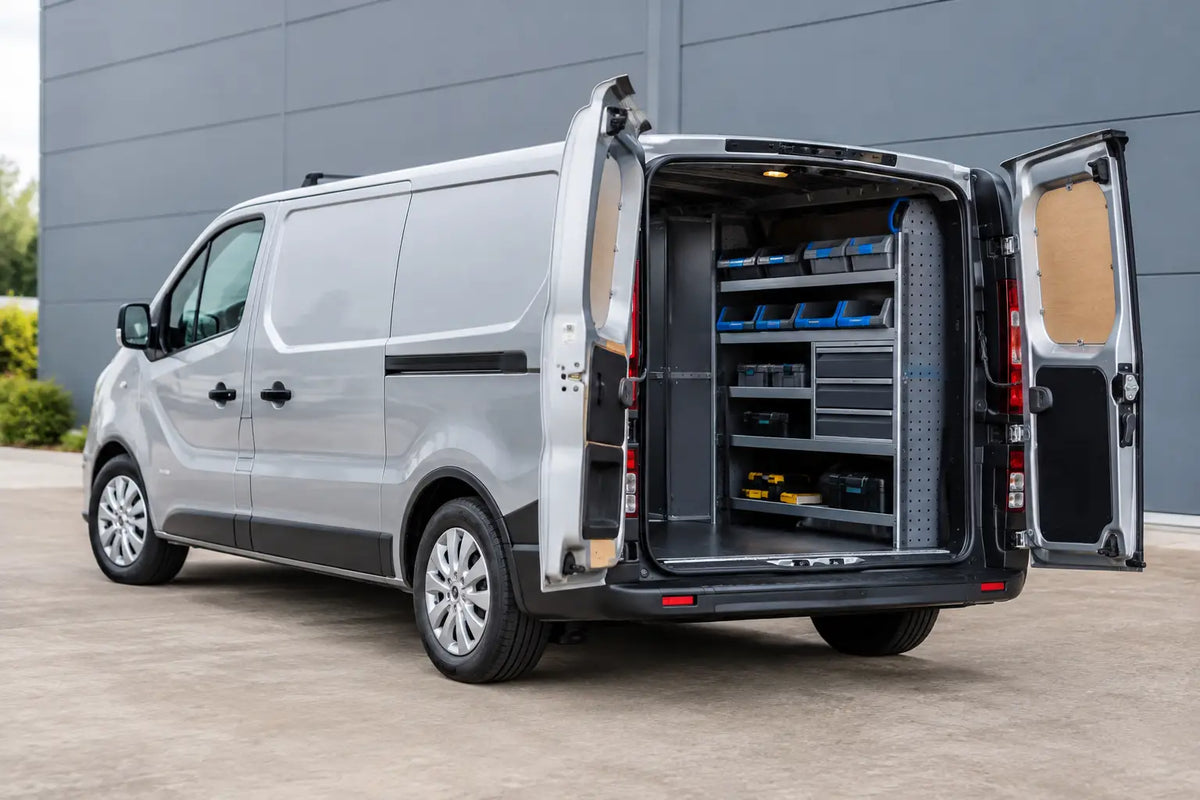
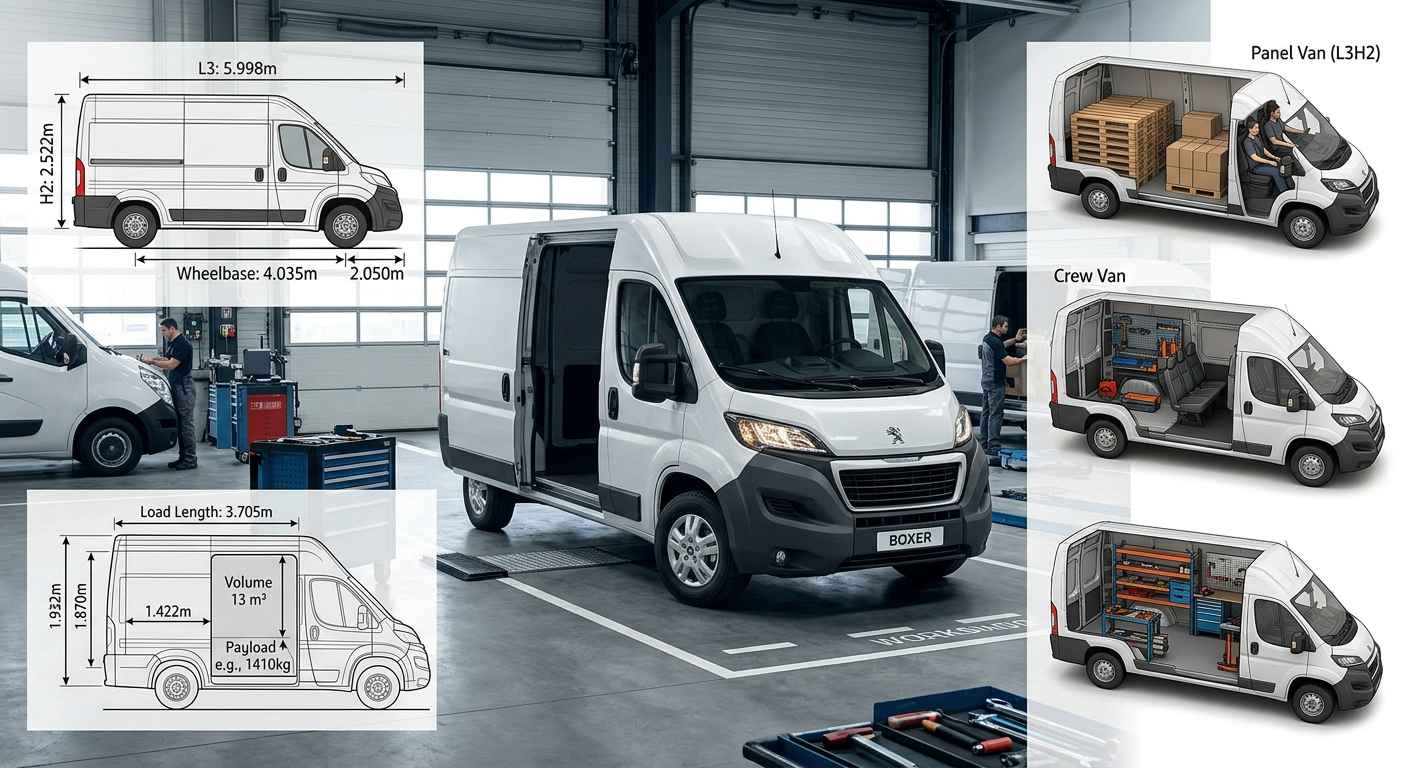
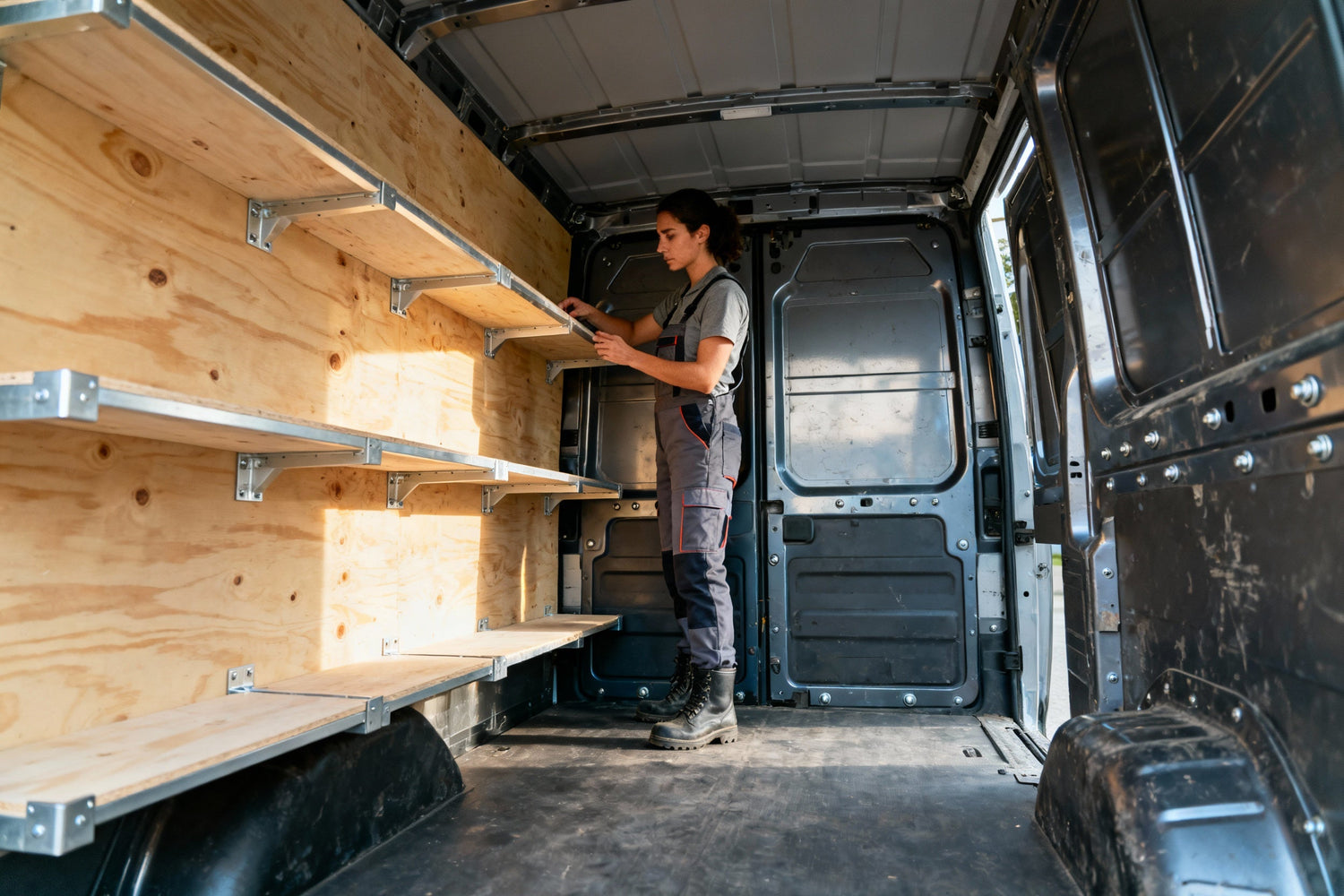
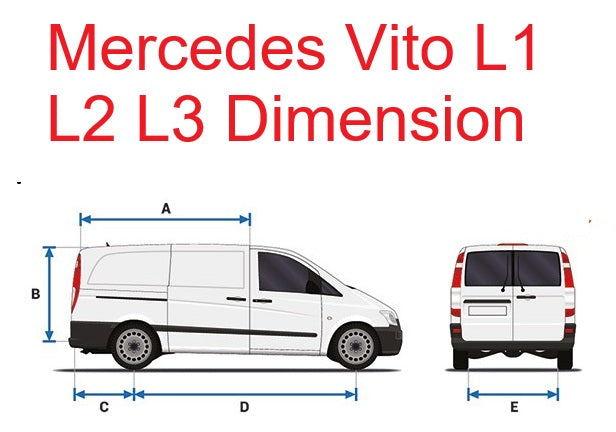
A van is a workspace, not a blank box. The shape of the side panels, door openings, wheel arches and roofline all affect what shelving will actually fit and how usable it will be once installed. That is why model-specific van shelving is usually the better choice for plumbers who want a clean fit and proper day-to-day function.
A system designed for a Transit Custom will not use the space in the same way as one built for a Vivaro, Trafic or Transporter. Even vans that look similar from the outside can have internal differences that affect shelf width, height and depth. When shelving matches the van properly, you get better use of space, a neater install and fewer compromises around access.
That matters when every inch counts. Wasted gaps may not sound serious, but across an entire van they reduce usable storage and make it harder to organise stock properly. For tradespeople working full weeks from the van, that inefficiency adds up quickly.
Materials, weight and payload
Plumbers already carry a fair amount of weight. Tools, fittings, parts and water-related equipment can push payload faster than expected, so shelving needs to be strong without adding unnecessary bulk.
This is where material choice matters. Heavy-duty construction is important, but there is always a trade-off between outright strength and keeping the van practical to load. Well-designed shelving should support real working use while helping you protect payload for the gear that earns money.
It is also worth thinking about how the weight sits in the van. A smart shelving layout keeps heavier items lower down and spreads the load sensibly. That helps with safety, handling and everyday convenience. High shelves are better for lighter consumables and parts you need often, not for anything heavy or awkward to lift.
Small-item storage is not optional for plumbers
For many trades, shelving alone is enough. For plumbers, it rarely is. Small components are a large part of the job, and they become a source of wasted time if they are not organised properly.
The best van shelving for plumbers usually includes a plan for bins, trays or compartment boxes. That could mean dedicated areas for elbows, couplers, washers, clips, valves, PTFE tape, screws and sealants. The exact format matters less than being able to find what you need quickly and restock it without guesswork.
Visibility is key. If the van forces you to open three boxes to find one fitting, the system is slowing you down. A better setup reduces those small delays that stack up over the course of the week. It also helps avoid overbuying parts you already had buried somewhere under a pile of tools.
Think beyond shelving alone
A well-organised plumbing van often needs more than side racks. False floors, pipe carriers, drawer units and worktop-style surfaces can all improve how the vehicle functions.
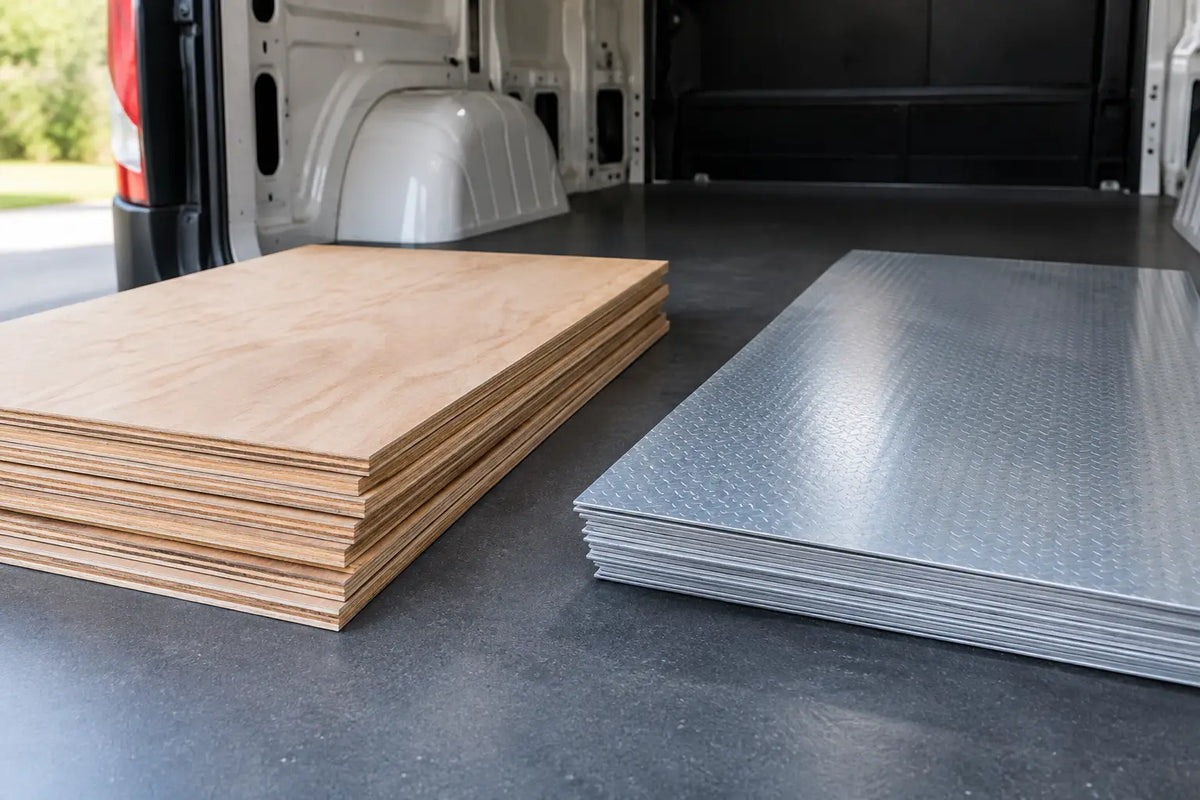
A false floor is especially useful if you carry both small stock and larger equipment. It creates hidden storage below while leaving the main floor area clear and tidy. That can be ideal for longer tools, spare parts or items you do not need on every stop.
Accessories can make a difference too. Sealant holders, wipe dispensers, paper roll mounts and glove box organisers are not just extras for the sake of it. In a busy van, they reduce clutter and keep the basics exactly where they should be. For plumbers working on customer property all day, that cleaner setup also looks more professional.
What to look for before you buy
Ease of installation matters, especially if the van cannot be off the road for long. A good storage system should be straightforward to fit and built for working use, not a weekend project full of modifications. If it is model-specific, that usually makes the process cleaner and the end result stronger.
It is also worth checking whether the layout matches the tools and stock you actually carry, not the tools you think you carry. Be honest about what lives in the van every day. If half your kit ends up on the floor because the shelving only suits small boxes, it is the wrong system.
Look for durability, sensible access and enough flexibility to support your workflow as jobs change. The cheapest option is not always the best value if it needs replacing or if poor organisation costs you time every week. On the other hand, there is no point paying for a huge setup if your work is mostly reactive call-outs and light maintenance. It depends on the van, the trade mix and how much stock you hold.
For UK plumbers who want a more efficient mobile workspace, the right answer is usually a van-specific shelving setup with strong core racks, practical small-part storage and enough open floor area to stay useful on real jobs. That is the balance worth getting right. A tidy van is good. A van that saves you time every single day is better.