










A small van can carry a serious workload, but only when every tool, fitting and consumable has a proper place. The right small van storage solutions do more than make the load area look tidy. They cut down the minutes lost hunting for a driver bit, sealant tube or spare fitting, protect expensive equipment in transit, and help you arrive on site ready to work.
For plumbers, electricians, fitters, maintenance engineers and other mobile trades, the aim is not to pack the van as tightly as possible. It is to build a working layout that suits the jobs you carry out most often, keeps weight under control and remains practical at the end of a long day.
Start with the work, not the empty load space
A common mistake is choosing racking based on how much it appears to hold. Capacity matters, but access matters more. If you use an item every day, it should not sit behind a stack of boxes or underneath longer materials. A van layout should follow your working routine from the rear and side doors through to the cab.
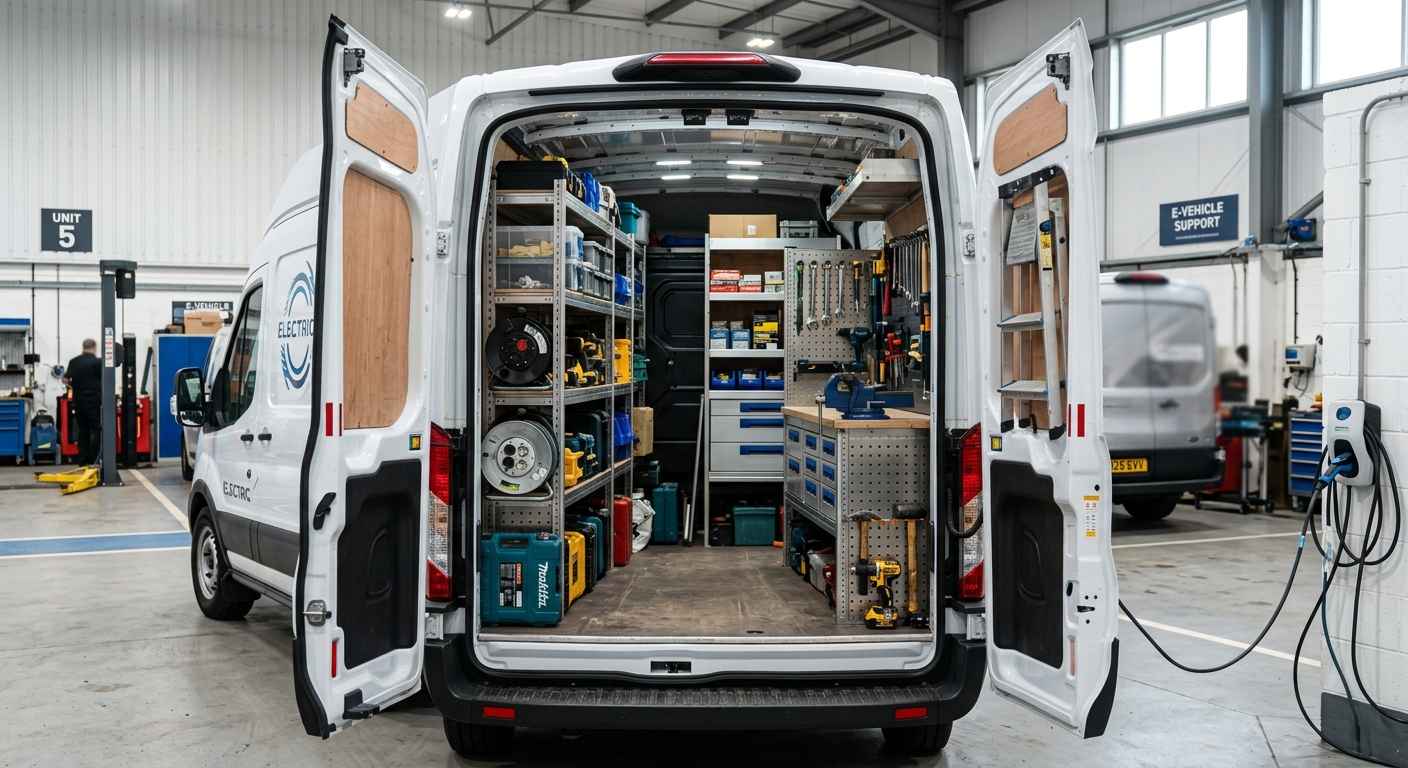
Think about what you reach for on a typical call-out. Hand tools, fixings, test equipment, sealants and PPE usually need fast access. Larger power tools, stock and occasional-use equipment can sit lower down or further into the vehicle. This simple distinction stops the most useful shelves becoming a dumping ground for everything else.
It also helps to separate clean items from dirty ones. Electrical test gear, paperwork and finished fittings need protection from muddy boots, offcuts and wet materials. A dedicated compartment, lidded box or cab organiser can prevent small problems from becoming damaged equipment or missing stock.
Before buying anything, measure the usable load area and identify the features that affect a layout: wheel arches, tie-down points, side-door position, bulkhead shape and rear-door access. Van make, model, wheelbase and year all matter. Model-specific shelving and racking are a sensible starting point because they are designed around the available space in that particular vehicle. Always check the listed vehicle compatibility before ordering.
Small van storage solutions that earn their space
In a compact van, every storage choice needs a clear job. The most effective layouts usually combine shelving, secure lower storage, a protected floor and a few well-chosen accessories rather than relying on one oversized unit.
Use shelving for visible, everyday stock
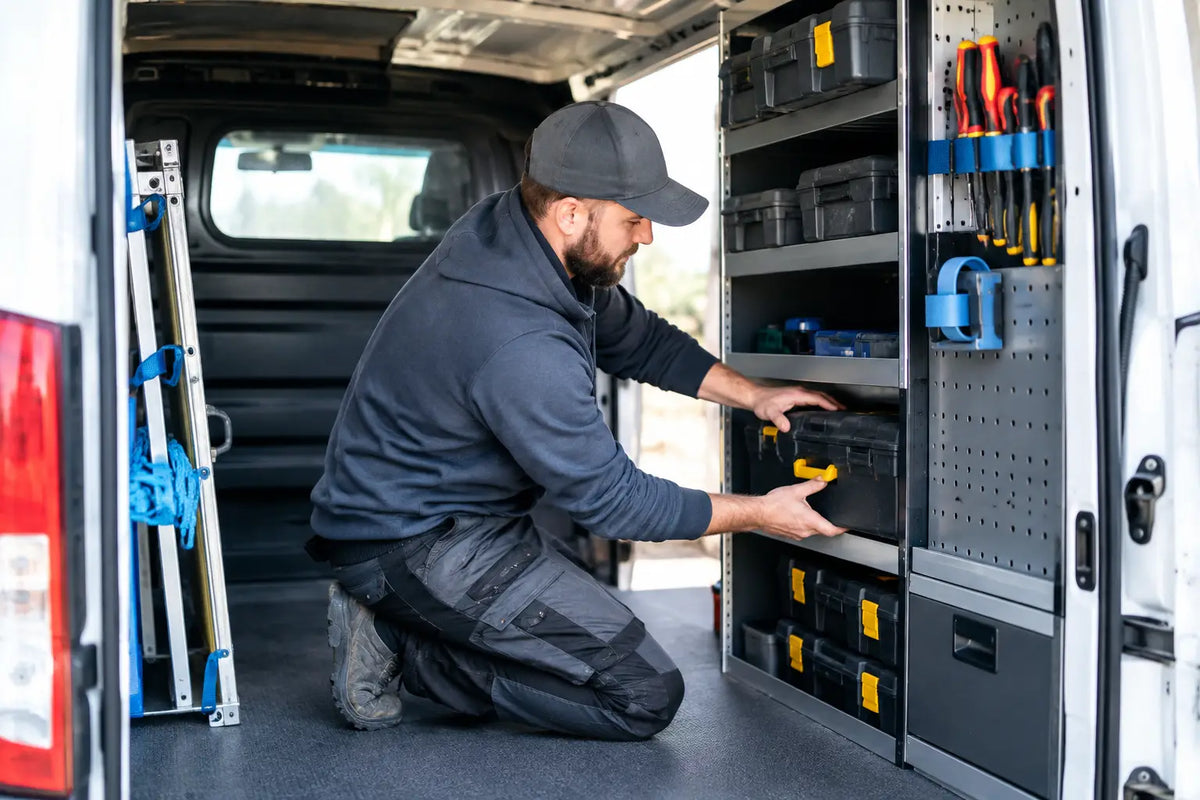
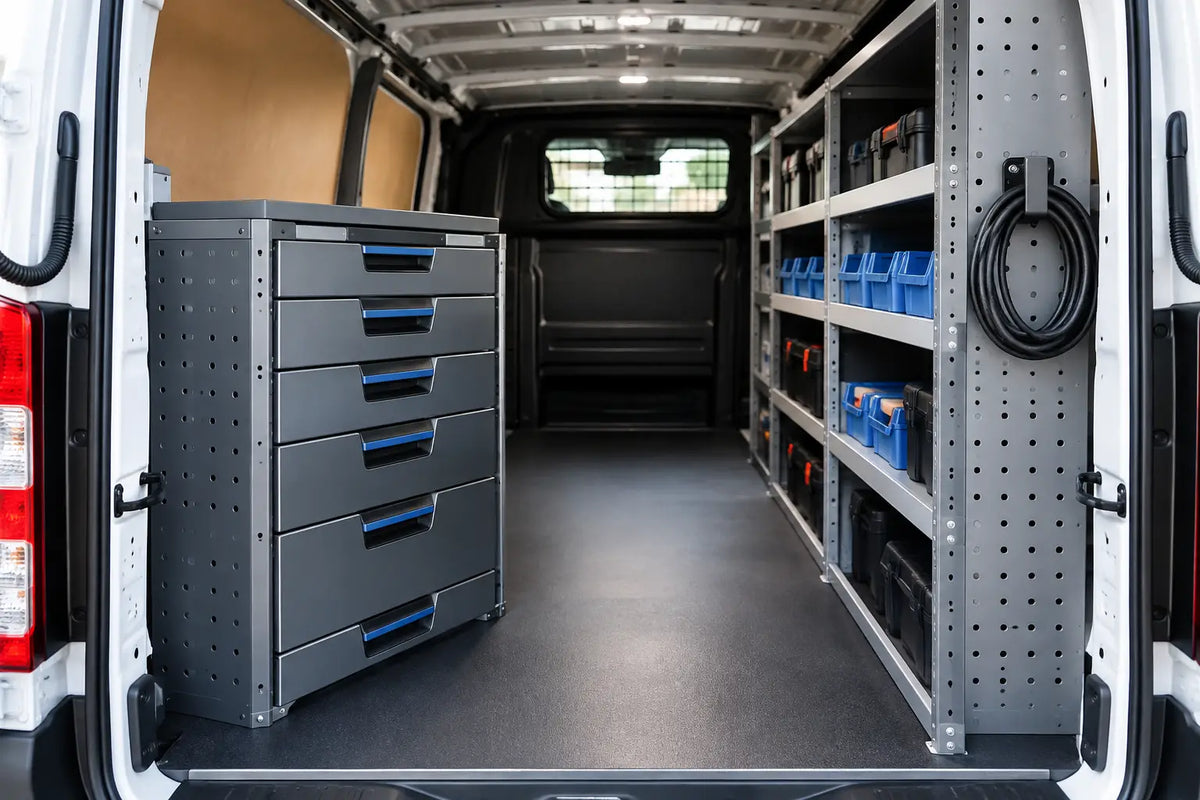
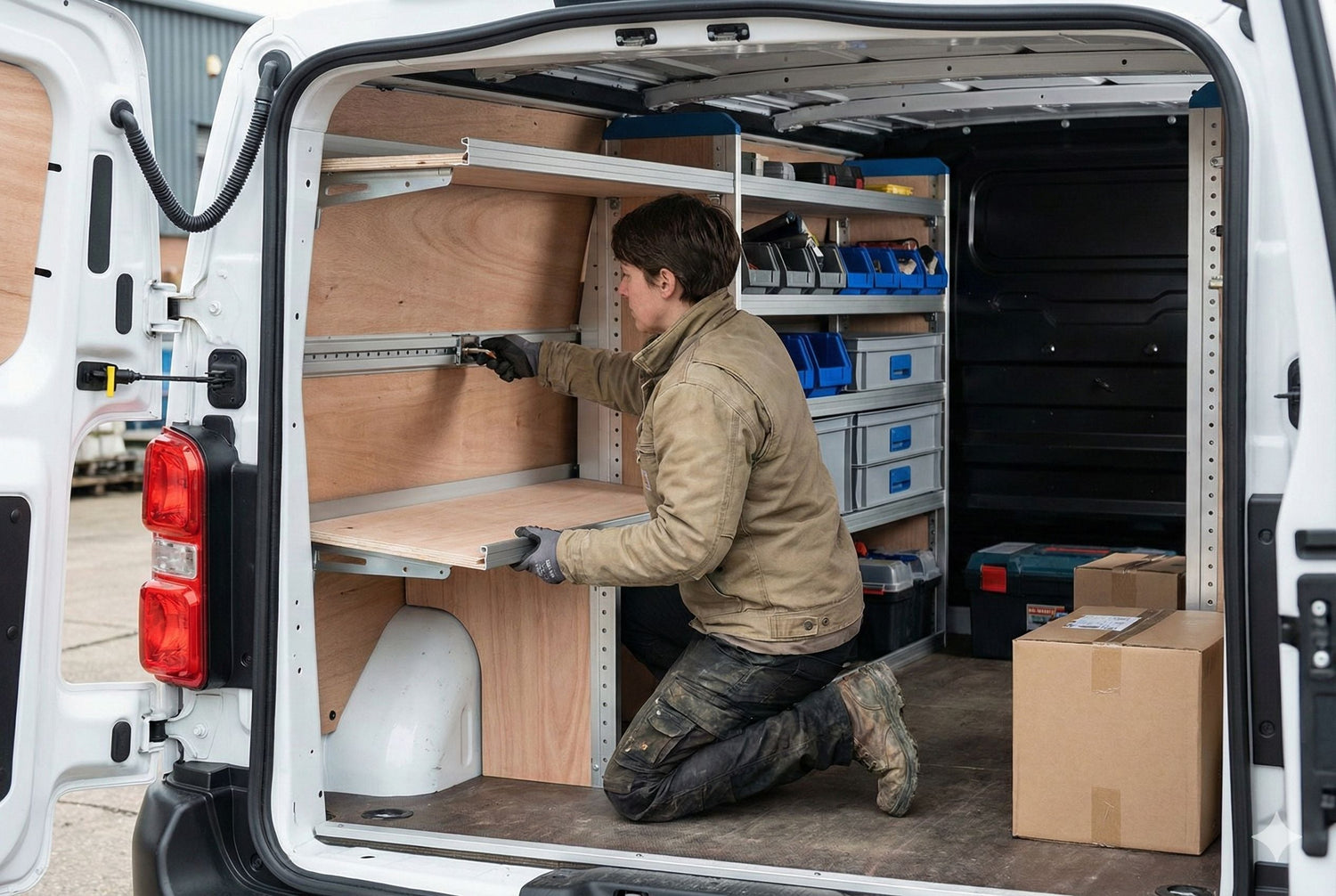
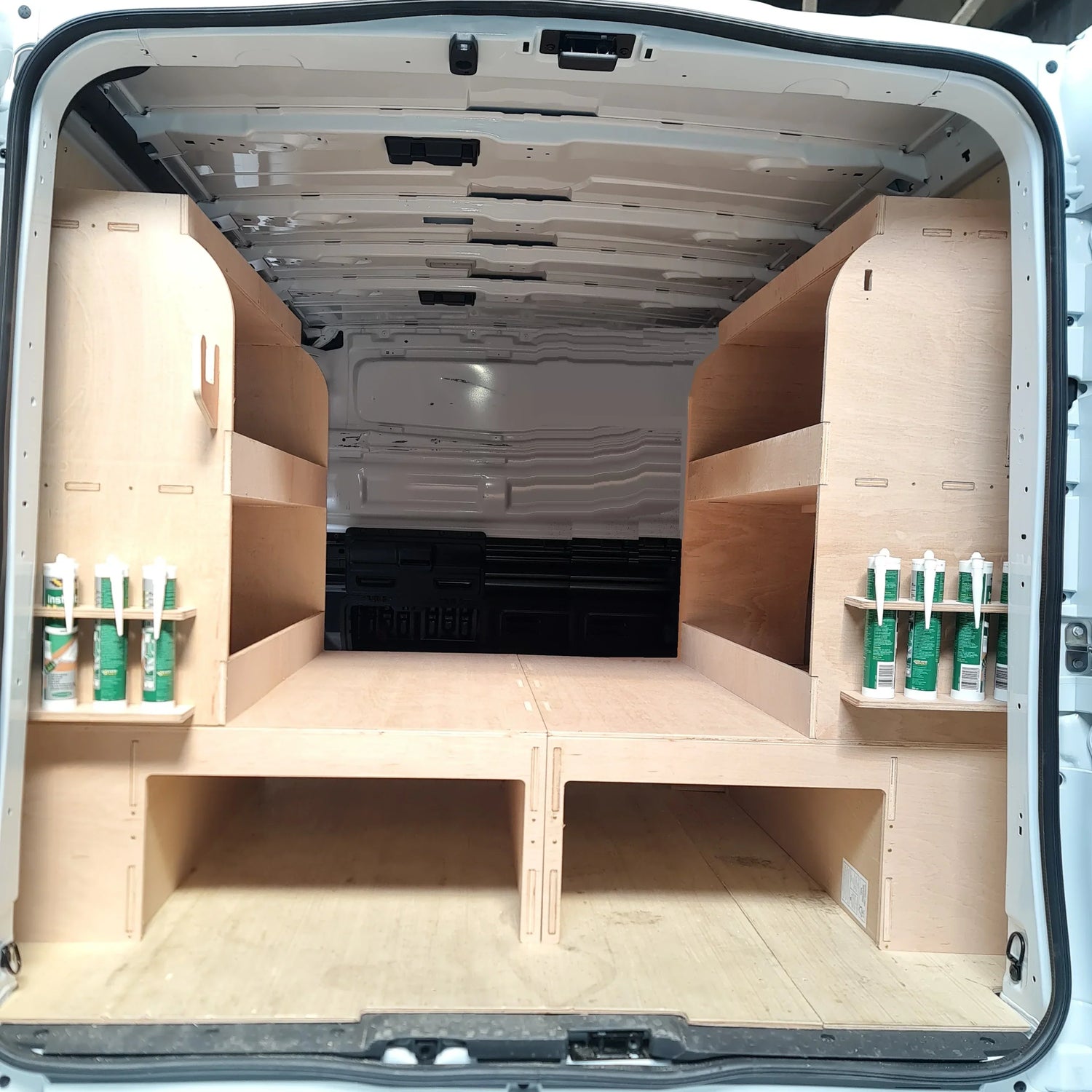
Open shelving is ideal for fittings, cases, boxed parts and regularly used consumables. It gives you a quick visual stock check before leaving for a job and makes it easier to put items back where they belong. Position shelves so that commonly used items are reachable from the rear or side door without climbing into the van.
The trade-off is that open shelves need discipline. Loose stock can move around, and a shelf full of mixed boxes soon becomes difficult to manage. Use labelled bins or consistent box sizes where possible, and avoid overfilling compartments. If a box has to be pulled out to see what is behind it, the shelf is already working against you.
Keep heavy equipment low and secure
Power tools, cable drums, batteries and heavier cases should sit low in the load area. This improves stability and reduces the effort of lifting equipment down from a high shelf. It also helps prevent damage when the van is braking, turning or travelling over rough ground.
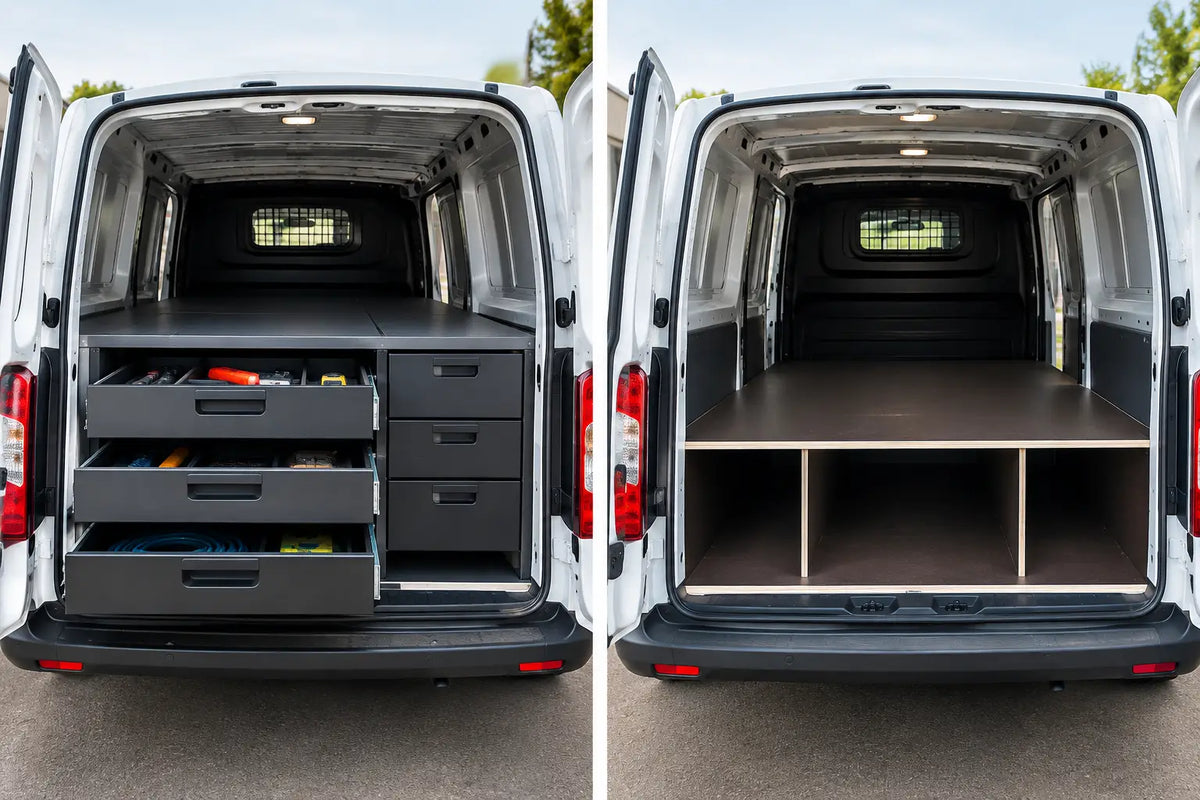
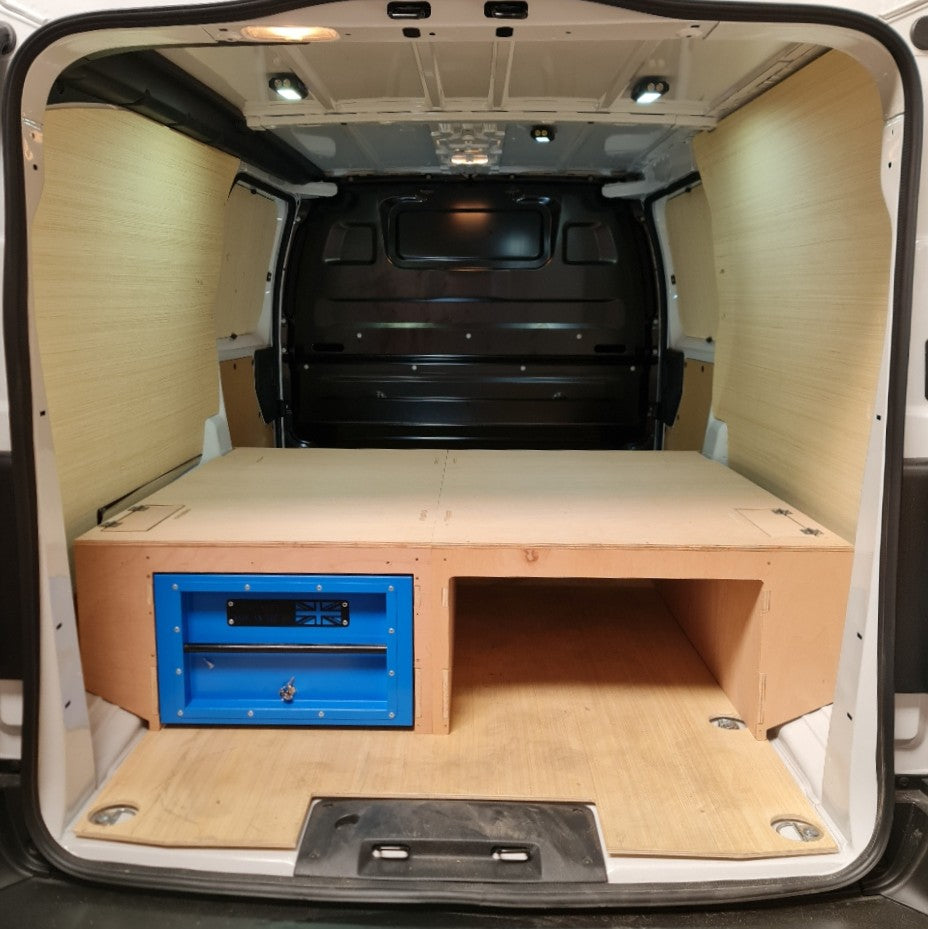
False floors can create useful underfloor storage for longer or flatter items while leaving the main floor clear for bulkier equipment. They are particularly useful when you need to carry tools and materials in the same vehicle, but the available height must be considered. In a small van, raising the floor can reduce vertical clearance for tall cases or larger loads. Measure the equipment you carry, not just the van.
Whatever system you choose, make proper use of suitable load restraint and the vehicle's existing securing points. Shelving keeps items organised, but it should not be treated as a substitute for securing heavier loads safely.
Give long materials a defined route
Lengths of conduit, trunking, timber, copper tube or trim can quickly take over a small load area. Leaving them loose on the floor makes access harder and increases the chance of damage to other tools. A planned route for long items, whether along one side, within a false-floor channel or in a suitable internal carrier, keeps the rest of the van usable.
This is one area where the right answer depends on your trade. An electrician carrying conduit may need easy side-door access. A joiner may prioritise a clear central floor for tool cases and sheet materials. Do not copy another trade's layout simply because it looks neat. Build around the materials you actually transport.
Use accessories to remove daily annoyances
Small accessories often make the biggest difference because they deal with the items that are used constantly and easily misplaced. Sealant holders, wipe dispensers, glove box organisers and dedicated holders for frequently used supplies can stop clutter spreading across shelves and floor space.
These additions are most useful when they are placed at the point of use. Wipes near the rear door are practical for cleaning hands before getting back into the cab. Sealants belong close to the tools used to apply them. Small fixings and consumables need a repeatable home, not a spare corner of a shelf.
Plan access from every door
A small van can feel much larger when both rear and side doors are used properly. Rear access often suits main tool storage and heavier cases, while the side door can work well for quick-grab consumables, PPE or equipment needed during short stops.
Stand at each door and picture a normal job. What do you need first? What will be used several times? What can stay inside until the end of the day? This exercise often reveals that an item stored neatly is still in the wrong place.
Be realistic about how often the van is parked in tight streets, customer driveways or busy sites. A layout that only works with both rear doors fully open may be less convenient than one that lets you grab essentials from the side. Access is part of productivity, particularly for service engineers and tradespeople completing several smaller jobs a day.
Protect the floor and keep the load area workable
The floor takes the hardest treatment in any working van. Tool cases slide across it, dirty materials are loaded onto it and heavy equipment is dragged in and out. A properly fitted false floor or durable floor system gives the load area a more controlled base and can help keep equipment from sitting directly on a worn, uneven surface.
It also sets the standard for the rest of the organisation. Once the floor is protected and clear, it is easier to see what should be stored on shelving, what needs a fixed holder and what should not be carried at all. That last point matters. A van full of rarely used items costs payload, takes up room and makes regular tools harder to reach.
At the end of each week, remove rubbish, broken packaging, offcuts and duplicate stock. Then replace the items that have drifted out of position. This is not housekeeping for its own sake. It is a quick reset that keeps Monday morning from starting with a search for tools.
Balance payload, durability and budget
The cheapest way to organise a van is not always the best value. A basic setup that does not suit the vehicle or your workload may need replacing once boxes begin moving around and access becomes frustrating. Equally, there is no point paying for storage capacity you will never use.
Start with the areas that solve the biggest daily issues: secure shelving for core stock, safe storage for heavier tools and a practical place for long materials. Add accessories once the main layout is working. This phased approach keeps the spend focused and lets you refine the van around real use.
Keep an eye on payload too. Racking, false floors, tools, materials and passengers all contribute to the vehicle's working weight. Check your van's payload information and account for the equipment you carry on a typical busy day. A well-organised van should improve how you work, not create an avoidable loading problem.
Choose a layout you can maintain
The best small van storage solutions are not the ones with the most compartments. They are the ones you can keep organised when the day runs late, the weather is poor and you need to leave for the next job. Clear zones, sensible shelf heights and storage matched to your van model make that far easier.
For vehicle-specific racking, shelving, false floors and practical workshop accessories, Vanshelves helps working van owners focus on the equipment that suits their make and model. Start with the tools and materials you use every day, give them a fixed place, and let the rest of the load area work around them.