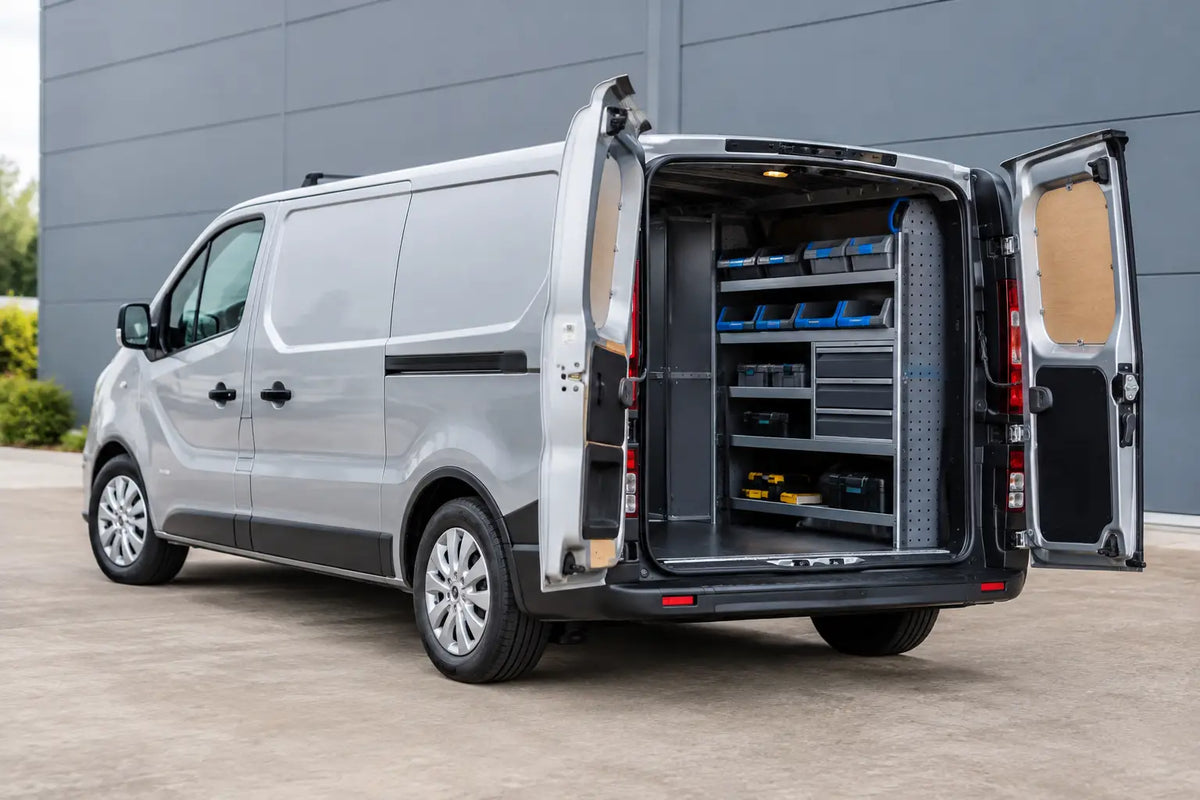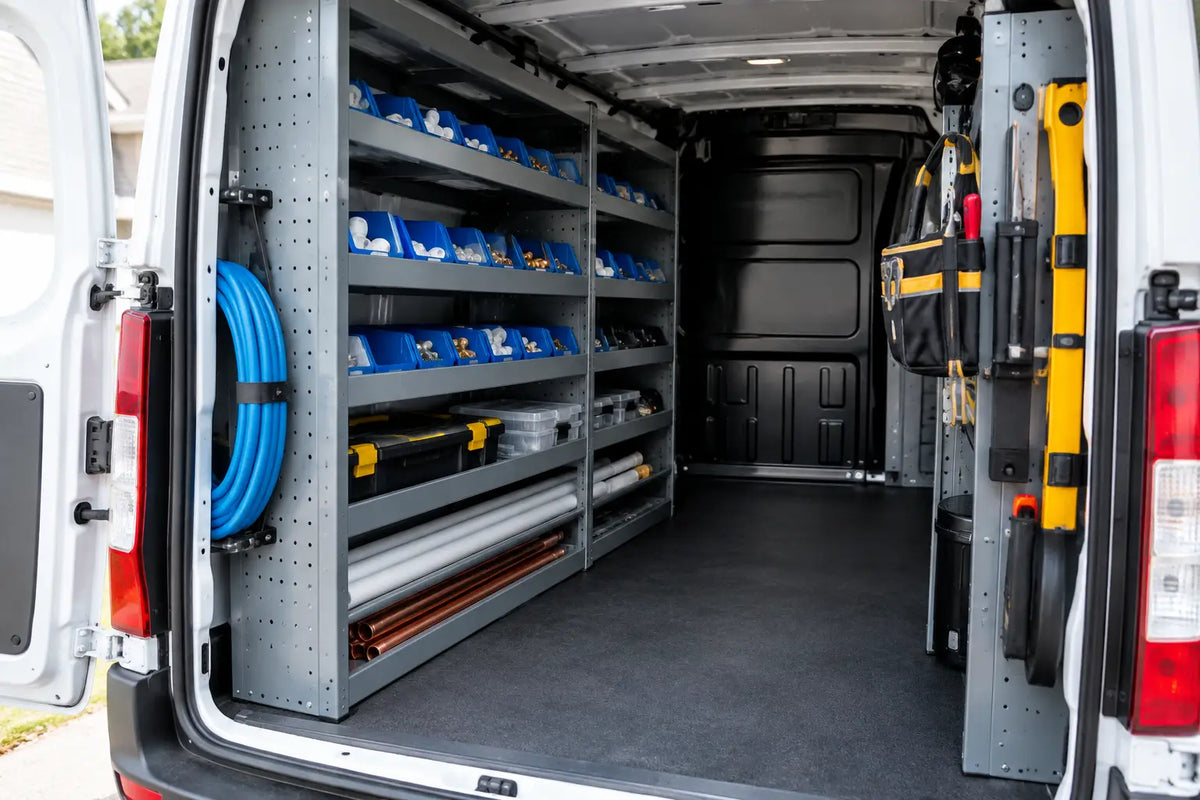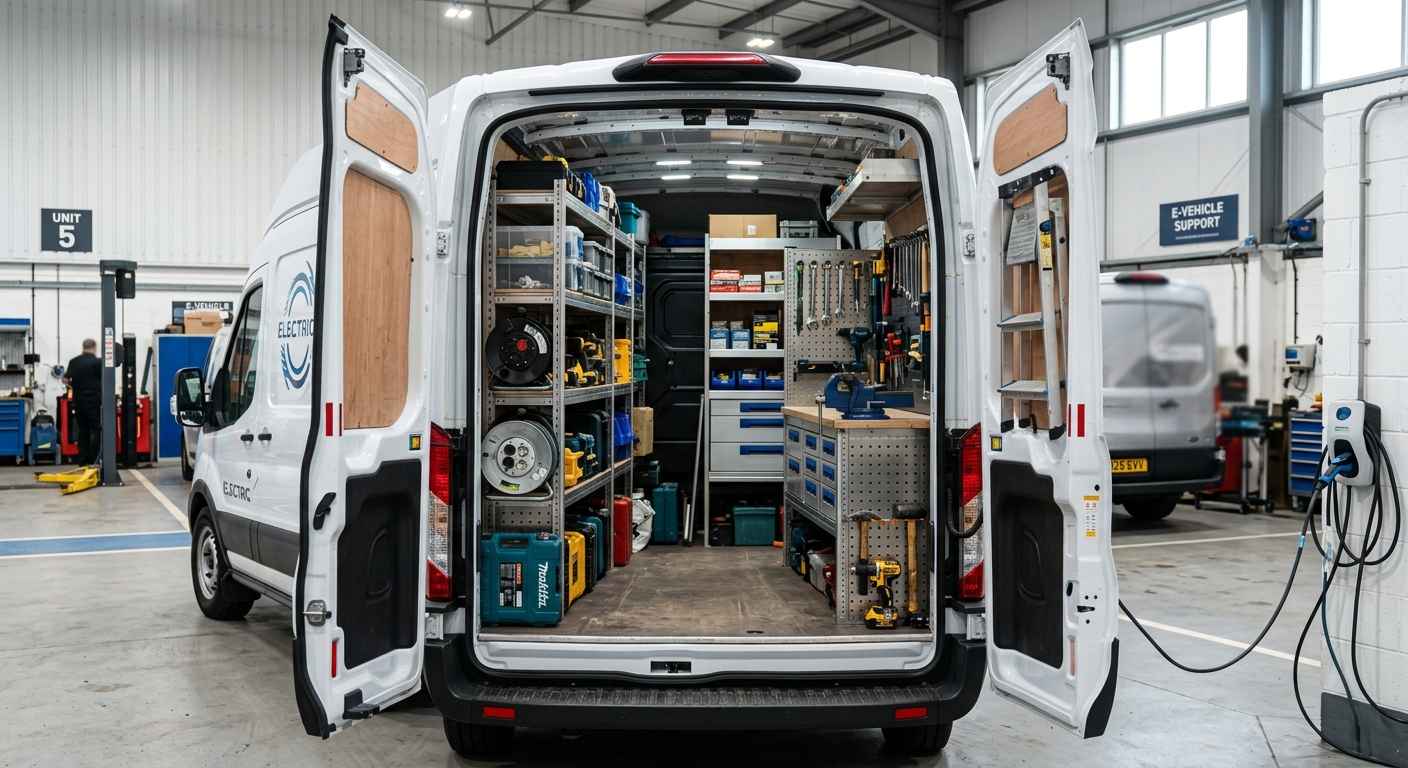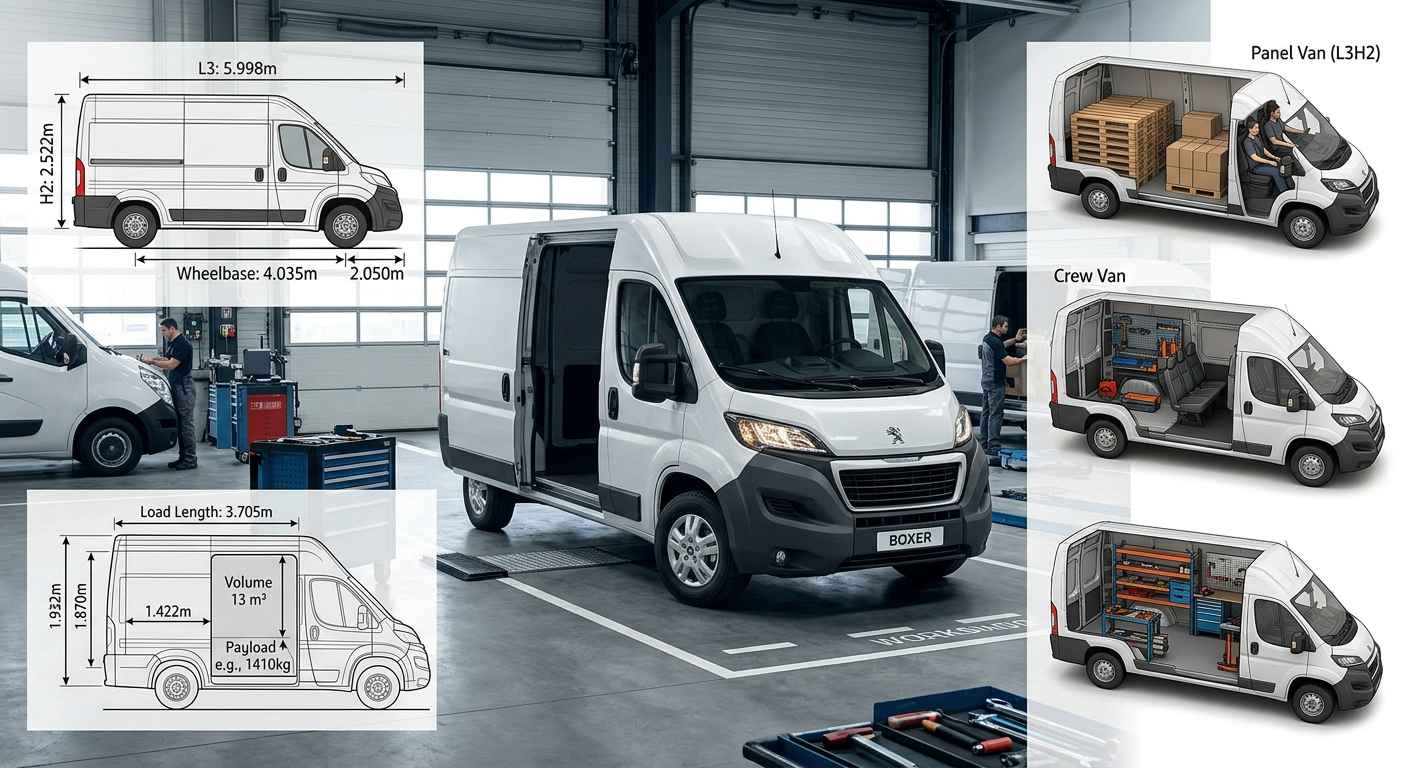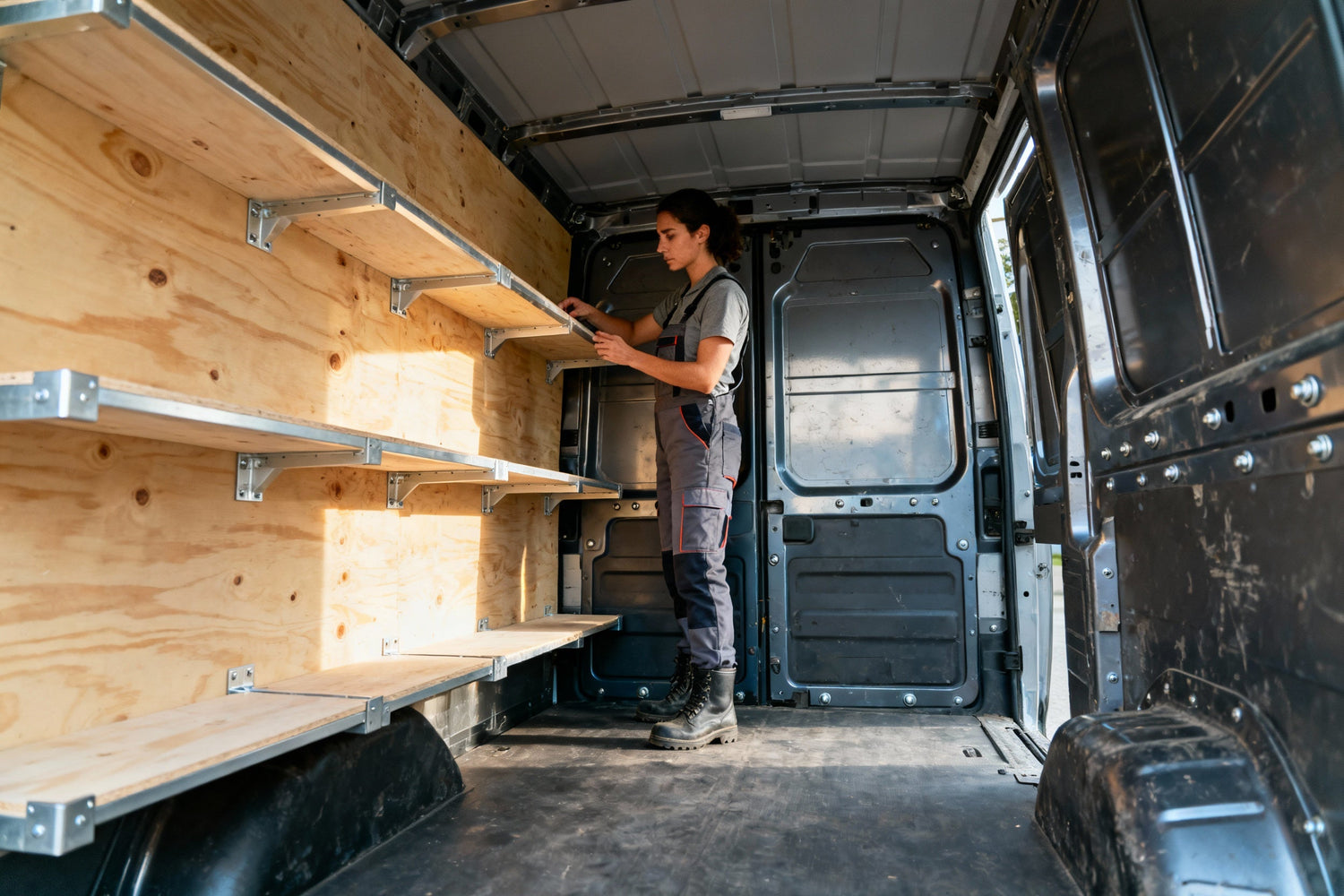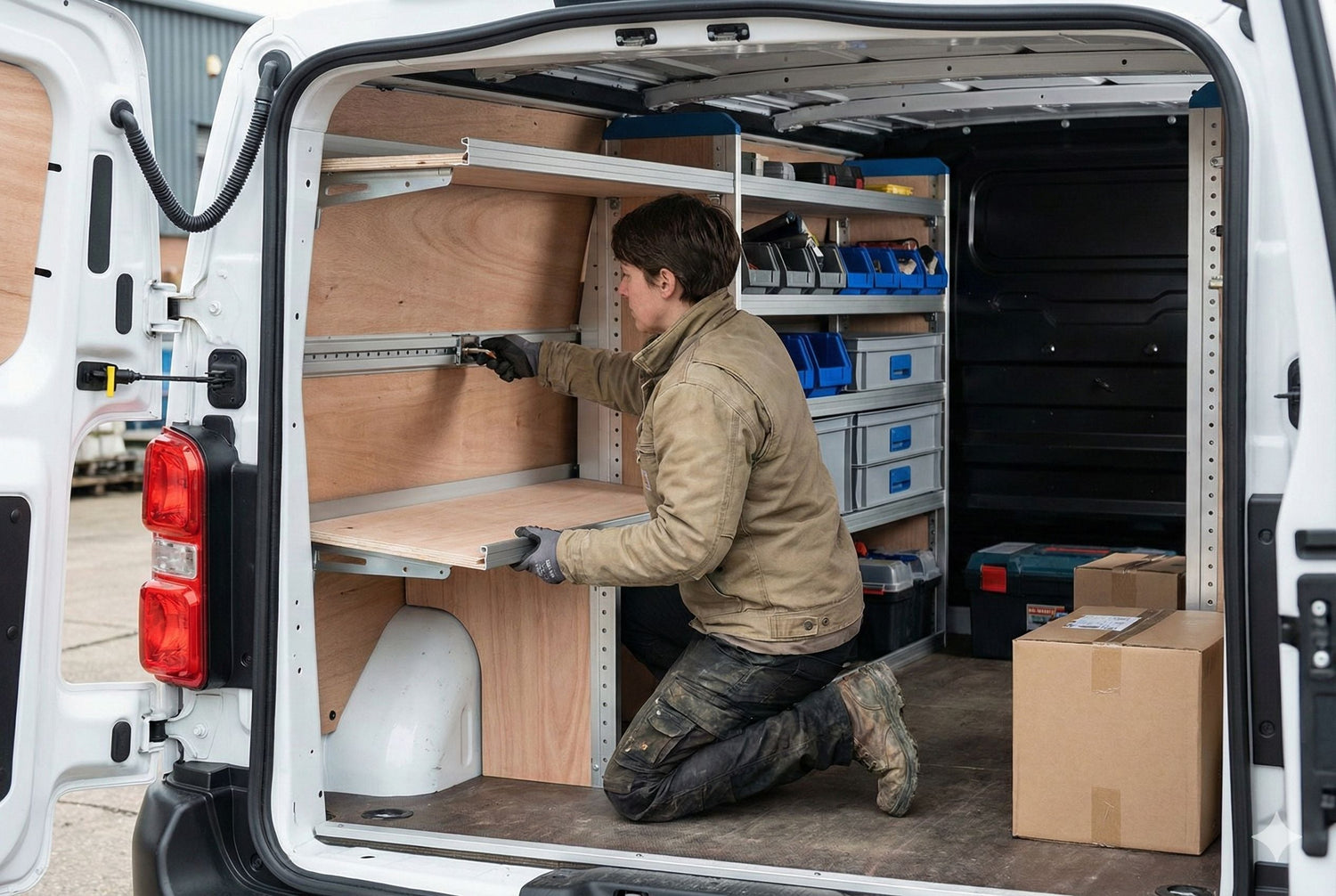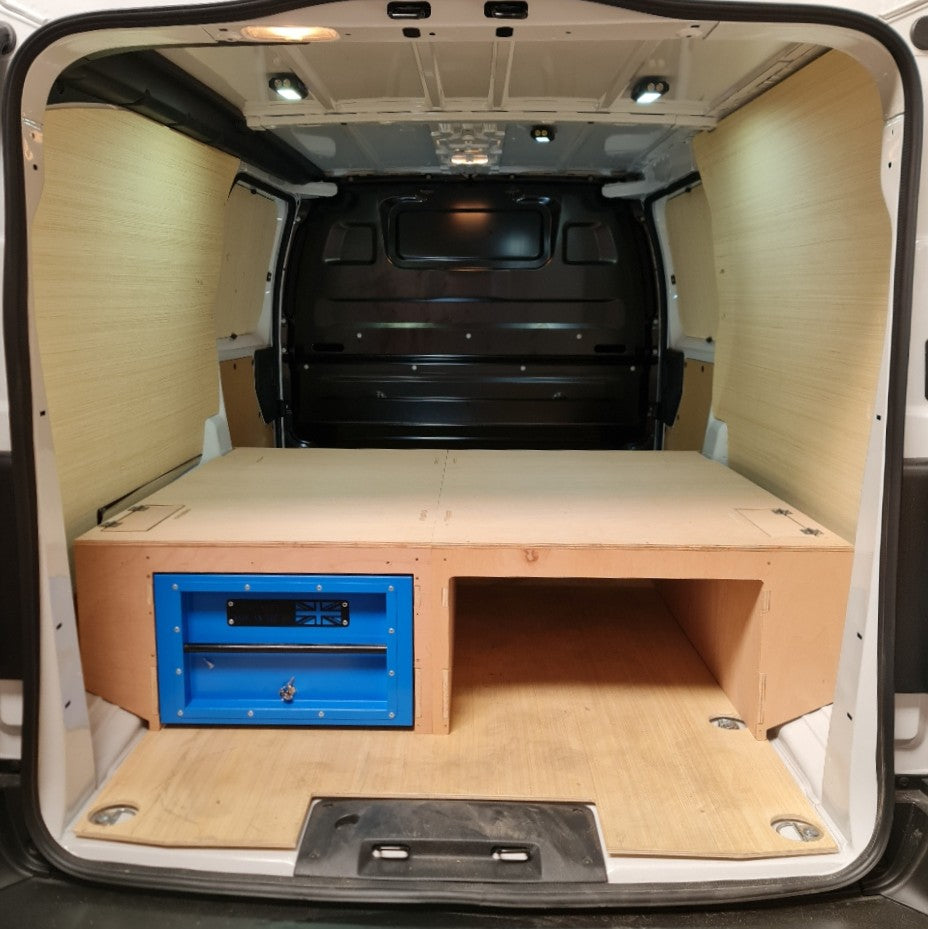







A van floor takes more punishment than most parts of the load space. Toolboxes slide across it, plasterboard corners catch it, wet boots stand on it and heavy kit is loaded day after day. Choosing between the best van floor options is not about making the back of the van look tidy alone. It is about protecting the vehicle, keeping equipment stable and creating a dependable base for a properly organised mobile workspace.
For many tradespeople, a vehicle-specific false floor or floor liner is the sensible starting point. It protects the original metal floor, gives shelving and accessories a more practical foundation, and makes the load area easier to clean and work from. The right material depends on what you carry, how often you load it, and whether the van needs to support racking, drawers or loose equipment.
Best van floor options at a glance
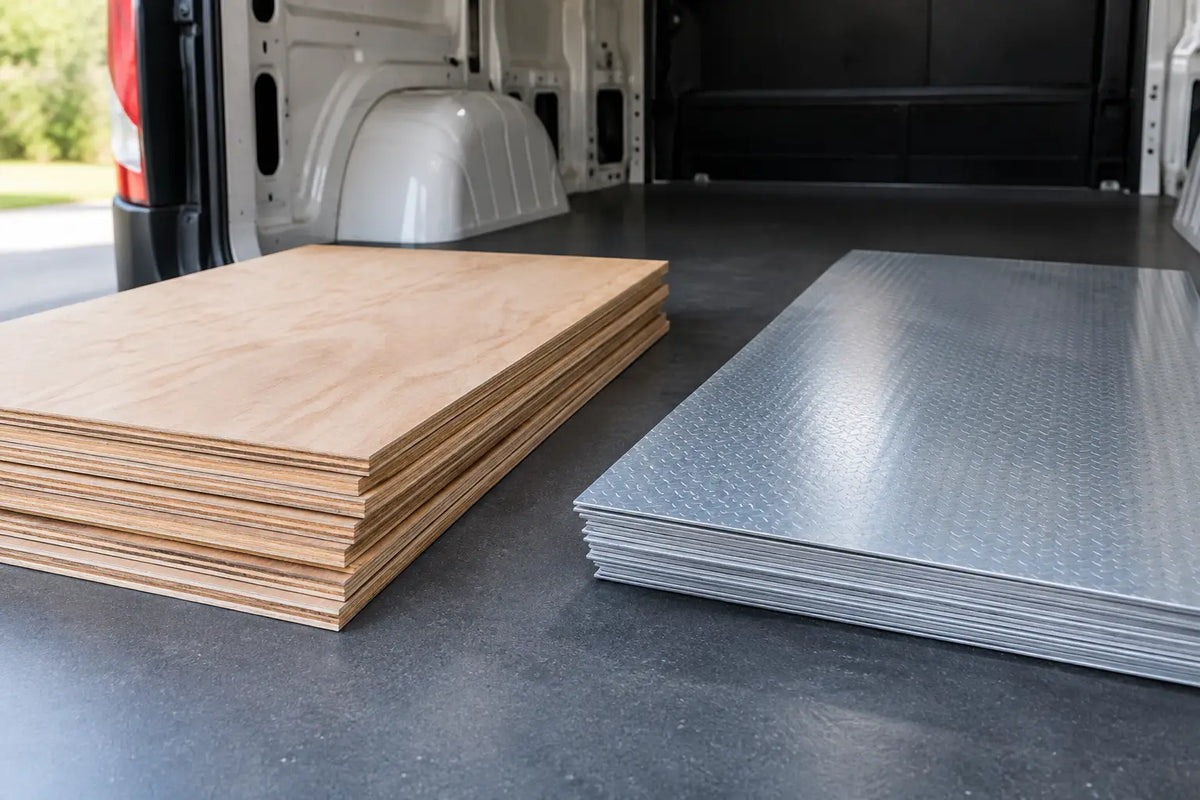
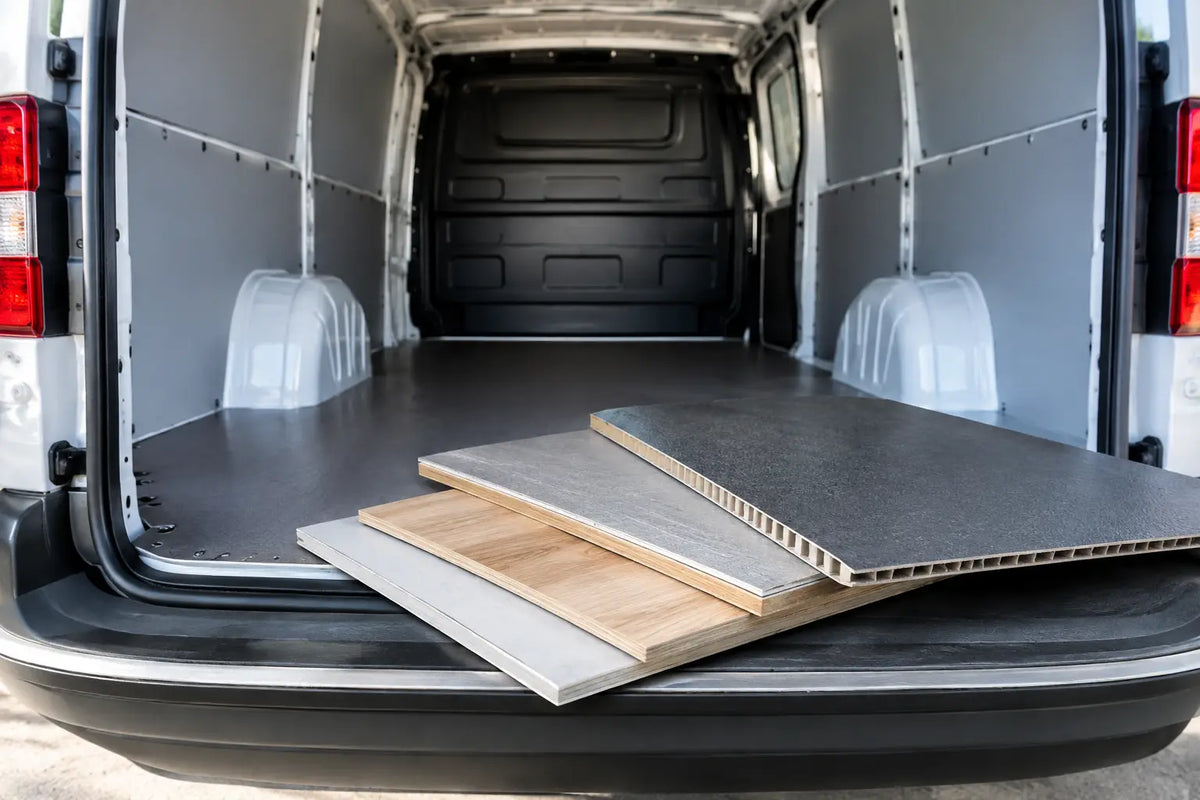
The most common choices are standard plywood, phenolic-coated plywood, rubber matting and aluminium chequer plate. Each has a place in a working van, but they do different jobs.
Standard plywood is an affordable, practical base for general trade use. Phenolic plywood adds a tougher, water-resistant surface and better grip. Rubber flooring is useful where impact protection and slip resistance matter most. Aluminium chequer plate is hard-wearing and easy to wipe down, although it is not always the quietest or most comfortable choice under loose tools.
The best option is usually the one that suits the work rather than the one with the toughest-sounding specification. An electrician carrying cases, testers and consumables has different priorities from a builder loading damp materials or a service engineer using a van as a daily workshop.
Plywood false floors: the practical all-rounder
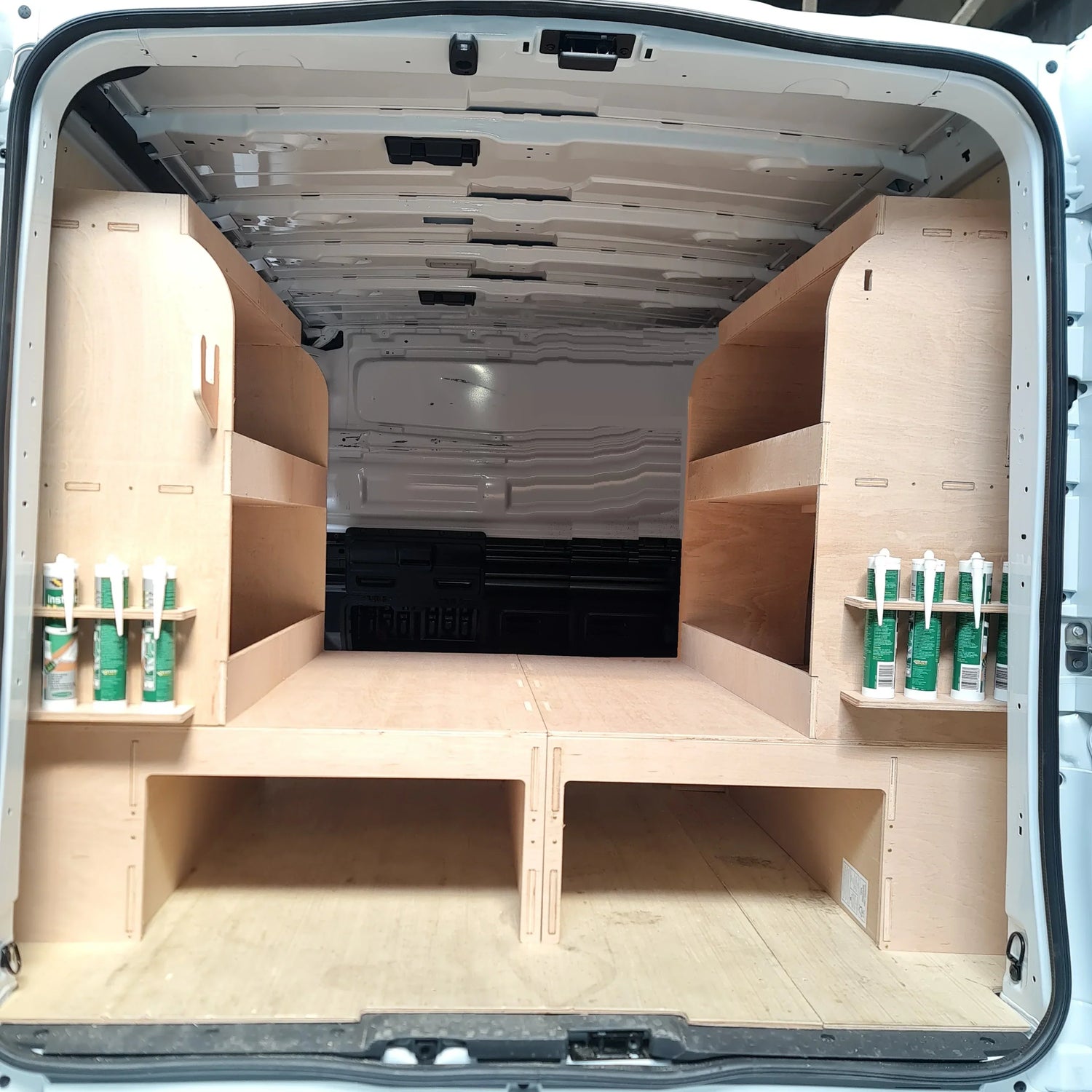
A plywood false floor is the familiar choice for good reason. It provides a flat, solid platform over the van's corrugated metal load floor, reducing the chance of small items disappearing into channels and giving your equipment a more stable surface. It also protects the original floor from scratches, dents and concentrated pressure from tool cases.
For a general-purpose working van, plywood offers a sensible balance of cost, strength and usability. It is comfortable enough to kneel on when sorting stock, and it helps reduce the metallic rattle that can come with loose equipment on an unlined floor.
The main limitation is moisture. Uncoated plywood can absorb water around exposed edges or damaged surfaces. If you regularly load wet gear, work outdoors in all weathers, or carry products that may leak, a basic board needs looking after. It is better suited to dry tools, boxed fittings and normal day-to-day trade use than repeated exposure to standing water.
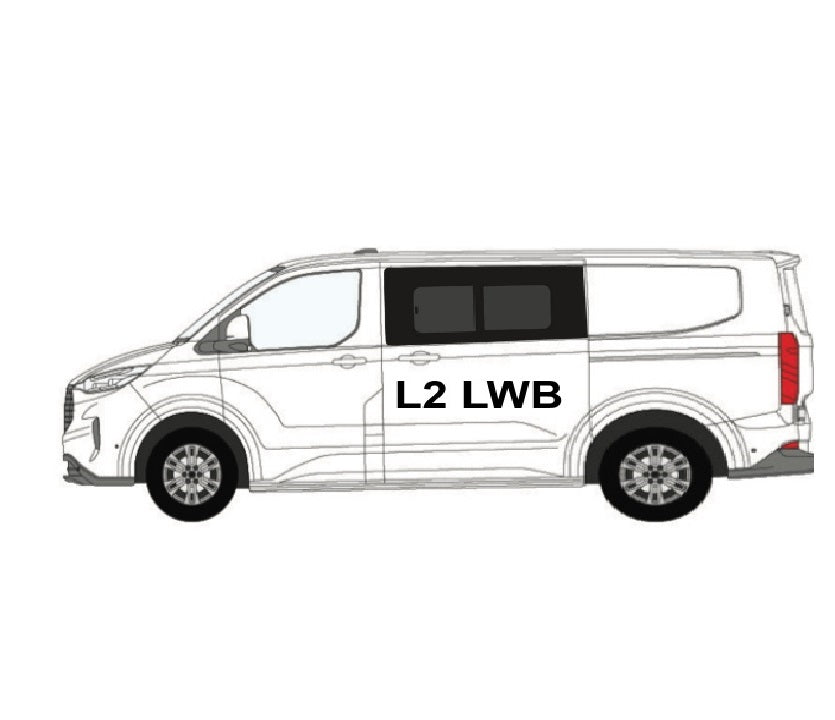
A model-specific board also matters. A floor cut for the correct wheel arch shape, load area length and fixing points is cleaner to fit and avoids unnecessary trimming. Always check the van's wheelbase, body style and model year before ordering, as load areas can vary within the same van range.
Phenolic plywood: better grip for demanding work
Phenolic-coated plywood is often the strongest all-round answer for busy trade vans. It has a durable coated face designed to cope better with dirt, damp and abrasion than plain plywood. Its textured surface gives useful grip under toolboxes, stackable cases and crates, particularly when the floor is wet or dusty.
That extra protection makes sense for plumbers, builders, landscapers, maintenance teams and anyone whose van sees muddy boots, wet materials or frequent loading. It can also be a good choice for fleet vans, where the load space needs to stand up to multiple drivers and consistent use.
Phenolic flooring is not indestructible. Sharp impacts can still damage the surface, and cut edges or drilled holes should be treated properly to limit moisture getting into the board. If you are fitting racking or securing accessories through the floor, plan the layout first and use suitable fixings. A poorly positioned hole can become a weak point over time.
The slightly higher upfront cost is often worthwhile when the van is used hard. A floor that keeps its surface, grip and shape for longer can save hassle compared with replacing a cheaper board prematurely.
Rubber van flooring: grip and protection where it counts
Rubber matting is a useful option when impact absorption and anti-slip performance are the priority. It helps stop loose equipment moving around and offers a more forgiving landing surface for heavy tools. It can also reduce noise from cases and components shifting during the day.
This type of flooring works well for service vans that carry valuable equipment, as well as vehicles where workers are regularly stepping in and out with wet footwear. It is easy to sweep or wipe clean, and it will not absorb water like untreated timber.
However, rubber flooring is rarely the best structural base on its own. It follows the shape of the metal floor beneath it, so it does not create the same flat platform as a false floor. That can be less convenient for setting up shelving, drawer units or organised storage systems. Thick rubber can also add weight, while dirt and moisture may collect underneath if it is not fitted and maintained properly.
For some vans, the most effective arrangement is a solid false floor with a rubber surface or mat in the areas that see the most wear. This approach gives you a stable base for storage while improving grip around the side door or rear loading area.
Aluminium chequer plate: hard-wearing but not for every trade
Aluminium chequer plate brings a tough, industrial finish to a load space. It resists corrosion, handles moisture well and is straightforward to wipe clean after a dirty job. It can suit vans carrying wet equipment, containers or materials that are likely to spill.
It also gives a professional, durable appearance, which may appeal where customers regularly see inside the vehicle. For certain commercial uses, that cleanable surface is a genuine advantage.
There are trade-offs. Aluminium can be noisy when tools are placed directly on it, and its raised pattern is not always as grippy as a textured phenolic board when dust or moisture is present. It can also be cold underfoot and less forgiving on equipment than timber or rubber. If your van carries lots of loose hand tools, fittings or cases, you may need mats, tie-downs or a well-planned racking system to stop movement and rattling.
Aluminium is best chosen for a specific reason, not simply because it looks tough. For most general trade vans, a quality phenolic floor delivers a more practical day-to-day balance.
Think about the whole load space, not just the floor
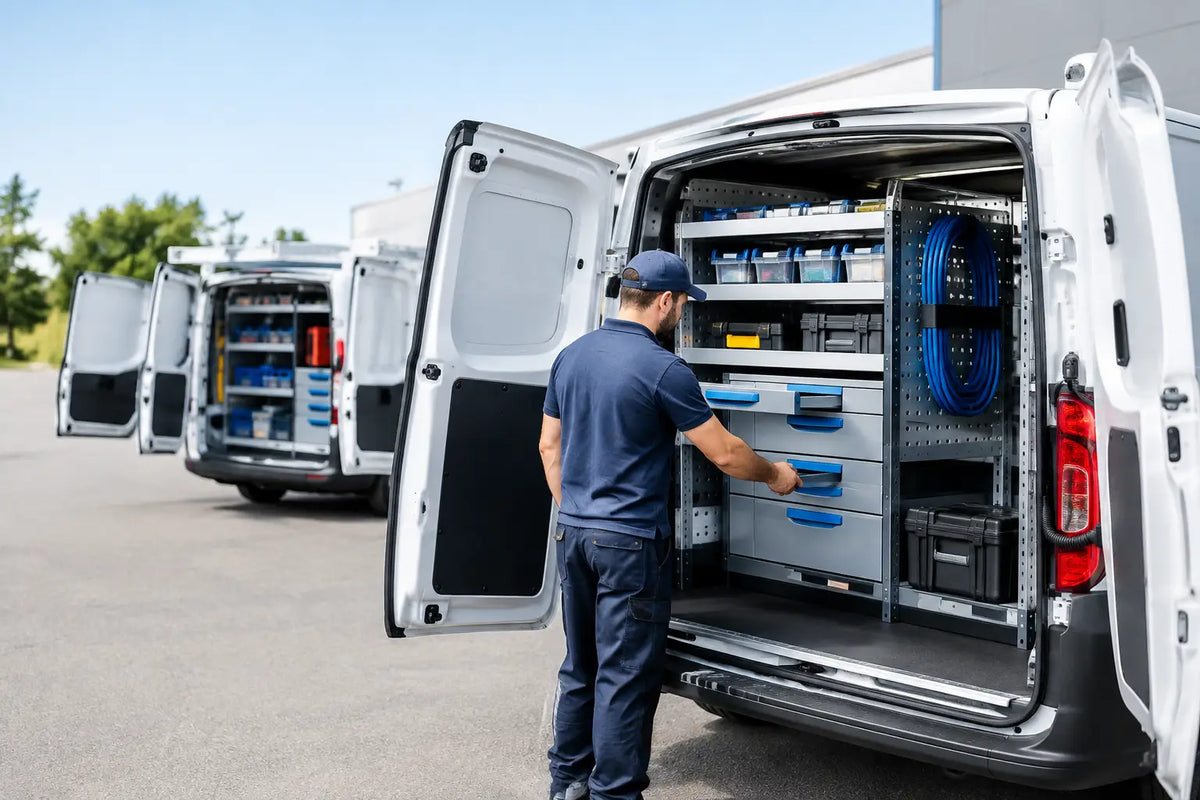
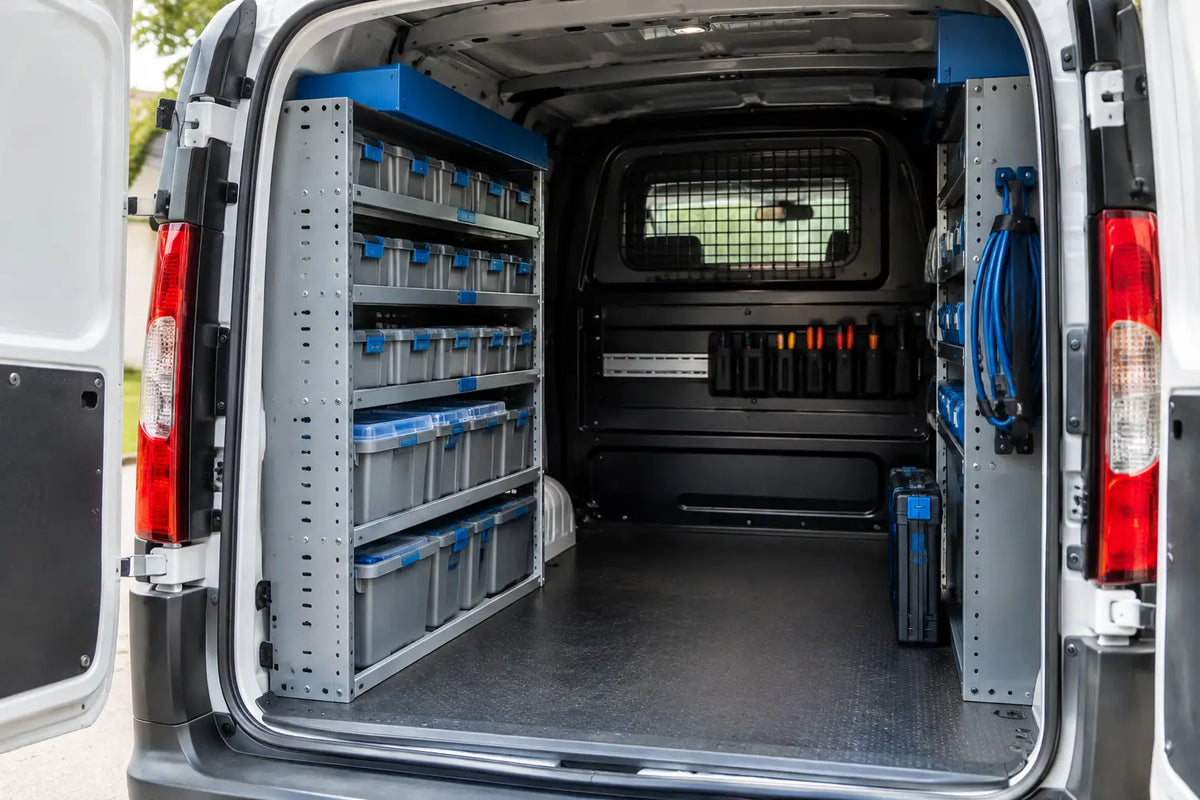
The floor is the foundation, but it works best as part of a complete storage plan. A durable base protects the van and supports the equipment above it, while shelving, racking and accessories keep that equipment where it belongs.
If you carry sealants, cartridges, power tools, fixings, cable reels and parts boxes, consider how each item will be accessed. Heavy cases should sit low and be restrained. Frequently used consumables should be within easy reach of the side or rear door. Long items need a planned route through the van so they do not rest loosely across the floor.
A false floor can also make the load space feel more usable because it creates an even working surface. Combined with suitable van shelving, it helps turn an empty cargo area into a workspace where tools are easier to find and less likely to be damaged in transit. CNC Work focuses on these practical, vehicle-led storage decisions because small improvements in organisation can save time on every job.
How to choose the right floor for your van
Start with the loads you carry on an ordinary week, rather than the occasional unusual job. If your van mainly transports dry cases and boxed stock, plywood may be all you need. If wet boots, damp materials and frequent loading are normal, phenolic plywood is usually a safer long-term choice. Where non-slip protection is the priority, rubber deserves consideration. Where wash-down practicality and moisture resistance are essential, aluminium may be the better fit.
Next, consider compatibility with your storage. Racking, shelving and drawer systems place loads in fixed areas, so the floor needs to remain flat, secure and suitable for the intended fixing method. Check the product details for your exact van before buying, especially if it has factory bulkheads, existing lining, tie-down points or an unusual load area configuration.
Finally, do not overlook weight. Every floor material adds weight to the vehicle, and a fully equipped van can soon become heavy once racking, stock and tools are loaded. Choose a floor that is strong enough for your work without adding material you do not need.
A good van floor should make the working day easier without demanding attention. Choose the board or lining that matches your trade, fit it to the correct vehicle specification, and build the rest of the load space around the way you actually work.