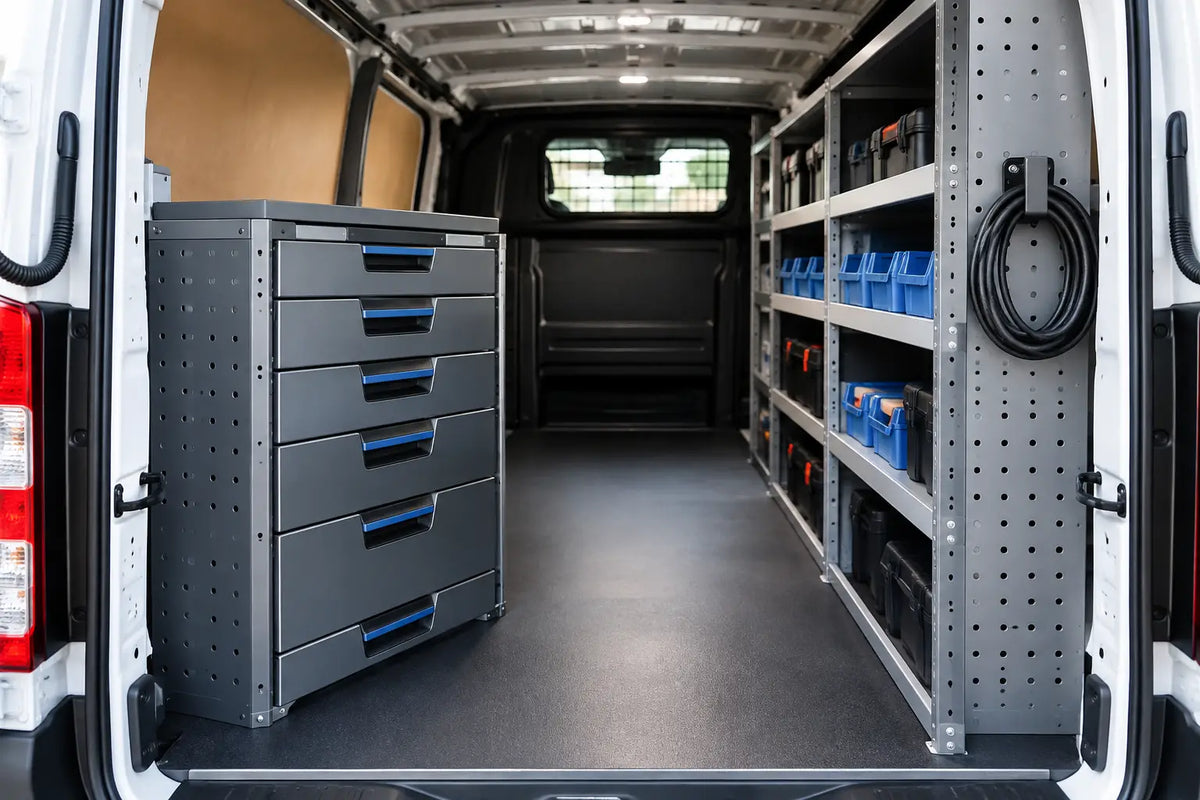











A false floor can make a working van far easier to organise, but it does take up some load-space height. If you are asking, do false floors reduce height, the straightforward answer is yes: the floor sits above the original van floor, so the usable vertical clearance beneath the roof is reduced by the thickness of the system.
That does not automatically make a false floor the wrong choice. For many electricians, plumbers, fitters and maintenance teams, the gain in organised storage and protected equipment is worth far more than the small amount of height lost. The key is choosing a setup that suits the equipment you carry and the way you work from the van.
Do false floors reduce height inside a van?
Yes. A false floor raises the surface you stand, load and store equipment on. That means there is less distance between the finished floor and the van roof. It does not change the external height of the vehicle, but it does reduce internal load-space clearance.
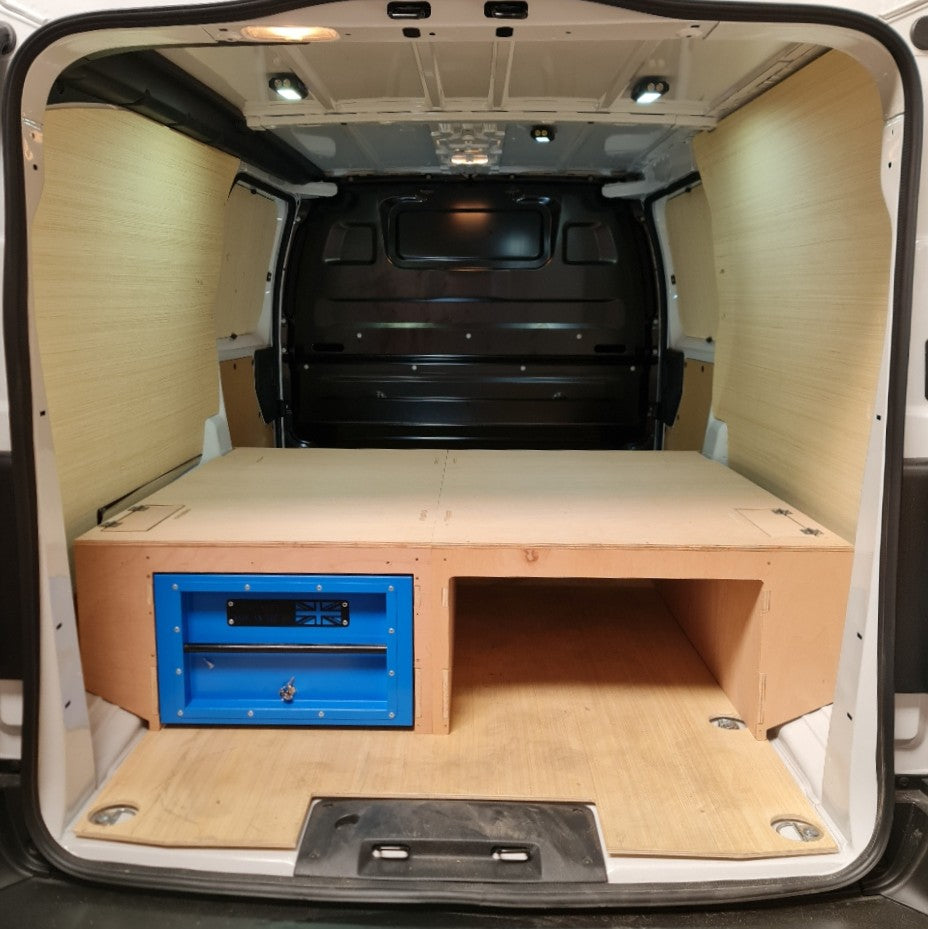
The amount lost depends on the construction of the floor. A simple plywood lining fitted close to the van’s existing floor may only take up the thickness of the board and fixings. A raised false floor with storage drawers underneath needs more depth, because it includes the top deck, supporting frame and the drawer or compartment space below.
This distinction matters. A protective floor lining is mainly there to protect the van and provide a hard-wearing surface. A proper false floor is raised to create useful storage underneath. If your aim is to carry tools out of sight while keeping the main load area clear, a false floor is often the more practical option, but it needs planning.
How much height do you usually lose?
There is no single figure for every van or every system. Material thickness, support construction, drawer depth and vehicle shape all affect the finished height. A low-profile floor can have a modest impact, while a storage floor designed around full-length drawers will sit noticeably higher.
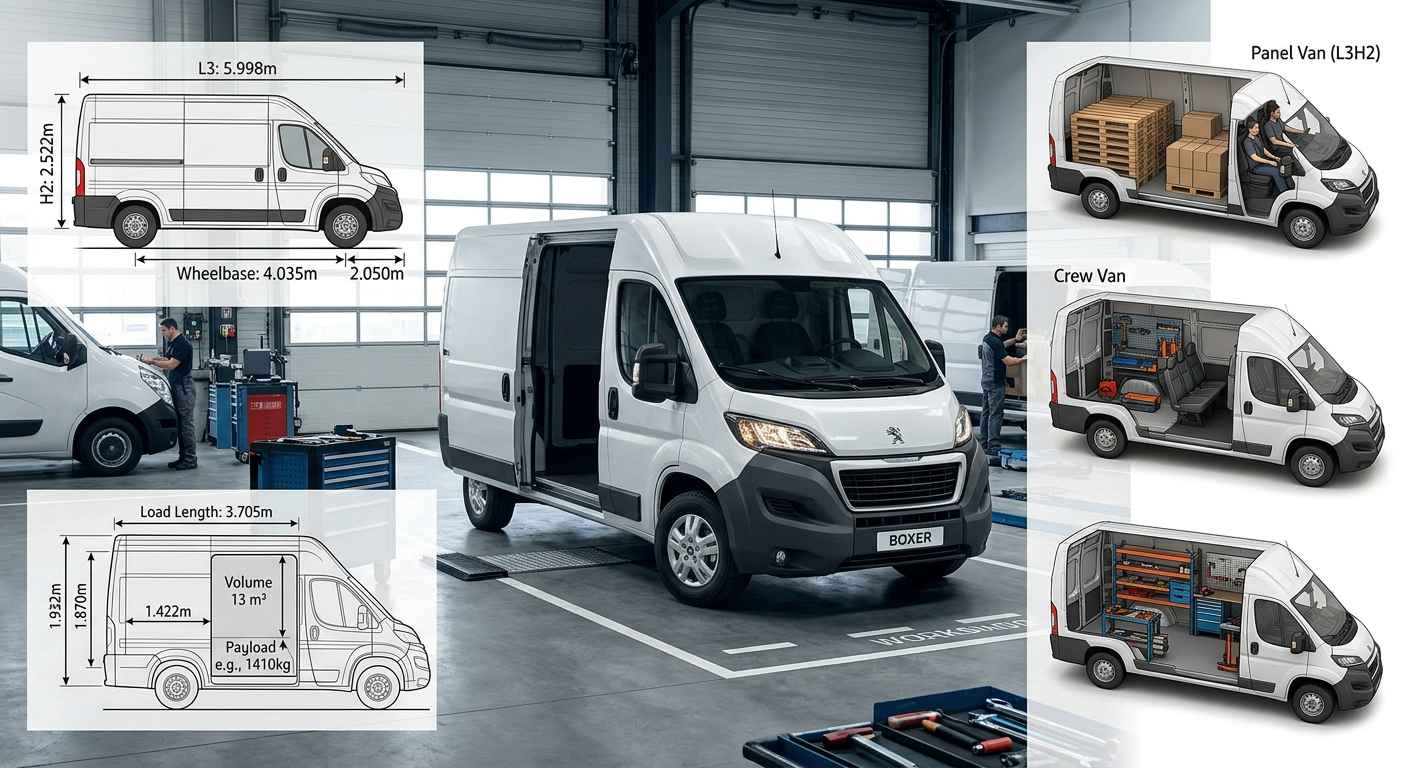
Before ordering, check the finished floor height in the product specification and compare it with your van’s internal roof height. Measure from the existing load floor to the lowest point of the roof, not only the highest part of the roof panel. Roof ribs, lining, lighting and rear-door openings can all affect the clearance available in practice.
It is also worth measuring the items that cause problems, rather than guessing. A tool case may still fit comfortably, while a tall compressor, site vacuum, boxed boiler, cable drum stack or upright material carrier may not. A few millimetres rarely matter for hand tools. They matter much more when you regularly carry bulky equipment or long, upright loads.
The rear door opening can be the limiting point
Internal roof height is not the only measurement to consider. The rear door opening can be lower than the tallest point inside the load area. If you load tall cases, stacked tubs or wheeled equipment through the back doors, check that the item clears the opening after the false floor has been fitted.
Side loading doors deserve the same attention. This is particularly relevant for trades that load toolboxes, generators or stock using a trolley. A raised floor increases the step-up into the van, so consider whether the new loading height remains practical for heavier items.
When a false floor is worth the lost clearance
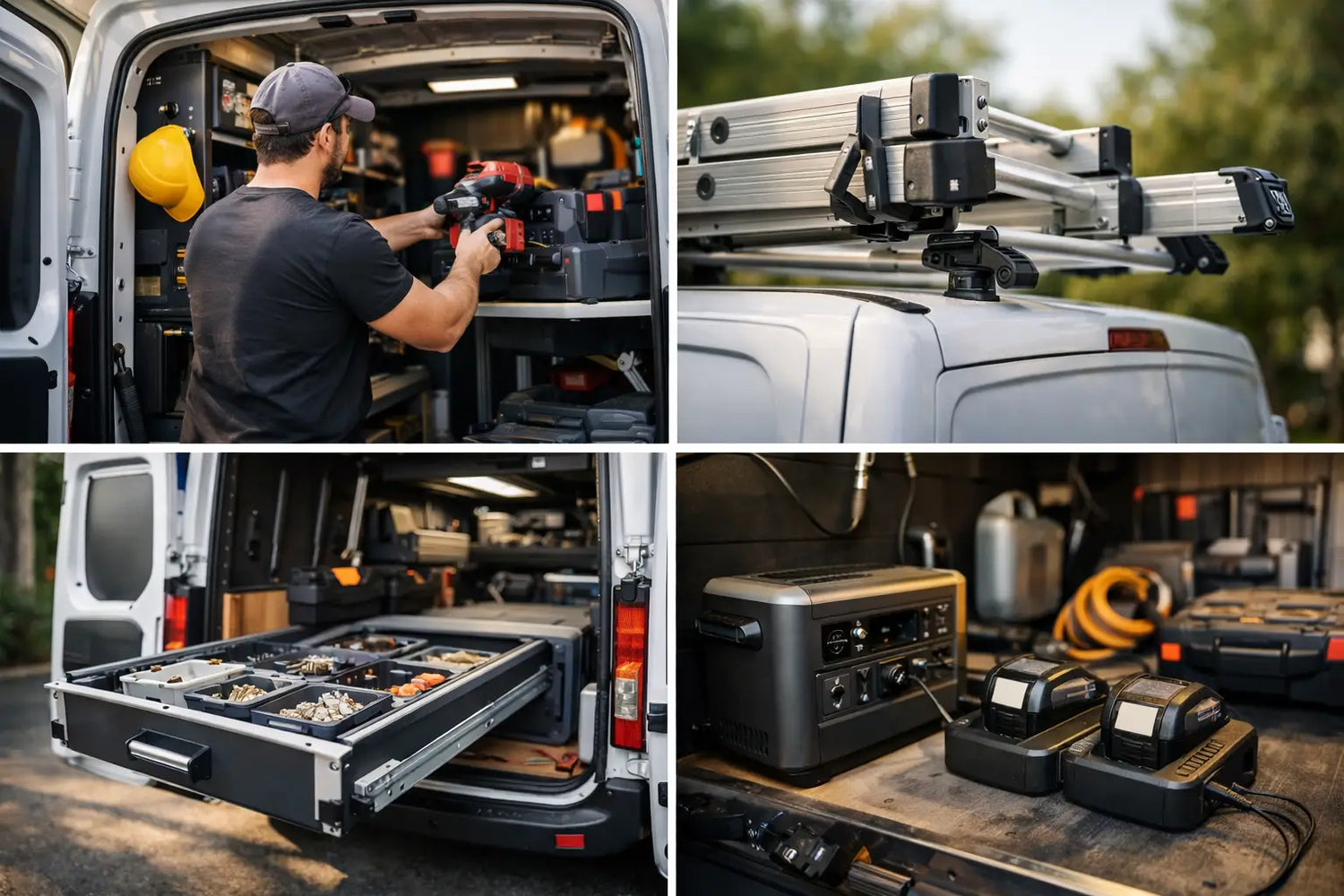
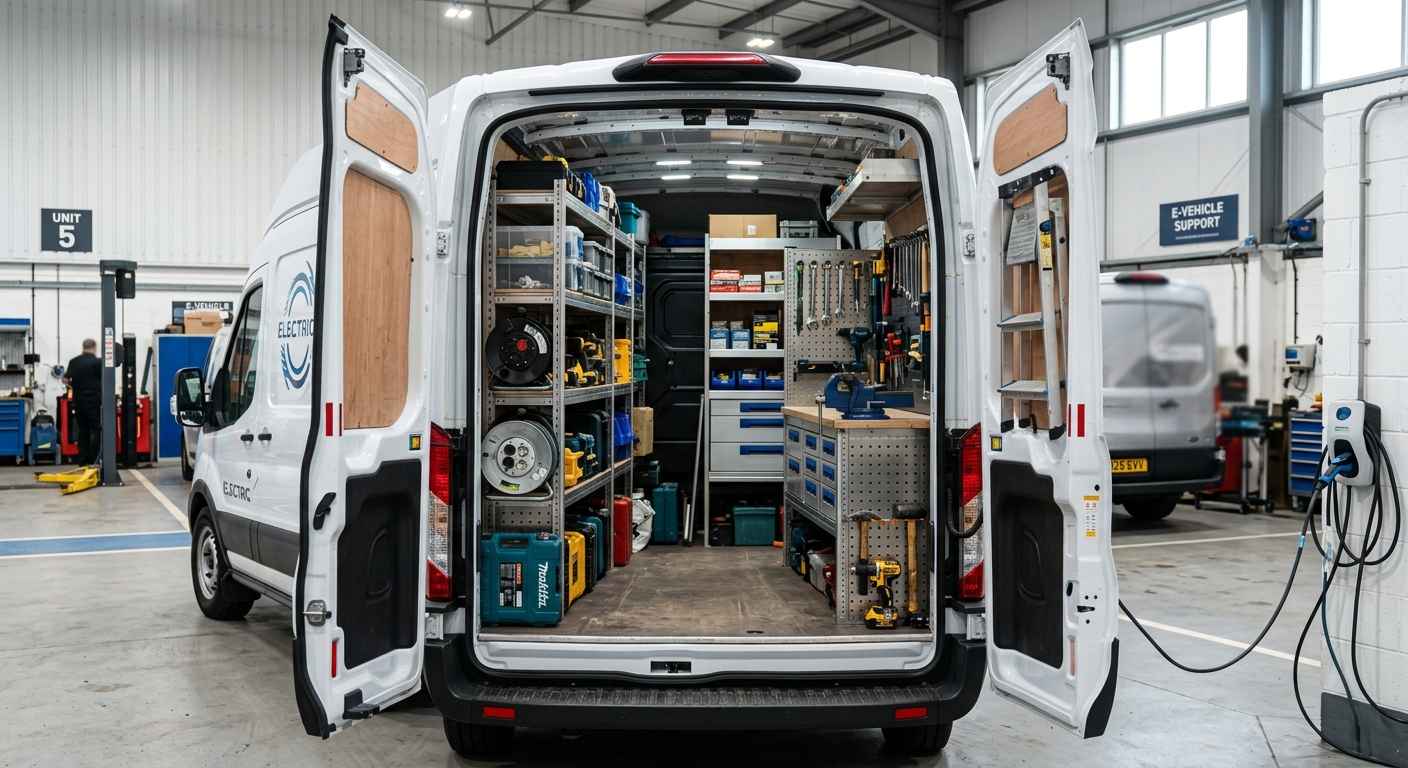
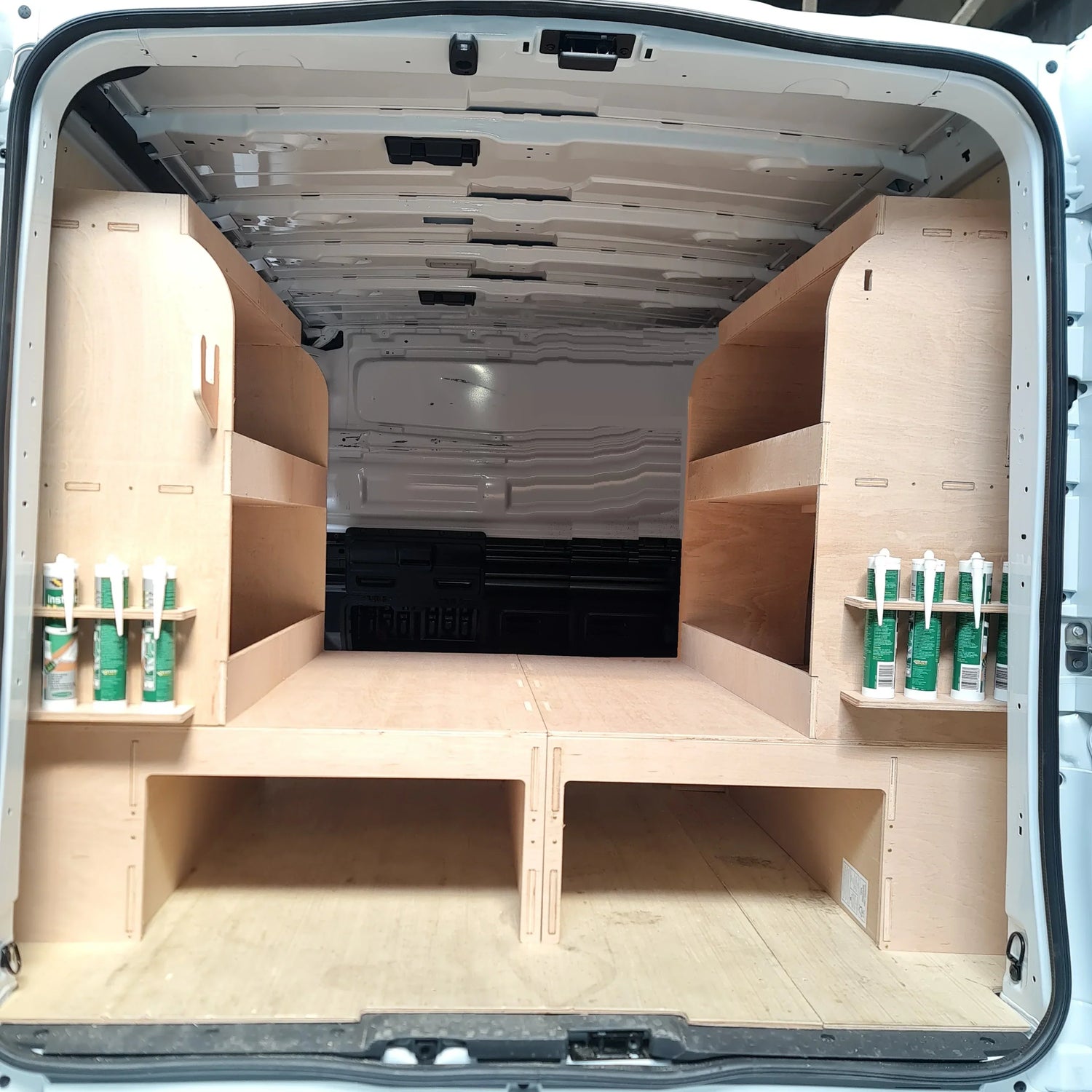
For a busy trade van, floor-level storage can solve a common problem: tools end up piled in the centre of the load area because there is nowhere secure and accessible to put them. A false floor creates a dedicated space for cases, fittings, hand tools or longer items, leaving the top surface available for materials and larger kit.
That can make the van quicker to work from. Instead of moving boxes to reach a tool bag, you can assign regular equipment to an underfloor drawer or compartment. It also helps keep valuable tools less visible when the doors are opened, although all tools should still be secured properly and the van should never be treated as risk-free storage.
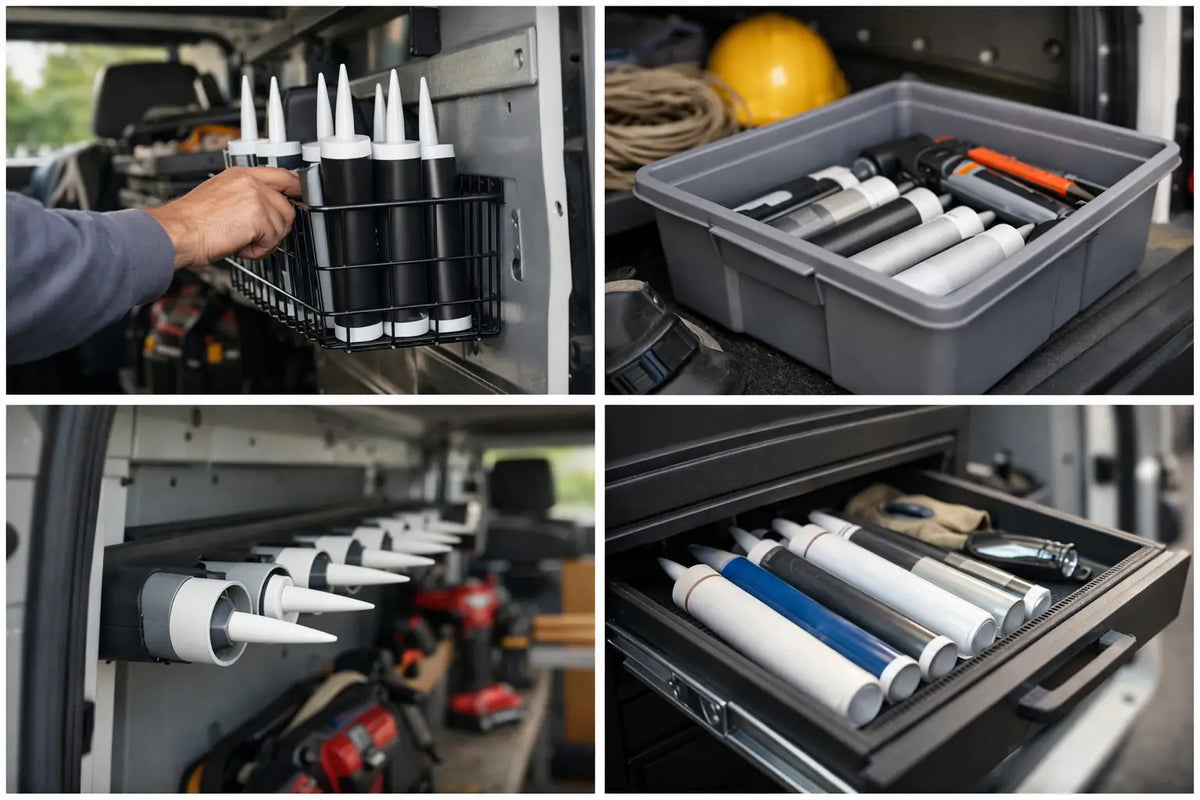
A false floor is especially useful when most of your equipment is low and stackable. Electrical cases, plumbing fittings, fixings, sealants, workwear, testing equipment and everyday hand tools can often be stored efficiently below deck. The main floor then stays clearer for ladders, boxed materials, cable, parts for the next job or equipment needed that day.
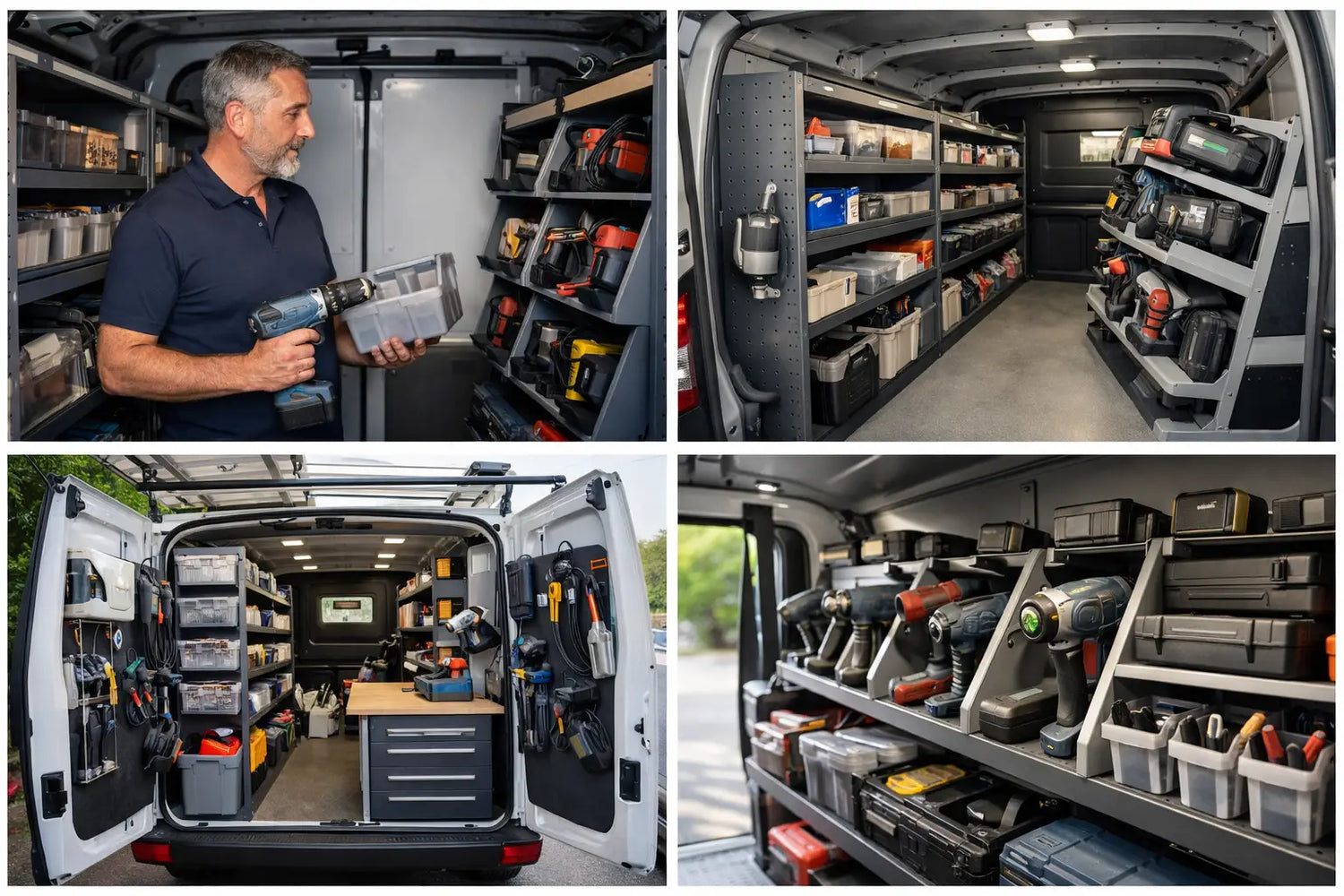
For fleet vehicles, a consistent layout can also help different drivers find equipment quickly and return it to the correct place. Less time spent searching for parts is time available for the job.
When reduced height may be a problem
A false floor may be less suitable if you often carry tall, awkward or upright loads. Builders and installers transporting sheet materials, tall plant, appliances or full-height stock should look carefully at the remaining clearance. The system may still work, but a lower-profile floor or a different storage layout could be the better answer.
It can also be a poor fit if you need to stand fully upright inside the van. Most standard-roof vans do not provide much standing room to begin with, and a raised floor reduces it further. If you use the load space as a regular work area rather than simply for storage, prioritise headroom in your decision.
Weight is another trade-off. Any floor system adds weight to the vehicle. A well-organised van is useful only if it remains within its permitted payload once tools, stock, passengers and accessories are onboard. Check your vehicle’s payload information and think about the real working load, not just the empty van.
Choose the floor around your daily load
The best way to decide is to list what lives in the van most of the time. Separate it into three groups: equipment you need on nearly every job, heavier items that need secure storage, and taller or bulkier loads that need open space. This quickly shows whether underfloor storage will improve your setup or create an obstruction.
Then measure the tallest regular item and the longest item you want to store beneath the floor. Do not design around the occasional unusual load if it only appears once or twice a year, but do not ignore equipment that is part of your normal week either.
Vehicle-specific fitment is equally important. Vans that look similar can have different wheelbase lengths, floor contours, door openings and fixing positions. Confirm the exact make, model, year, wheelbase and roof configuration before choosing a false floor or any matching van shelving. A system suited to one version of a van should not be assumed to suit another.
Consider how the top deck will be used
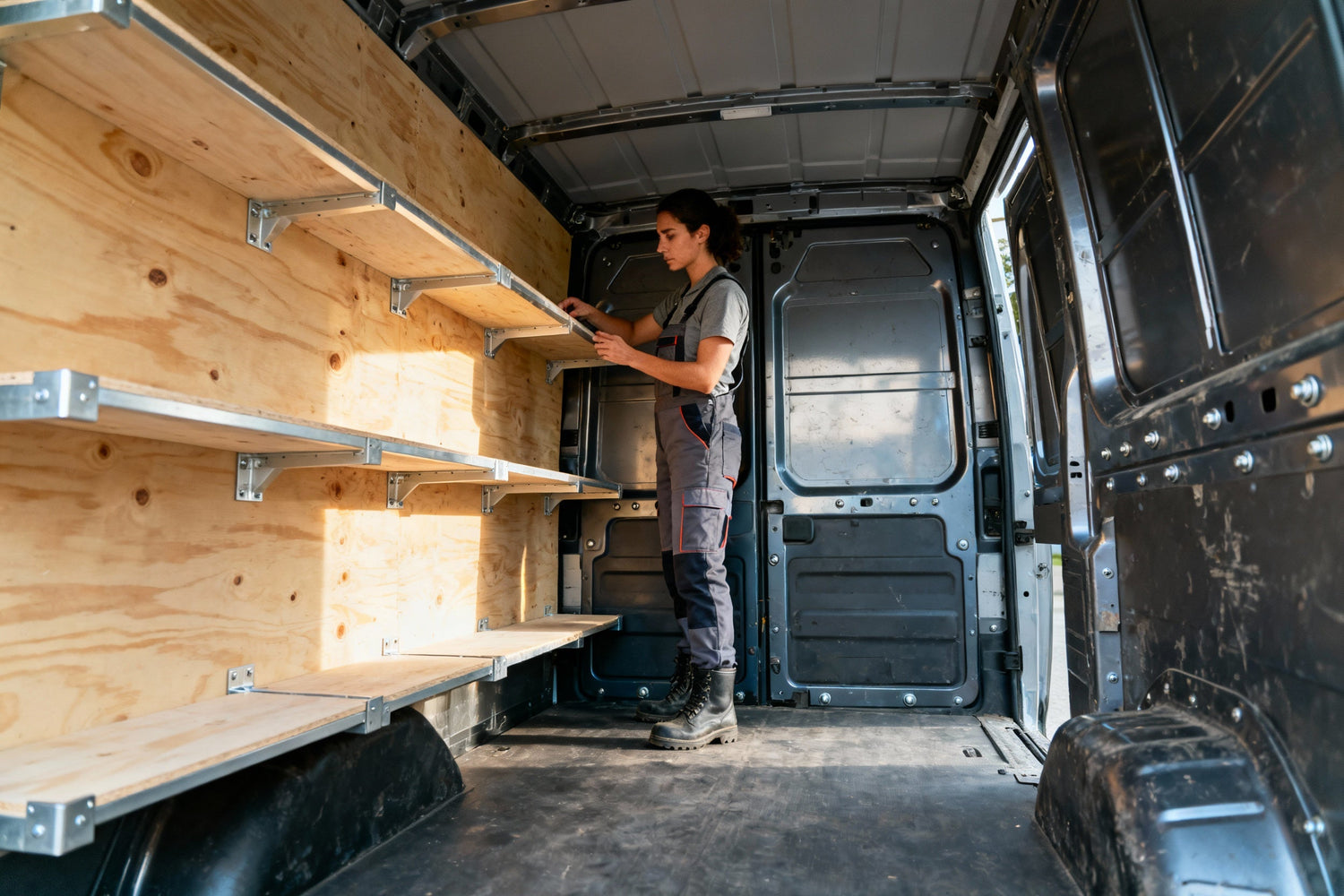
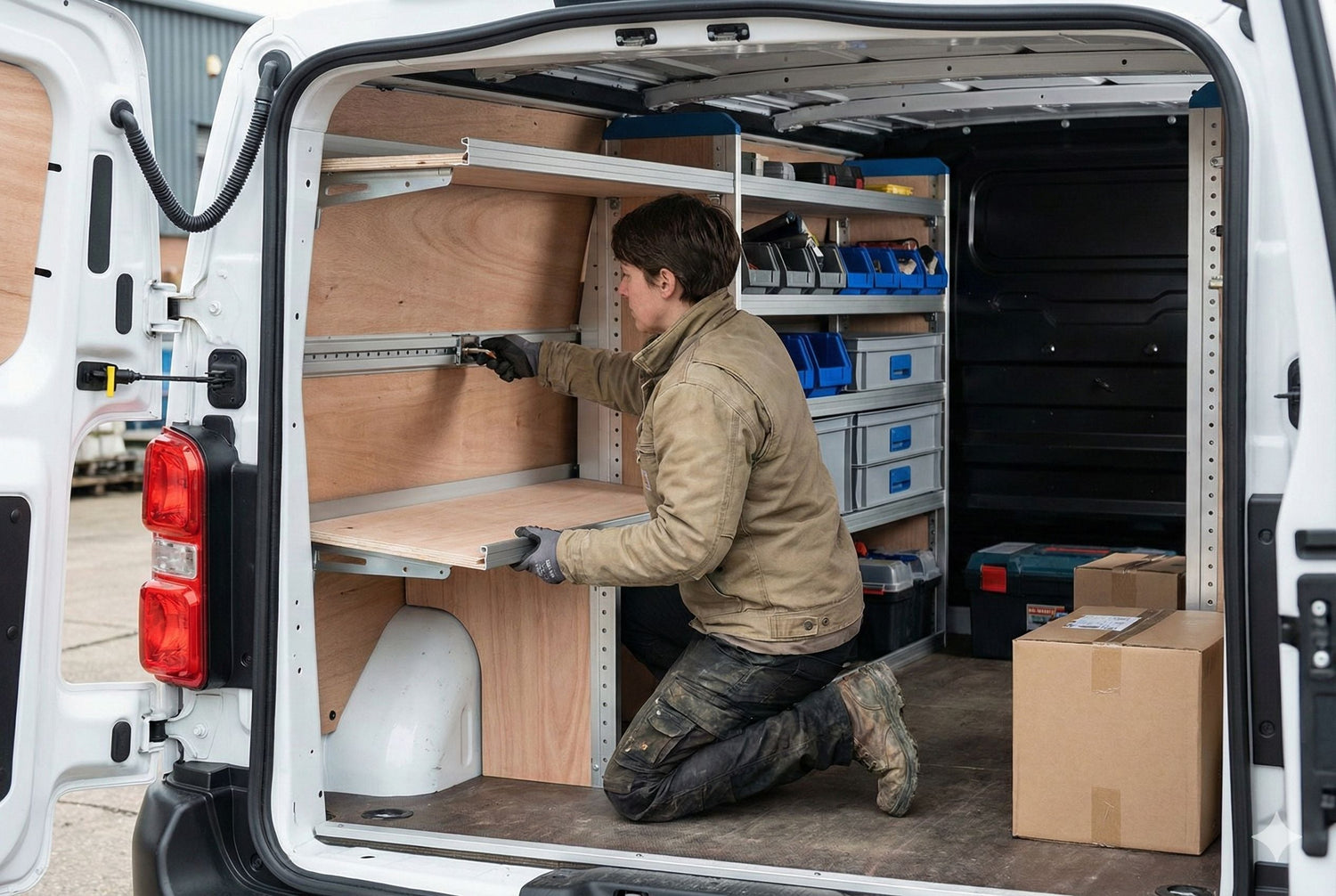
The upper surface needs to work as hard as the storage below it. If you regularly load wet, dirty or heavy equipment, choose a durable finish that is easy to clean and provides suitable grip. If you use racking or shelving, plan access so that drawers can open without clashing with stored items or side-door loading.
Load restraint remains essential. A false floor is not a substitute for securing cargo. Tools, cases and materials can move under braking or cornering if they are not held in place. Use suitable restraint points, straps or storage systems for the load you carry, and keep heavy items low where possible.
A practical way to make the decision
Measure your current floor-to-roof clearance, rear opening and side-door access. Measure your tallest regular load. Then subtract the specified finished height of the false floor. The remaining number is the clearance you will actually have on site, not the clearance shown in a basic van brochure.
If that space still covers your daily work, a false floor can turn unused floor area into organised, protected storage and make the rest of the van easier to load. If it leaves you struggling with the equipment you carry most, keep the floor lower or choose a storage layout that protects your load height.
A good van setup should remove friction from the working day, not create another thing to work around. Choose the floor height that gives your tools a proper home while leaving enough room for the jobs you are paid to do.