









A van that makes you climb over loose toolboxes to reach a tube of sealant is costing you time before the job has even started. The top accessories for trade vans are not about filling every spare inch with kit. They are about giving the tools, fixings and consumables you use most a secure, obvious place - so you can load up, find what you need and get on with the work.
For most trades, the best setup starts with the jobs you do repeatedly. An electrician may need easy access to fixings, testers and cable accessories. A plumber may need sealants, fittings and wipes within reach. A maintenance engineer might prioritise secure storage for hand tools alongside room for replacement parts. Build the van around that daily workflow, rather than buying accessories one at a time without a plan.
Top accessories for trade vans: start with a proper base
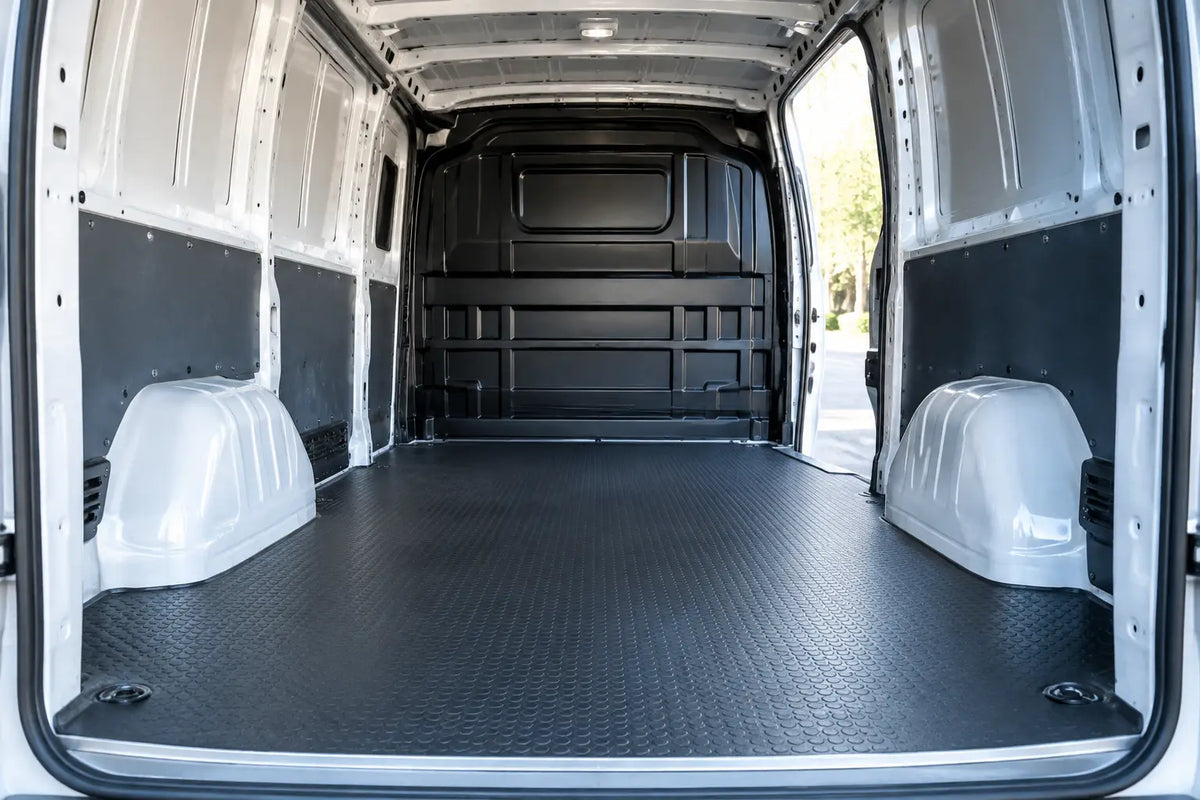
The accessories that deliver the biggest improvement are usually the ones that make the whole load area work harder. A clear, solid base also makes it far easier to add smaller organisers later.
Van racking and shelving
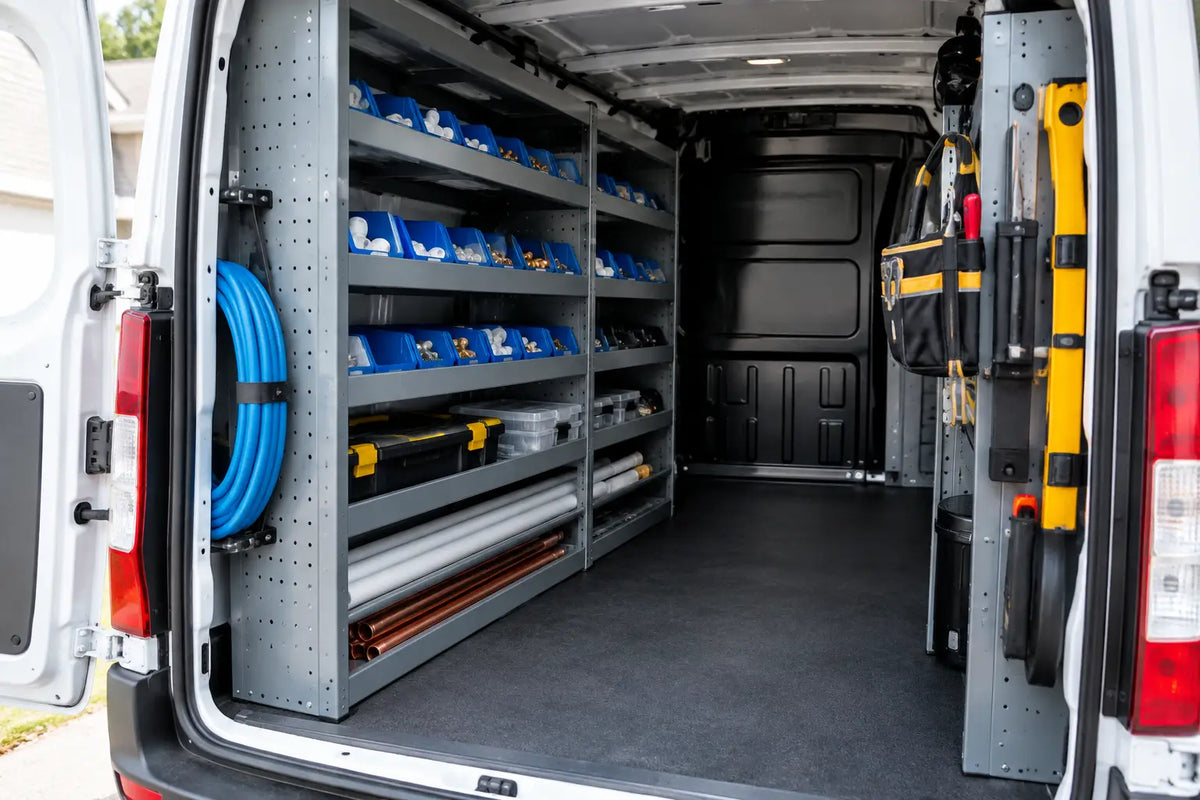
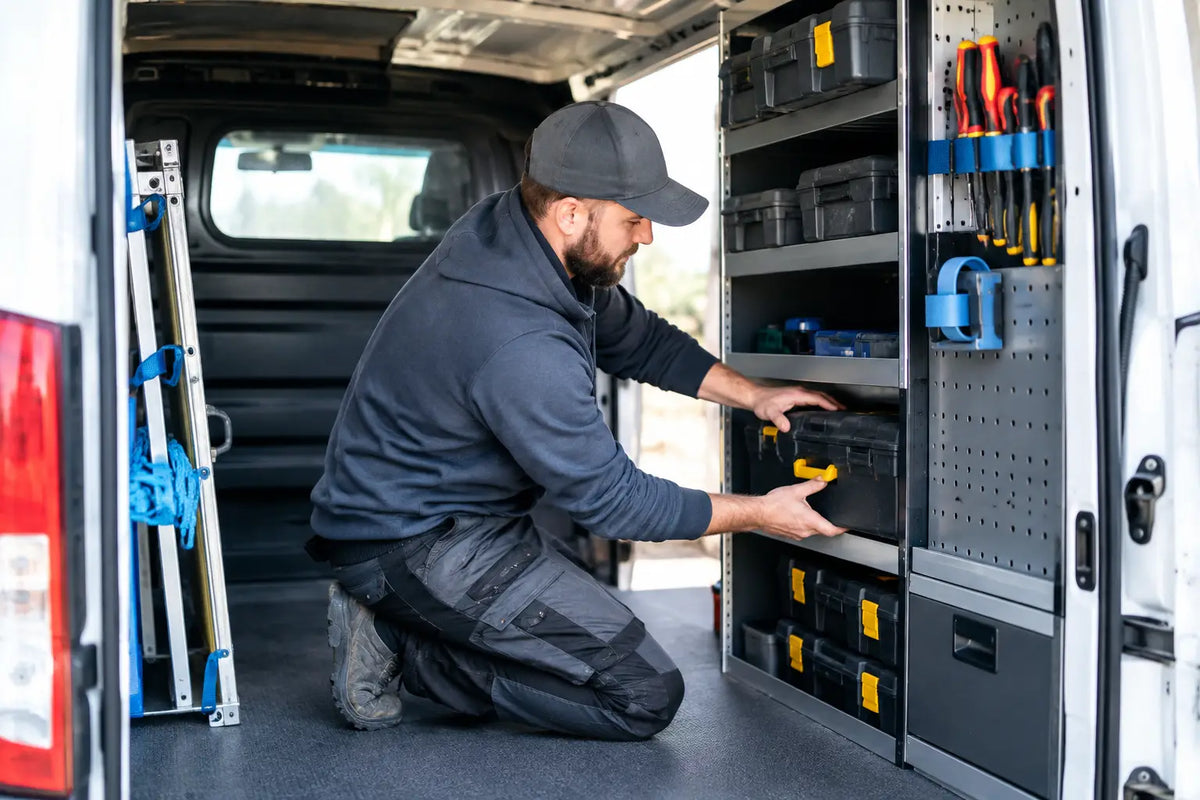
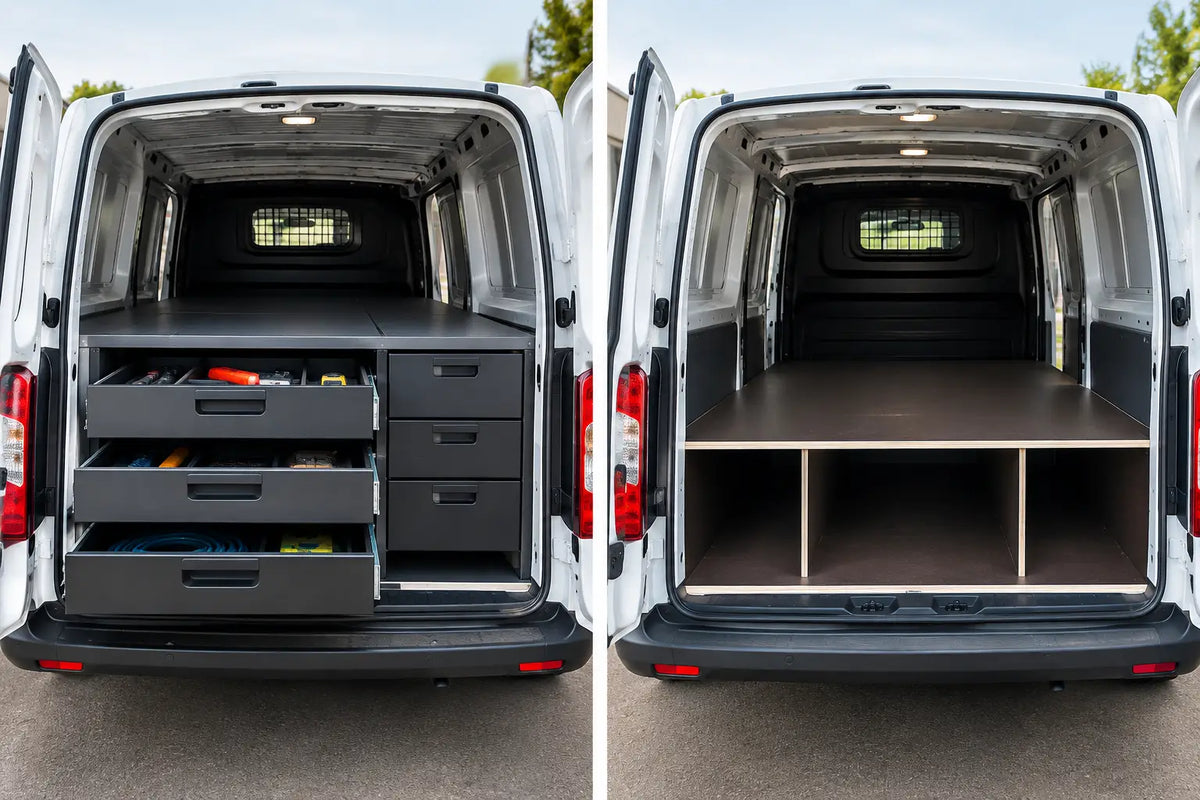
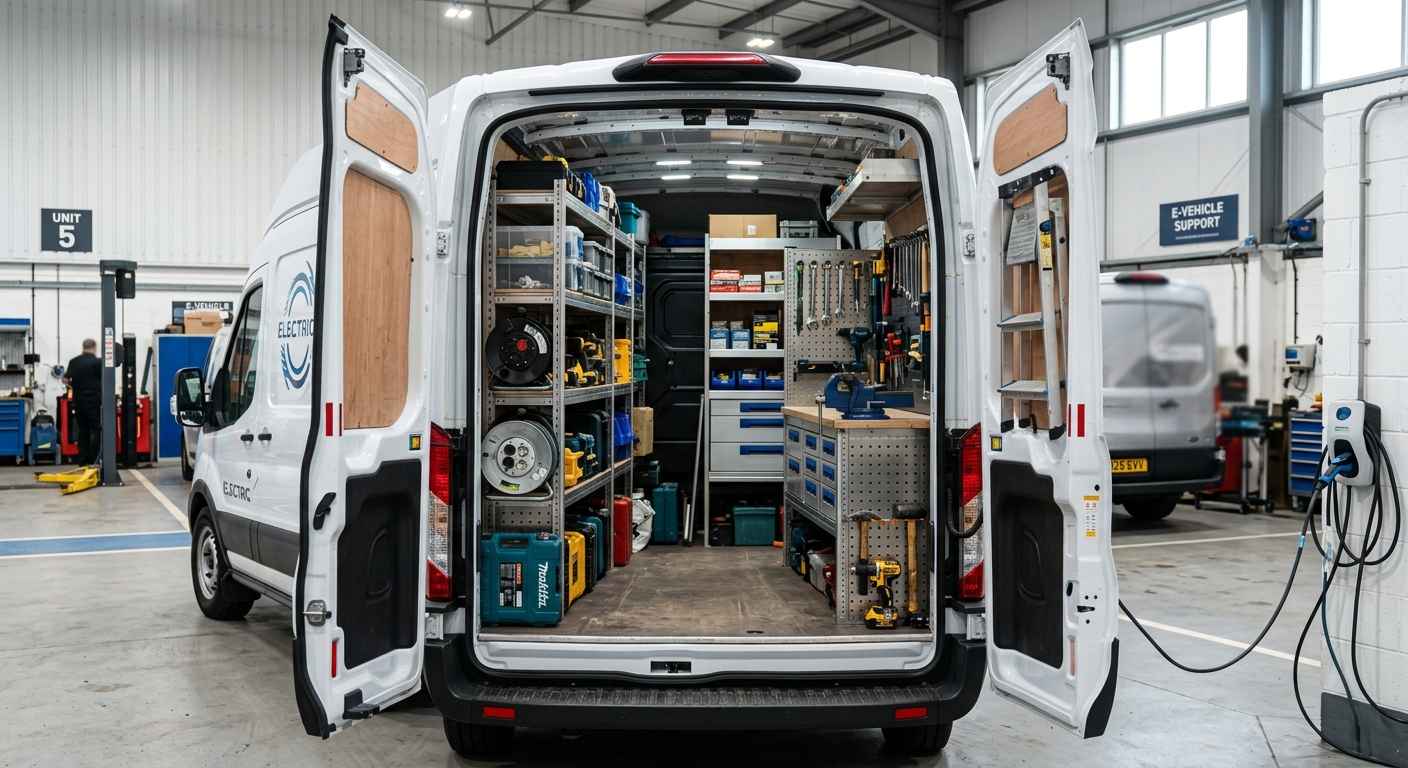
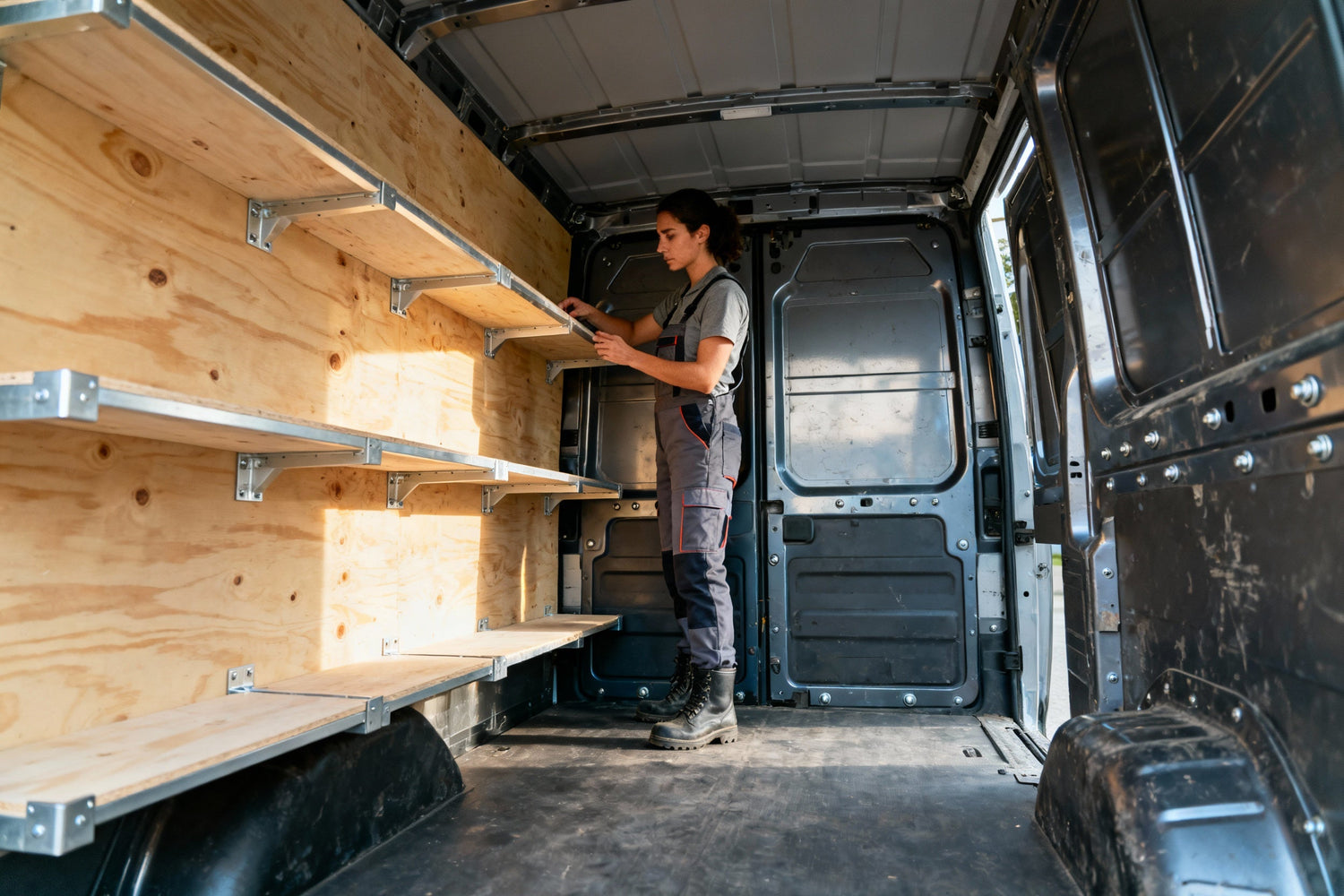
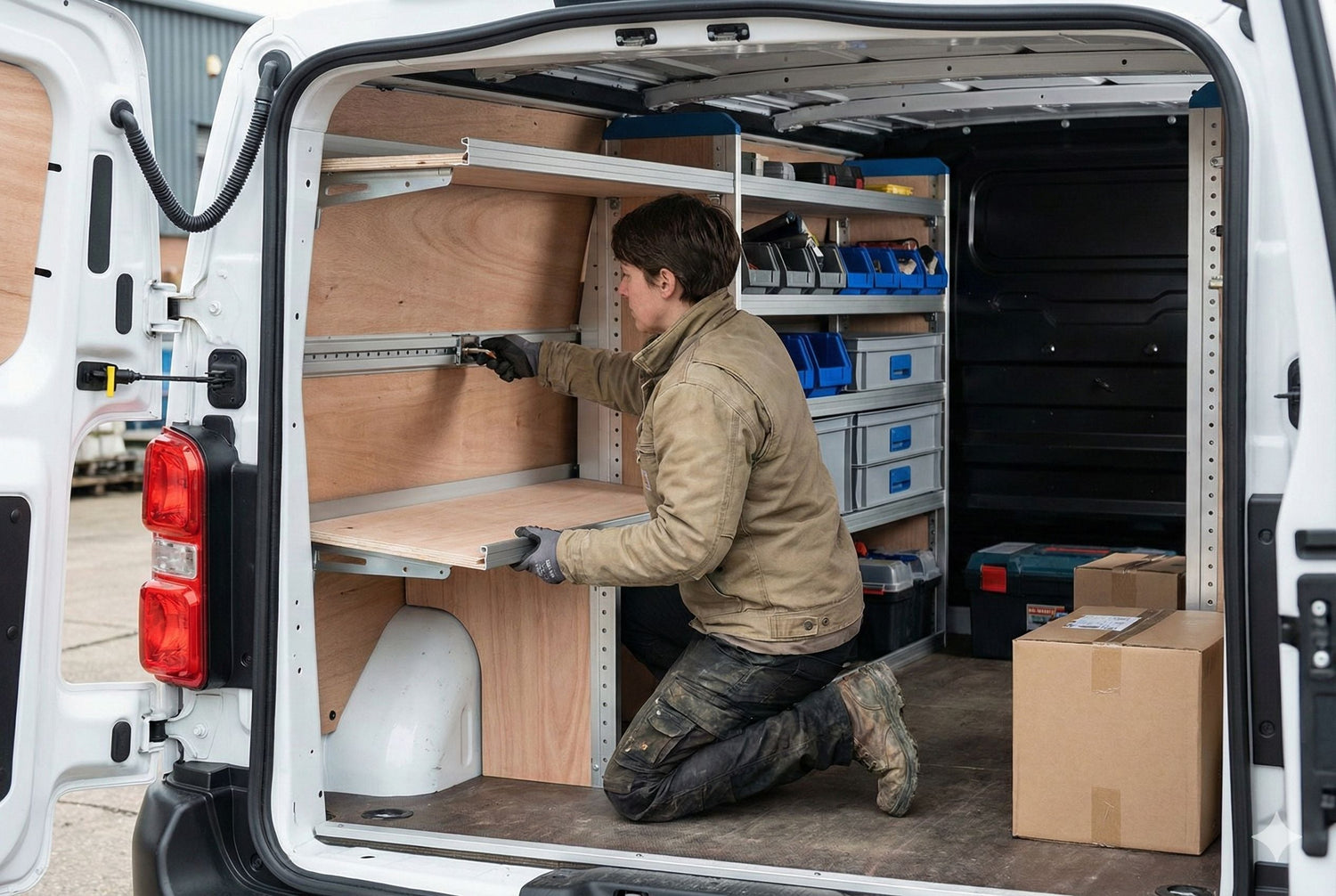
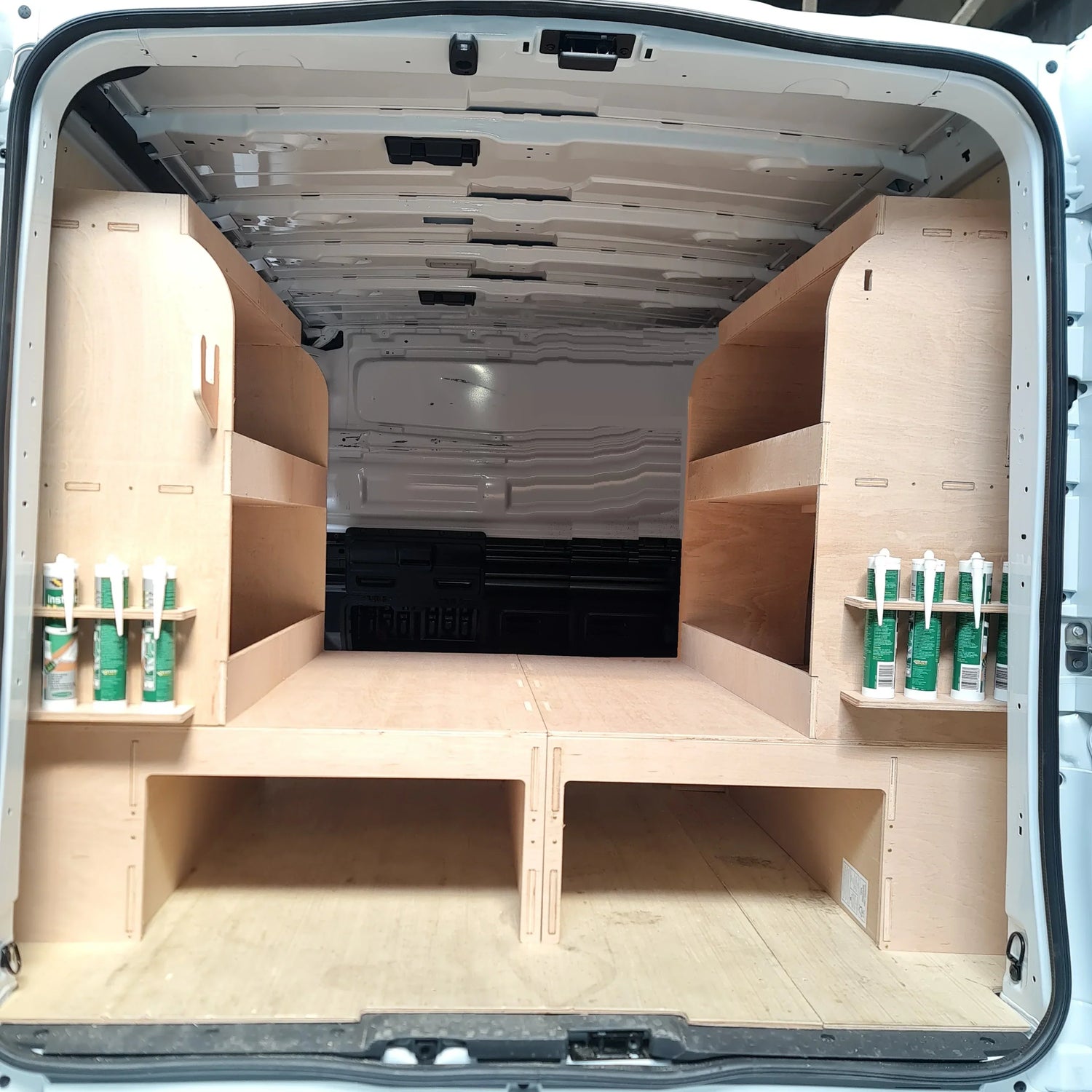
Van shelving is the backbone of an organised working vehicle. It moves tool cases, boxes and materials off the floor and gives everything a fixed location. That means less time searching at the roadside and fewer loose items shifting about during travel.
Choose racking with the type of load in mind. Open shelves suit stackable boxes, fittings cases and larger tools that need quick access. Shelving with dividers or bins is more useful where you carry lots of small parts. The right answer depends on your trade and the amount of stock you keep in the van.
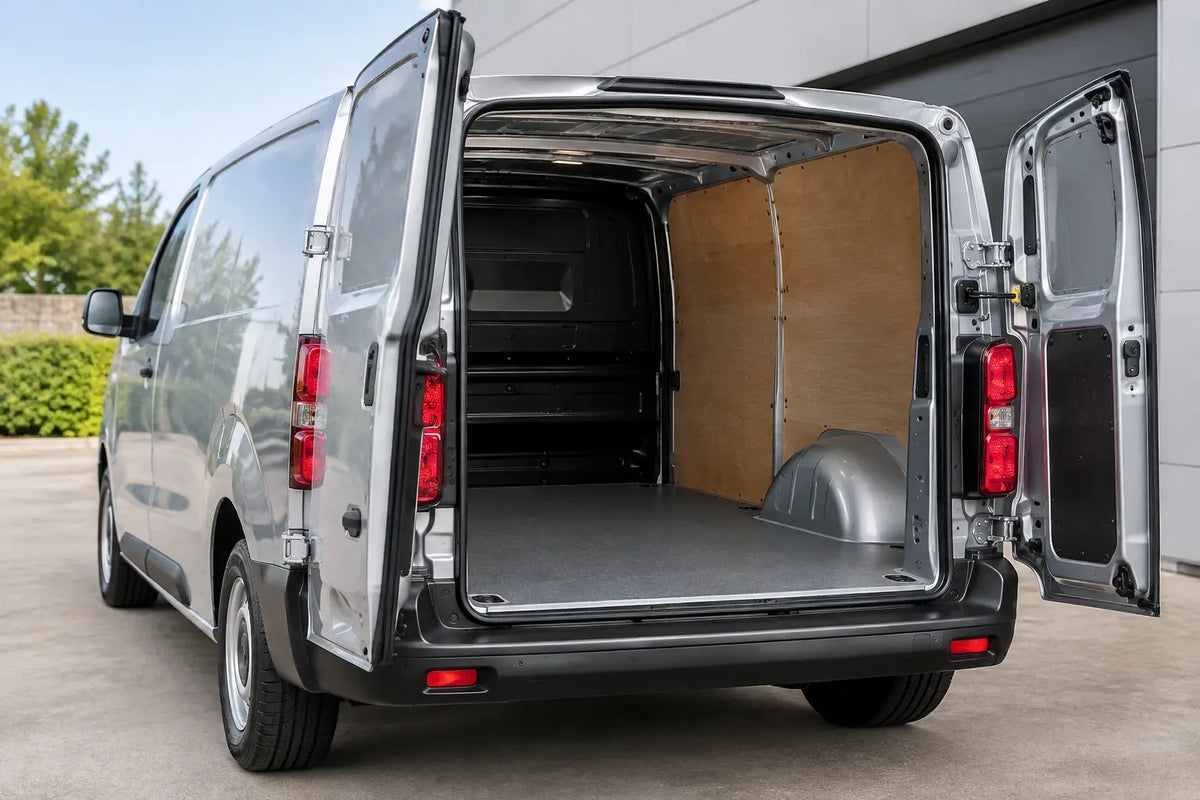
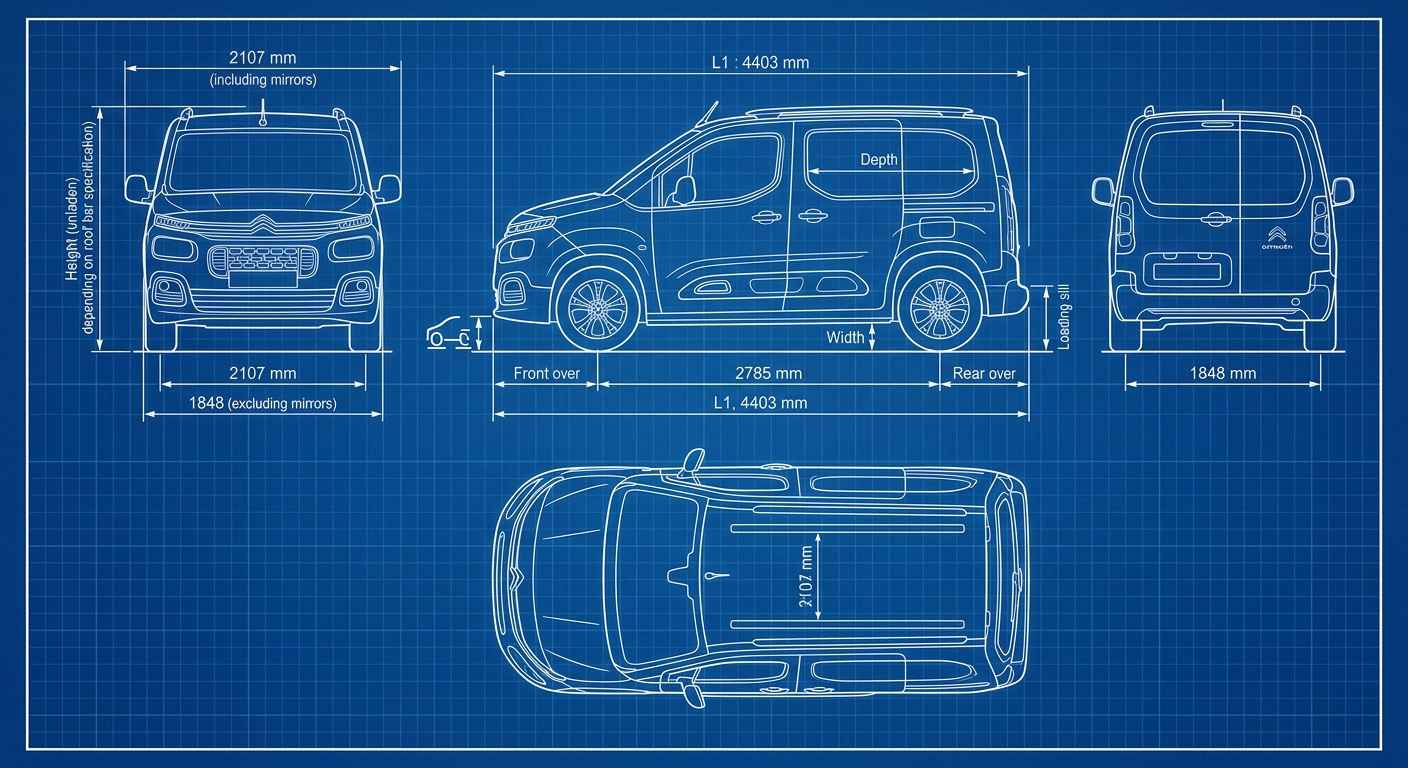
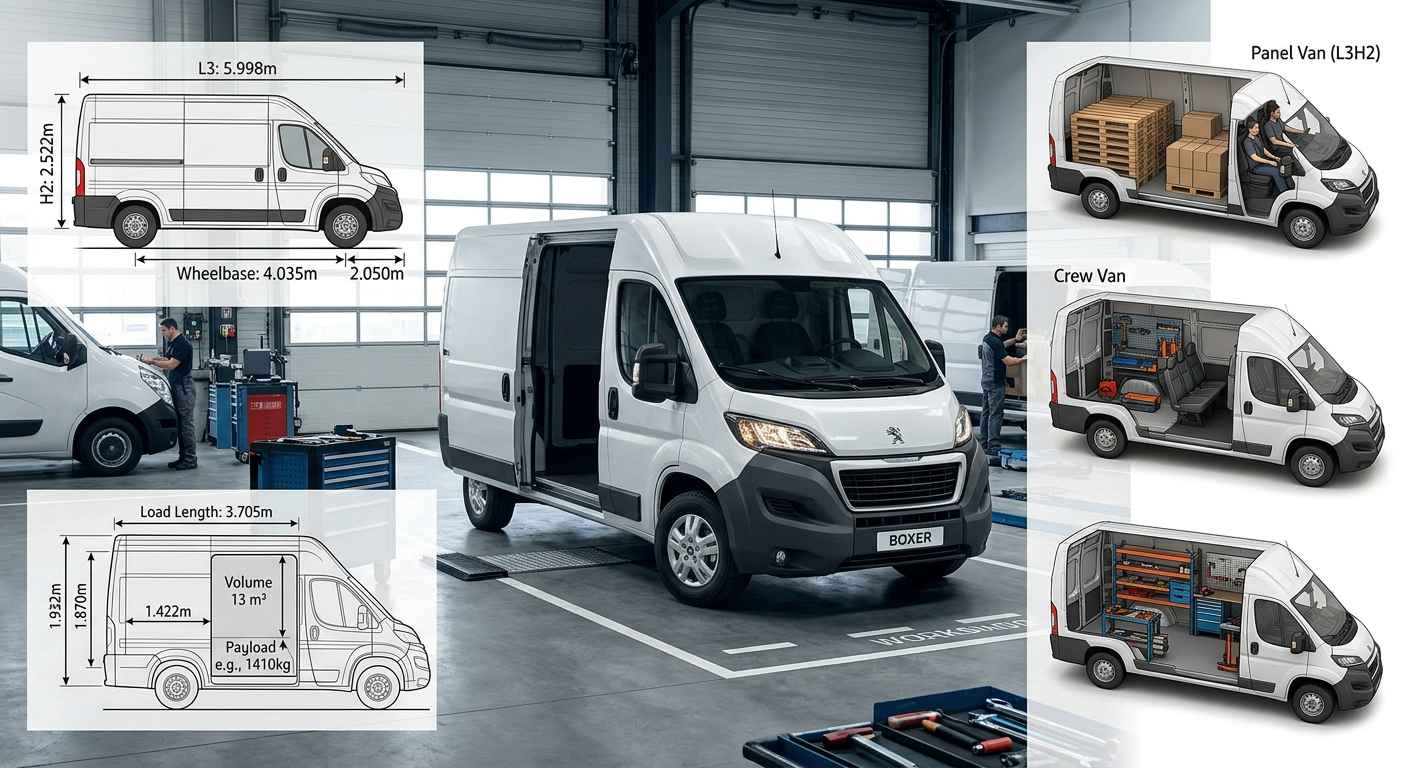
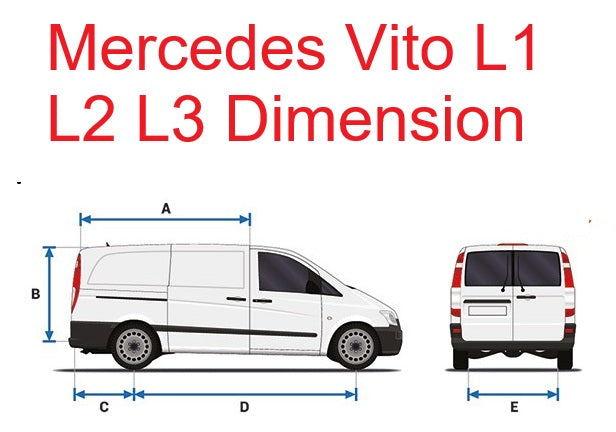
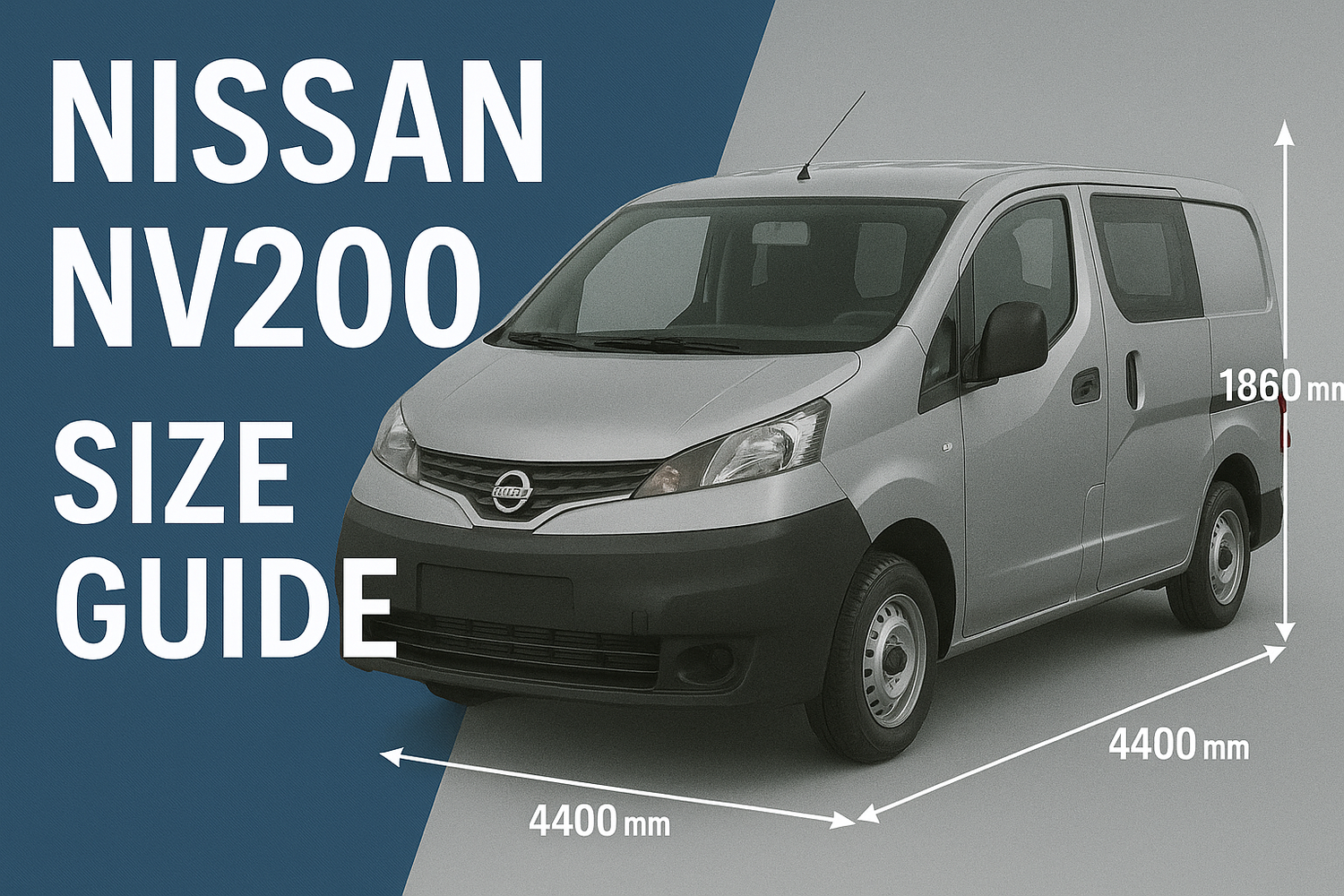
Vehicle-specific shelving matters here. The internal shape and dimensions of a Ford Transit Custom are different from those of a Volkswagen Transporter, Mercedes Vito or Vauxhall Vivaro. Check the stated fitment carefully against your van's make, model and wheelbase before ordering. A system designed around the vehicle is generally simpler to position and gives a more considered use of the available space.
False floors
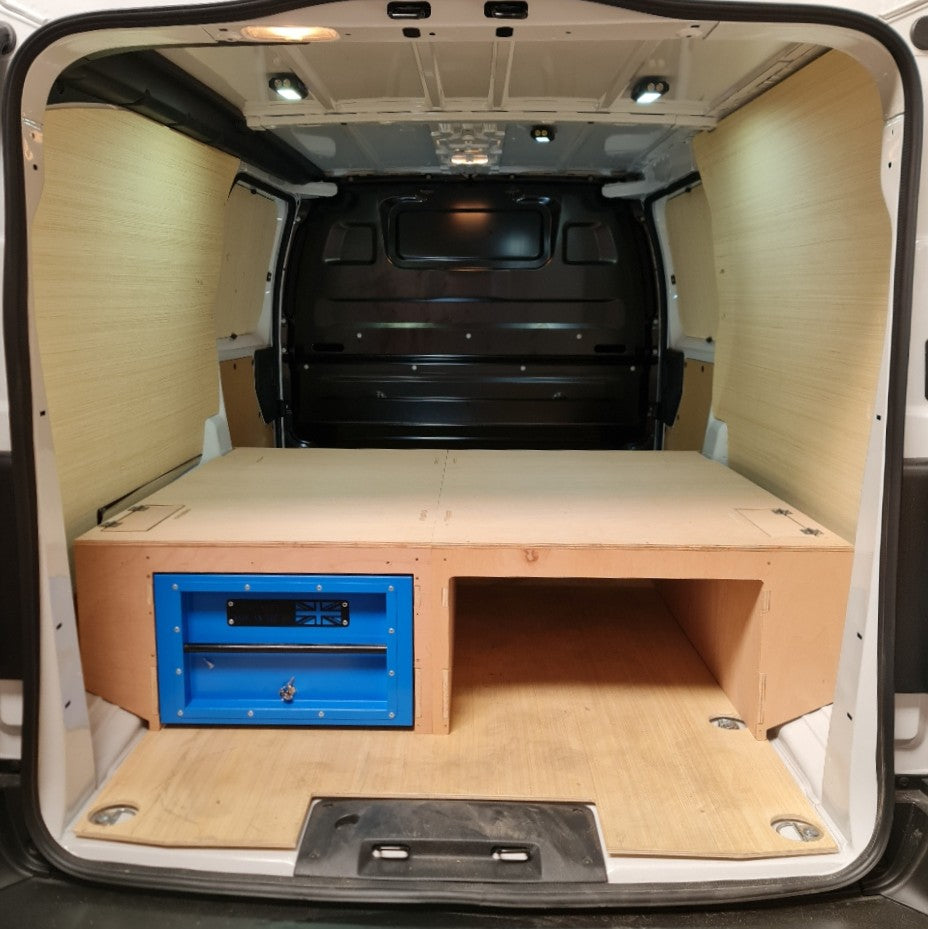
A false floor creates a second storage level beneath the main load area. It is especially useful for longer items that are awkward to store on shelves, such as conduit, pipework, trunking, spirit levels or narrow cases. Instead of laying these across the floor and blocking access, they can be kept below the working surface.
This can make a noticeable difference in smaller vans, where floor space disappears quickly. The trade-off is that a false floor raises the load deck, so it is worth thinking about the height of the equipment you regularly carry. If tall machinery or bulky materials are part of your daily load, measure first and make sure the layout still works.
Load restraint and tool security
Even a well-racked van needs a way to keep heavier items under control. Toolboxes, vacuums, generators and larger cases can move when braking or turning if they are not properly secured. Restraint points, straps and suitable storage positions help protect the equipment and make the load area safer to use.
Avoid treating the floor as general overflow space. If something is too large for a shelf, give it a deliberate position and secure it. It is a straightforward habit that prevents damaged tools, broken fittings and the frustrating rattle of loose kit on every journey.
Small van storage accessories that earn their place
Once the main structure is in place, smaller accessories can remove many of the daily irritations that slow tradespeople down. These are often inexpensive compared with a full racking system, but their value comes from keeping high-use items where they belong.
Sealant and cartridge holders
Sealant tubes, adhesives and cartridges are easy to lose amongst cases and offcuts. A dedicated holder keeps them upright, visible and ready to grab without opening several boxes. It also helps stop cartridges rolling around the floor, where nozzles can become damaged or covered in dirt.
This is a particularly useful addition for fitters, bathroom installers, window and door trades, decorators and general builders. Consider where it is mounted. It should be close enough to reach easily, but not in a position where long cartridges can catch when loading larger items.
Wipe dispensers
Wipes are one of those van essentials that get used constantly but are rarely stored well. A proper dispenser keeps them clean, dry and easy to access after handling sealant, grease, dust or dirty fittings. It also prevents the packet being crushed under a tool case when the van gets busy.
Mount a wipe dispenser near the side door or rear access point if you regularly use wipes between jobs. That placement lets you clean your hands or tools without climbing into the load area.
Glove box organisers
The cab can become as cluttered as the back of the van. Receipts, parking permits, cables, pens, measuring tapes and small paperwork soon pile up in the glove box. An organiser gives these items separate sections, making it easier to find the basics without emptying everything onto the passenger seat.
This is not just about tidiness. Keeping job paperwork and everyday vehicle items organised can save time when you are at a customer site, dealing with a supplier or checking details before setting off. It also helps stop important documents getting mixed in with food wrappers and loose change.
Parts bins and small-item storage
Fixings, connectors, clips, blades, drill bits and fittings are difficult to manage in large open boxes. Purpose-made bins, compartment cases and shelf dividers keep stock separated by size or type. For anyone who carries a broad range of small components, this is one of the clearest ways to reduce wasted time.
There is a balance to strike. Over-dividing every small item can make restocking a chore, while too few sections create another mixed-up box. Group products by how you use them: everyday fixings in the most accessible place, less common items further back, and replenishment stock stored separately where possible.
Plan the layout around your working day
The best van accessory is the one that suits the way you actually work. Before adding anything, stand at the rear and side doors and think through a normal job. What do you reach for first? Which tools come out together? What gets put away last? Those answers should shape the layout.
Frequently used tools and consumables should sit nearest the doors, ideally at a comfortable height. Heavier equipment belongs low down, both for easier lifting and a more stable load. Items used occasionally can go higher up or further inside the van. This simple order reduces unnecessary bending, reaching and unloading.
It is also worth leaving some capacity for changing work. A van that is packed to the last centimetre can become difficult to load when a job calls for extra materials or a new piece of equipment. Keep a clear floor zone or adjustable shelf space where possible, particularly if your workload varies from day to day.
Choose accessories for the van you have
A good product can still be the wrong choice if it does not suit the vehicle. Check the exact van model, year where relevant, wheelbase and door arrangement before buying racking, shelves or false floors. Internal dimensions and fixing positions can differ between versions that look similar from the outside.
Weight is another practical consideration. Work out what you already carry before adding substantial storage systems, machines and materials. Spreading the load sensibly and avoiding unnecessary duplicate equipment will keep the van more manageable and help you make better use of its payload.
For fleets, consistency is often worth considering too. Giving similar vehicles a comparable layout means drivers can find stock quickly when vehicles are shared, and replacing consumables becomes easier to manage. It may not be essential for every business, but it can save confusion as the fleet grows.
CNC Work focuses on practical van shelving, false floors and storage accessories for working vehicles, helping tradespeople build a setup around their vehicle and their day-to-day kit. Start with the items that waste the most time now, then add accessories as your workflow becomes clearer. A well-organised van should feel less like a place to store tools and more like a workspace that is ready when you are.