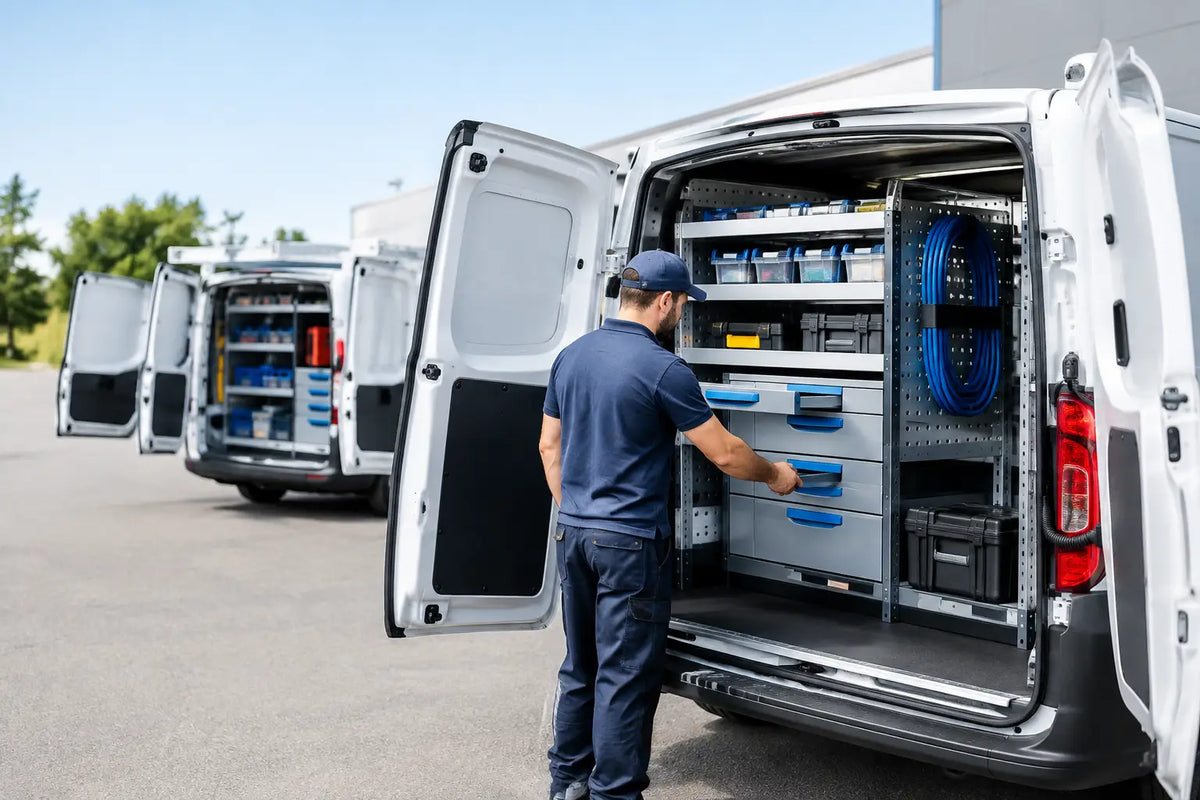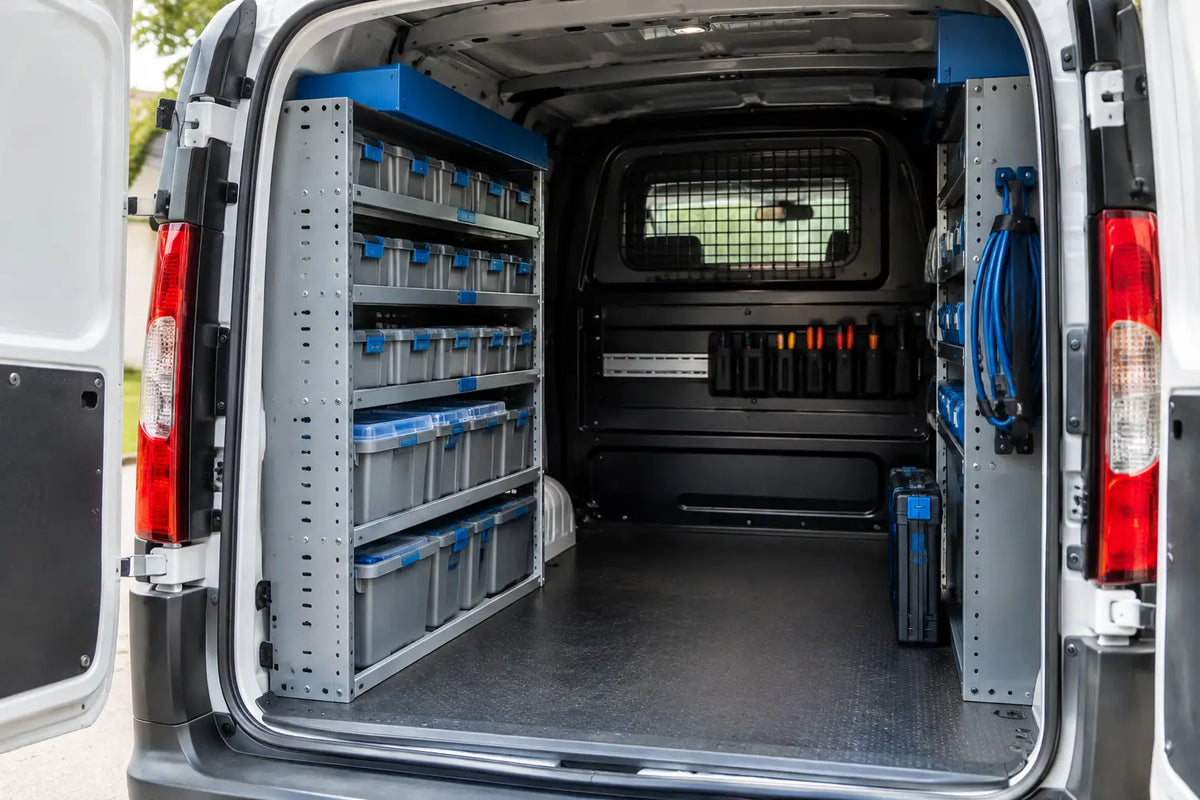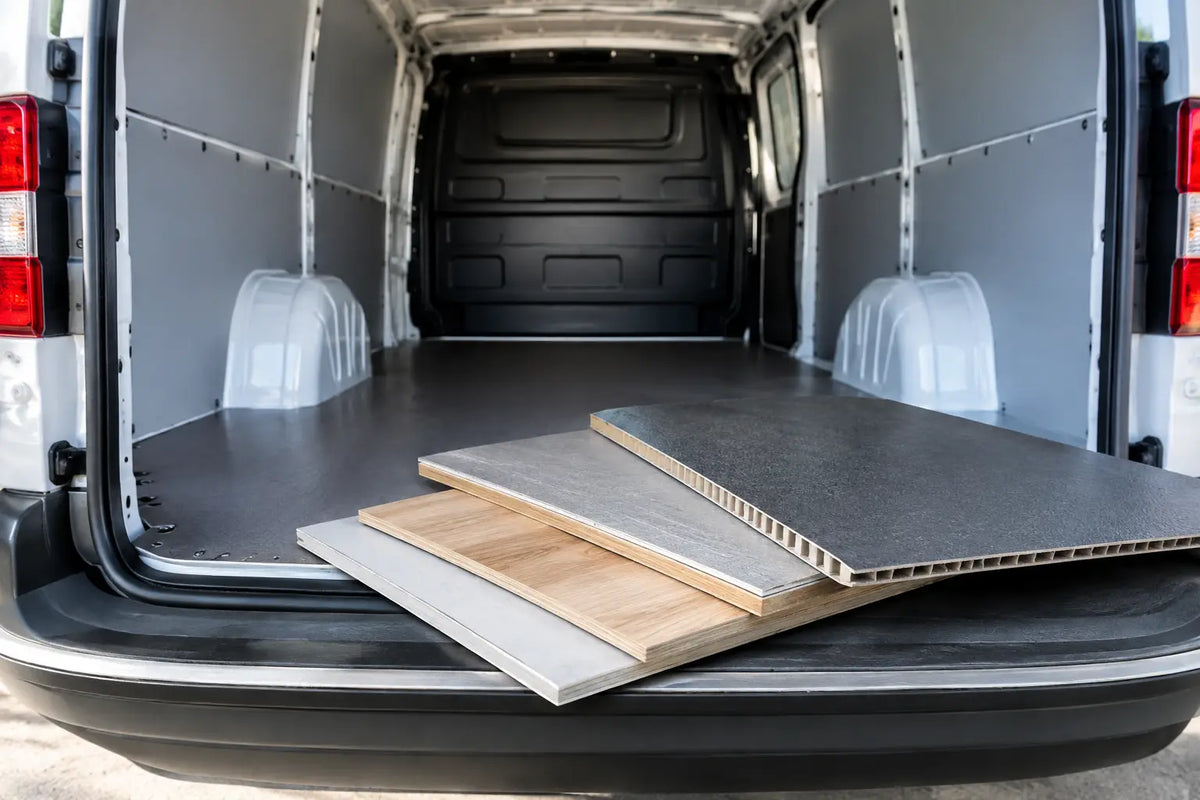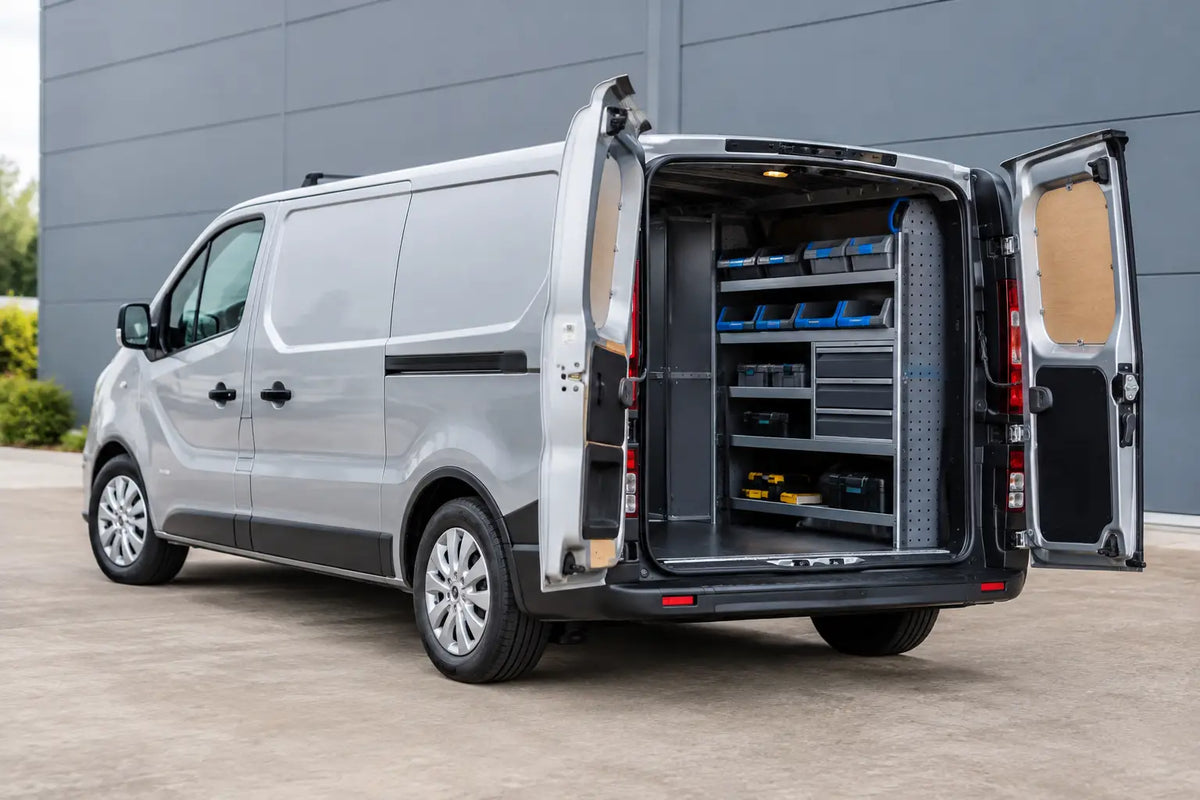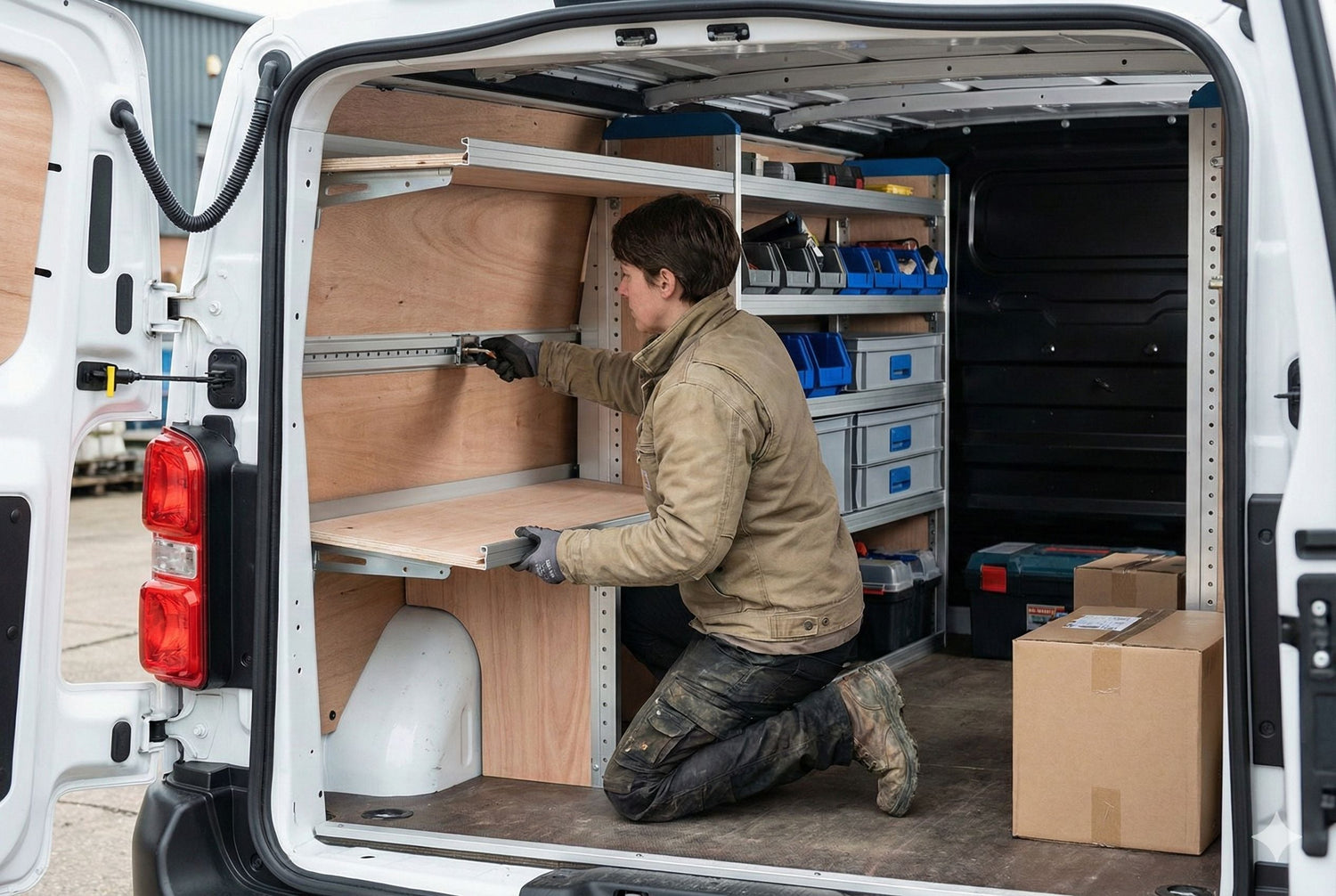











A van floor takes the punishment before anything else does. Muddy boots, tool cases, ladders, pipe, fittings, paint tins and repeated loading all leave their mark. The right commercial vehicle flooring gives you a level, protected base for daily work, helping your load area stay safer, tidier and easier to use.
For a working van, flooring is not an afterthought. It affects how securely equipment sits, how easily you can clean the load space and whether future racking or storage can be fitted sensibly. Get the floor right first and the rest of the workspace is easier to organise.
What commercial vehicle flooring needs to do
A good floor has several jobs. It must protect the original van floor from dents, scrapes and moisture while standing up to constant foot traffic and loaded equipment. It also needs enough grip to reduce the chance of cases and materials sliding when you brake, turn or drive over uneven ground.
The best choice depends on how the van is used. An electrician carrying stackable cases has different needs from a landscaper loading dirty machinery, while a delivery van may prioritise fast cleaning and a flat loading surface. There is no single board or finish that suits every commercial vehicle.
Most tradespeople should look for flooring that is strong, stable and practical to maintain. It should sit flat, avoid creating unnecessary trip points and allow access to existing load-lashing points where required. If you are fitting racking, the flooring should also be considered as part of the complete layout rather than as a separate purchase.
Ply lining, rubber mats and false floors
Different flooring options solve different problems. Understanding the trade-off saves money and avoids having to remove and replace a floor after the van has already been organised.
Plywood floors for everyday trade use
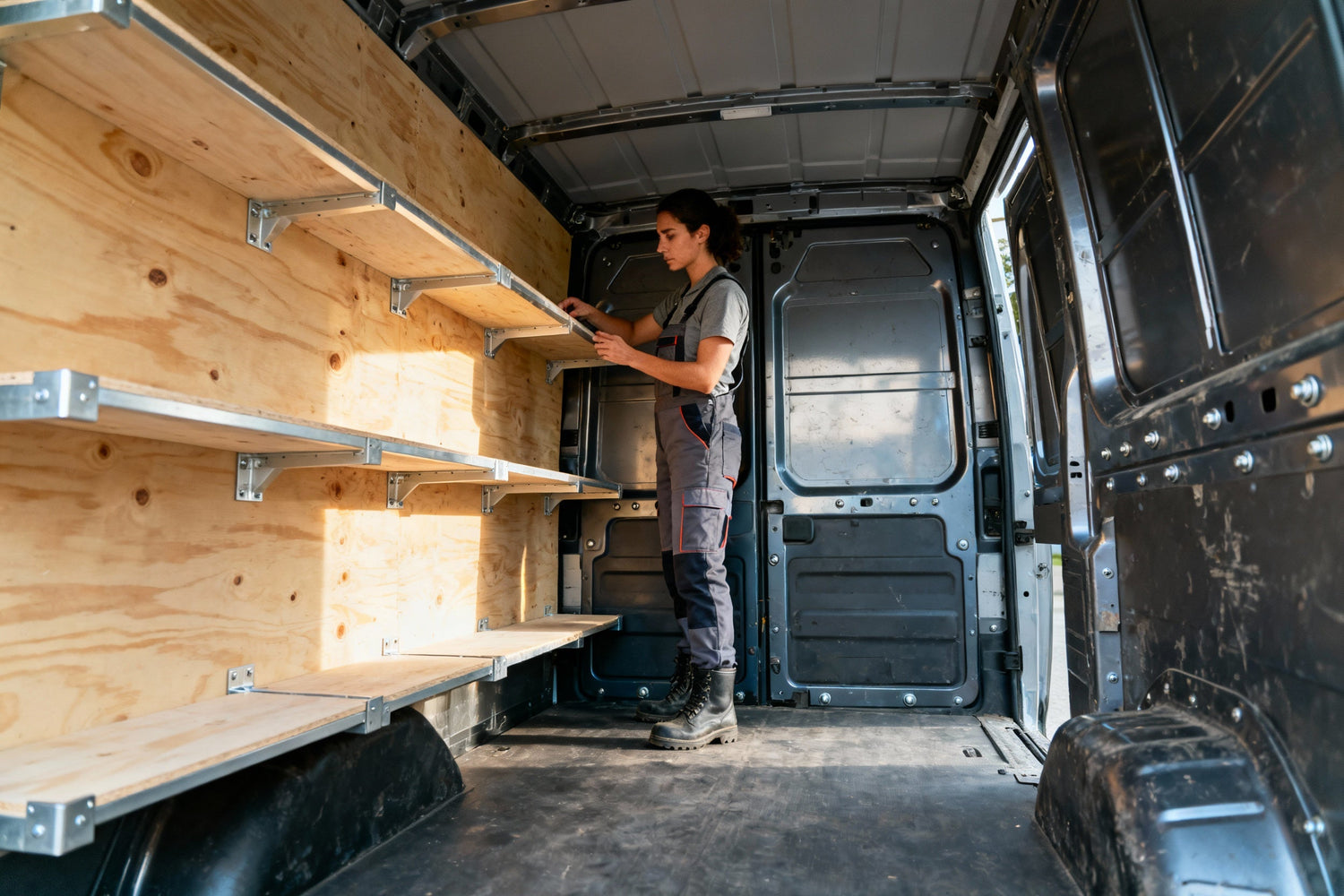
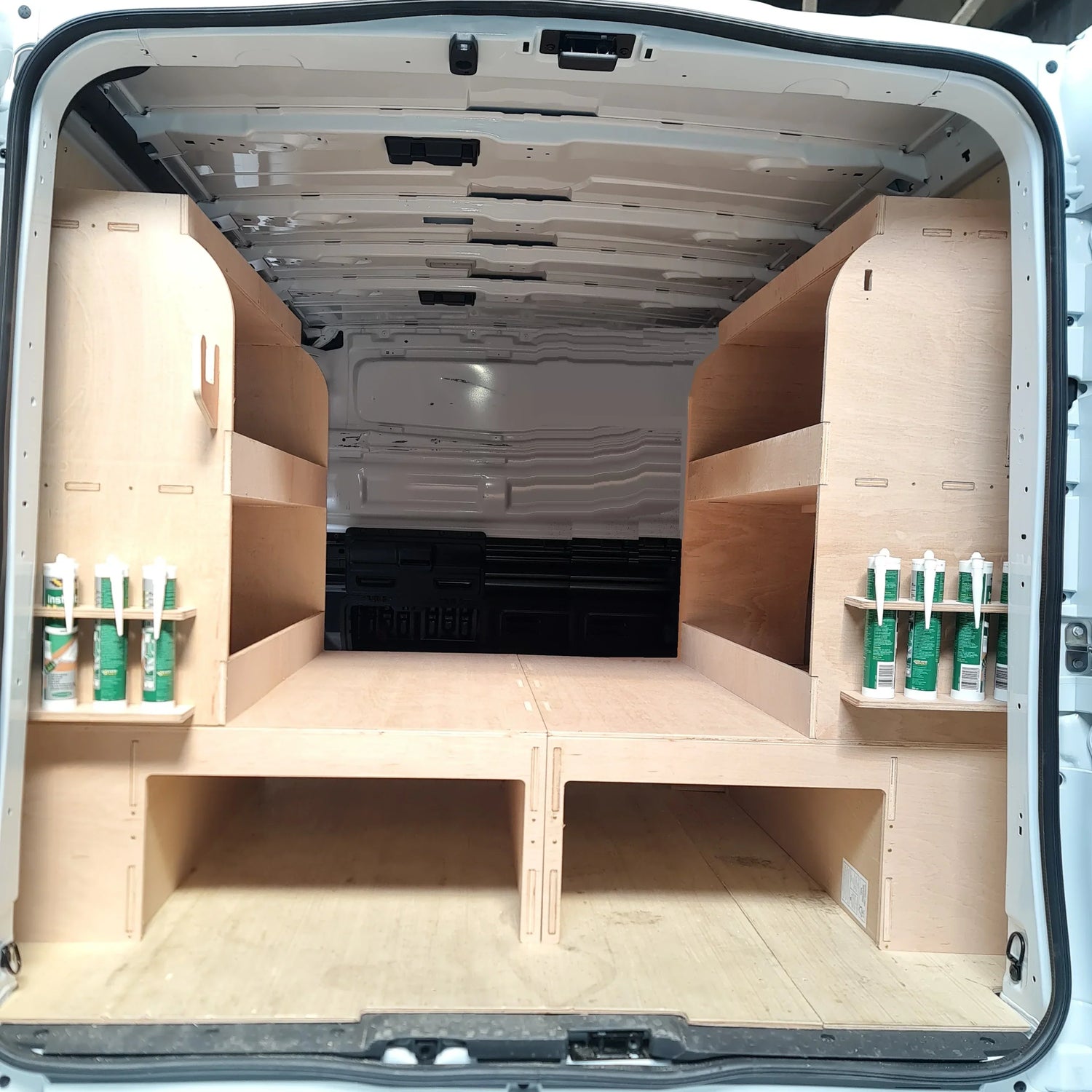
Plywood flooring is a familiar choice for good reason. It provides a firm, dependable surface for tools, boxes and shelving systems, and it protects the factory metal floor from normal working damage. A properly cut floor also makes the load area feel more finished and gives equipment a consistent base.
The surface finish matters. A plain board may be suitable for light use, but a coated or textured finish is often more practical where wet boots, dust and regular cleaning are part of the job. More grip is useful, although very aggressive textures can make it harder to slide heavy cases into position. Think about whether you carry loads by hand, use a trolley, or regularly need to move equipment around the van.
Plywood adds weight, which is worth considering if payload is tight. For most trade vans, the protection and usability justify it, but fleet operators carrying dense materials should account for every addition to the vehicle.
Rubber flooring for grip and easy cleaning
Rubber flooring can be useful where a non-slip surface is the main priority. It helps protect against scuffs, is comfortable underfoot and can be easier to wipe down after dirty work. It is particularly useful for vans carrying wet equipment or for jobs where operatives enter the load space throughout the day.
However, rubber is not always the best stand-alone answer for a hard-working load area. Some products can move if they are not secured properly, and a softer surface may not give heavy shelving, tool chests or wheeled equipment the solid support they need. It can work well as part of a layered setup, but check how it will behave under your normal load.
False floors for organised mobile workspaces
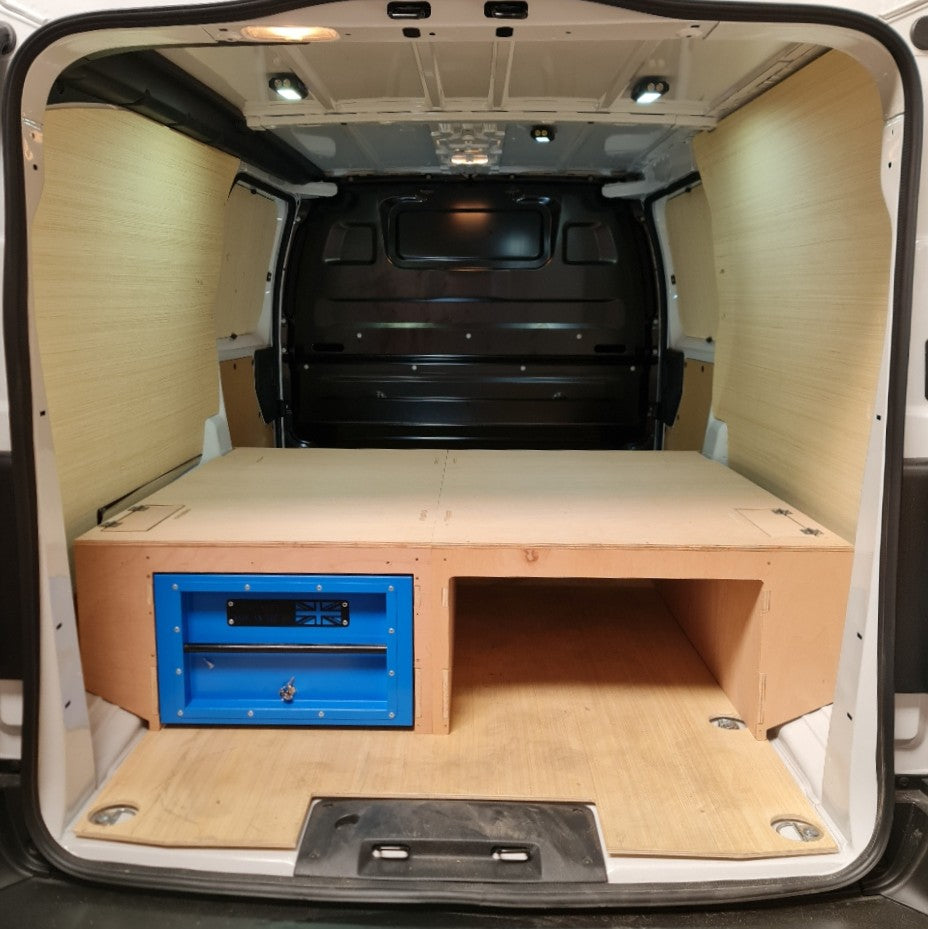
A false floor creates storage below the main load surface. This is useful for long items, smaller tools, fittings and materials that would otherwise roll around or take up valuable shelving space. For tradespeople who need a clear load area but still carry a wide range of kit, it can make a major difference to daily efficiency.
The benefit is not just extra storage. A well-planned false floor separates frequently used tools from bulkier equipment, so you spend less time unloading the van to reach one item. It can also help create a more professional layout for engineers and contractors who work from the vehicle all day.
There is a compromise. A raised floor reduces internal height slightly and adds weight. It must also be chosen for the specific van and planned around the rest of the storage system. Before ordering, measure the items you want to store underneath and consider whether you need full-width drawers, long channels or a mix of both.
Match the floor to the van and the job
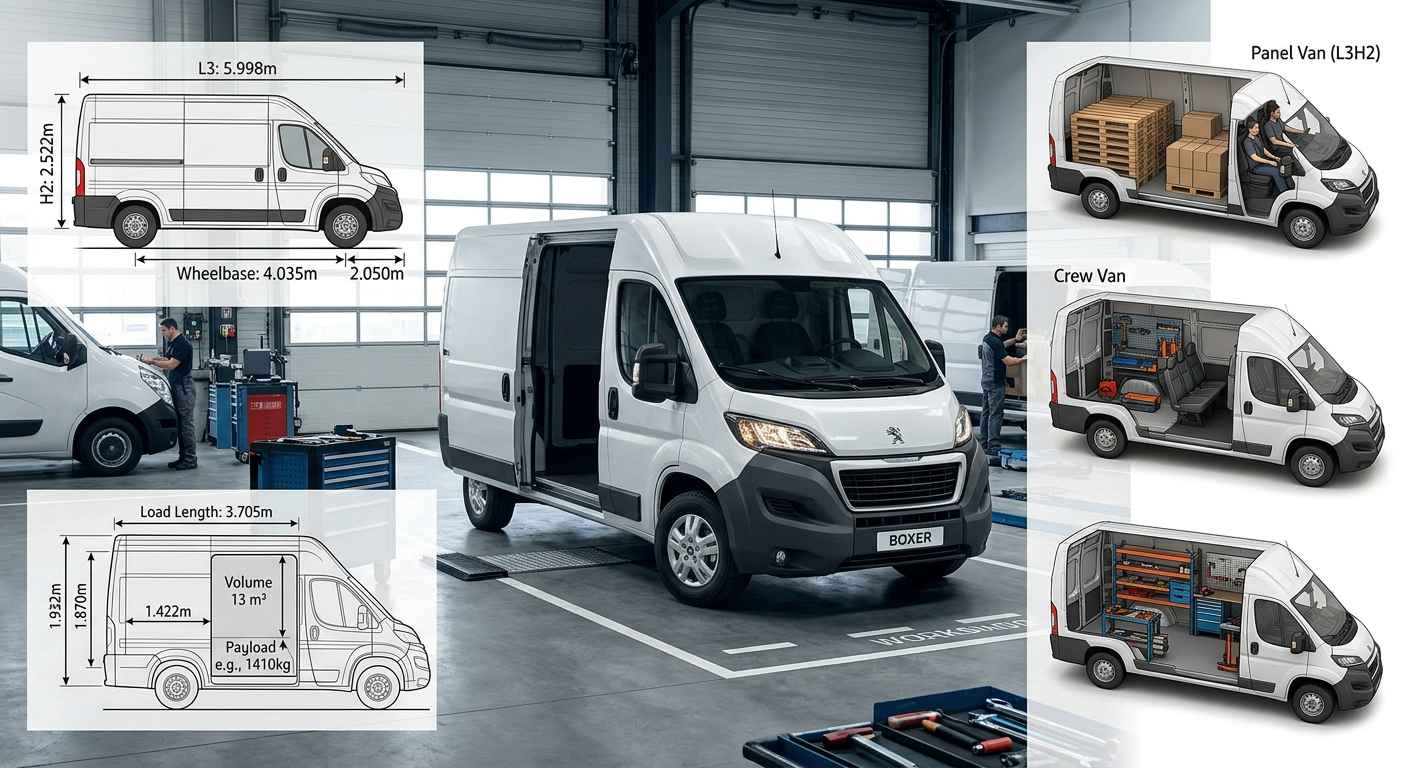
Commercial vans are not interchangeable. Wheel arch positions, side-door openings, load-lashing points and floor contours vary between models and wheelbases. A floor that is correct for one Ford Transit Custom may not suit another version, and the same applies across vehicles such as the Volkswagen Transporter, Mercedes Vito, Renault Trafic, Vauxhall Vivaro, Peugeot Expert, Citroen Dispatch and Toyota Proace.
Always confirm the exact model, year, wheelbase and door configuration before choosing vehicle-specific flooring. This is especially important if the van has already been converted, has a bulkhead, or includes factory features that affect the load area. Checking these details early is far quicker than adapting a floor that does not sit correctly.
Your work pattern matters just as much as fitment. A plumber may need a tough, easy-clean base under pipe racks and cases. A painter and decorator may value grip around paint, dust sheets and step ladders. A maintenance engineer may get more value from a false floor with accessible storage for parts and consumables. The best setup supports the jobs you do every week, not the occasional job that happens once a year.
Plan flooring with racking and shelving
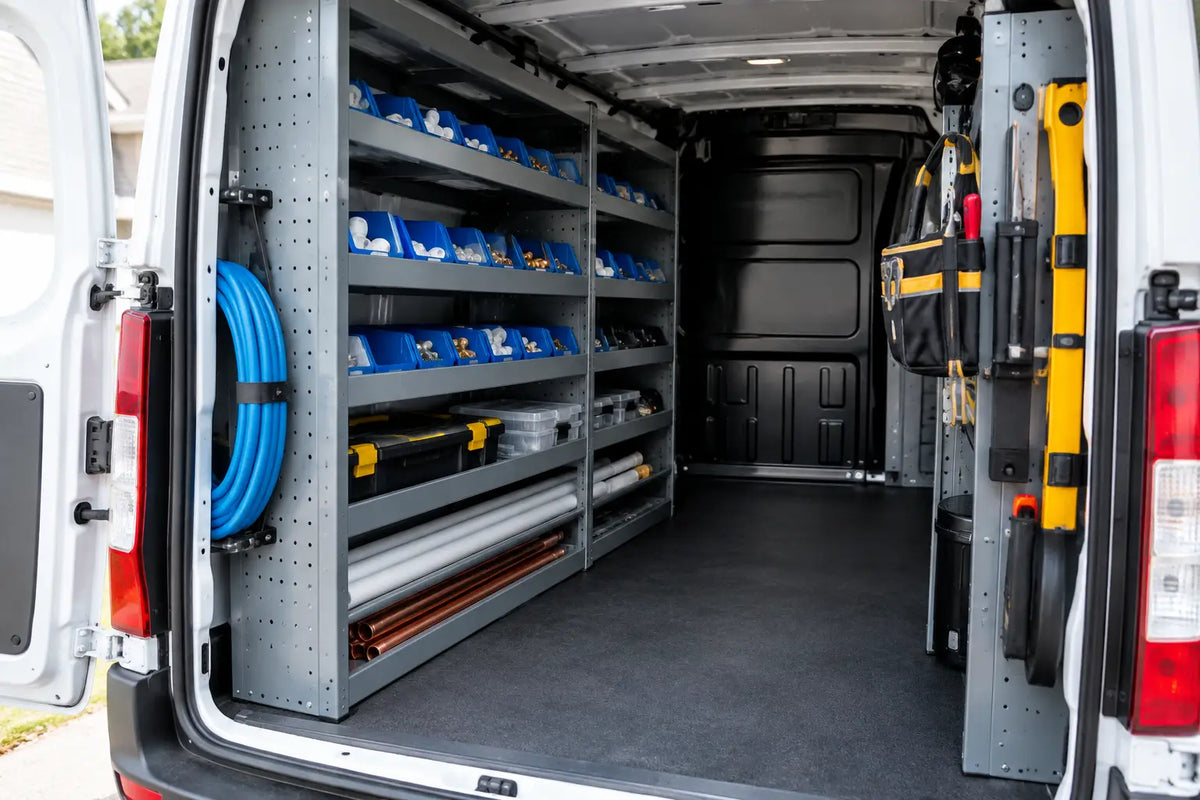
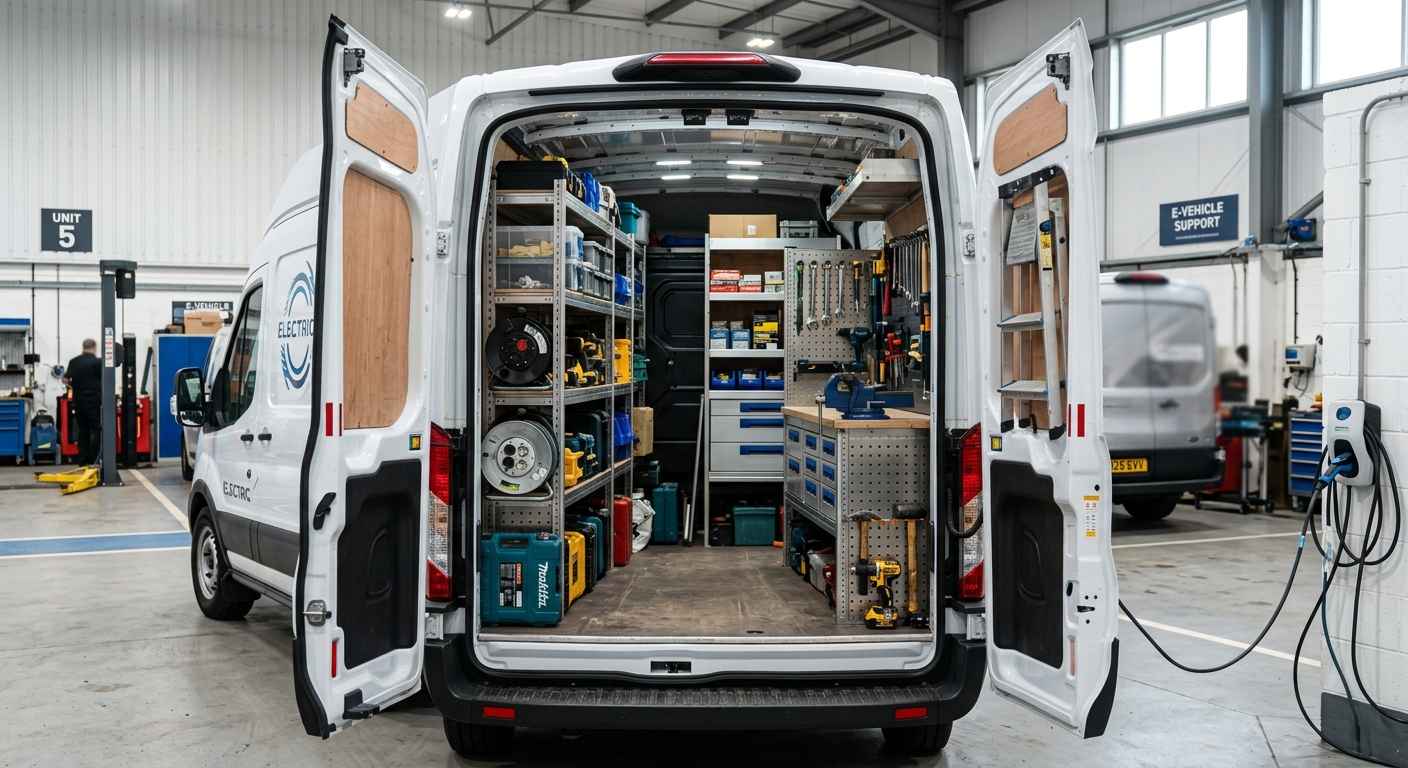
Flooring works best when it is part of a complete van layout. Racking, shelving, cases, holders and floor storage should all have a defined place. If shelves are being added later, leave enough clear space to access them and make sure bulky items can still be loaded through the side or rear doors.
Start by separating your equipment into three groups: items used on nearly every job, stock or consumables that need regular replenishing, and larger equipment used only when required. The first group should be quickest to reach. The second should be visible enough to check at a glance. The third can sit lower down, under a false floor or towards the front of the load area if it does not need constant access.
A flat, durable floor gives this system a reliable foundation. It is also easier to keep clean, which matters when the van doubles as a mobile workspace and a calling card for your business. CNC Work focuses on practical, vehicle-led storage choices because the useful layout is the one that saves time between jobs.
Installation points that are easy to overlook
Before fitting any commercial vehicle flooring, clean the factory floor thoroughly and remove loose debris. Dirt trapped underneath can cause rubbing, hold moisture and stop the new floor from sitting level. Check for existing damage or signs of water ingress first, particularly around doors and wheel arches.
Avoid drilling into the van without understanding what is beneath the panel. Modern vans have wiring, fuel lines, structural sections and other components that must not be disturbed. Use the intended fixing points and follow the instructions supplied with the flooring or storage system.
Once fitted, check that doors open freely, tie-down points remain usable where needed and the floor does not lift at edges or corners. If you are adding racking, make sure the system is secured using appropriate vehicle mounting points rather than relying on the floor alone to take the load.
Keep the floor working for longer
A working floor does not need much attention, but regular checks prevent small issues becoming costly ones. Sweep out grit and metal swarf, wipe up spills promptly and inspect the edges after carrying unusually heavy or awkward loads. If water is regularly getting into the rear or side doors, deal with the source rather than letting moisture sit beneath stored equipment.
Use load restraints for heavy cases, machinery and materials. Flooring improves the surface under the load, but it does not replace safe securing. Keeping weight low and evenly distributed also makes the van easier to work from and helps protect both the floor and your equipment.
Choose flooring for the work you actually carry out, then build the rest of the van around it. A sensible base makes every shelf, drawer, tool case and storage accessory more useful from the first job of the day to the last.