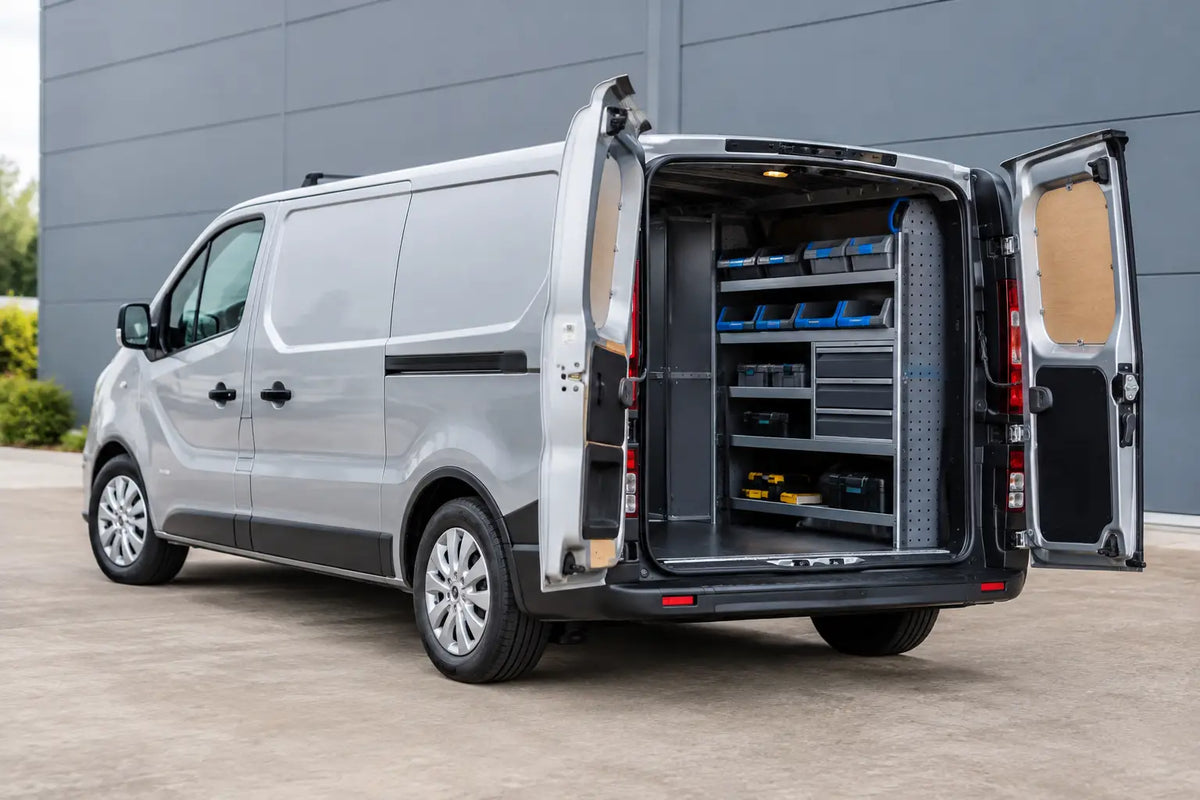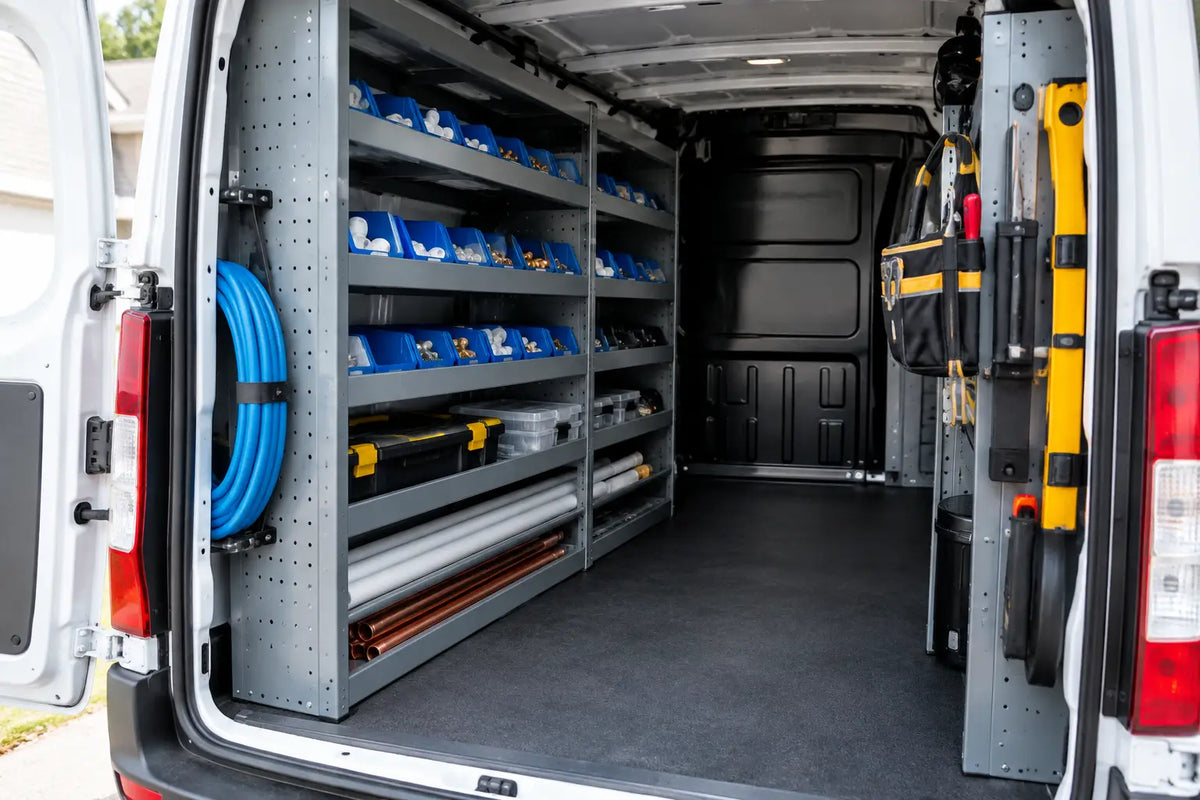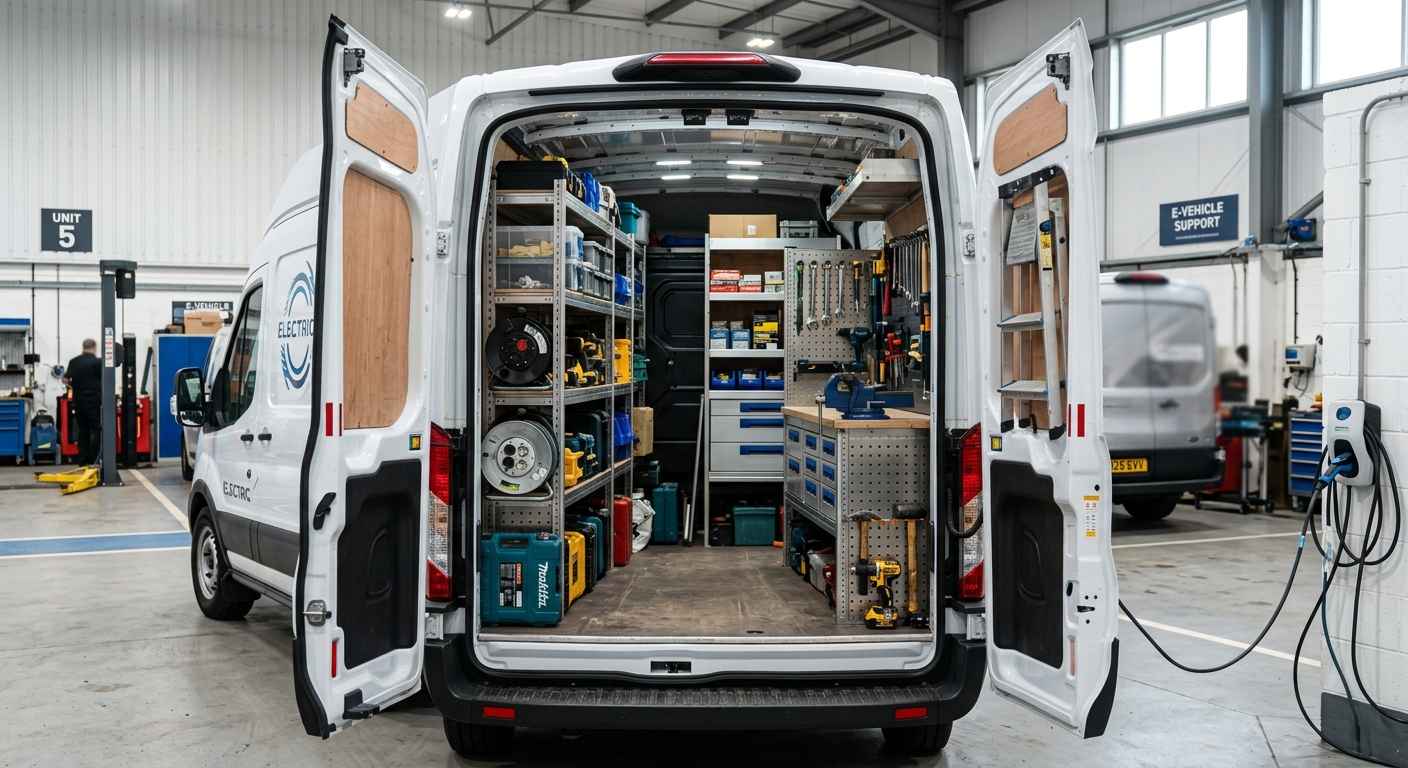








You feel the cost of a messy van long before the job starts. Five minutes hunting for fittings here, a missing drill bit there, boxes sliding about on the way to site - it all adds up. Good van shelving fixes that by turning dead space into usable storage and making the van work like part of the job, not another problem to manage.
For most trades, the point is simple. You need to get to tools quickly, keep stock in order, and avoid damaging kit during the day. Whether you run a single van or a small fleet, the right shelving setup helps you work faster, look more professional, and waste less time between calls.
Why van shelving earns its keep
A van is more than transport when you earn from it. It is your store room, your workshop, and often your first impression when you pull up outside a customer's property. If the back is a pile of tubs, loose tools and half-used boxes, the day gets harder than it needs to be.
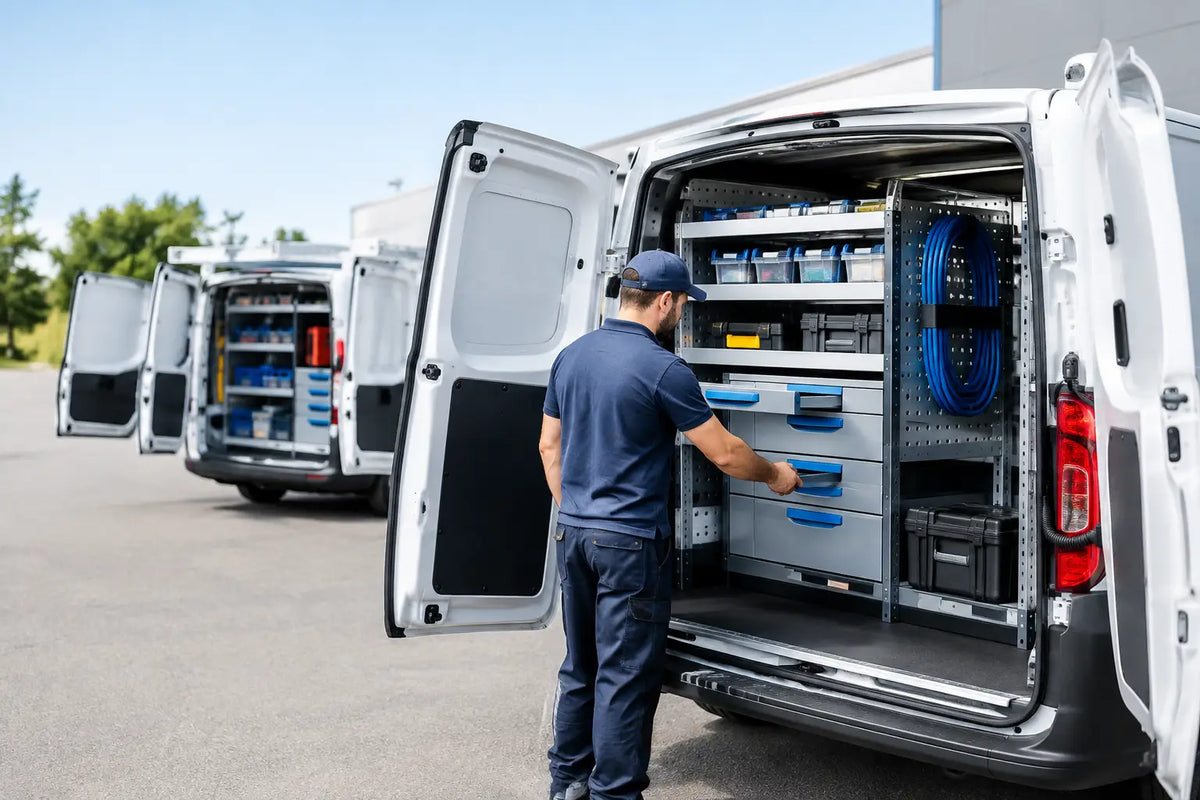
Van shelving gives everything a fixed place. That matters because speed on the job usually comes from routine. When sealants are always on one side, fixings are grouped properly, and power tools sit where they should, you spend less time searching and more time getting on with paid work.
There is a safety side as well. Loose equipment can move under braking or cornering, and heavier items can do real damage to both the van and what is stored inside it. Shelving helps contain the load and keeps fragile or expensive tools from being crushed under everything else.
There is also the issue of stock control. Plumbers, electricians, builders and maintenance teams often carry a mix of parts that can disappear into the back of a van if there is no structure. Shelving makes it easier to see what you have, what needs replacing, and what should not have been left in there for the last three weeks.
What good van shelving actually looks like
The best setup is not the one with the most compartments. It is the one that suits the way you work. A mobile installer carrying cases and consumables needs a different layout from a maintenance engineer with test gear, hand tools and small parts. That is why vehicle-specific and trade-specific thinking matters more than just buying the cheapest rack you can find.
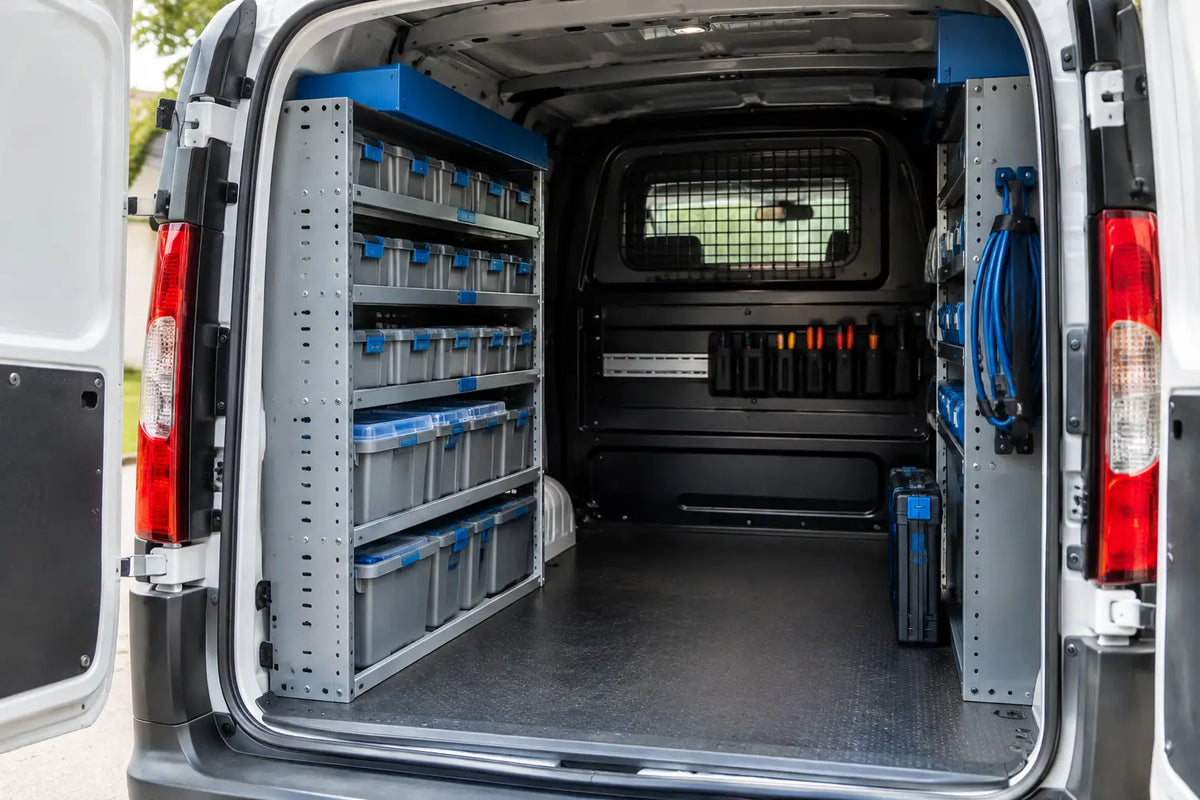
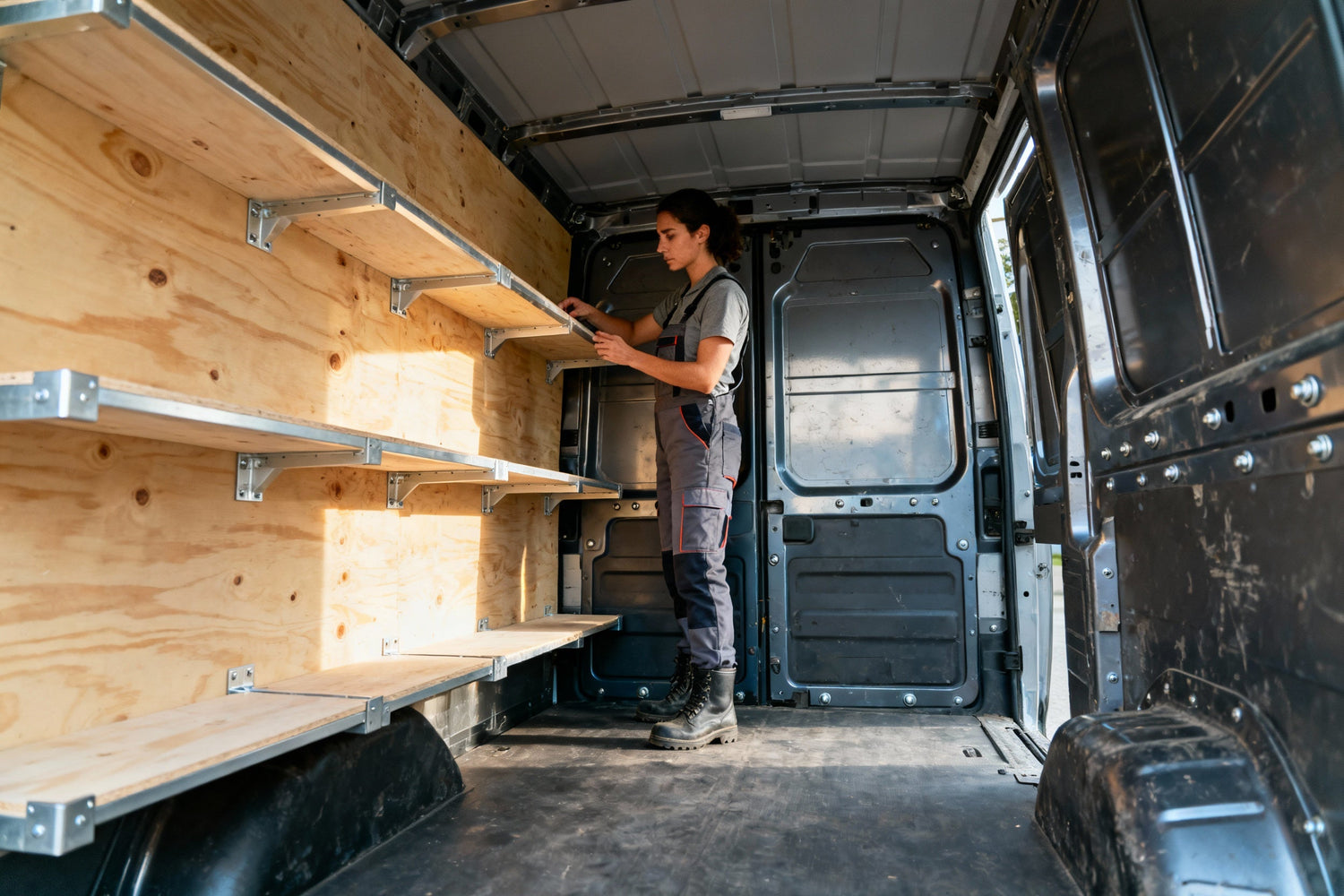
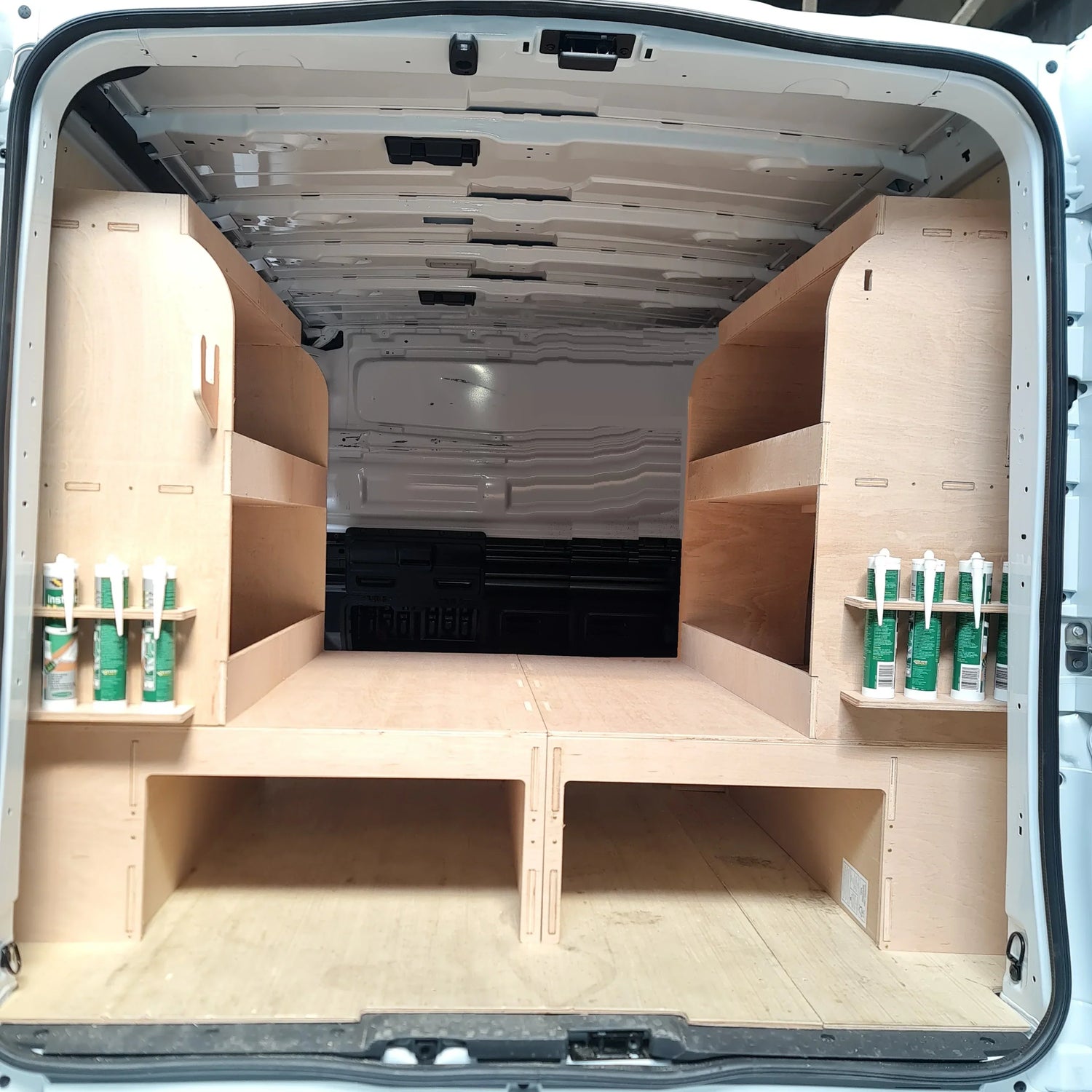
Good shelving makes use of the van's shape without getting in your way. It should leave enough floor space for larger items while using the sidewalls properly for shelves, trays and holders. It also needs to feel solid. If the system rattles, flexes or wastes awkward gaps, it will become irritating very quickly.
Ease of access matters just as much as storage volume. If you have to unload half the van to reach one commonly used item, the layout is wrong. Frequently used tools should be near the doors or at comfortable reach height, while less-used stock can sit further in or lower down.
Choosing van shelving for your trade
There is no single right answer because work patterns vary. An electrician might need tidy storage for testers, sockets, cable accessories and small boxes of components. A plumber may need room for pipe fittings, sealants, hand tools and bulkier kit. A decorator might prioritise shelves that keep tins, tapes, fillers and dust sheets separated and easy to grab.
That is why it pays to think in terms of daily jobs rather than product names. What do you reach for first? What gets used on every visit? What needs protecting? What rolls around? Once you answer those questions, the shelving layout becomes much easier to judge.
For some users, open shelving is the best option because it keeps tools visible and easy to reach. For others, adding boxes, dividers or accessory holders makes more sense, especially if you carry lots of smaller consumables. The right answer depends on whether visibility or containment is the bigger issue in your day-to-day work.
Vehicle-specific van shelving makes life easier
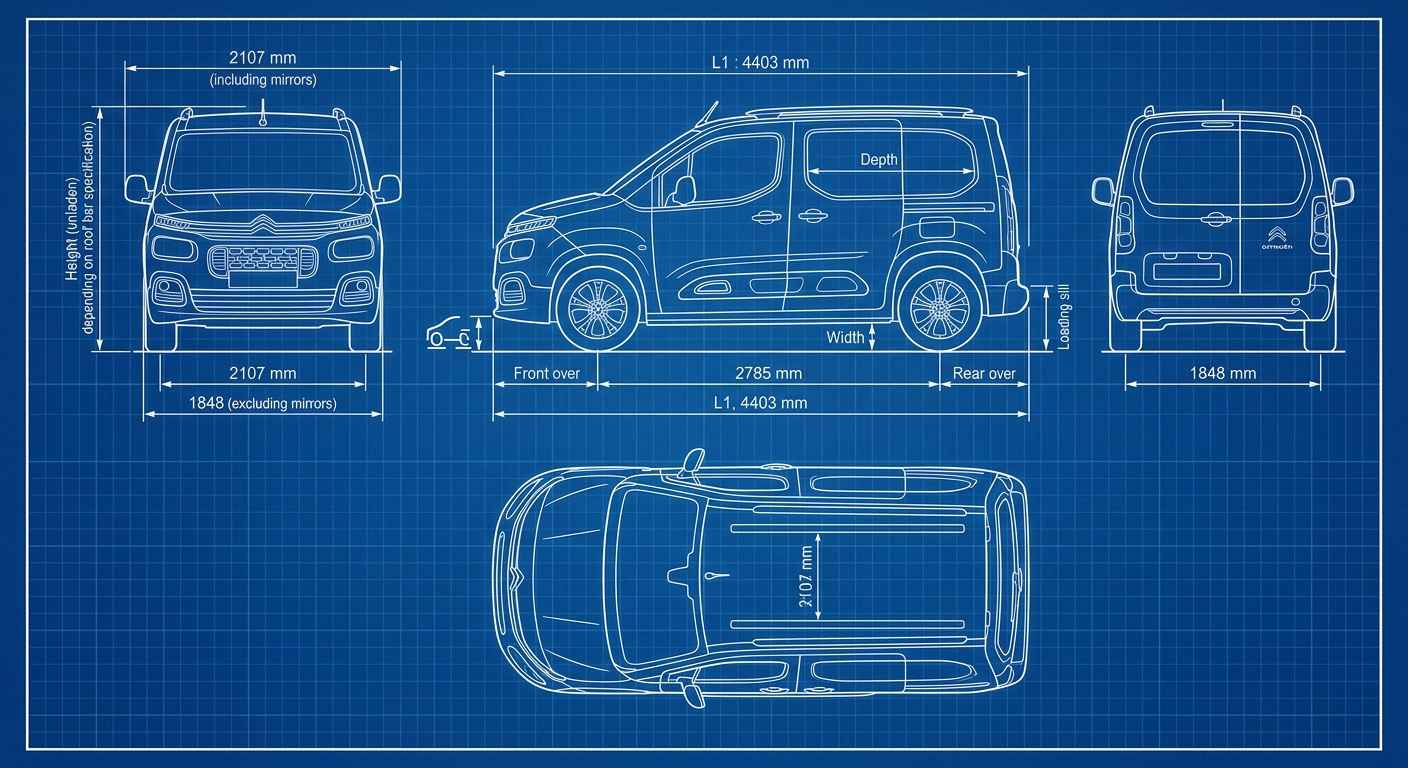
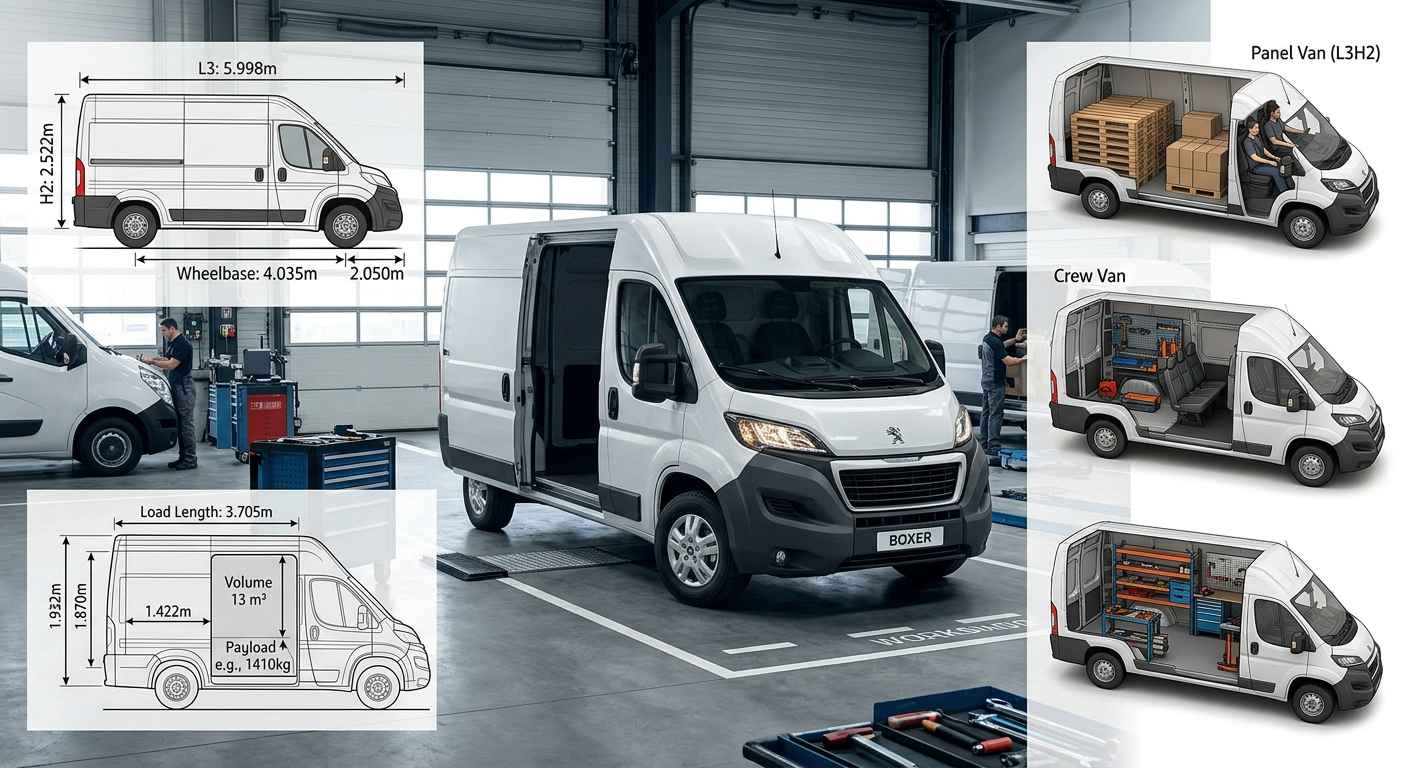
One of the biggest mistakes buyers make is treating every medium or large van as if it has the same internal shape. It does not. Wheel arch positions, side panel contours, door openings and load lengths all affect what will fit properly and what will become a compromise.
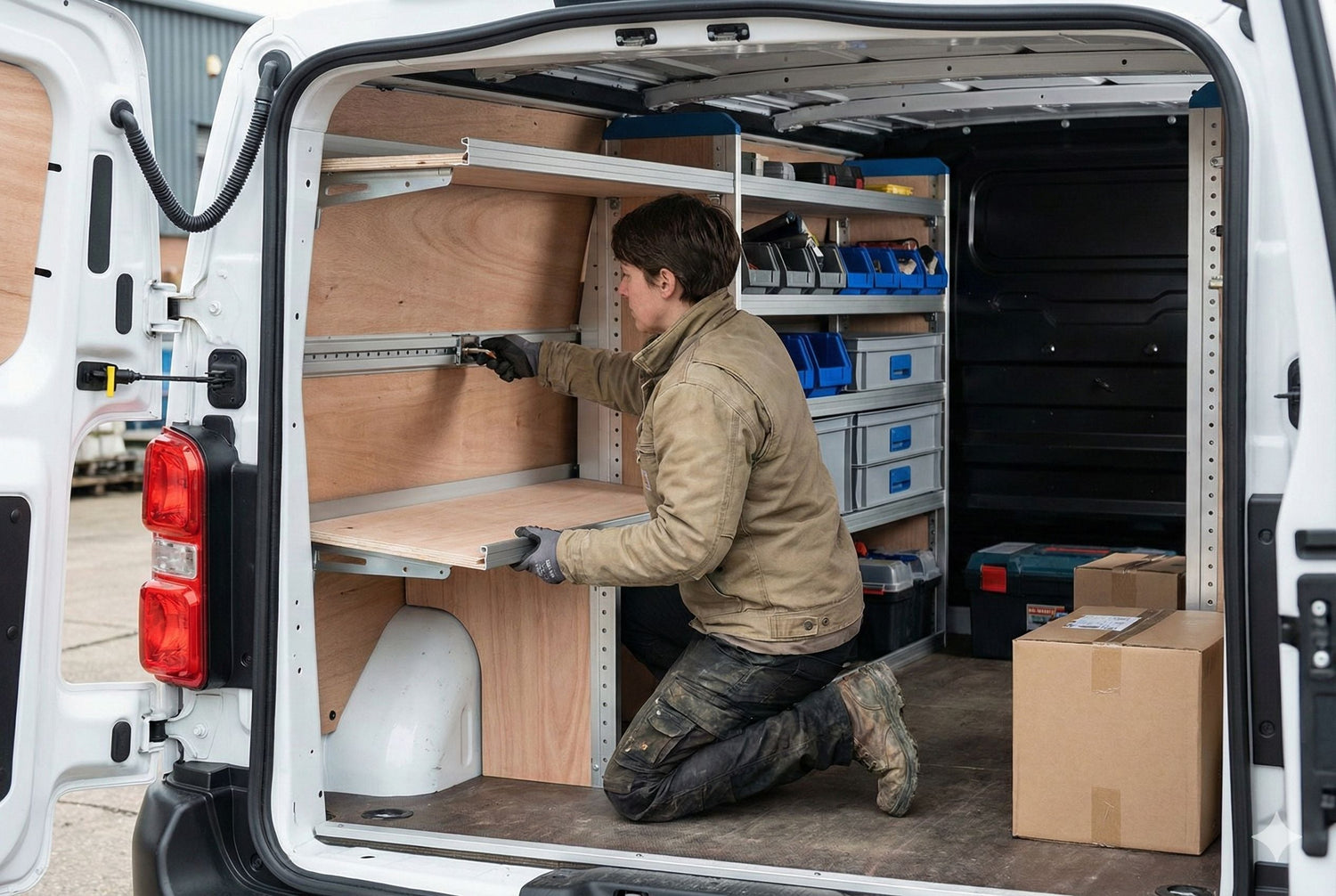
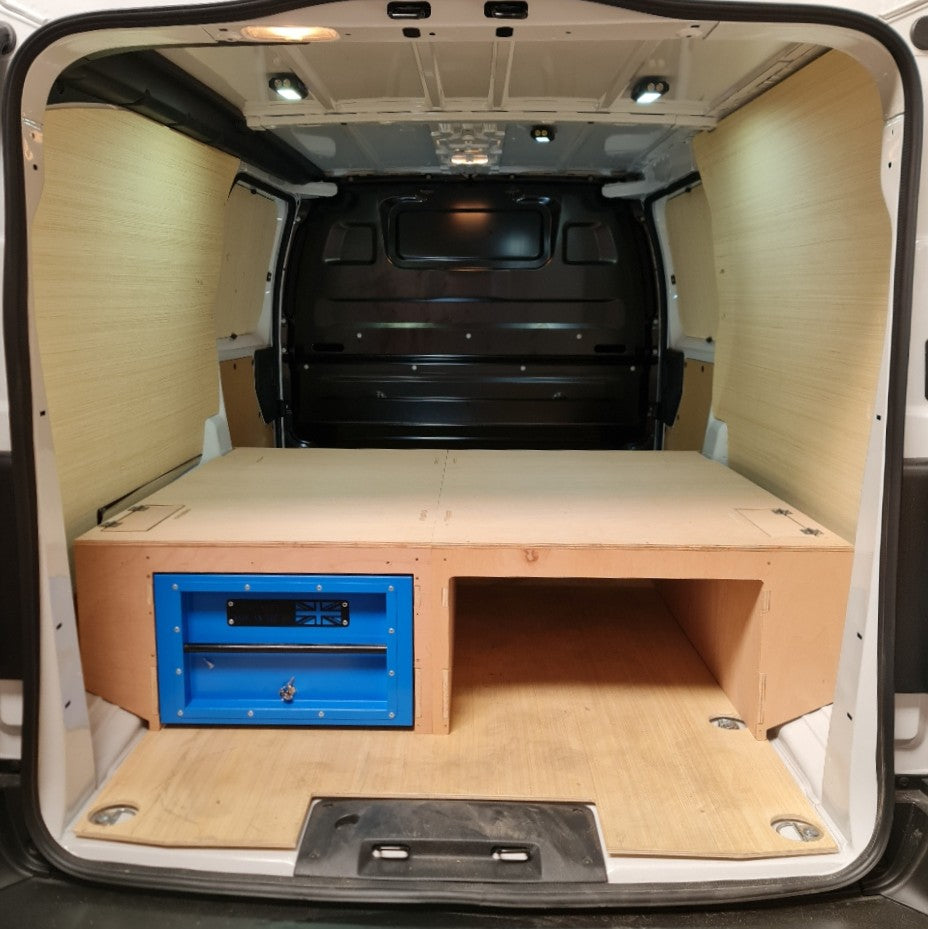
Vehicle-specific van shelving saves time because it is designed around the van you actually drive. That usually means better use of space, fewer fitting headaches, and a neater finish once installed. It also helps if you want the back of the van to feel organised rather than improvised.
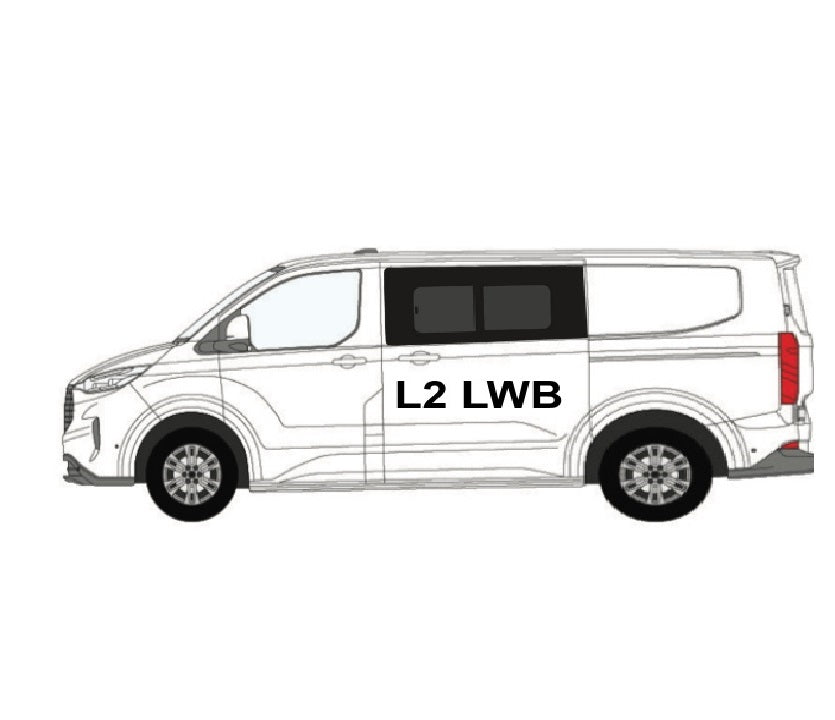
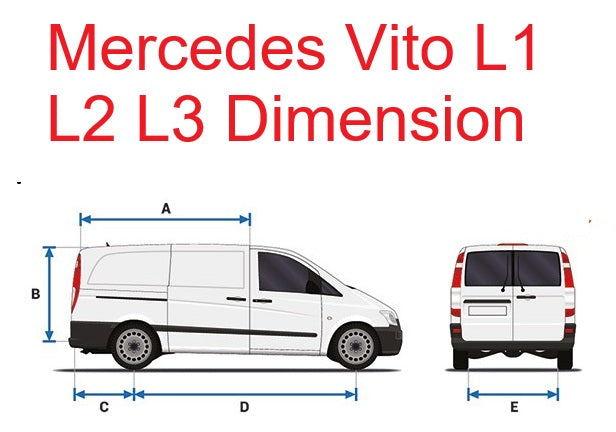
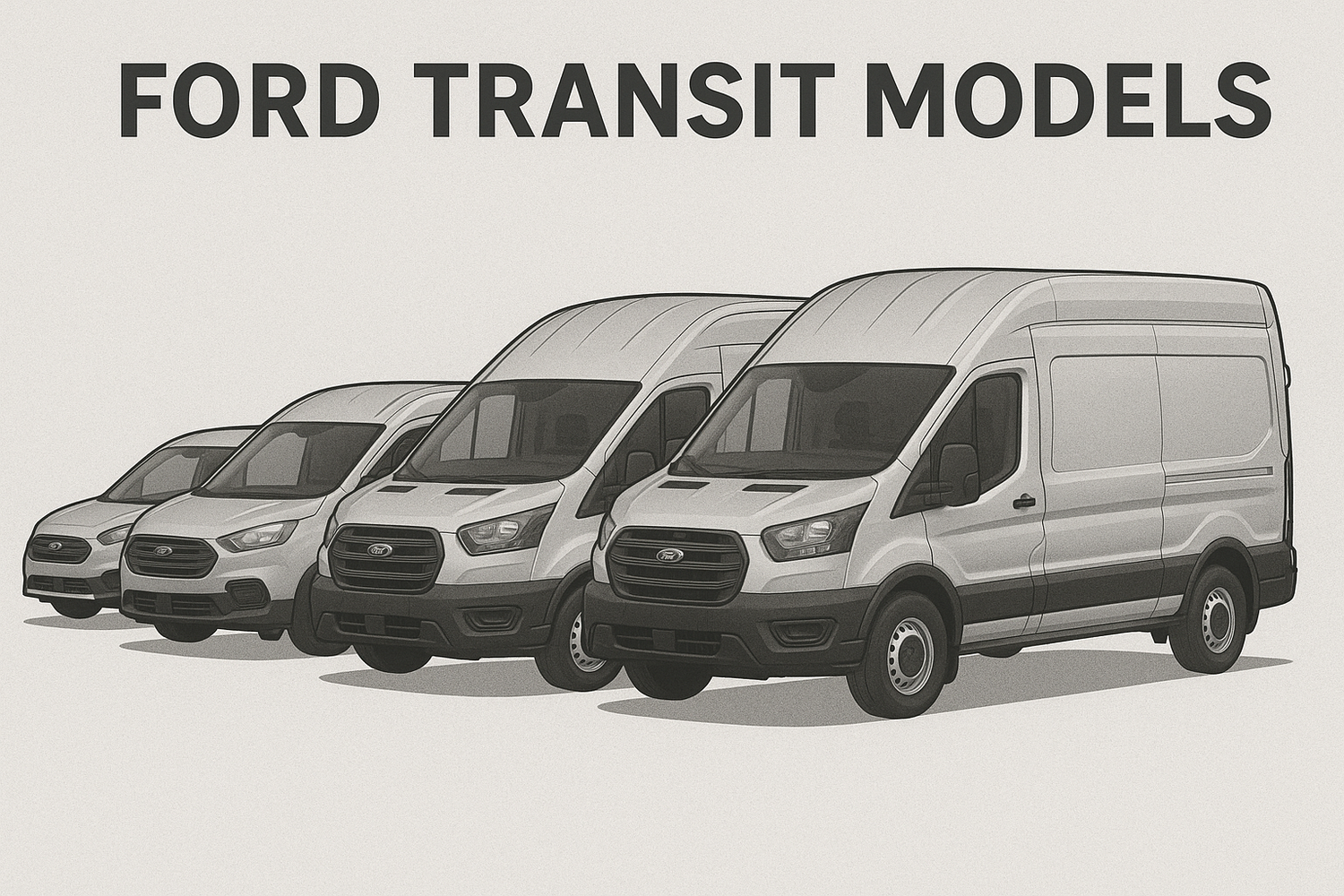
For popular working vans such as the Ford Transit Custom, Renault Trafic, Vauxhall Vivaro, Mercedes Vito and Volkswagen Transporter, model-specific systems can make a clear difference. You are not guessing whether the unit will sit right or whether it will eat into loading space more than expected. You can choose with more confidence and get on with fitting it.
Material, durability and day-to-day use
In real van use, durability is not a luxury. Shelving gets knocked by tool cases, rubbed by boxes, and loaded in a hurry when the weather is poor or the job is running late. If it cannot handle that, it will not stay looking tidy for long.
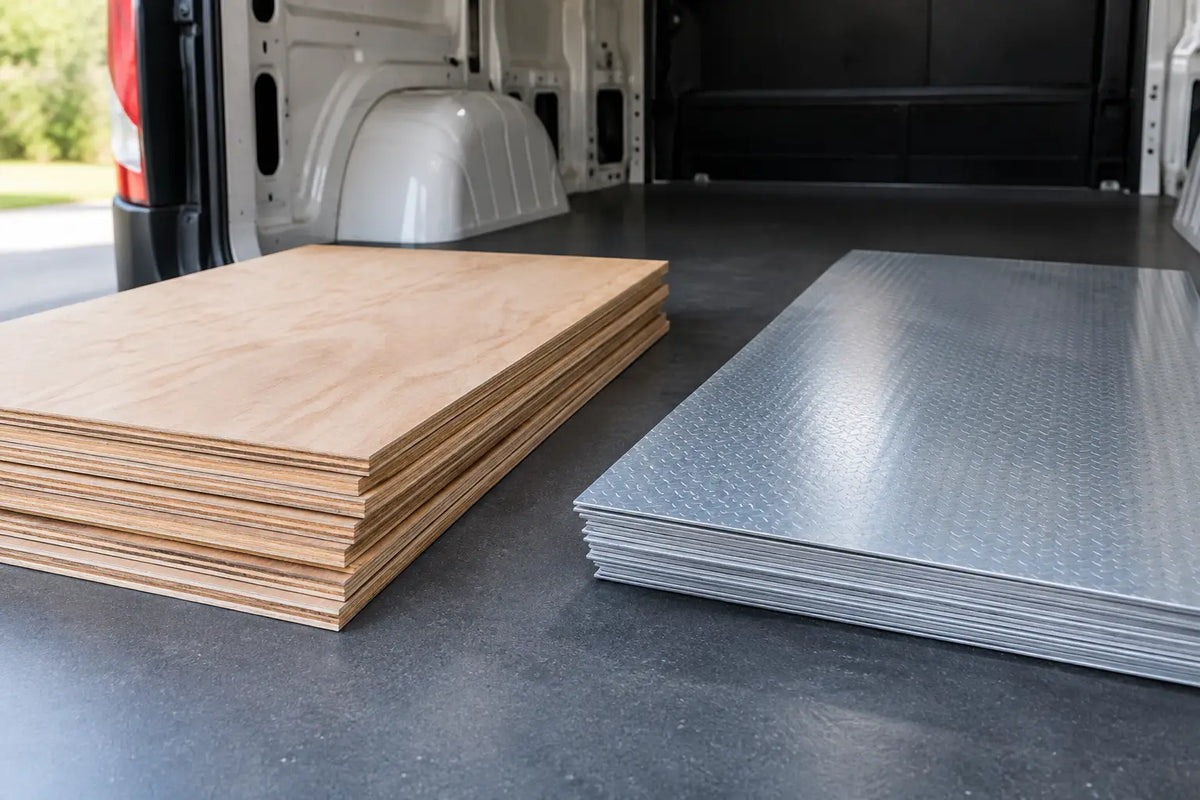
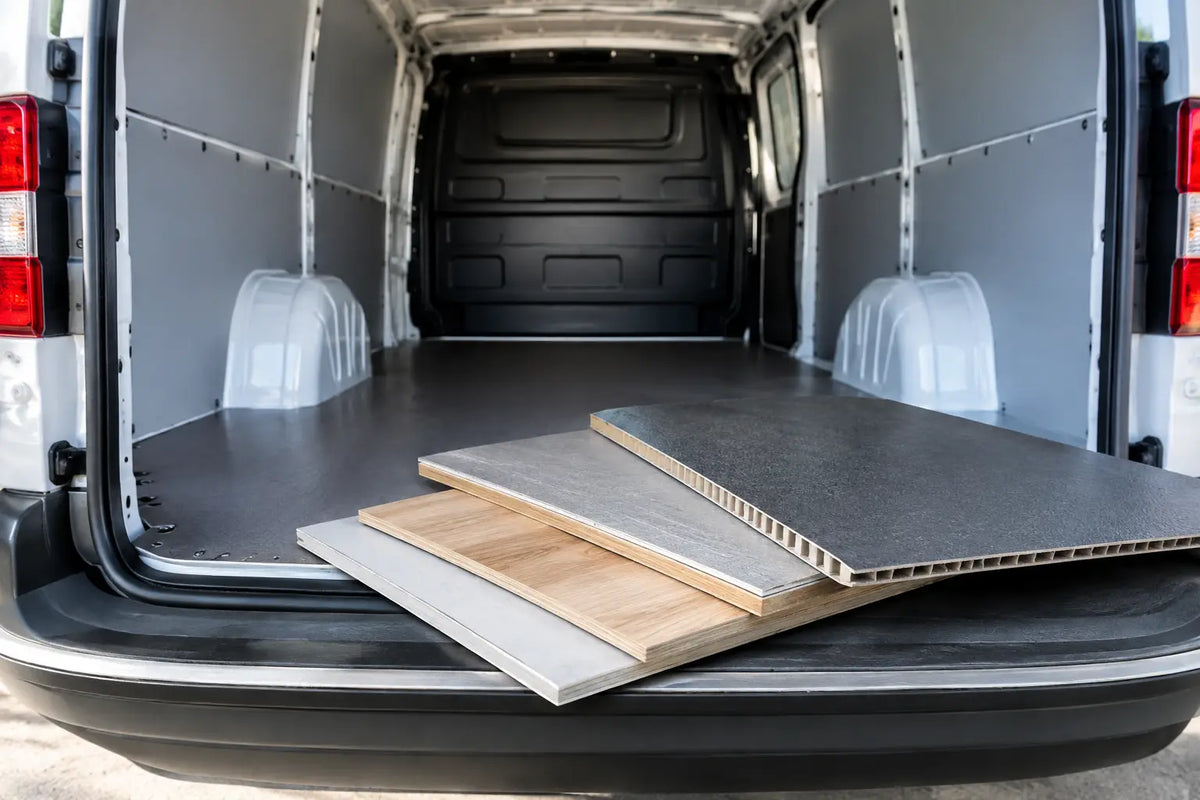
A decent system should feel built for trade use rather than occasional DIY. Strength matters, but so does sensible design. Shelves need to be deep enough to hold what they are meant to hold, edges need to contain items properly, and the whole setup should stay practical after months of daily use.
Weight is worth considering too. Stronger is not always better if it adds unnecessary mass and eats into payload. The aim is a balance - solid enough for hard use, but sensible for a working vehicle that still needs to carry tools, materials and stock without wasting capacity.
Installation and getting the layout right first time
Most buyers want van shelving that is straightforward to fit and easy to plan. That makes sense. The longer a van is off the road, the more it costs you. A practical shelving system should not turn into a weekend-long puzzle.
Before fitting anything, think about workflow. Which door do you use most? Do you load large items regularly? Will you need space for ladders, packouts, cable reels or vacuum units? These questions matter because once the shelving is in, moving it around is not something most people want to repeat.
It is also worth thinking ahead a bit. If your work is changing, or you are taking on more varied jobs, leave yourself enough flexibility so the van still works six months from now. A layout that is too tightly planned around one narrow use can become limiting as the business grows.
Van shelving and the professional impression
Customers notice more than many tradespeople think. When you open the van and everything is in order, it suggests you run the job properly. That does not mean the van needs to look like a showroom, but it should show control, care and competence.
A tidy van can also help your own standards. People tend to keep organised spaces organised. Once shelving gives tools and stock a proper home, it becomes easier to reset the van at the end of the day and start the next morning without yesterday's mess slowing you down.
That matters for sole traders and fleet operators alike. If several people use the same vehicle, shelving helps create consistency. Everyone knows where things belong, which reduces confusion, cuts lost items, and makes the van easier to manage across different jobs.
Getting better value from the right setup
Cheap storage can cost more if it wastes space, wears out quickly or never quite suits the work. Good van shelving is really about value over time. If it saves even a small amount of time on every call-out, helps avoid damaged tools, and makes restocking easier, it starts paying for itself through daily use.
That is why buying on fit and function usually beats buying on price alone. The best setup is the one that matches the van, supports the trade, and stands up to proper working life. At CNC Work, the focus is on practical, vehicle-specific solutions that help turn a van into a more efficient workspace without overcomplicating the buying process.
If your van still feels like a storage problem on wheels, that is usually a sign the layout is costing you more than you think. Sort the space properly, and every job after that starts on better footing.