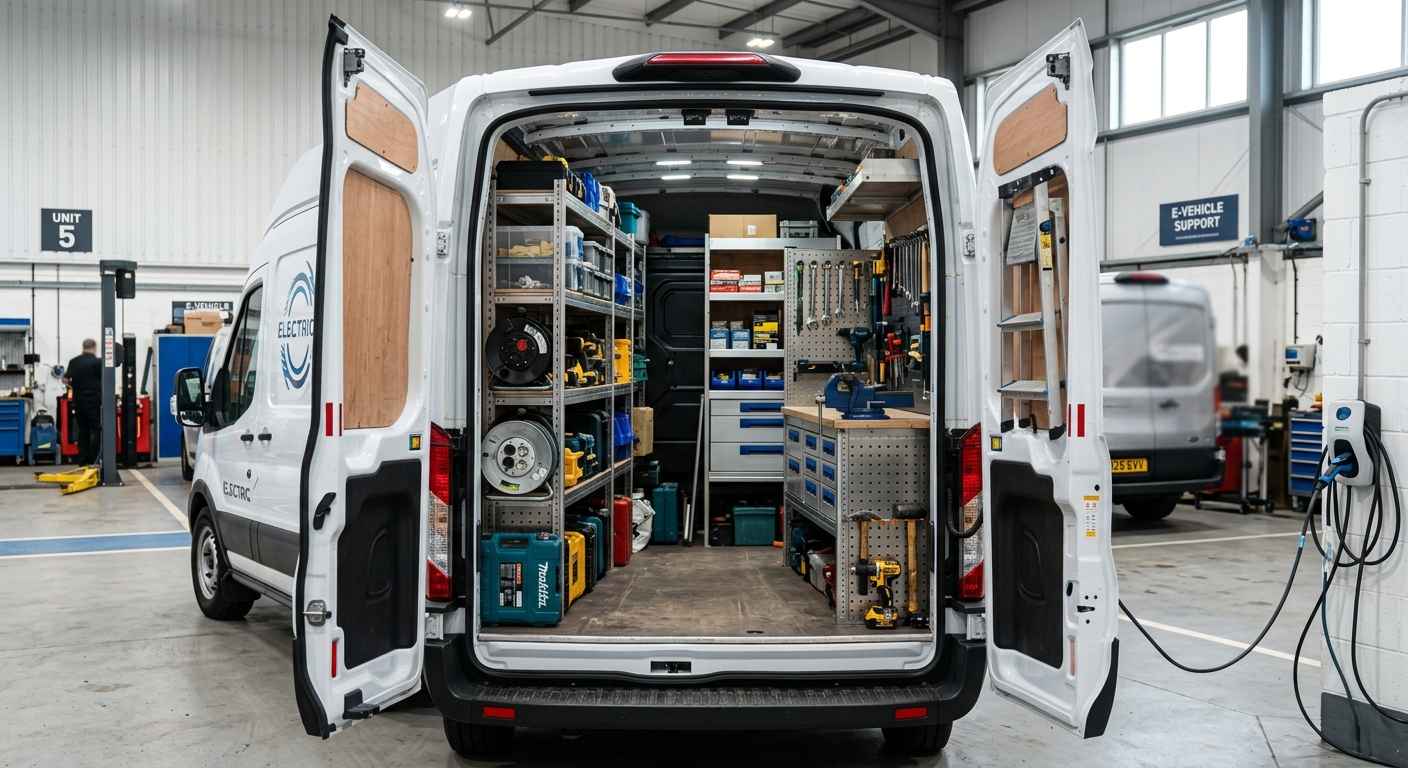











A constant clatter from the back of the van is more than irritating on a long run between jobs. It distracts you, makes it harder to spot a new fault, and usually means tools are knocking together or storage is working loose. To stop van tools rattling properly, you need to deal with both the tools themselves and the way your van is laid out.
Throwing a blanket over everything may quieten things down for a day, but it does not make loading or finding tools any easier. The better approach is to give each regular item a secure place, then check the shelving, floor and fittings that carry the load.
Find out what is actually rattling
Do not assume every noise is coming from a loose drill case. Empty packaging, spare fixings, cable reels and loose offcuts can all make a surprising amount of noise. Start with the van parked safely, then work from the rear forwards. Open every drawer, cupboard and case, and give the contents a firm shake.
It helps to separate noises into two types. A sharp metallic rattle is commonly loose hand tools, screws in an open tray, or a latch with play in it. A dull knock often comes from cases moving across a false floor, timber against bare metal, or a heavy item shifting against the side of a racking unit.
Take the van for a short drive after each adjustment if you can. A noise that does not appear on smooth roads may show itself over speed cushions, potholes or roundabouts. This prevents you changing several things at once and never knowing which fix worked.
Secure heavy tools before anything else
Heavy equipment should not be sitting loose in the load area, even if it seems too large to move. Toolboxes, breakers, testers, power-tool cases and pipe benders gain momentum when you brake or turn. That movement creates the loudest knocks and can damage the van interior as well as the tool.
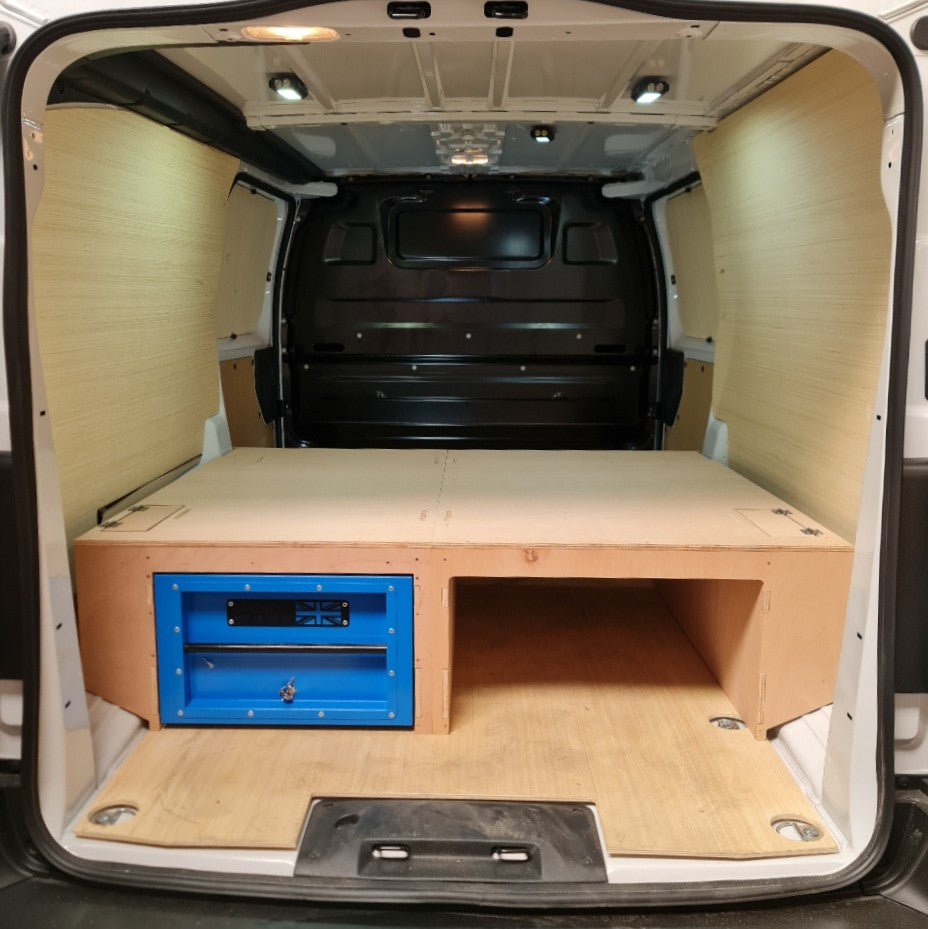
Place heavier items low down and as close to the bulkhead as practical. A raised floor with properly positioned tie-down points can make this much easier, allowing you to strap bulky equipment down rather than relying on a pile of cases wedged together. Keep the straps tight enough to stop movement without crushing plastic cases or putting pressure on delicate kit.
A Van Vault or other lockable storage box can also reduce noise when it is fixed securely and used for tools that would otherwise travel around the floor. The point is not simply locking the tool away. It is making sure the box, its lid and the items inside cannot knock about while you drive.
Use racking that gives tools a fixed home
The quickest way for a tidy van to become noisy is to stack everything on open shelves with no dividers, lips or holders. Each time you pull away, the load slides. Good van racking should support your day-to-day tools rather than asking you to pack them perfectly every morning.
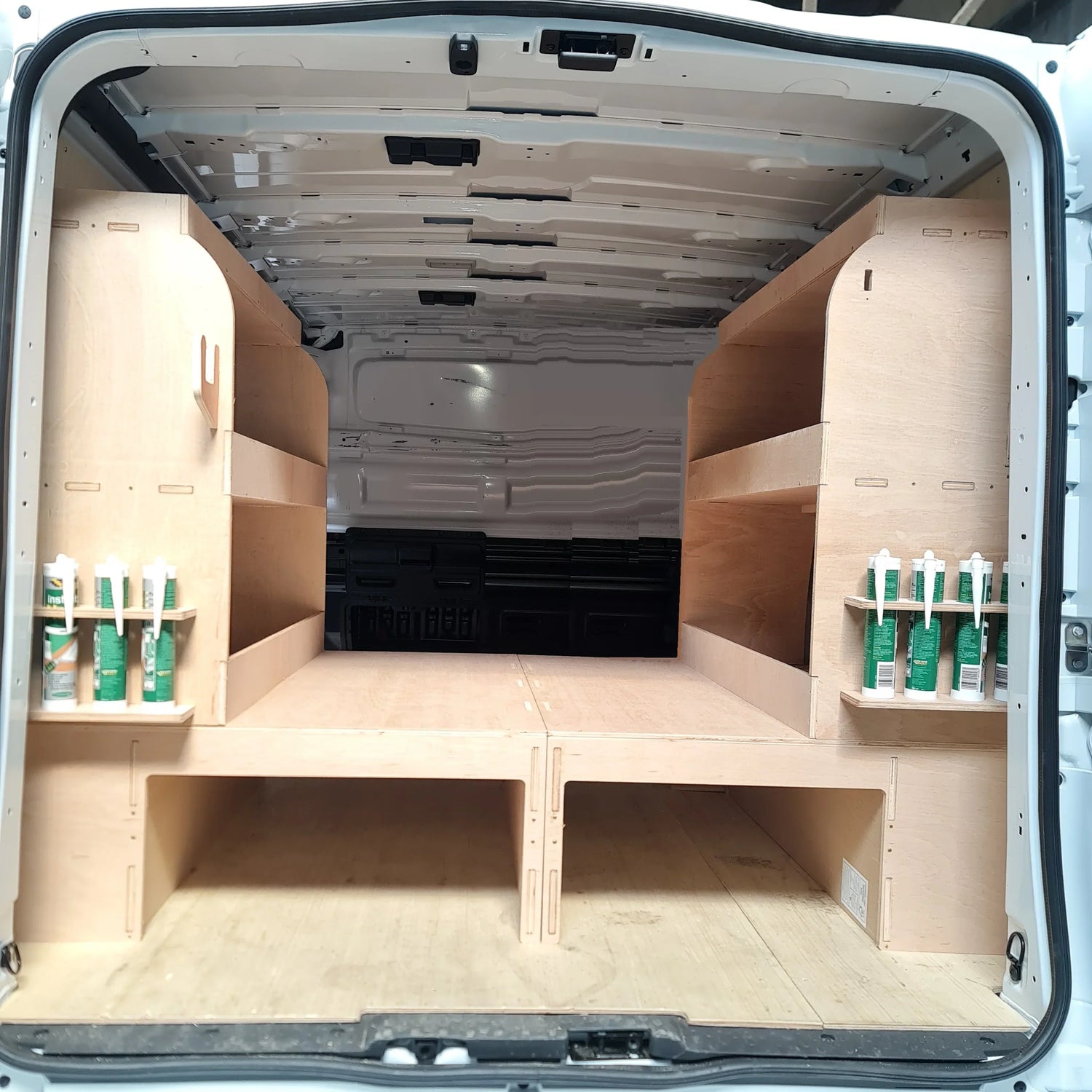
Plywood shelving with useful shelf edges, dividers and dedicated compartments keeps cases from migrating across the unit. It also lets you store weight sensibly: heavier cases at the bottom, regularly used items around waist height, and lighter stock higher up. Avoid overfilling shelves. A shelf packed so tightly that you have to force a case in is just as likely to rattle as one that is half empty.
For smaller items, drawers are generally quieter than open shelving. Screws, clips, terminals, drill bits and fittings should not be rolling around in a large tool case or loose on a shelf. Drawer dividers, bins and organisers stop contents colliding every time the van moves.
At Vanshelves.co.uk, model-specific shelving and storage options make it easier to build a layout around the vehicle and trade, rather than trying to make a generic unit fit an awkward space. Check the product details against your exact van model, body length and door arrangement before ordering.
Add soft contact points where tools touch
You do not need to line the whole van with thick foam to make a difference. Use tough rubber matting, non-slip shelf liner or closed-cell foam at the places where cases repeatedly touch timber, metal or one another. Small pads under a tool case or along the back edge of a shelf can take out a persistent buzz.
Use materials that can cope with a working van. Thin household carpet and soft packing foam soon hold damp, tear apart and collect dust. Rubber or wipe-clean liners are more practical around wet gear, sealants, oils and building dust.
If you carry ladders, lengths of conduit, trunking or pipe, give them proper restraints too. Long materials are especially noisy because they flex and tap at several points. Secure them at more than one point and avoid letting ends rest directly against bare metal.
Stop drawers, doors and lids from moving
A rattle is sometimes caused by the storage unit rather than what is in it. Check every latch, hinge and runner with the van stationary. If a drawer has noticeable side-to-side movement when closed, inspect whether it is overloaded, the runner fixings are loose, or the catch is not engaging properly.
Do not try to cure a failing latch by stuffing cloth around it. That can hide the issue and make the drawer harder to close. Tighten accessible fixings, remove unnecessary weight and replace worn catches or runners where needed. A drawer that opens during a sudden stop is a bigger problem than an annoying sound.
Cupboard doors can be quietened with small rubber buffers placed where the door closes against the frame. Fit them neatly and make sure the latch still closes fully. The same applies to lids on storage boxes. A tiny amount of movement at the lid can become a constant vibration at road speed.
Check the floor, bulkhead and racking fixings
If the noise is more of a creak, thud or vibration, look beyond the tools. A false floor that is not sitting firmly, damaged floor panels, loose wheel-arch protection or racking bolts that have worked loose can all transmit noise through the van.
Inspect fixing points regularly, particularly after carrying a heavy load or driving regularly on poor roads. Look for fresh marks around brackets, elongated holes, cracked timber, loose fasteners or rub marks where a unit has been moving. Address these early. A little movement tends to become more movement as the fixing holes wear.
Do not overtighten fixings into thin vehicle panels or use unsuitable screws because they are to hand. Van storage needs to be fixed using the correct mounting method for the product and vehicle. If you are unsure, follow the supplied fitting instructions or speak to the product supplier before loading the unit.
Load the van in the same order each day
Even a well-equipped van gets noisy when the loading routine changes every job. Keeping your core kit in the same place means you notice straight away when something is missing or sitting loose. It also saves time at the first call of the day.
Try to reserve one area for power tools, another for fittings and consumables, and one secure floor space for larger job-specific equipment. Things that come out several times a day should be near the side or rear door, not buried behind heavier cases. This reduces the temptation to drop tools wherever there is a gap.
Before you set off, do a quick door-open check: drawers shut, cases seated, straps tight and no loose items on the floor. It takes less than a minute and is usually the difference between a quiet working van and a noisy one.
When rattling points to a bigger issue
Not every sound should be treated as a storage problem. A new rattle from underneath the vehicle, around the doors, suspension or engine bay needs proper investigation. If the noise continues after the load area is empty, or it changes with speed, braking or steering, arrange for the vehicle to be checked.
For the noises that do come from the back, the fix is rarely one expensive item. Secure the heavy kit, organise the smaller tools, add protection at contact points and keep an eye on the racking fixings. A quieter van is easier to work from, easier on your concentration, and far more likely to stay organised through a busy week.