










The tools you need most should not be buried behind a stack of fittings, loose cable reels and yesterday’s packaging. A proper trade van storage planning guide starts with the way you actually work: what comes out first, what stays in the van, what is heavy and what needs to stay clean, dry and easy to find.
A well-planned van saves time on every callout. It also reduces damage to tools, stops parts rolling across the floor and makes the van easier to load at the end of a long day. The aim is not to fill every spare gap with racking. It is to give each item a sensible home while keeping access, payload and day-to-day practicality in mind.
Start with your working day, not the racking
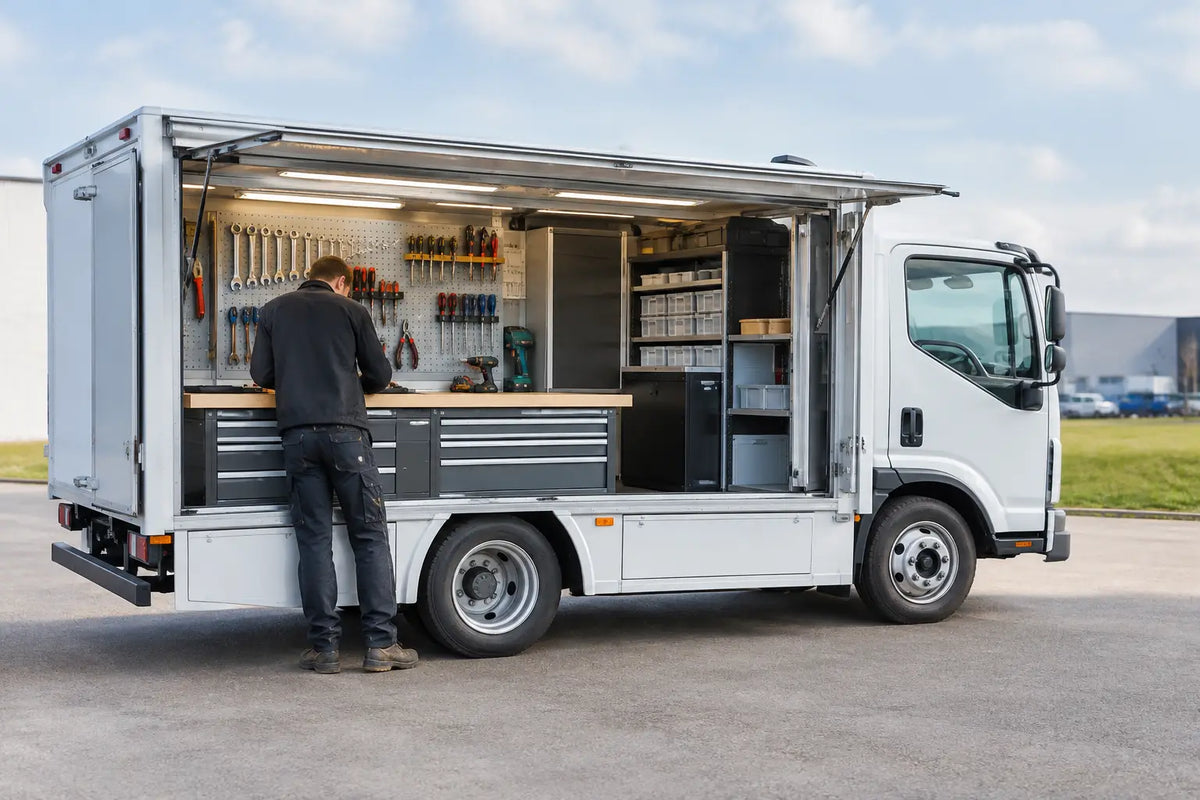
Before measuring the load area, make a note of what is in the van during a normal week. An electrician may need clear access to cable, testers, fixings and small parts. A plumber may carry pipe, fittings cases, power tools and sealants. A carpenter may need long-tool storage, sheet material protection and quick access to saws.
Separate equipment into three groups: items used on nearly every job, tools used once or twice a week, and stock carried for specific work. The first group belongs nearest the side or rear doors. Occasional kit can sit further inside or higher up, provided it is restrained and safe to reach.
This simple exercise prevents a common mistake: buying shelving first, then trying to force every tool into it. Your layout should follow your workload, not the other way round.
Measure the van you actually own
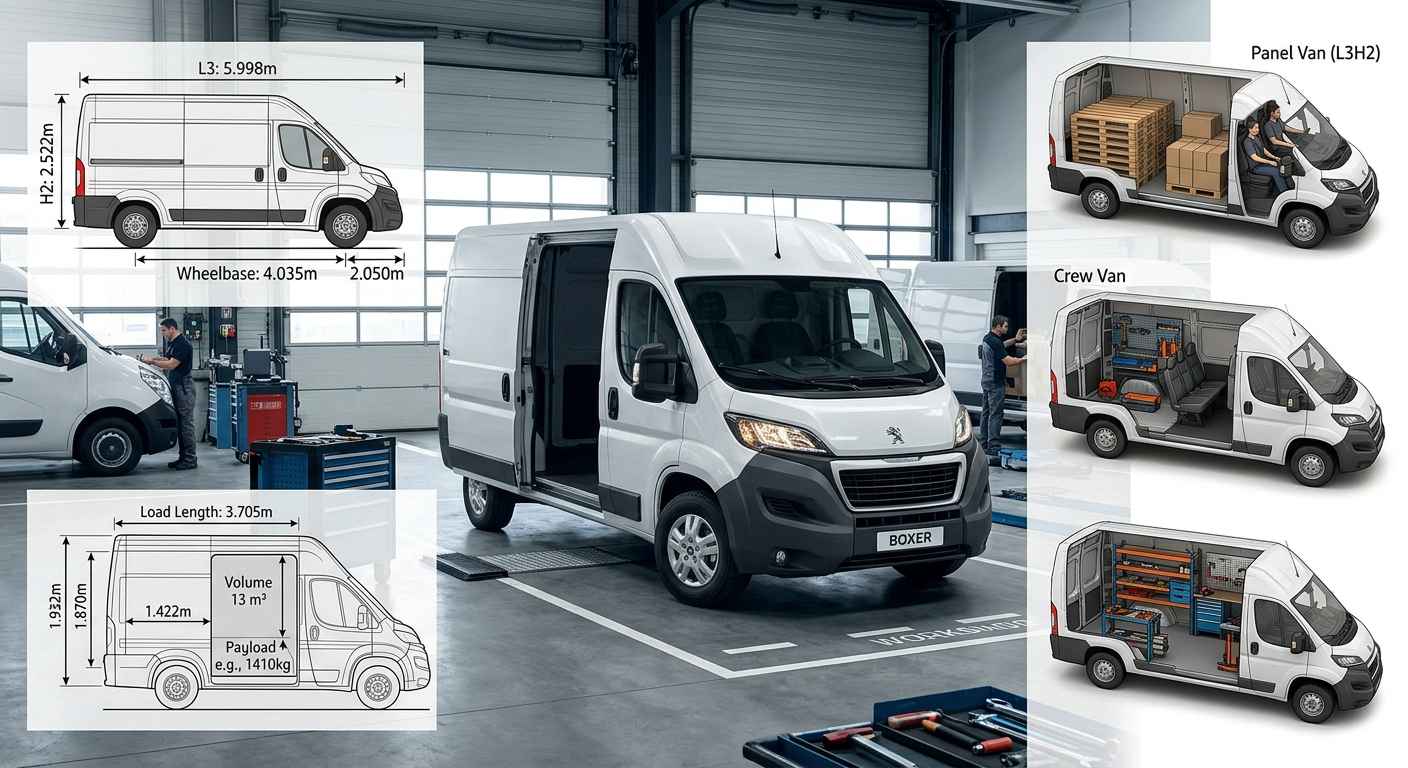
Van model names are useful, but they are not enough for ordering storage. A Ford Transit Custom, Renault Trafic, Vauxhall Vivaro, Volkswagen Transporter or Peugeot Expert can have different wheelbases, roof heights, trim levels and internal linings. Measure the usable space after any factory lining, bulkhead or existing floor has been fitted.
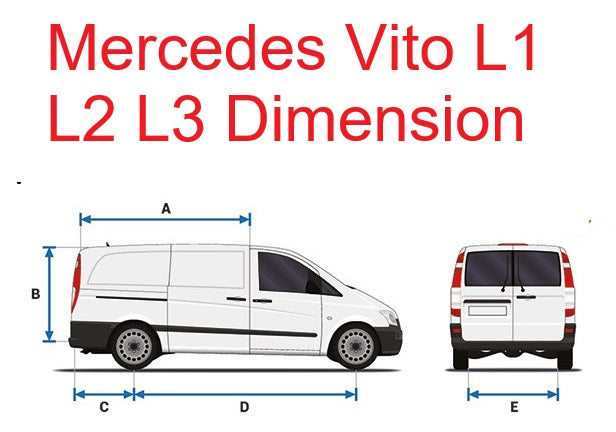
Record the load length, width between wheel arches, full internal width, height and the door openings. It is also worth noting where tie-down points, lighting, access panels and wheel boxes sit. These details affect whether a shelf unit, false floor or drawer can be used comfortably.
When choosing vehicle-specific racking, confirm the exact van model, year and wheelbase against the product details. This is especially important for fleets with similar-looking vans from different generations.
Leave room for doors, drawers and your hands
A storage unit can technically fit but still be awkward to use. Check that rear-door access is clear, side loading doors can be used without obstruction, and drawers have enough room to extend. Think about winter gloves too. Small handles and tight compartments may be frustrating if you are reaching in and out all day.
Plan the floor before building upwards
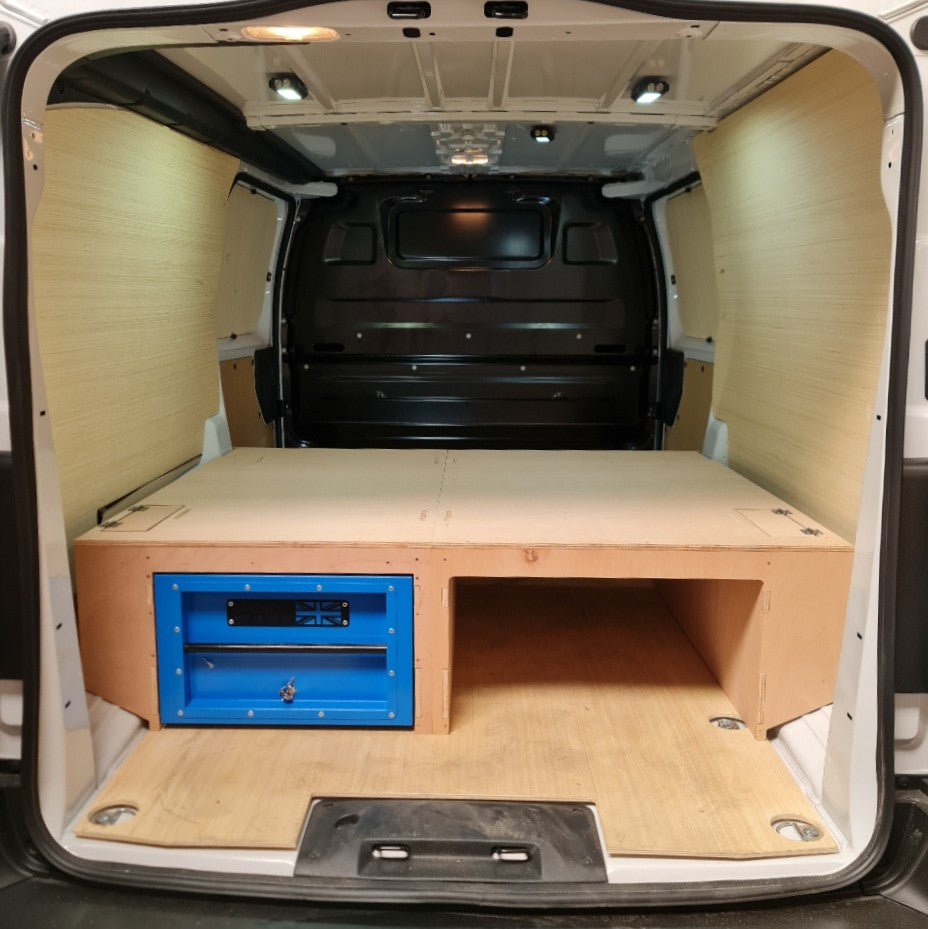
The floor takes the hardest treatment in a working van. It also determines how stable the rest of the layout feels. A raised or false floor can provide a level, protected base and create a concealed channel for long items such as conduit, pipe or trim. It can be a sensible choice where long materials are regularly carried but you do not want them loose in the load area.
For many trades, the key benefit is keeping the main floor clear. A false floor lets you store awkward lengths below while using the upper surface for tool cases, stock or a secured drawer unit. It does reduce available load height, so measure carefully if you carry bulky equipment or tall boxes.
Choose a durable floor that suits the work rather than the prettiest finish. A van used for wet boots, muddy site materials and heavy cases needs a surface that can cope with regular use and is straightforward to sweep out.
Put weight low and close to the bulkhead
Heavy tools, compressors, generators, power tool stacks and boxes of fixings should be kept low wherever possible. Positioning heavier equipment closer to the bulkhead helps avoid loading too much weight at the rear. It also makes the van feel more settled when driving.
Do not confuse storage capacity with vehicle payload. Racking, false floors, drawers, tools, materials, fuel and passengers all contribute to the loaded weight. Check the manufacturer’s payload figure for your specific van and keep an eye on changes as extra equipment is added.
Secure every substantial item using suitable fixing points and restraints. A Van Vault or other lockable tool storage can be useful for valuable equipment, but it still needs to be positioned and fixed in a way that suits the vehicle and your access needs. A loose tool box is not made safe simply because it is heavy.
Give small consumables a fixed place
Lost time often comes from the small things: a missing tube of sealant, mixed drill bits, loose screws or a packet of wipes that has disappeared under a case. These items do not need a large storage system, but they do need repeatable locations.
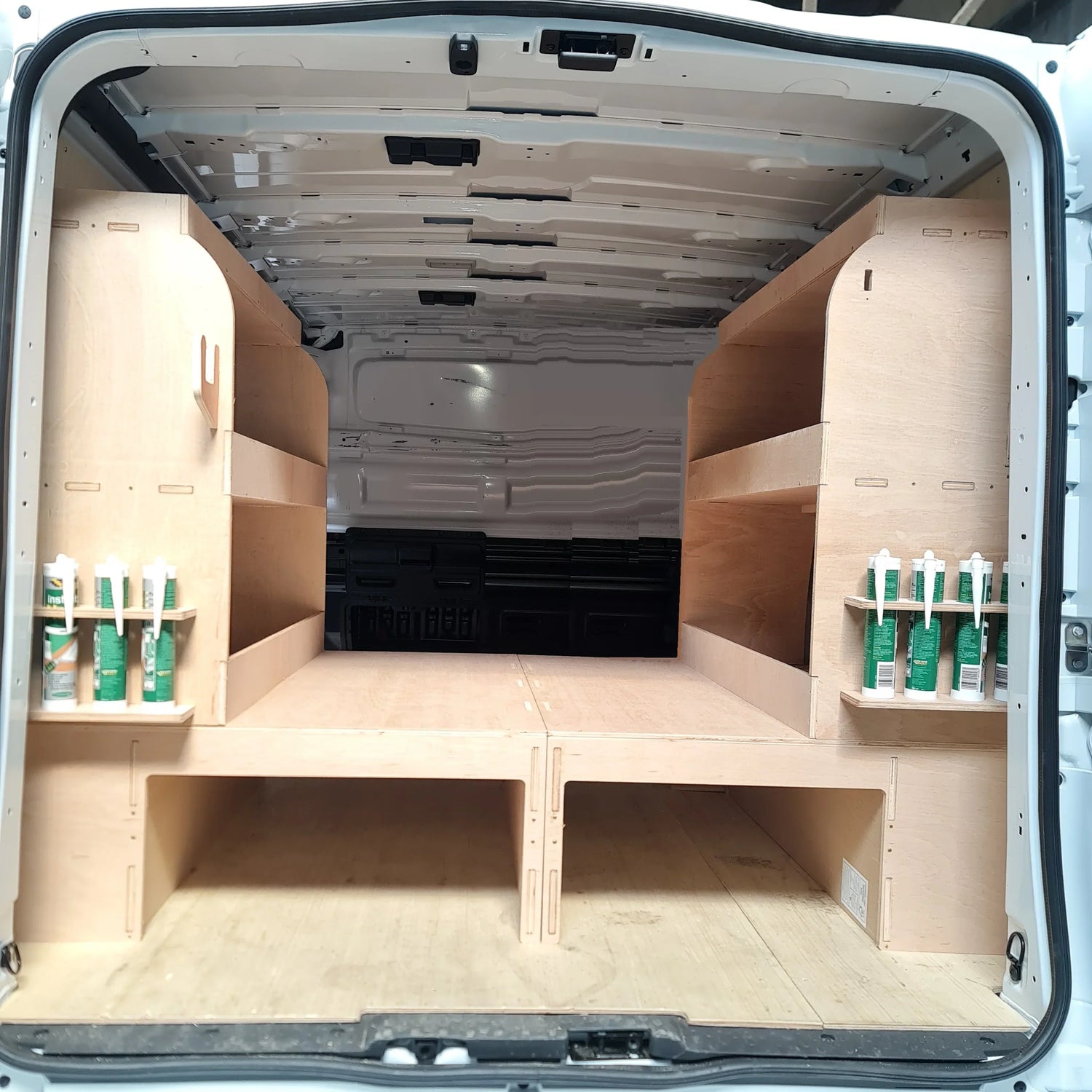
Workshop-style accessories can make a real difference here. A sealant holder keeps tubes upright and visible, a wipe dispenser stops packets getting crushed, and a glove box organiser prevents the cab becoming a second storage shed. Use open holders for items you need to grab quickly, while lidded boxes are better for small fittings that would otherwise spill.
Avoid creating too many tiny compartments. If finding a fitting requires opening five separate containers, the system will not last. Group items by task where it makes sense, such as drilling, first fix, plumbing repairs or electrical terminations.
Choose shelving around access and stock levels
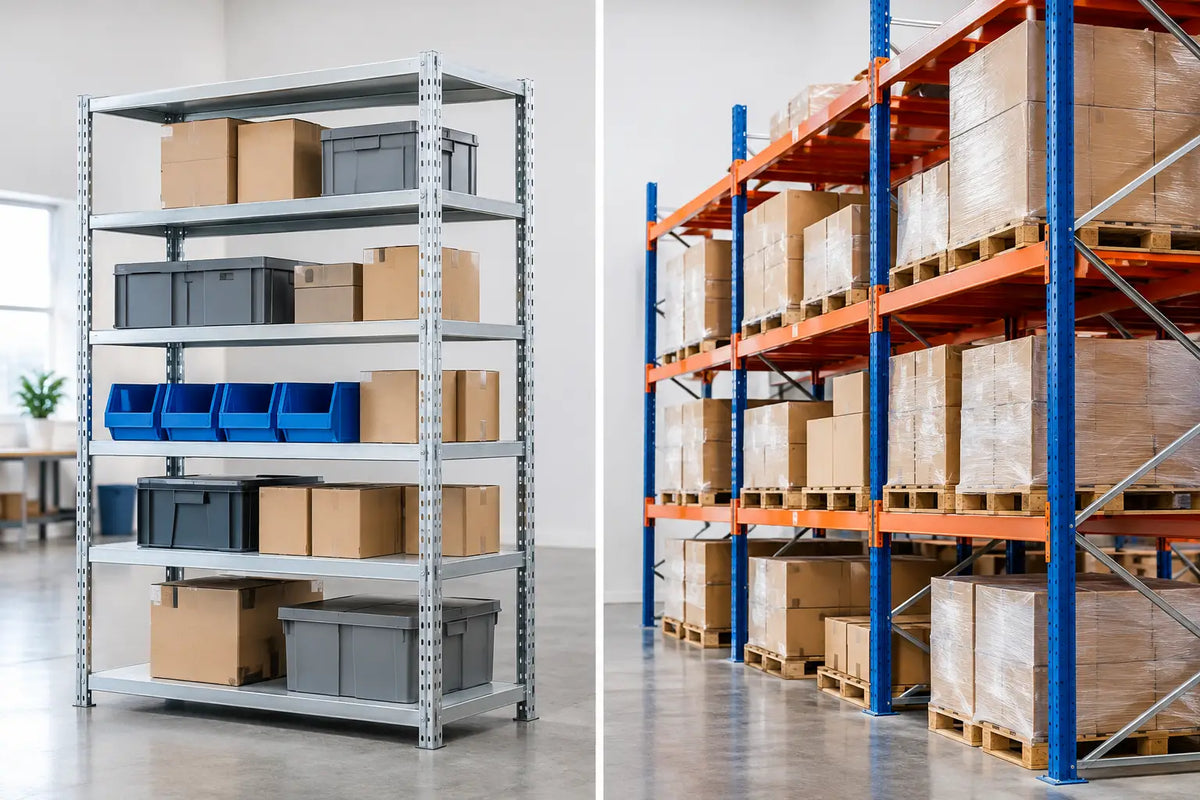
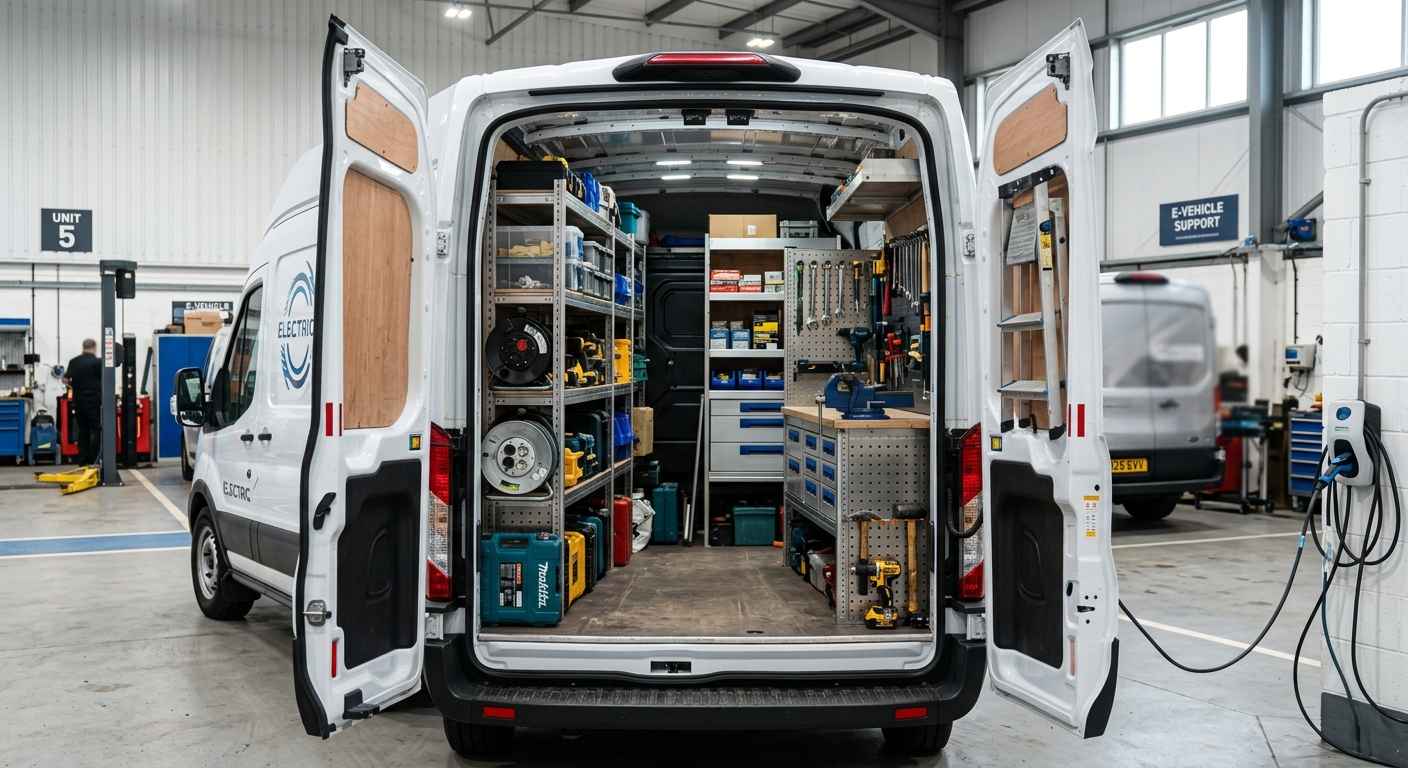
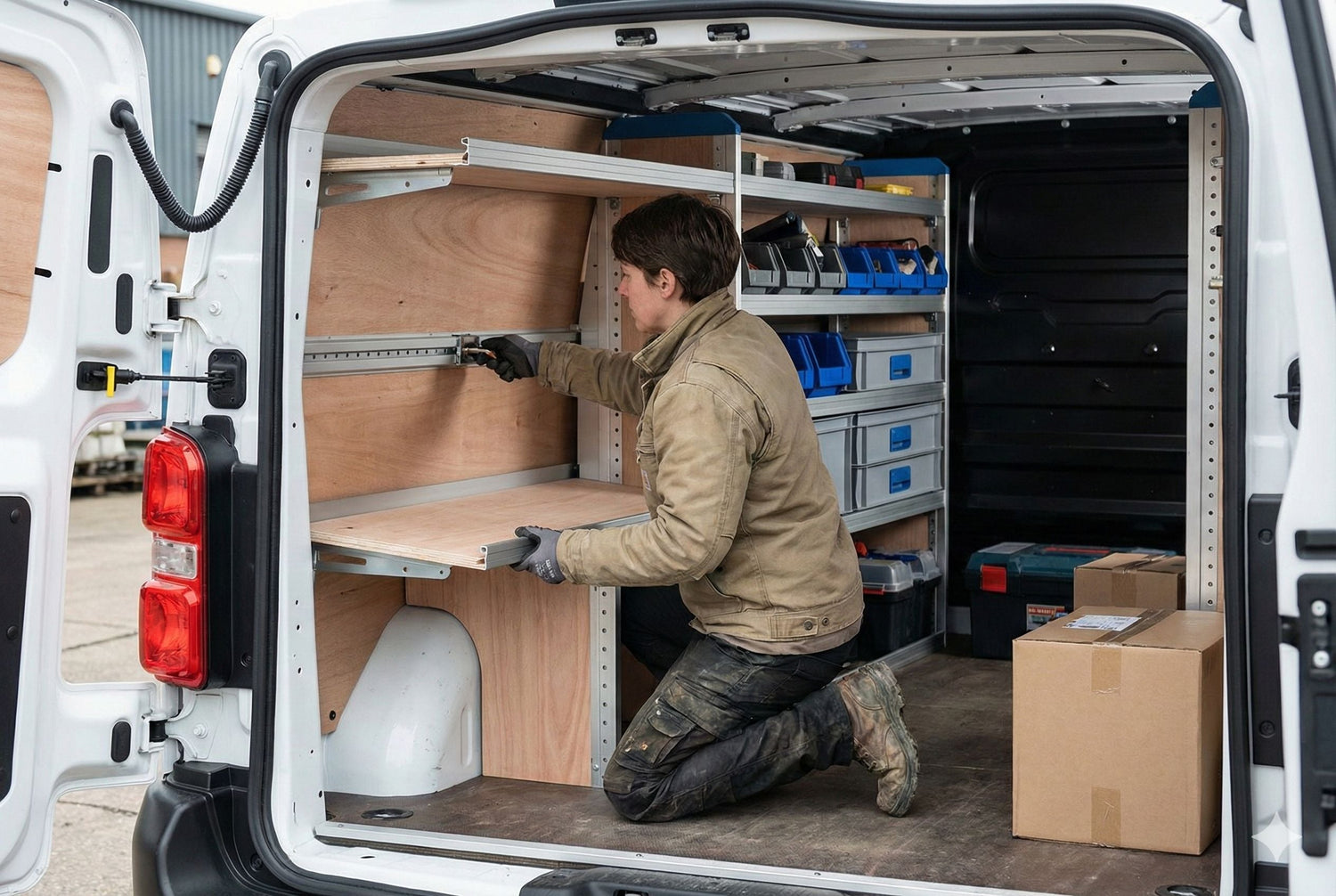
Side-wall shelving is a practical starting point for many trades because it keeps the centre aisle available. Open shelves suit tool cases, boxes and regularly replenished stock. Divided shelves or bins work better for fittings and consumables, particularly when the van carries a wide range of sizes.
The best arrangement depends on how much stock you carry. A service engineer with lots of small spares may benefit from more compartments and labelled bins. A builder carrying changing loads of equipment may need broader shelves and more open floor space. There is no value in fitting tall racking on both sides if it narrows access and leaves nowhere for the items that earn their place in the van.
Plywood shelving remains a popular choice because it is practical, durable and easy to work with in a commercial vehicle. Look for solid construction, sensible shelf spacing and a layout designed around your particular van rather than a one-size-fits-all approach. At Vanshelves.co.uk, storage is organised by vehicle type to help narrow the choice before you commit to a layout.
Do not waste the cab
The cab should remain safe and uncluttered, but it can hold paperwork, charging leads, gloves and everyday personal items more neatly than the load area. Keep anything that could move under braking out of footwells and off the dashboard. A tidy cab also makes a better impression when you are collecting a customer or meeting a site manager.
Make loading and restocking part of the plan
A good layout should be easy to maintain, not just satisfying on fitting day. Put regular stock where you can see when it is running low. Label bins if more than one person uses the vehicle. Keep a clear area for returns, packaging and materials needed for tomorrow’s work so they do not get mixed into the everyday tool storage.
Fleet managers should keep layouts broadly consistent across similar vans where possible. Drivers can move between vehicles more easily, replacement stock is quicker to find and inspections become simpler. That said, standardisation should not ignore different job roles. An electrical maintenance van and a heating engineer’s van will have different priorities even if the base vehicle is the same.
Allow the layout to develop
Few vans are perfectly organised from day one. Use the first few weeks to spot what is working. If you repeatedly leave an item on the floor, it probably needs a nearer or larger storage position. If a shelf stays empty, it may be taking space from something more useful.
Start with the fixed foundations - floor protection, secure heavy storage and the main racking - then refine the smaller accessories around your routine. The useful test is simple: at the end of a busy day, can you return every item to its place without moving half the van? If the answer is yes, the layout is doing its job.