










A van racking kit should make the job easier, not create another risk to manage. Good racking kit safety starts before the first tool goes on a shelf: it means choosing storage that suits the van, fitting it carefully, loading it sensibly and checking it as part of normal vehicle upkeep. A loose case, overloaded drawer or poorly secured rack can become a serious problem when you brake sharply, turn through a roundabout or open a side door on site.
For working vans, organised storage is about more than keeping the floor clear. It protects expensive tools, saves time at every call-out and helps keep weight under control. Whether you run a Ford Transit Custom, Renault Trafic, Vauxhall Vivaro, VW Transporter or another trade van, the same practical rules apply.
Why racking kit safety matters on a working van
Tools and materials have real weight. A drill case, stack of fittings, cable reels or box of fixings may not seem significant on its own, but a full day’s load soon adds up. In a sudden stop, unsecured items continue moving. That can damage the bulkhead, the racking itself, the rear doors and anything else in the load area.
There is also the everyday cost of poor storage. A cluttered floor makes it easier to trip when reaching into the van. Loose sealant tubes roll under shelving. Heavy boxes get shifted repeatedly because there is no fixed place for them. It slows the job down and puts more strain on your back and knees.
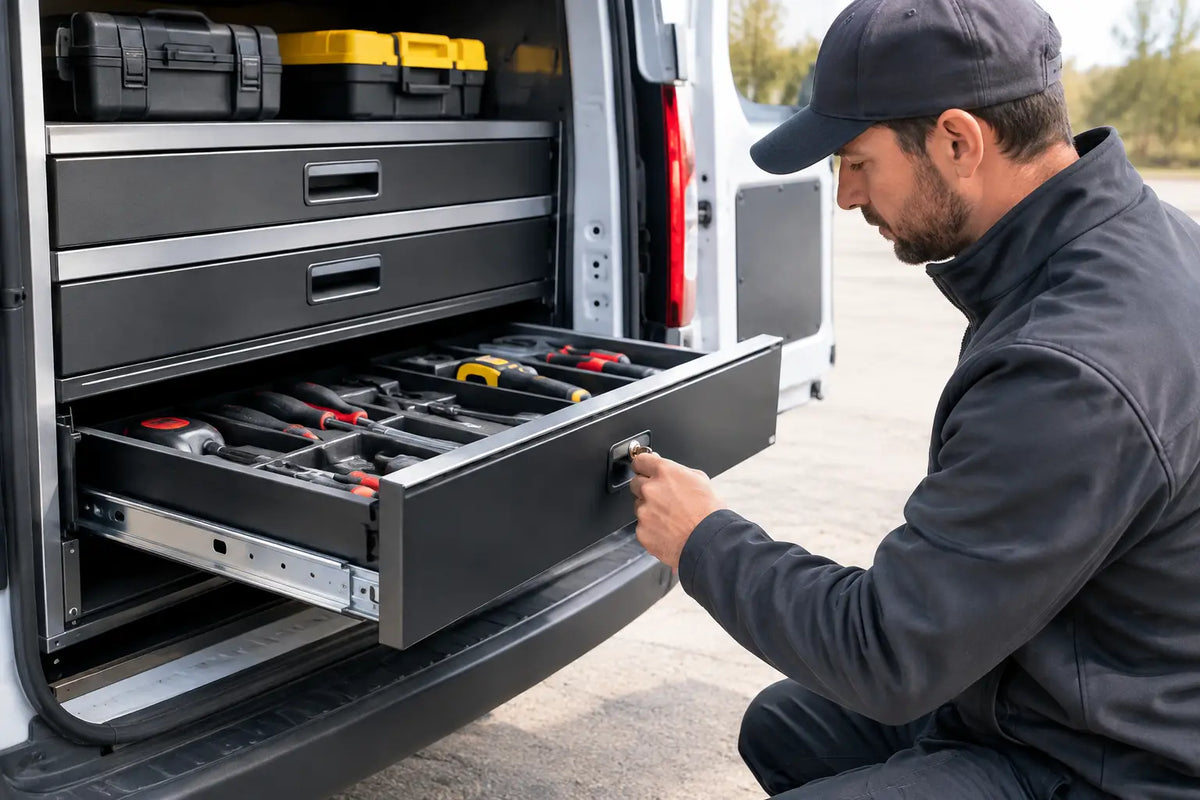
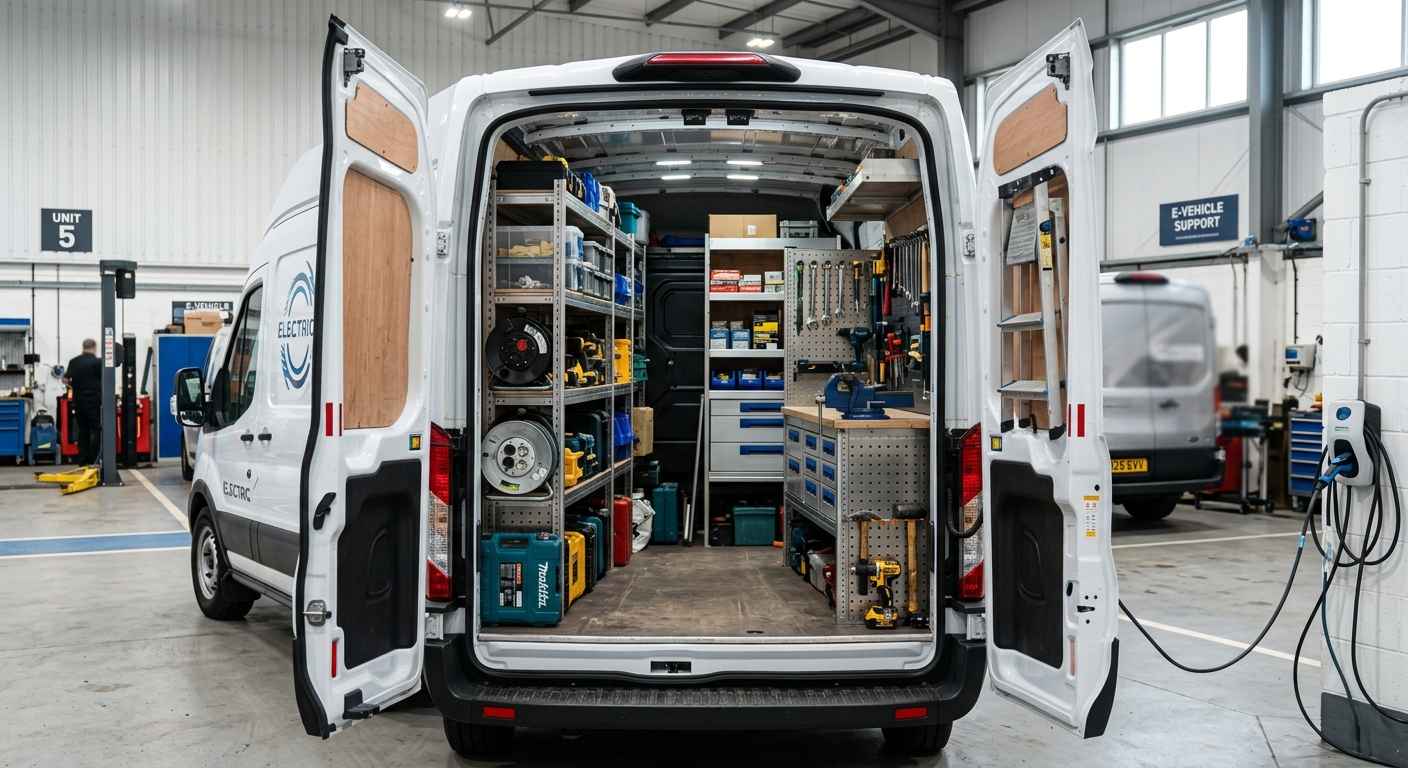
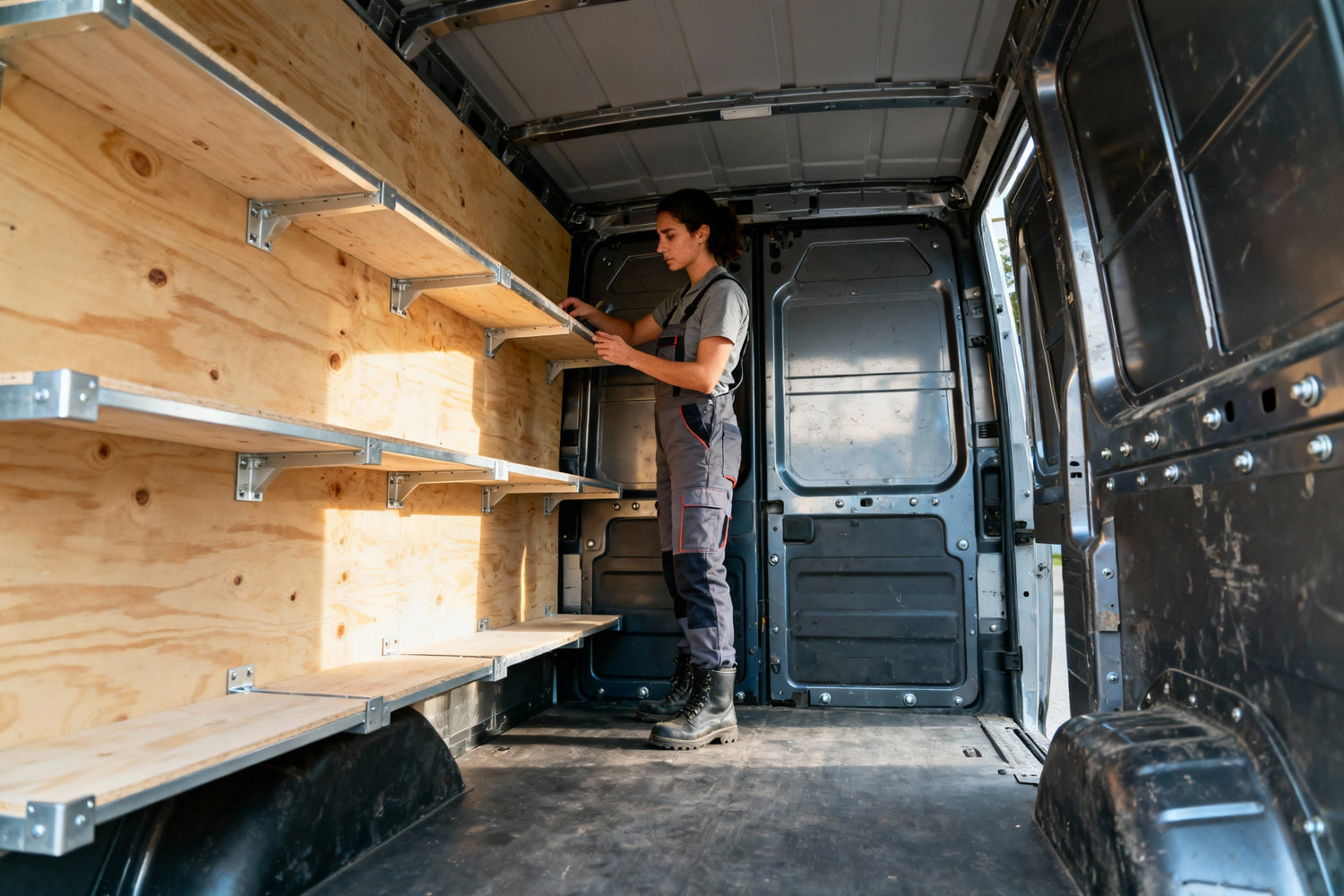
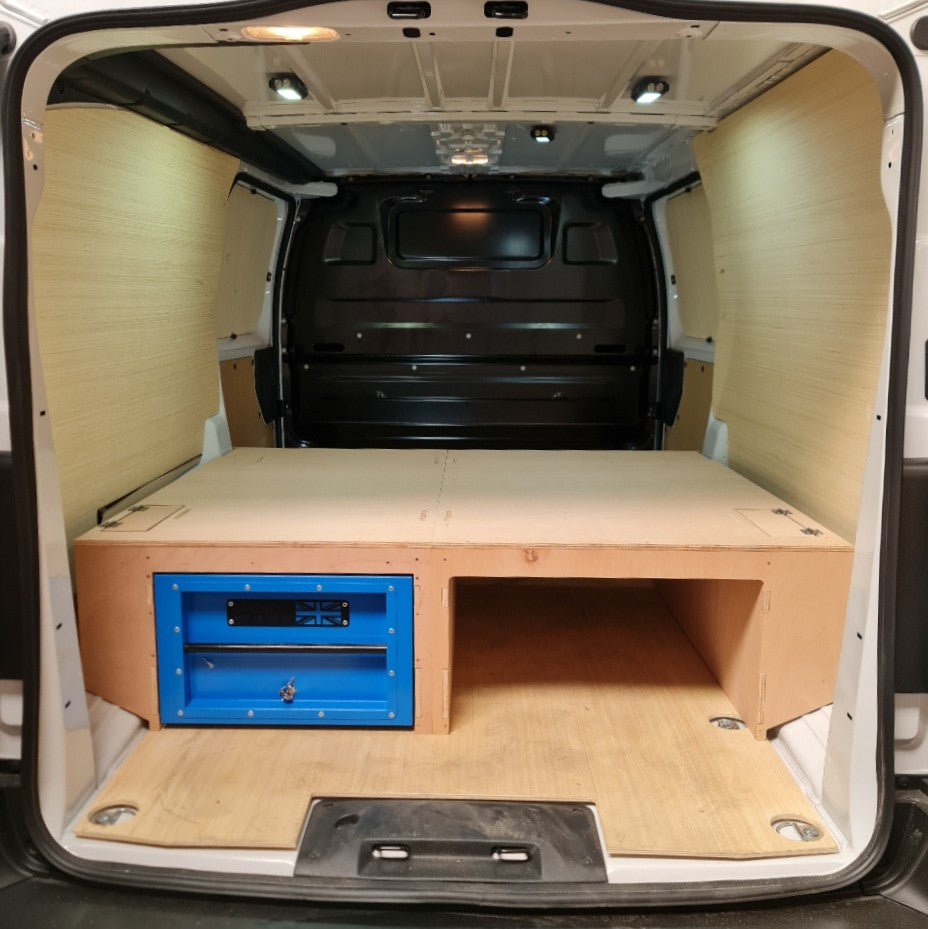
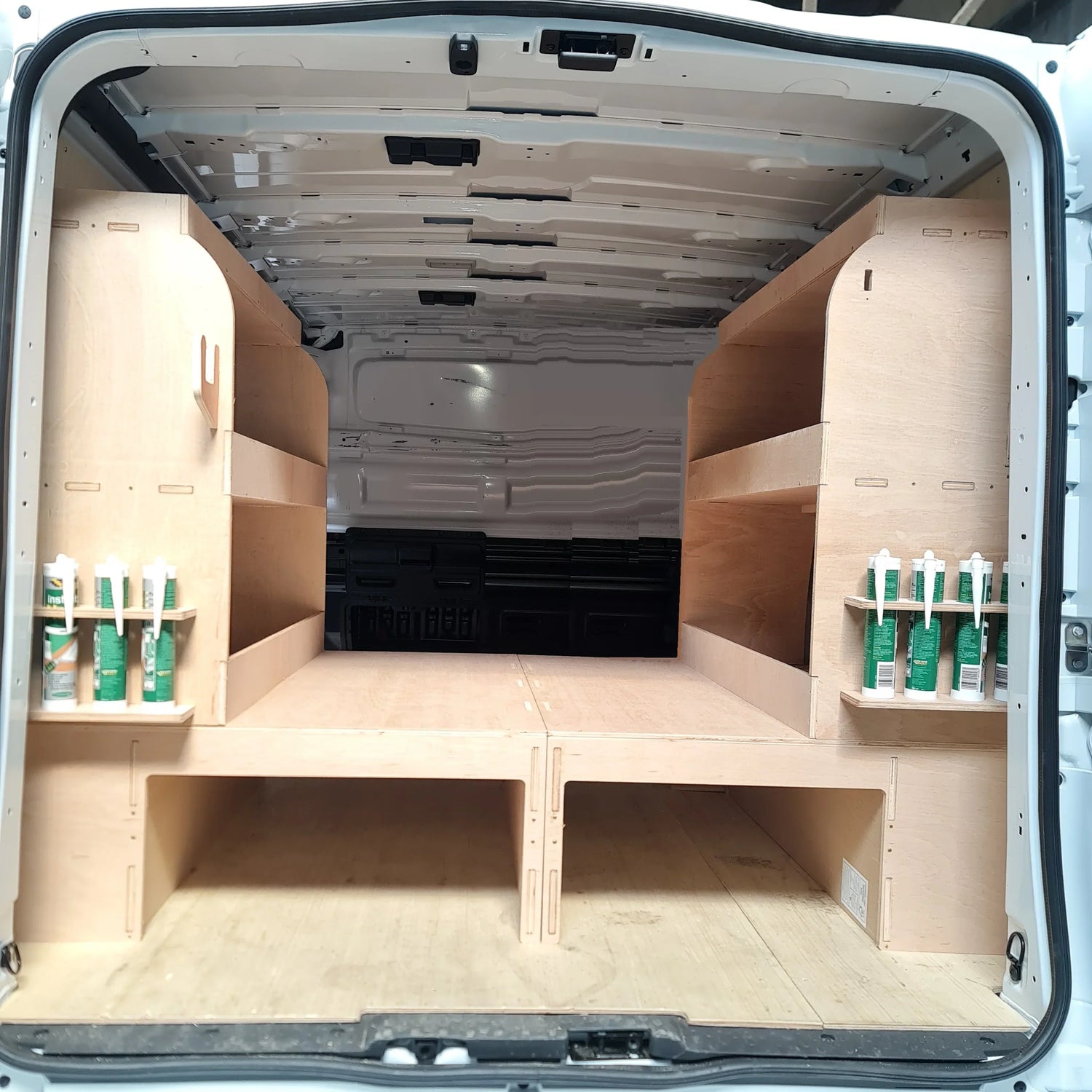
A properly selected van racking system gives tools a home. Shelves keep consumables visible, drawers stop small parts spreading across the floor, and raised or false floors can create useful storage below the main load space. The key point is that the system must be appropriate for the work you do and the vehicle you drive.
Start with the van, not the storage list
The best setup for an electrician carrying cases, testers and cable is not necessarily right for a plumber with pipe fittings, hand tools and heavier boxed stock. Before buying a kit, think about the items that stay in the van every day, not just the occasional larger load.
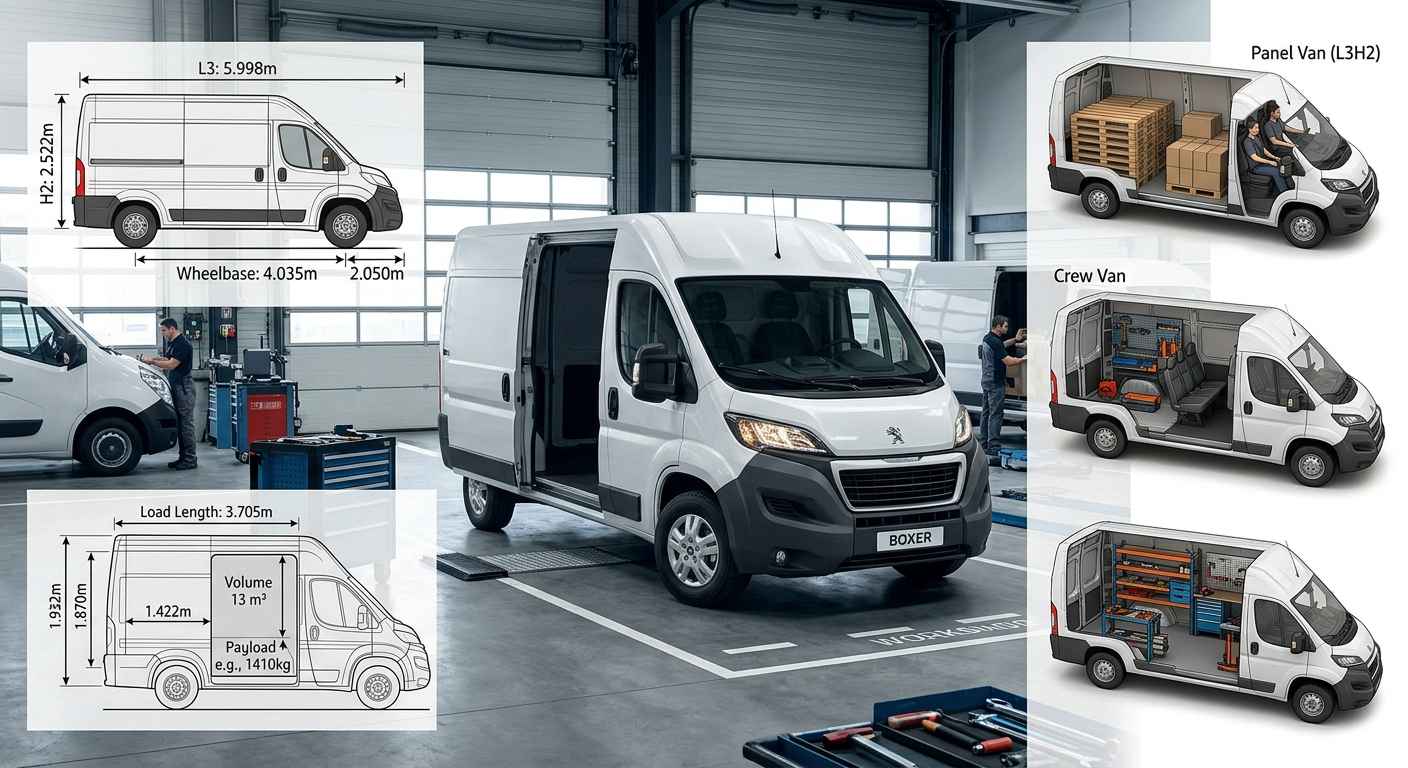
Check the exact make, model, wheelbase and year of your van before choosing model-specific racking. Internal dimensions, door openings, wheel arch positions and factory fixing points can differ between variants. A kit designed for one vehicle should not be assumed to fit another simply because the vans look similar from the outside.
It is also worth considering your access pattern. If you mainly work from the side door, frequently used items should be reachable there without climbing into the load area. If you load from the rear, deeper shelves and rear-facing drawers may make more sense. Safe storage is often the storage that prevents awkward stretching, repeated lifting and rummaging around on the van floor.
Keep clear access to essential equipment
Do not block access to the spare wheel carrier, vehicle tools, lighting connections or any equipment you may need in an emergency. If you carry a first-aid kit, fire extinguisher or warning equipment, give it a clearly marked and easily reachable position.
The same goes for your daily essentials. A wipe dispenser, glove box organiser or sealant holder may seem like a small addition, but these accessories can stop loose items being left on shelves or rolling around in footwells. Small jobs often make the difference between a tidy van and one that gradually becomes difficult to use safely.
Fit racking carefully and follow the supplied instructions
A racking kit is only as secure as its fixings and fitting method. Use the instructions supplied with the product, including the correct fixings and fixing locations. Do not substitute random screws, add holes without understanding what is behind the panel, or rely on adhesive products to hold heavy storage in place.
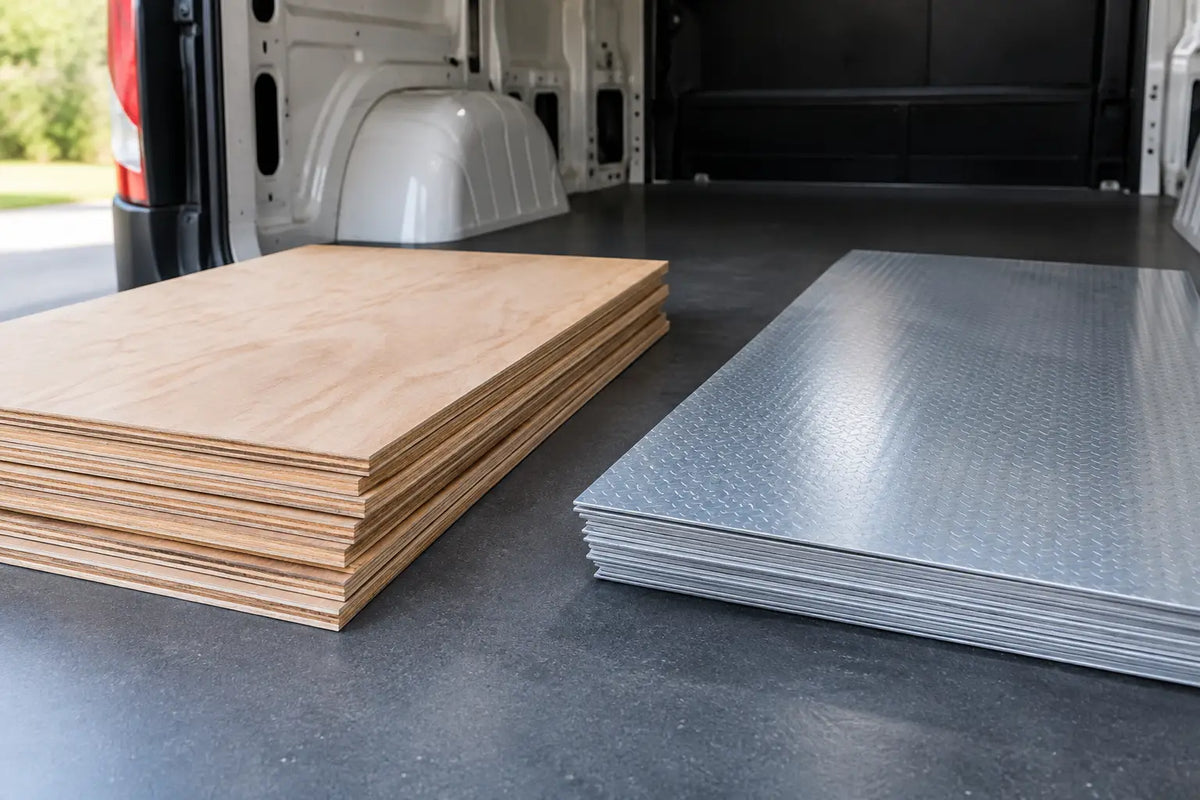
Before fitting, inspect the load area for existing damage, corrosion, loose lining or signs of water ingress. A rack mounted against a damaged surface may not remain secure. If your van has already had flooring, lining, ply panels or other equipment installed, make sure these do not prevent the racking from sitting squarely and being fixed as intended.
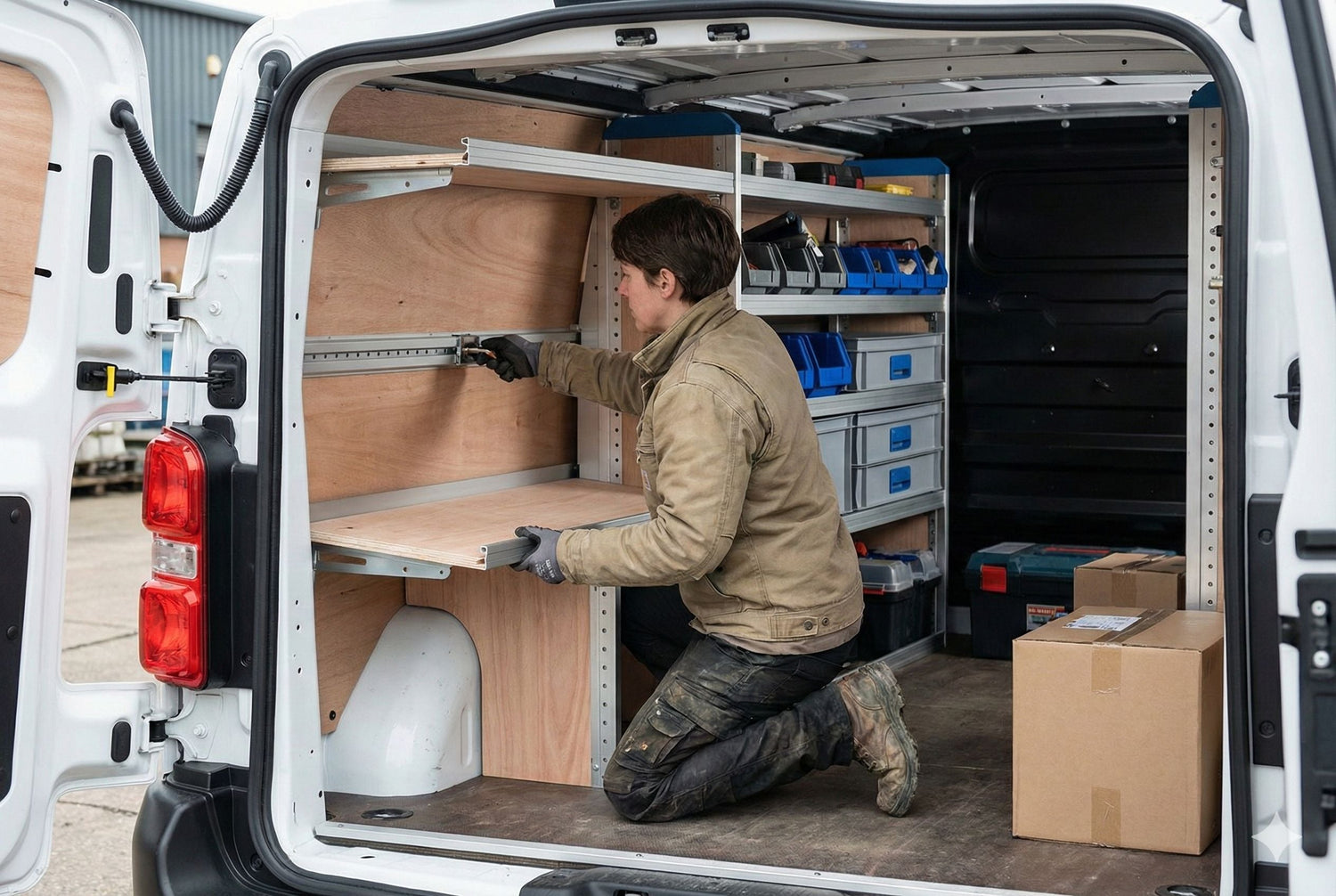
Once fitted, check that shelves are level enough for their intended use, drawers run freely and doors can open without catching. A rack that rubs on a door or forces a panel out of position is not something to ignore. Correct it before loading the van.
Avoid drilling through wiring, fuel lines, brake lines or structural areas. If you are unsure what sits behind a panel or beneath the floor, stop and check the vehicle documentation or speak to a suitably qualified professional. Taking ten minutes to confirm a fixing point is far better than creating an expensive repair.
Load the van with weight and movement in mind
The safest shelf is not always the fullest shelf. Heavy equipment should sit as low as possible and be positioned so it cannot slide forward, backwards or sideways. Keep lighter, frequently used items higher up, provided they are contained by shelf lips, boxes or other suitable restraints.
Weight distribution matters as much as shelf strength. Concentrating everything on one side can affect how the van handles, particularly when the load is heavy. Try to spread the load evenly from left to right and avoid placing all dense materials at the very rear. Always work within the van’s stated payload and axle limits, taking account of passengers, fuel, racking, flooring and any permanent equipment.
Use cases, bins and dividers for loose stock. A shelf full of mixed fittings may look organised when parked, but it will not stay that way after a week on the road. Stackable bins are useful for screws, clips, connectors and small plumbing parts, while lipped shelves help prevent larger cases migrating during travel.
For longer items such as conduit, trunking, pipe or timber, use a storage solution designed to retain that load. Do not balance lengths across open shelves or wedge them where they can shift when the doors are opened. If an item could fall out when you open the van, it needs a better home.
Secure drawers, doors and removable boxes
Drawers and storage boxes should remain closed in transit. Check their catches regularly, especially if they are loaded with metal fittings or power tools. A latch that feels loose when the van is parked is unlikely to improve after travelling over potholes and uneven site entrances.
If you remove boxes from the racking during a job, return them properly rather than placing them loosely on the floor for later. It is easy for one case to become ten by the end of the day. A quick reset before leaving site keeps the next journey safer and saves time in the morning.
Build safety checks into the working week
Van racking takes vibration every time the vehicle moves. Even a well-fitted system needs occasional inspection. A short check once a week is usually enough for most working vans, with a more thorough look after carrying unusually heavy loads or driving regularly on rough access roads.
Look for movement in the rack, cracked timber, bent brackets, loose bolts, damaged shelf edges and worn catches. Check the floor around the racking too, particularly where heavy items are loaded and unloaded. If something has started to work loose, deal with it before it becomes a larger repair.
Listen for new rattles. A rattle is not always a problem, but it is often an early warning that a box is loose, a fitting needs tightening or a tool has been left unsecured. Find the cause rather than turning the radio up and hoping it disappears.
Keep the load area clean enough to inspect. Sawdust, plaster dust and offcuts can hide damage and stop drawers or catches working properly. A quick sweep at the end of the week makes the van more pleasant to work from and lets you spot issues sooner.
Choose practical storage over maximum storage
It is tempting to fill every spare centimetre with shelves, drawers and accessories. In reality, an overloaded layout can be less useful than a simpler one. You need room to load larger items, step into the van safely and reach what you use most often.
Think about future changes in your workload as well. If you regularly carry a tool vault, test equipment, cable drums or boxed materials, leave enough flexible space for them. A false floor with accessible compartments can be useful for longer or less frequently used items, while open shelving may be better for stock you need to see at a glance.
At Vanshelves.co.uk, the sensible approach is to select storage by van model and working use, then add practical accessories where they solve a real problem. The aim is not to fill the van with kit. It is to make every item easier to find, carry and secure.
A tidy van is built through small habits: close the drawer, return the case, check the fixings and keep heavy loads low. Those few minutes at the end of a job help protect your tools, your vehicle and the people working around it tomorrow.