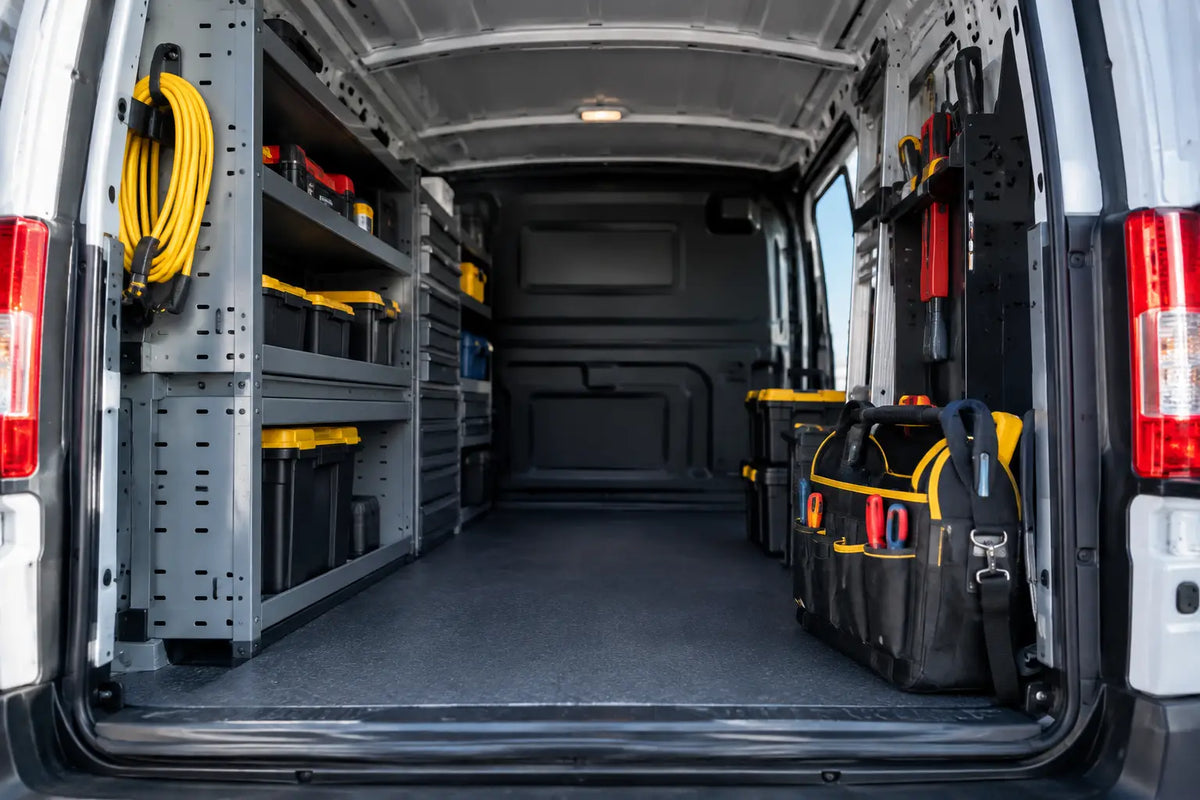









A toolbag is easy to throw in the cab or carry through a customer's house. But after a few busy weeks, it often becomes the place where fittings, drill bits, paperwork and the tool you need most all disappear together. The real question in shelving versus toolbags is not which option is better in every case. It is which one helps you complete your usual jobs with less searching, fewer damaged tools and more usable load space.
For most working vans, the best answer is not shelving or toolbags alone. Fixed van shelving handles stock, consumables and regularly used equipment, while toolbags keep a focused set of tools mobile. The right balance depends on your trade, vehicle size and how often you work away from the van.
When toolbags make sense
Toolbags earn their place because they travel well. If you are an electrician heading into a commercial unit, a heating engineer going up several flights of stairs, or a carpenter moving between rooms, carrying a selected set of tools is far more practical than repeated walks back to the van.
A good toolbag also protects the interior of the van from loose hand tools. It gives you a simple routine: pack the kit needed for the day, take it to the job, then return it to its place. For sole traders with a smaller load and varied call-outs, this can be enough at first.
The limitation is capacity. Toolbags are designed around carrying weight, not storing a broad range of stock. A bag full of power tools, testers, hand tools and fixings becomes awkward quickly. Overloading it makes access worse, puts strain on zips and handles, and can leave expensive equipment piled together without proper separation.
Toolbags are also poor at showing you what needs replenishing. A box of screws at the bottom of a bag or a half-used tube of sealant tucked behind a drill is easy to overlook. That costs time when you arrive at site missing a basic part.
Where van shelving earns its keep
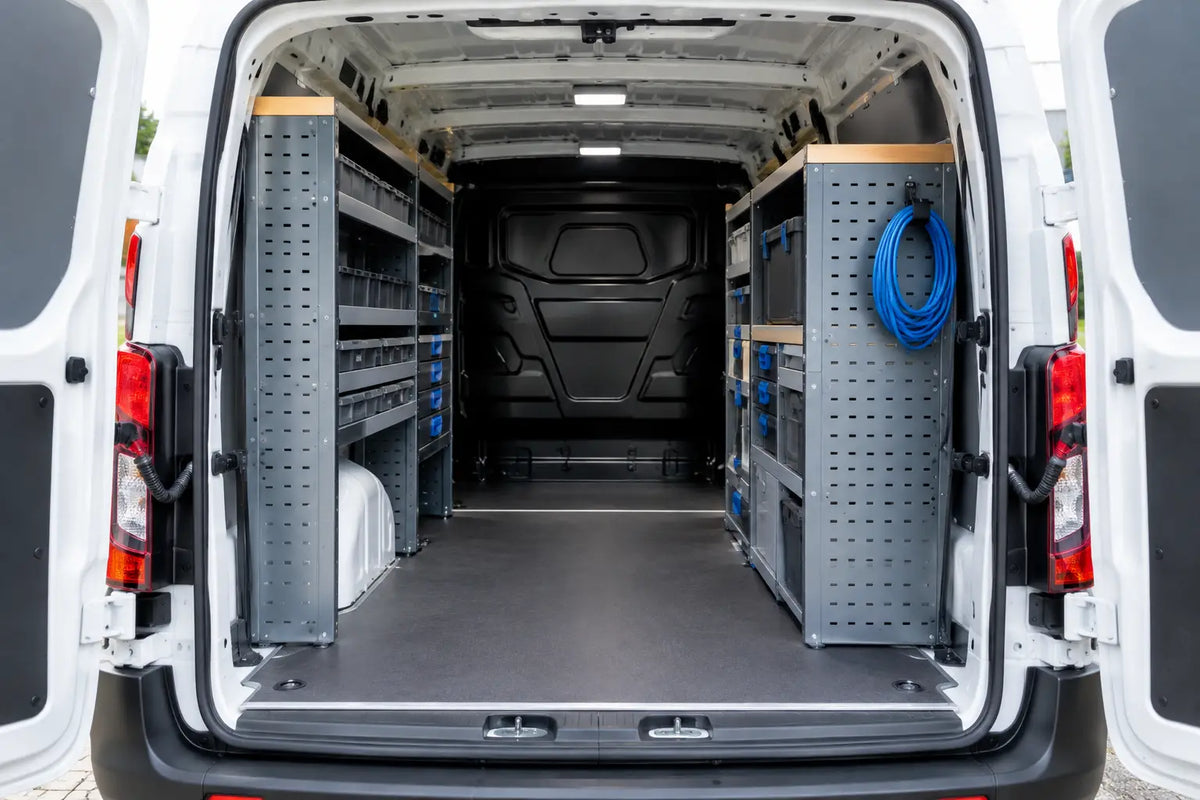
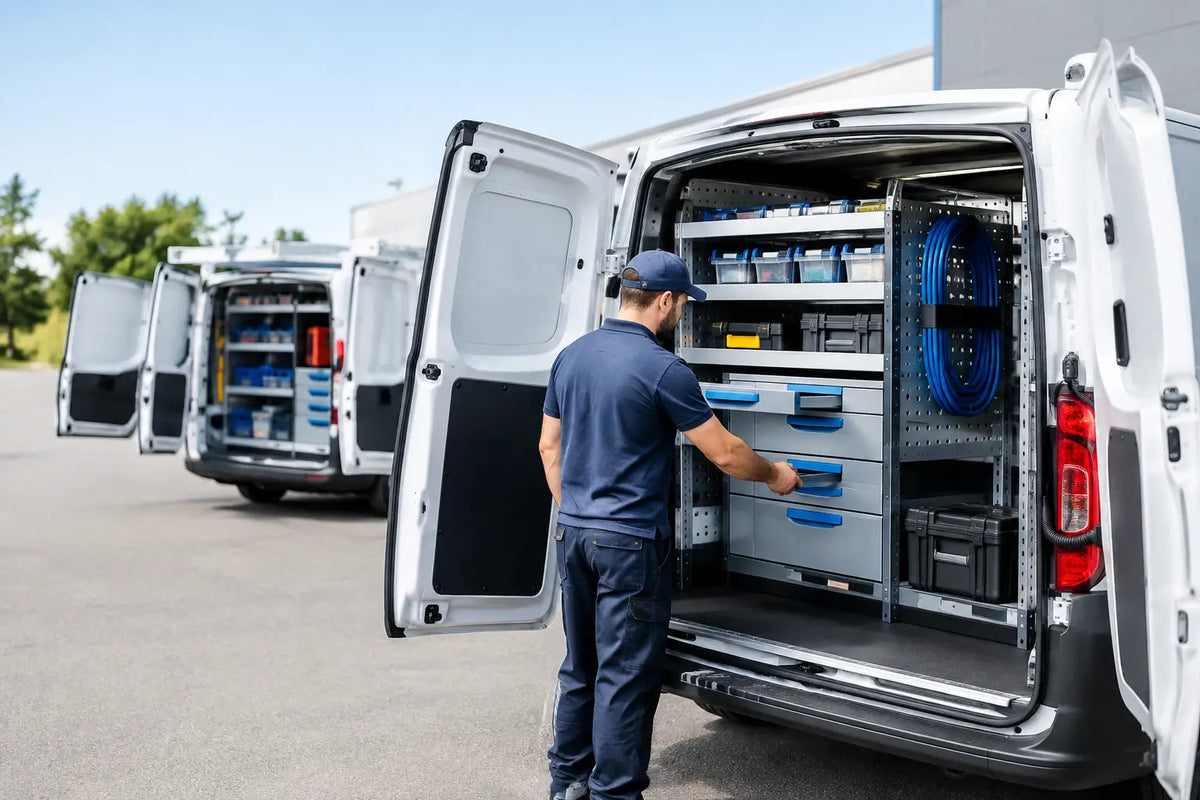
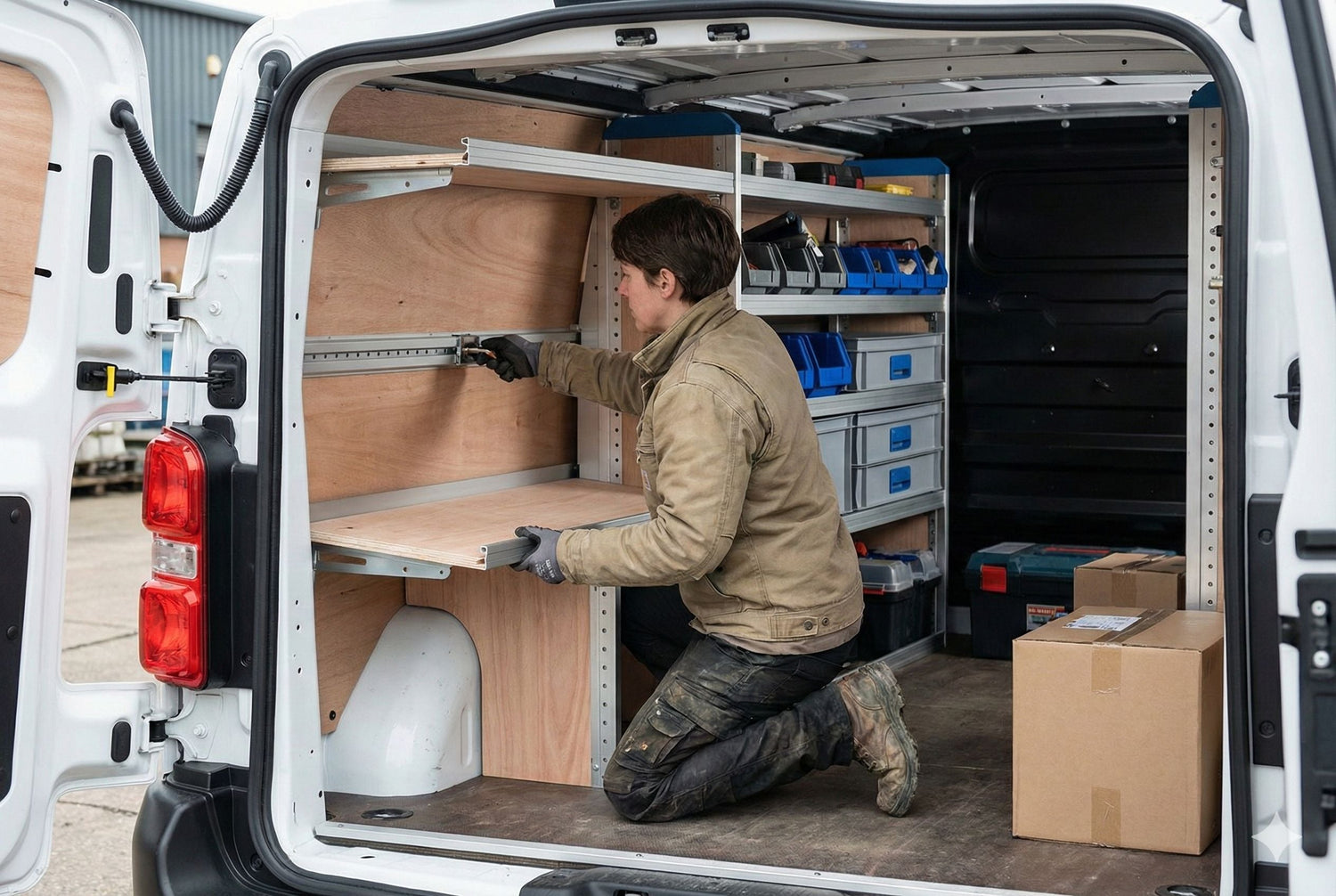
Van shelving gives every item a fixed home. That sounds simple, but it changes the start and end of every working day. Instead of unloading half the van to reach one case, you can see your fittings, cable, adhesives, fixings and hand tools from the side or rear door.
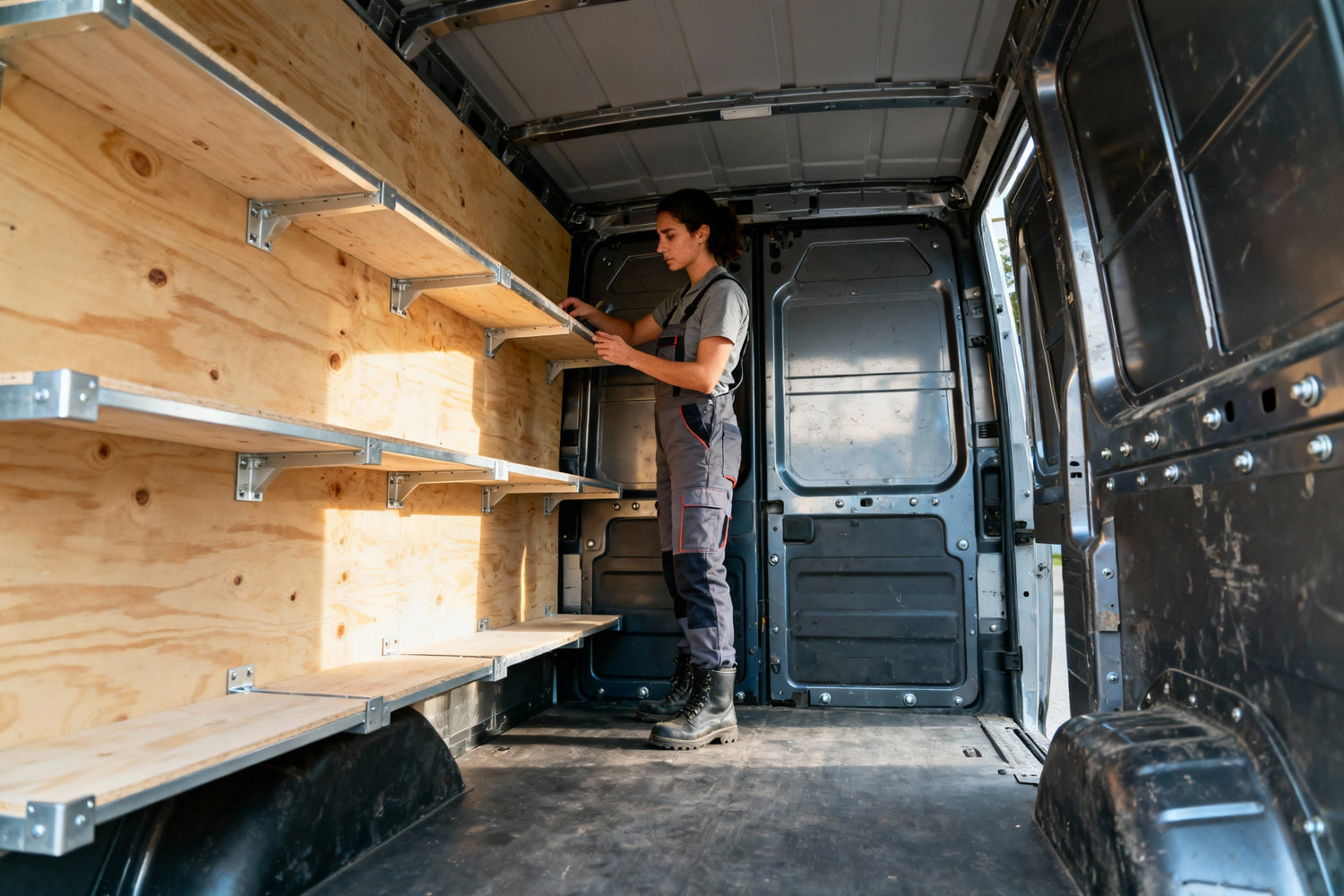
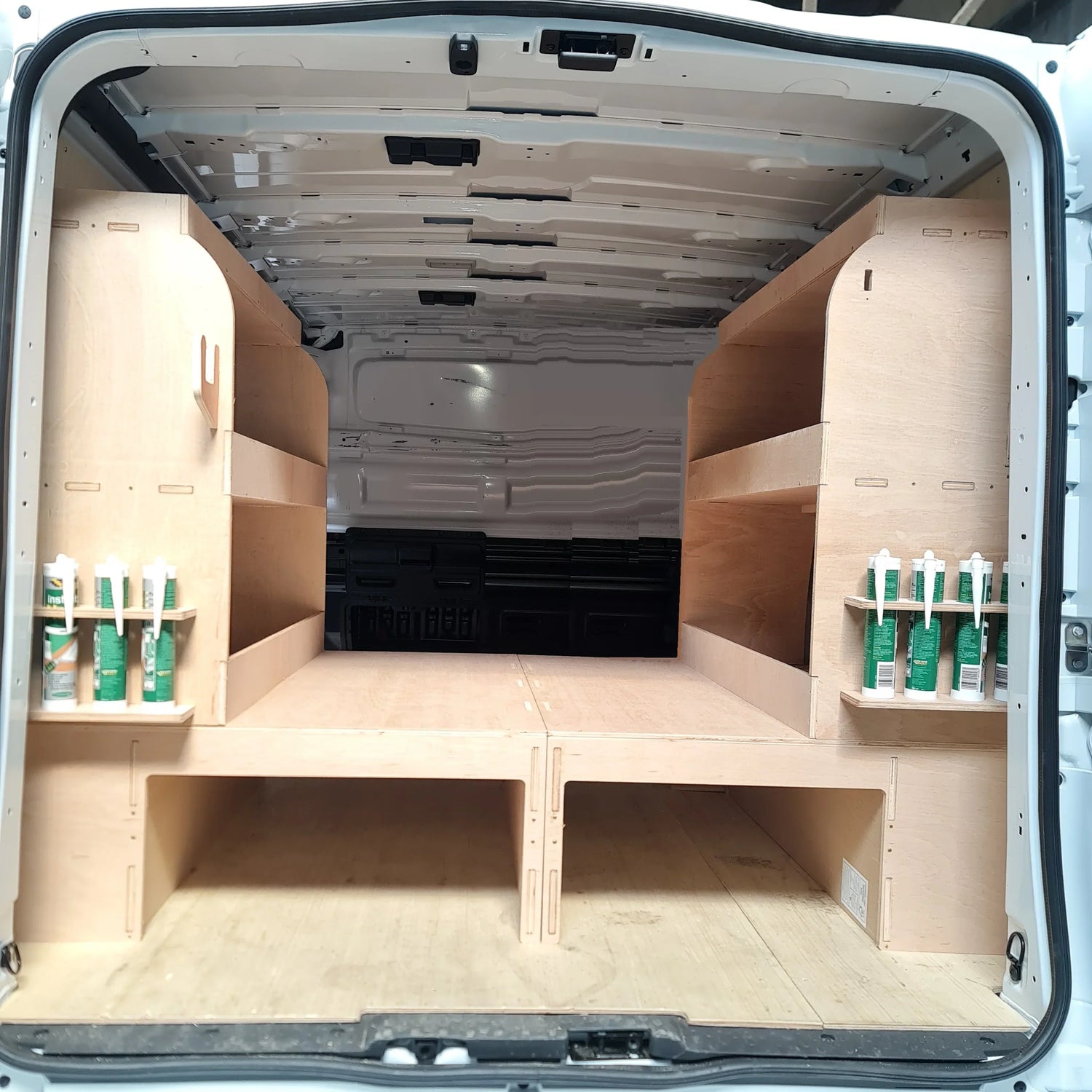
Plywood racking is particularly useful for trades that carry mixed materials. Shelves can hold organiser cases, tool cases and boxed stock at a sensible height, while lower sections can take heavier items. Vertical dividers make it easier to separate conduit, trim, pipe, timber offcuts or longer tools, depending on the layout.
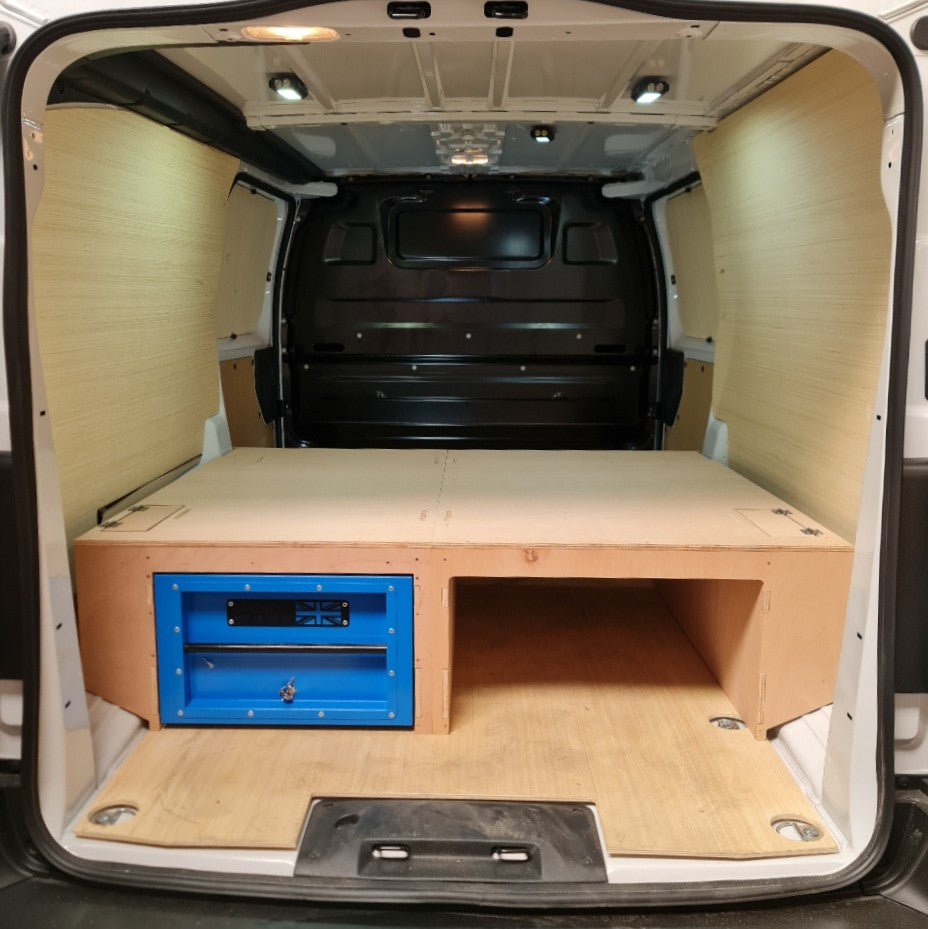
A properly planned shelving system also keeps the floor clearer. This matters when you need room for larger equipment, a vacuum, a ladder, a boiler component or a delivery of materials. The aim is not to fill every inch with racking. It is to use the wall space so the floor remains useful.
For fleet managers, shelving brings another benefit: consistency. When vehicles carrying the same type of work are organised in a similar way, operatives can find stock quickly and replacement drivers are not faced with a different layout in every van. It also makes routine checks of consumables far easier.
Access is the biggest difference
A toolbag concentrates everything into one movable container. That is useful when the work is indoors, but it means finding a small item can involve emptying pockets or lifting out heavier tools first. Shelving spreads items out, so you can separate them by job type, size or frequency of use.
Think about the kit you reach for before 9 am. If it is used on nearly every job, it should be visible and reachable without kneeling in the doorway. Items used less often can sit higher up or further back. This simple approach saves a surprising amount of time over a week.
Shelving versus toolbags by trade
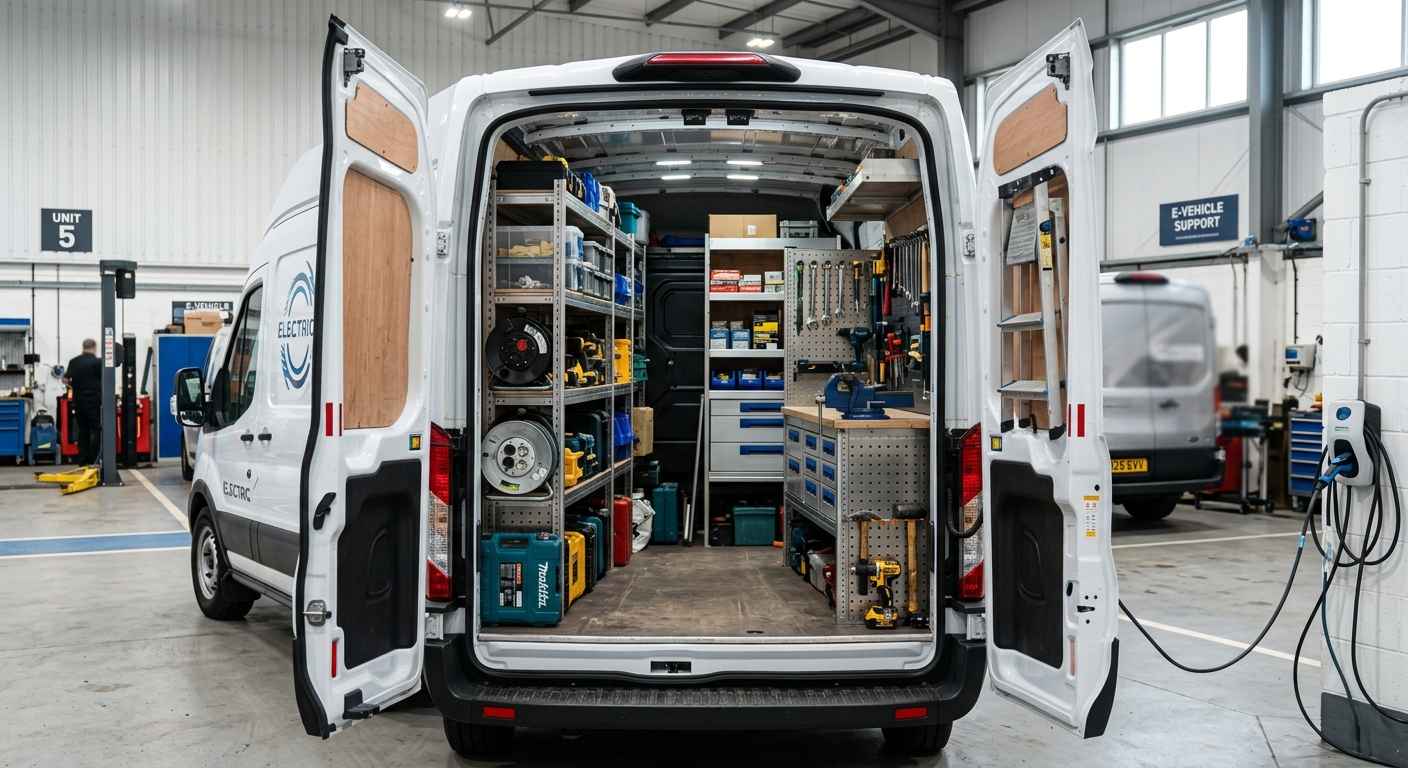
The right setup changes with the work. An electrician may benefit from shelving for cable accessories, clips, trunking fittings, tester cases and labelled organisers, plus a toolbag for core hand tools and a small drill. A plumber may keep compression fittings, valves, sealants and consumables on shelving, while using a bag for daily hand tools.
Carpenters often need a clearer floor for larger saw cases, dust extraction or materials. In that case, shallow shelving on one side, combined with secure storage for smaller tools, can be more useful than deep units on both walls. Builders and maintenance contractors may need shelving for fixings and PPE, but retain open space for site-specific equipment.
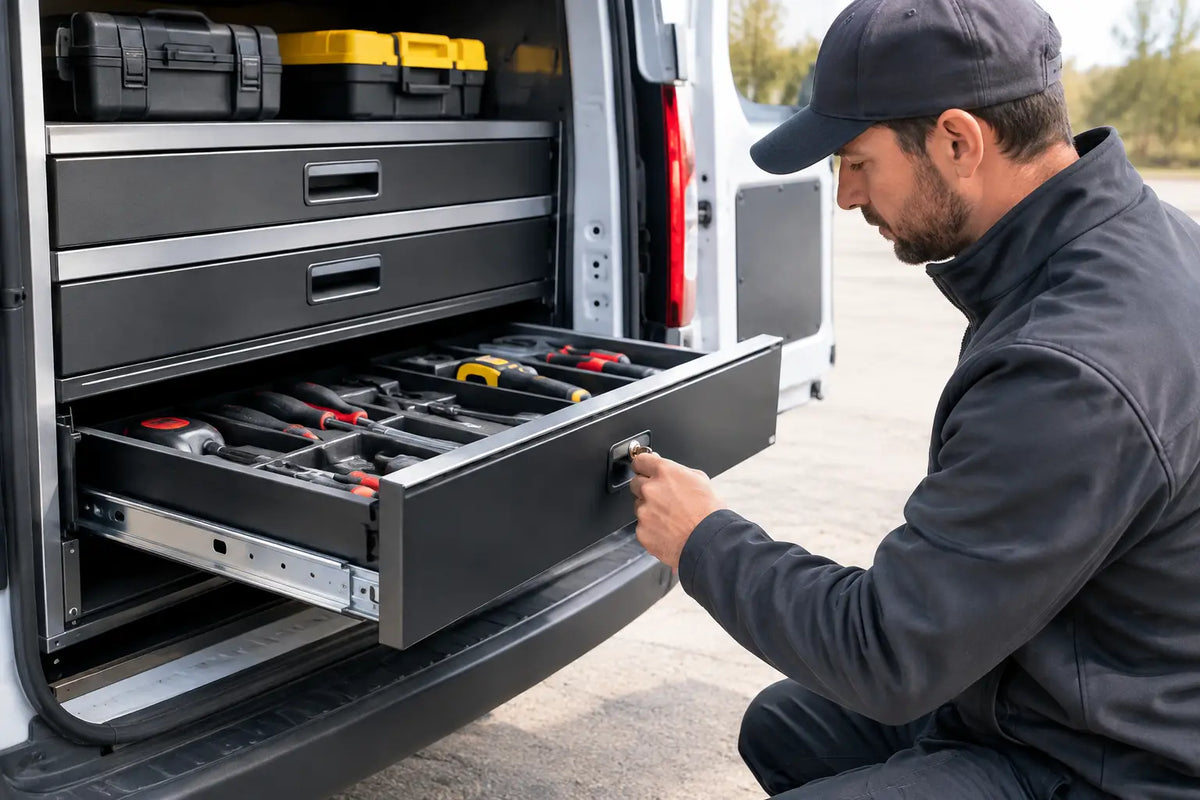
For mobile mechanics, drawers and divided storage can be worth considering alongside shelves. Small parts and specialist sockets are difficult to manage in open bags. Likewise, heating engineers carrying a mixture of fittings, analysers and boxed parts usually need more separation than a few toolbags can provide.
This is why a one-size-fits-all layout rarely works. Your van should be planned around what you carry most days, not around the largest item you use once a month.
Do not overlook weight and vehicle balance
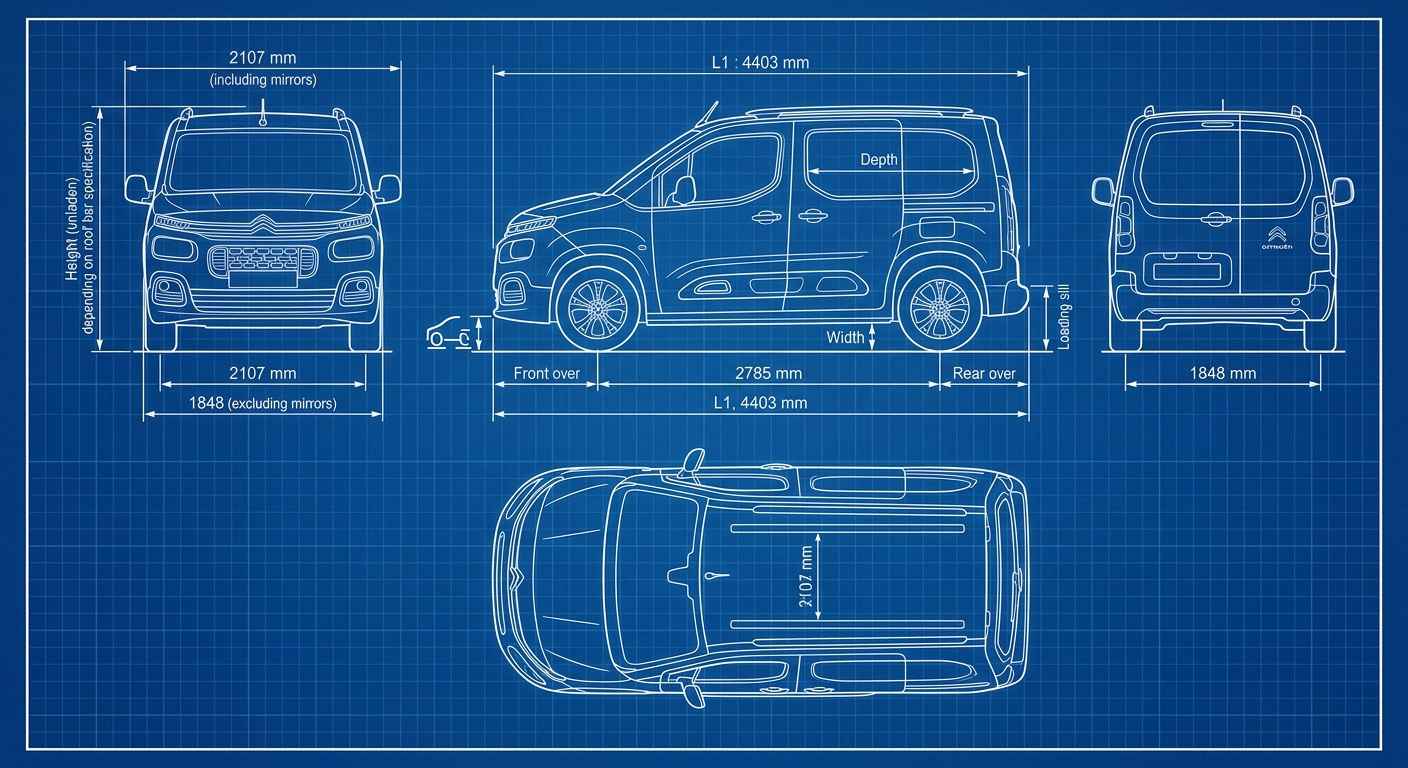
Shelving improves organisation, but it adds weight and takes up internal width. Before choosing a layout, consider your van's payload, the weight of your usual tools and stock, and the room needed for larger loads. Heavy tool cases, boxes of fittings and machinery should be kept low where practical.
Avoid stacking dense items on high shelves simply because there is space available. A sensible layout keeps the heaviest kit close to the floor and distributes load evenly across the vehicle. Secure stored equipment properly, especially anything that could shift under braking or when cornering.
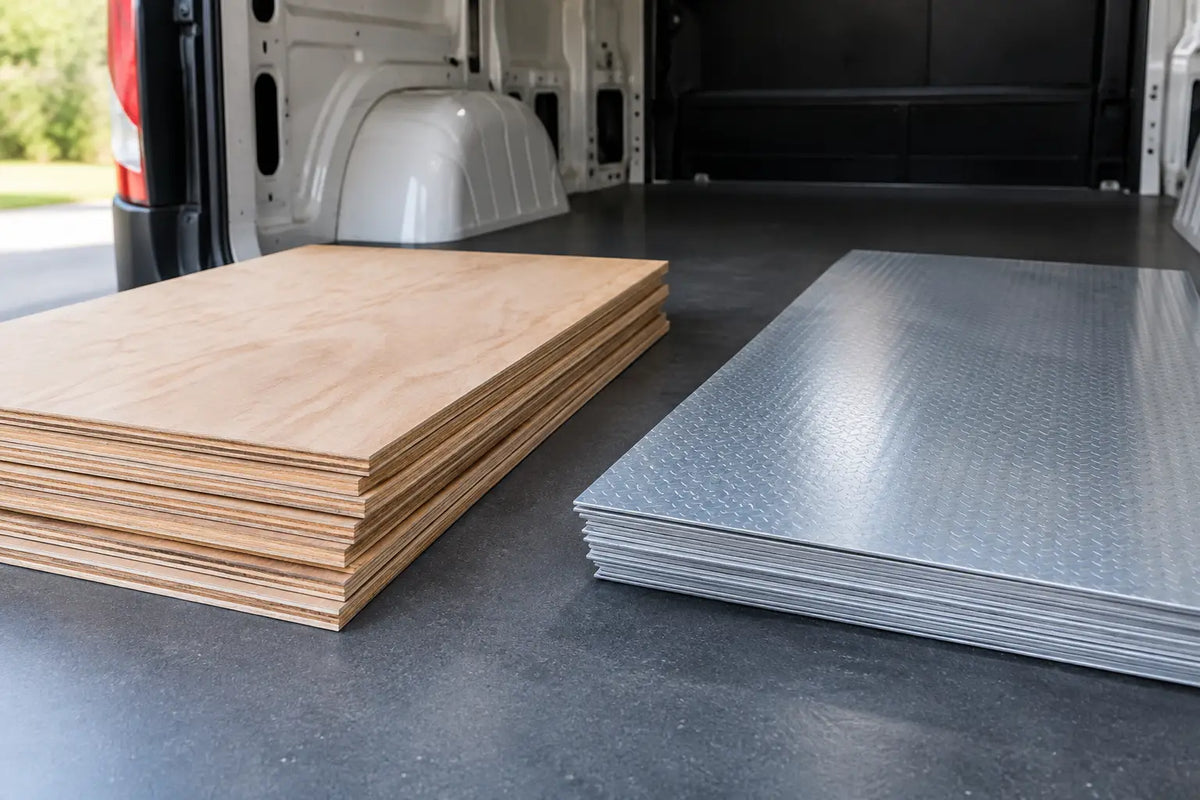
Plywood shelving is popular because it is durable, practical and easy to work around. It gives a solid place for everyday trade equipment without the sharp edges or rattling often associated with loose metal storage. The key is choosing a model-specific system that suits your van's shape and door access, rather than assuming a generic rack will fit safely.
A combined setup is usually the practical answer
The strongest case for shelving is not that it replaces toolbags. It stops toolbags from becoming your entire storage plan. Keep a grab bag ready for the tools needed inside a property, then return it to a consistent shelf position at the end of the job.
A typical working layout might use shelving for stock and organisers, a lower area for heavier cases, and a dedicated position for one or two toolbags. Add purpose-made holders for items such as sealant tubes, wipes or gloves where they are easy to reach. These small details prevent loose items rolling around and free up shelf space for the things that matter.
If you carry valuable tools overnight, consider how secure storage fits into the overall arrangement. A secure box or Van Vault-style solution can work with shelving, but it needs to be placed without blocking access to your routine stock. The most organised vans make security, access and available floor space work together.
Start with your daily load, not a shopping list
Before buying racking, empty your van and group its contents. Put daily-use tools in one group, regular stock in another, occasional equipment in a third, and bulky items separately. You will soon see what needs a shelf, what needs a bag and what is taking up room without earning its place.
Measure the largest cases and check where you need access from. Rear-door access may suit one trade, while a side-door working position may be more efficient for another. Also allow for future changes: a little spare shelf capacity is useful when your workload grows or you add a new service.
At Vanshelves.co.uk, vehicle-specific shelving, false floors, drawers and practical storage accessories are designed to help working van owners build a layout around real equipment. Check the product category for your exact vehicle and consider the type of work it carries before choosing a configuration.
A toolbag should make walking into a job easier. Shelving should make running the whole day easier. Build your van around both jobs, and you spend less time hunting for kit and more time getting the work done.