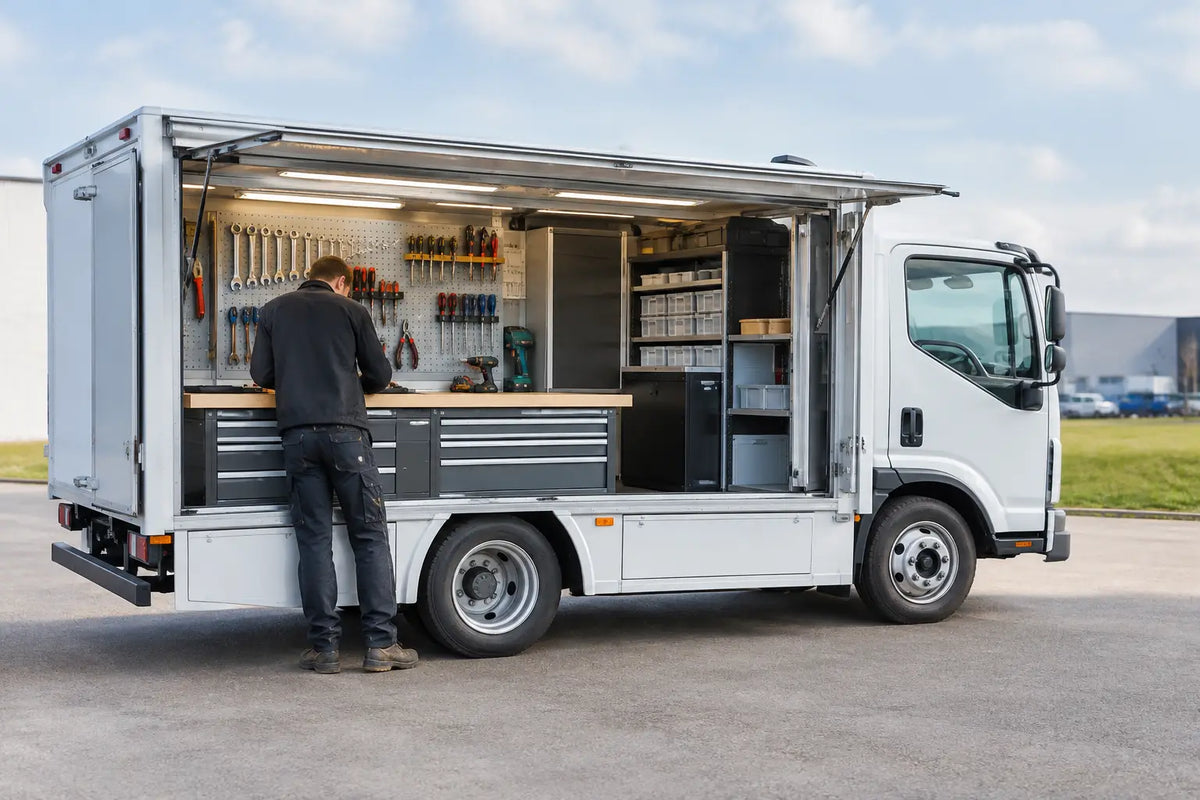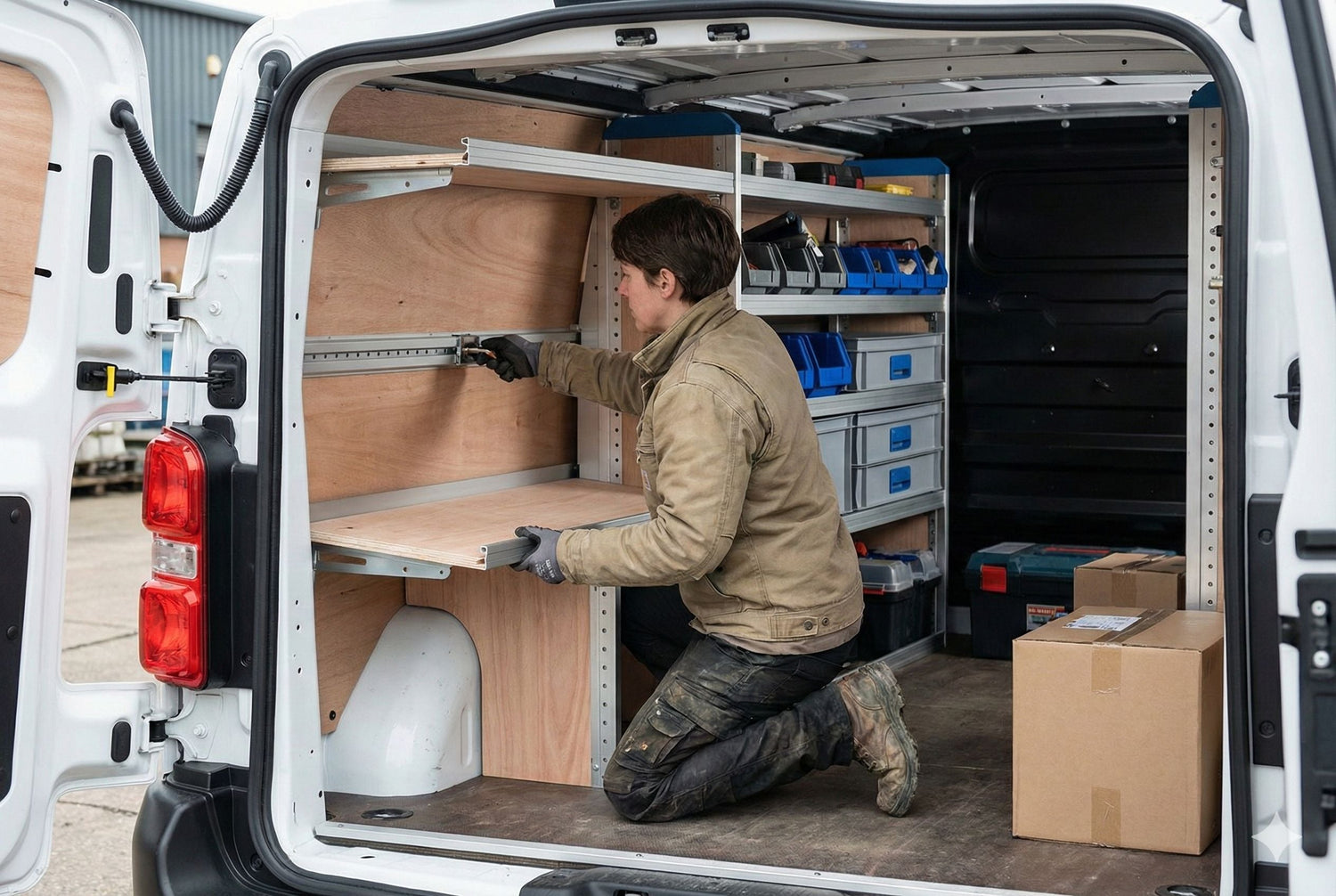











A van becomes a mobile workshop when it helps you get through jobs without wasting ten minutes looking for a fitting, shifting toolboxes or climbing over loose materials. For an electrician, plumber, carpenter or heating engineer, the right layout is less about filling every gap and more about making the kit you use every day easy to find, safe to carry and quick to put back.
A well-organised van also presents a better image when you arrive on site. More importantly, it reduces the small frustrations that build up across a working week: damaged tools, spilled sealants, missing fixings and stock rolling around the load area. The best setup depends on your trade, your van model and the weight you carry, but the principles are much the same.
What a working mobile workshop needs
A practical mobile workshop should support the way you actually work. That means looking at the order in which you use equipment, rather than buying storage simply because it looks tidy in a photo.
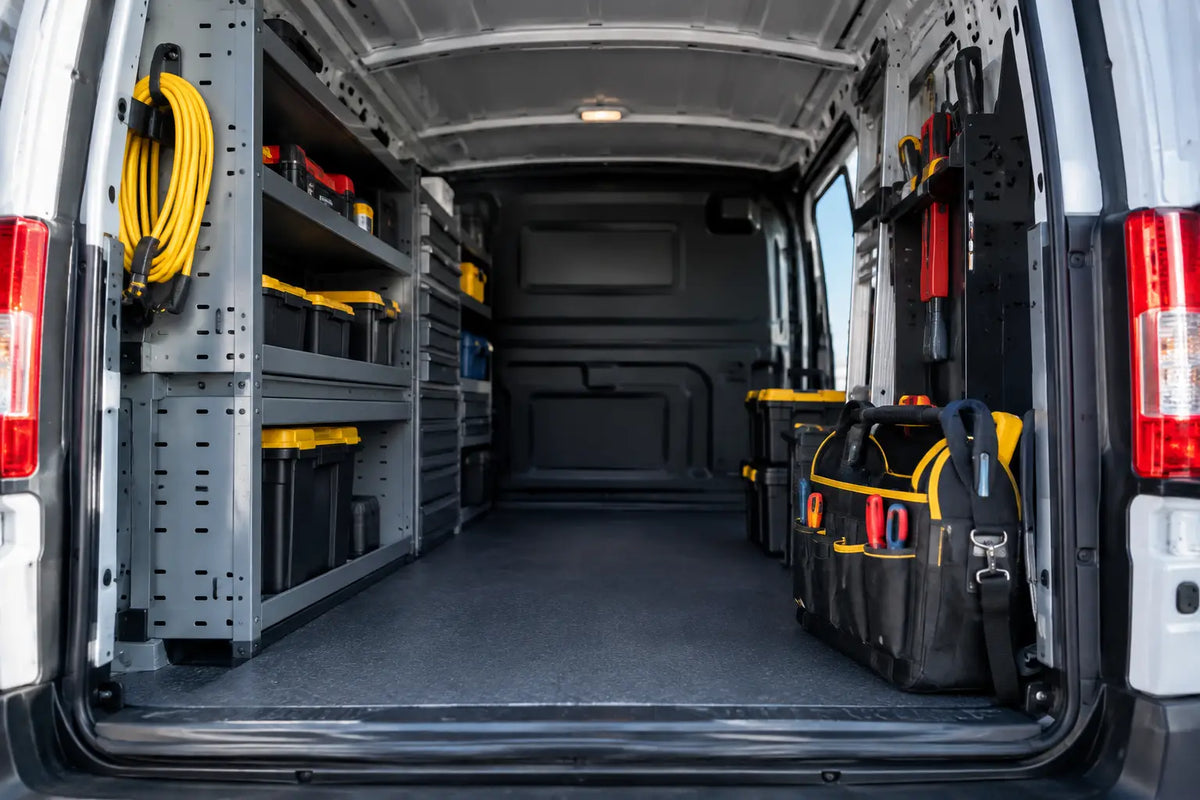
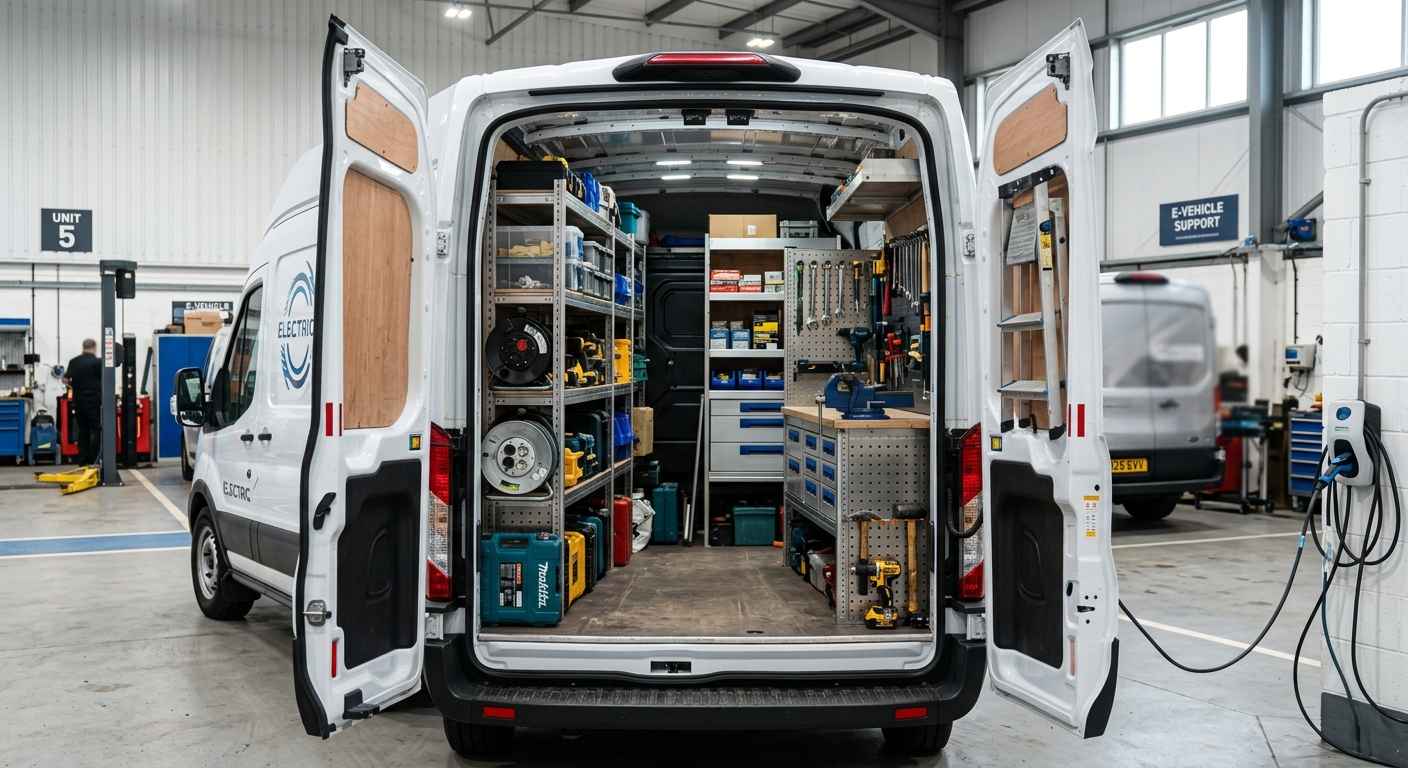
Start with the items that travel in your van every day. These are often power tools, hand tools, consumables, fixings, PPE, cables, pipe fittings or sealants. They need reliable homes close to the side or rear doors, where they can be reached without unloading half the van.
Tools used less often can sit further forward, while bulky equipment and heavier cases are usually best kept low down. This keeps the floor clear and helps avoid lifting heavy items down from high shelves. It is a simple point, but it makes a noticeable difference after a long day of call-outs.
Your van should also leave room for the jobs that change. A plumber may need space for lengths of pipe one day and a boiler component the next. A joiner may need to carry sheet materials, doors or a mitre saw. Fixed storage is useful, but a layout with a clear central aisle or an open section of floor is often more valuable than another narrow shelf.
Begin with your daily load
Before choosing racking, lay out your regular equipment on the ground and group it by use. Keep drilling and fixing kit together, put electrical test equipment in one protected area, and separate clean fittings from dirty hand tools. You will soon see which items need open shelving, which need a drawer, and which are better stored in cases.
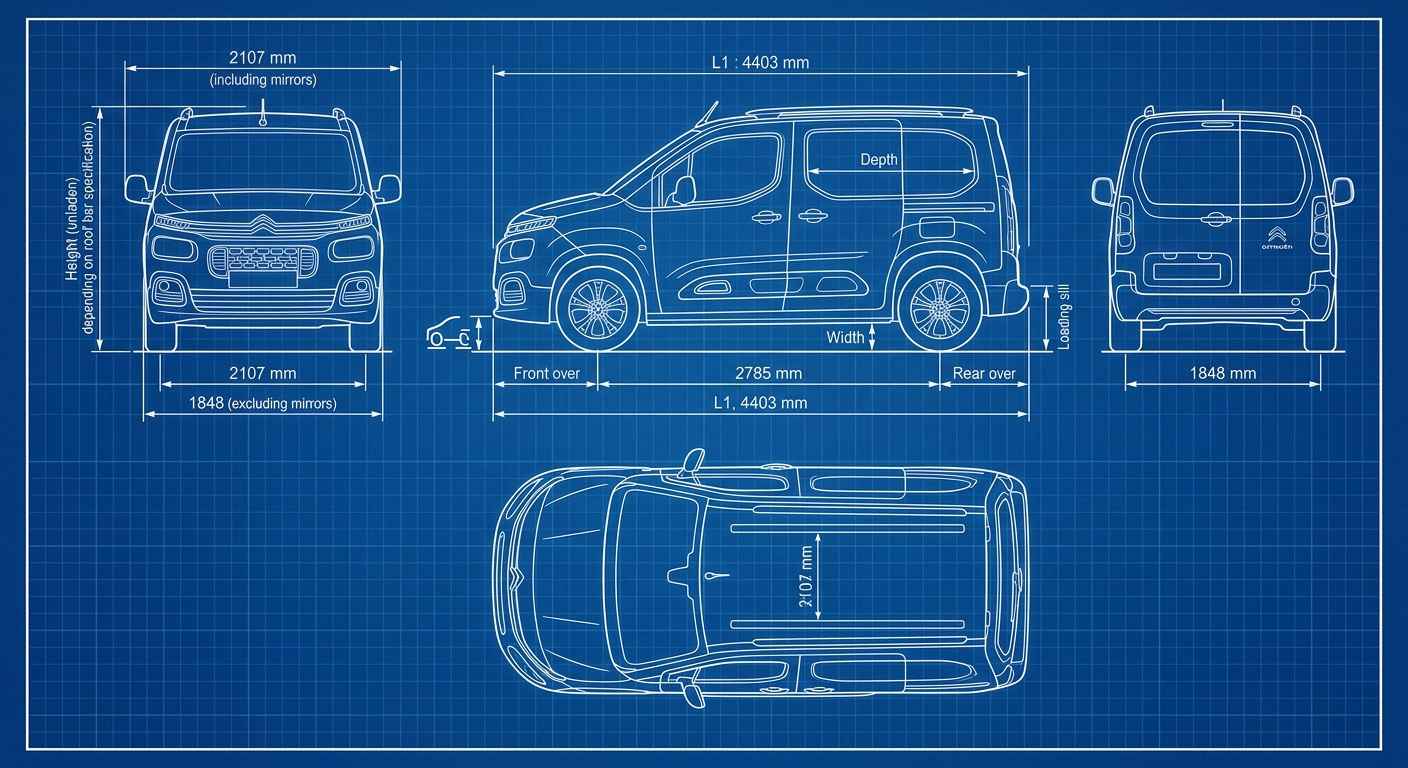
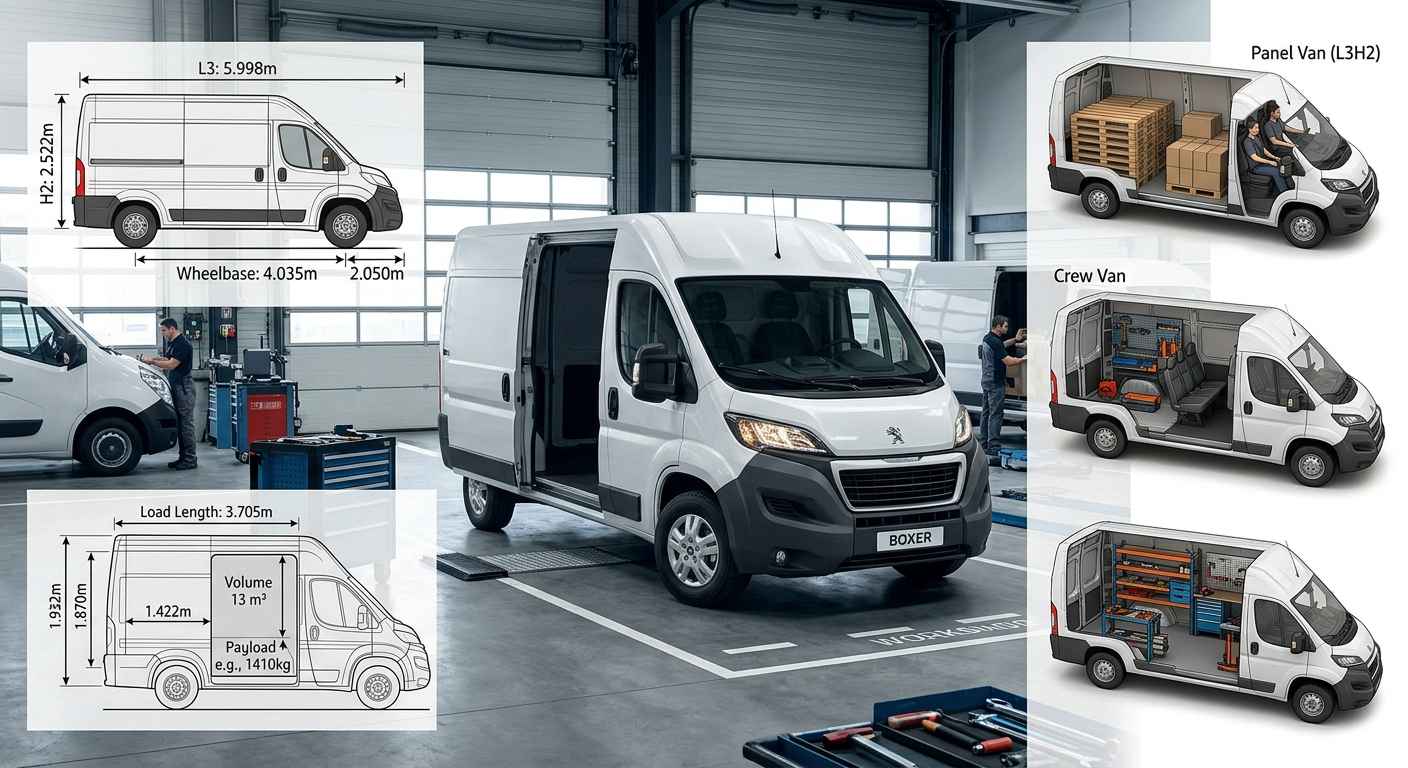
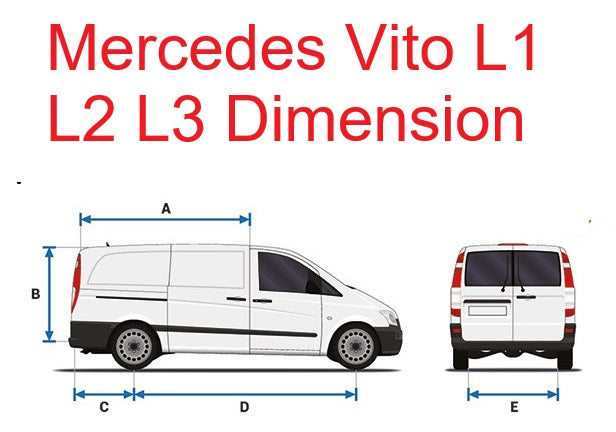
This exercise also prevents a common mistake: fitting shelving along both sides of the van, then finding there is no sensible place for larger equipment. Take internal measurements of your load space and account for wheel arches, door openings and any factory bulkhead. Vehicle-specific products are helpful because dimensions can vary significantly between even closely related vans.
Plan the layout around access, not just capacity
A van can hold plenty of tools and still be awkward to use. The difference comes down to access. Think about where you park on a typical job and which door you use first. If you normally work from the side door, your most-used kit should be available there. If you tend to reverse onto driveways, rear-door access may matter more.
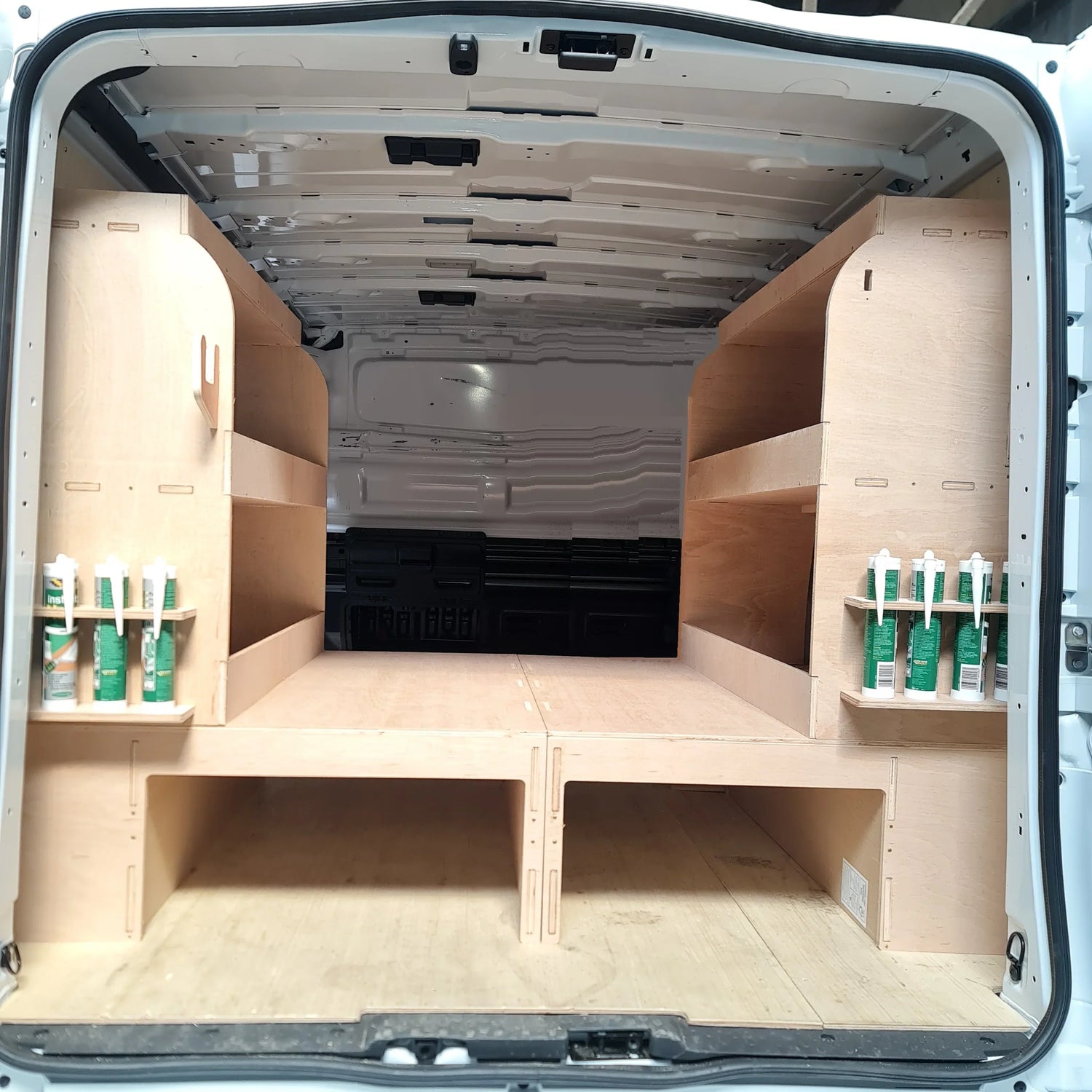
For many trades, one side of the van works well for racking and consumables, while the other remains open for longer materials, a tool chest or larger cases. This gives you storage without turning the load space into a narrow corridor.
Keep frequently used items at a sensible height
Frequently handled products should sit between knee and shoulder height where possible. Small parts boxes, wipe dispensers, gloves and sealants are easier to grab when they are not buried at floor level or balanced above your head. Accessories may seem minor, but they stop the cab and door pockets becoming storage areas for everything from adhesive tubes to disposable gloves.
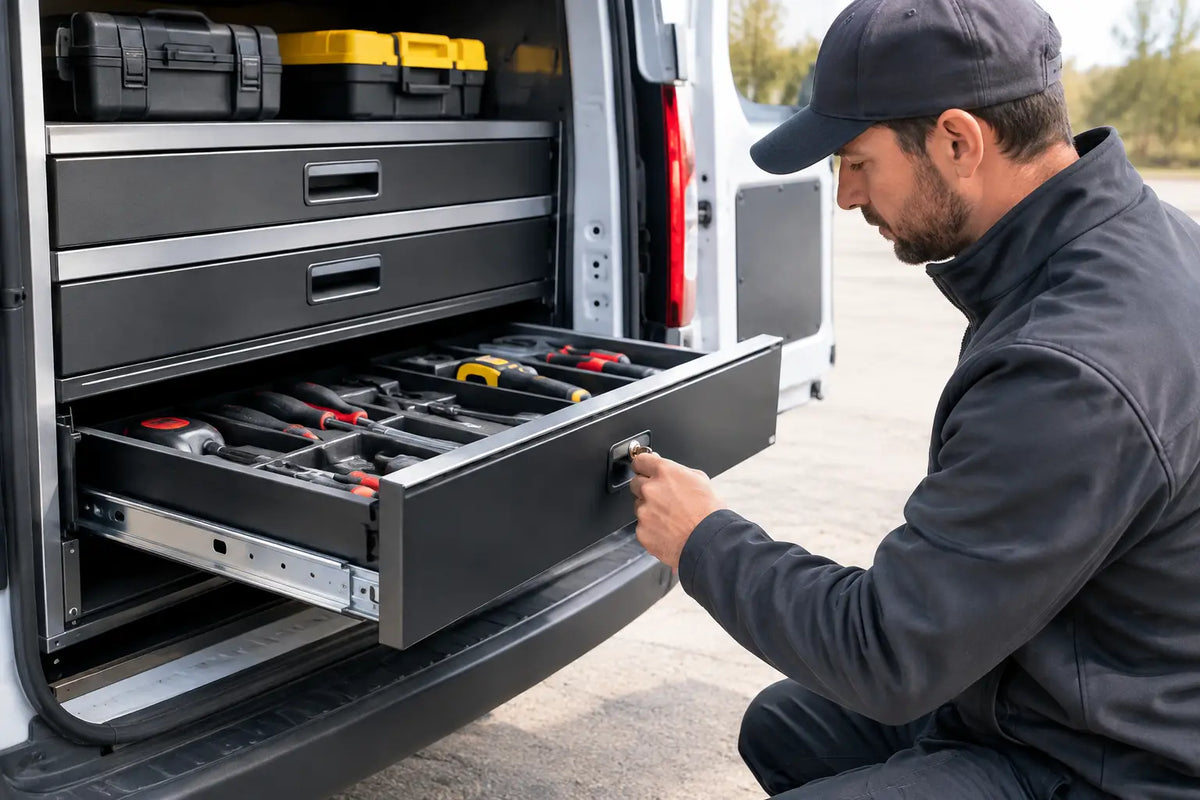
Open shelving is particularly useful for larger tool cases and clearly labelled storage boxes. Drawers are better for loose fittings and smaller tools, especially where you need to see stock levels at a glance. If you carry expensive equipment, consider how you will secure it as well as where you will place it. Organisation and security need to work together.
Do not forget the loading area
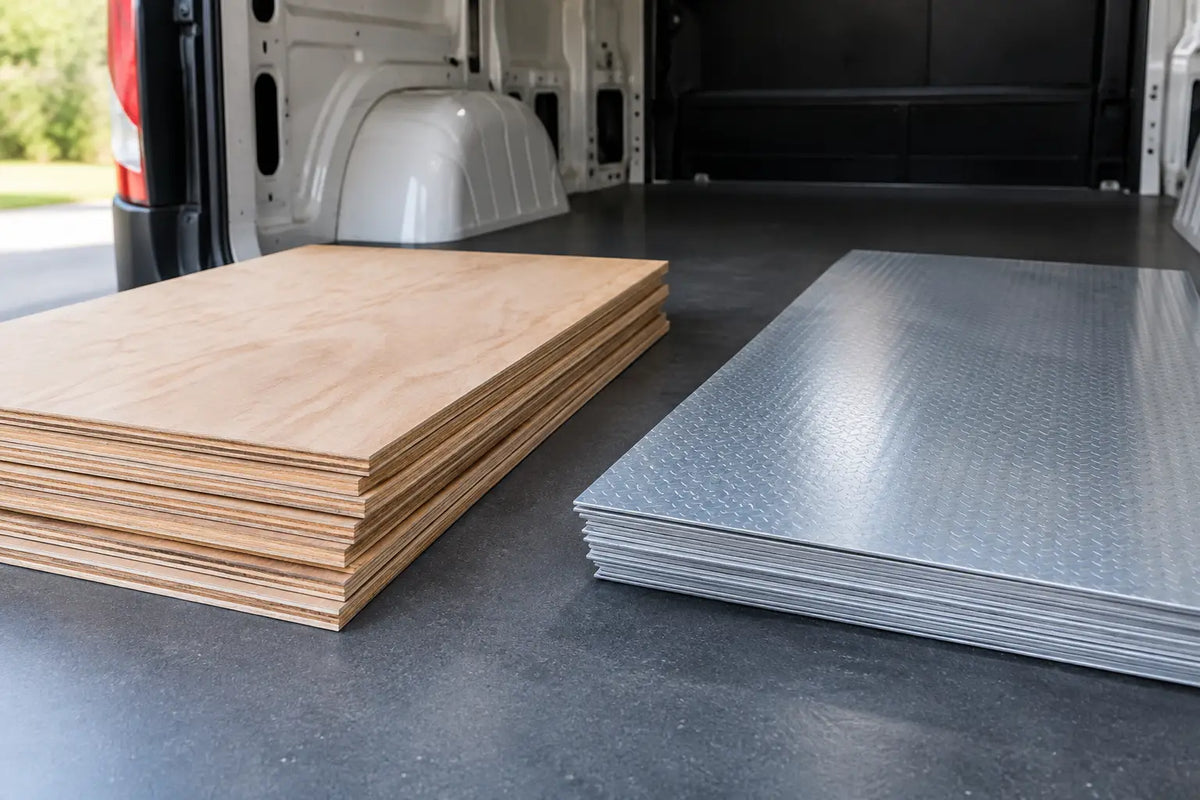
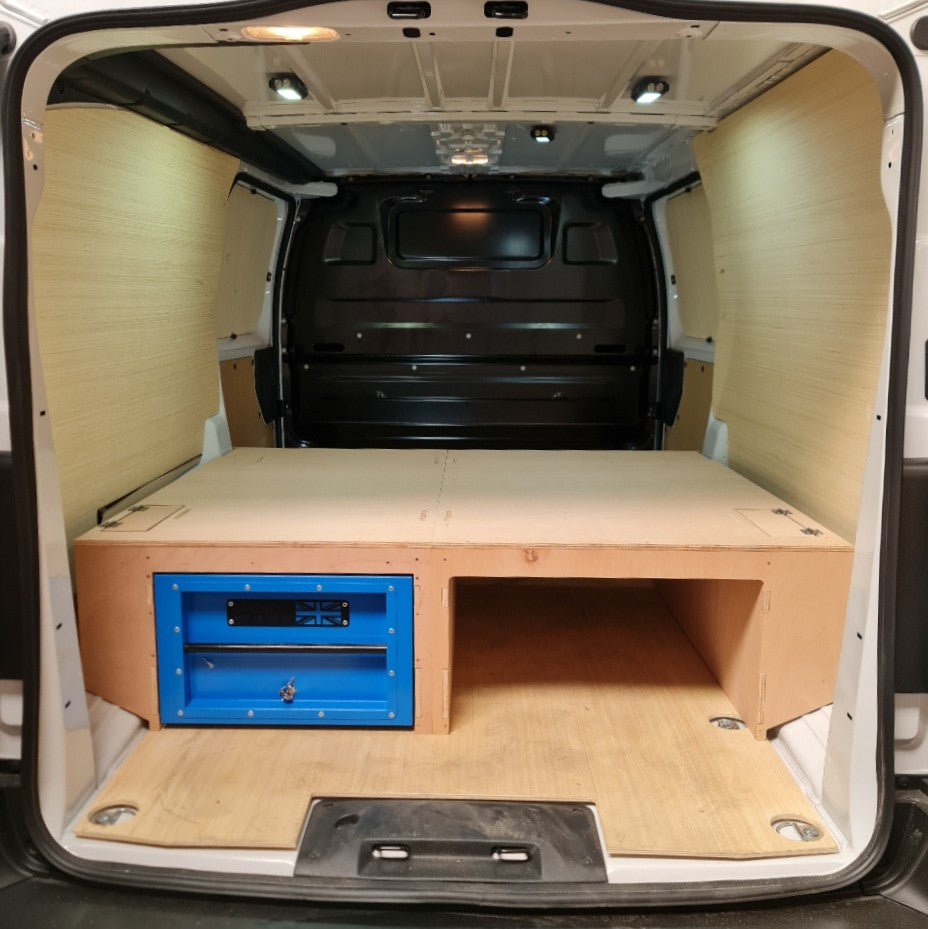
The floor is the foundation of the whole setup. A raised or false floor can provide a more durable working surface and may help create useful underfloor storage, depending on the design and vehicle. It can also protect the original van floor from scuffs, wet boots and the daily movement of tools.
However, extra floor height reduces available headroom, so it is worth considering if you regularly carry tall cases or stand inside the van. Similarly, heavy-duty drawer systems are useful for keeping equipment contained, but they take up load length and add weight. Choose them where the access benefit is clear, not just because drawers look neat.
Build safety into the storage plan
Loose equipment is a safety issue, not merely an untidy one. A hard brake or sharp turn can send cases, fittings and tools moving across the load area. Every item needs a secure place, especially heavy power tools, gas-related equipment, liquids and metal stock.
Racking should be properly suited to the van and installed according to the supplied instructions. Avoid overloading shelves or placing the heaviest equipment high up. Keeping weight low and distributed sensibly helps the van feel more stable on the road, particularly when travelling between jobs with a full load.
Check the van's payload before adding substantial racking, false flooring, drawers and tools. The payload has to cover more than your equipment - it includes passengers, fuel, materials and any other load. It is easy to underestimate this once a vehicle is fitted out for a specialist trade.
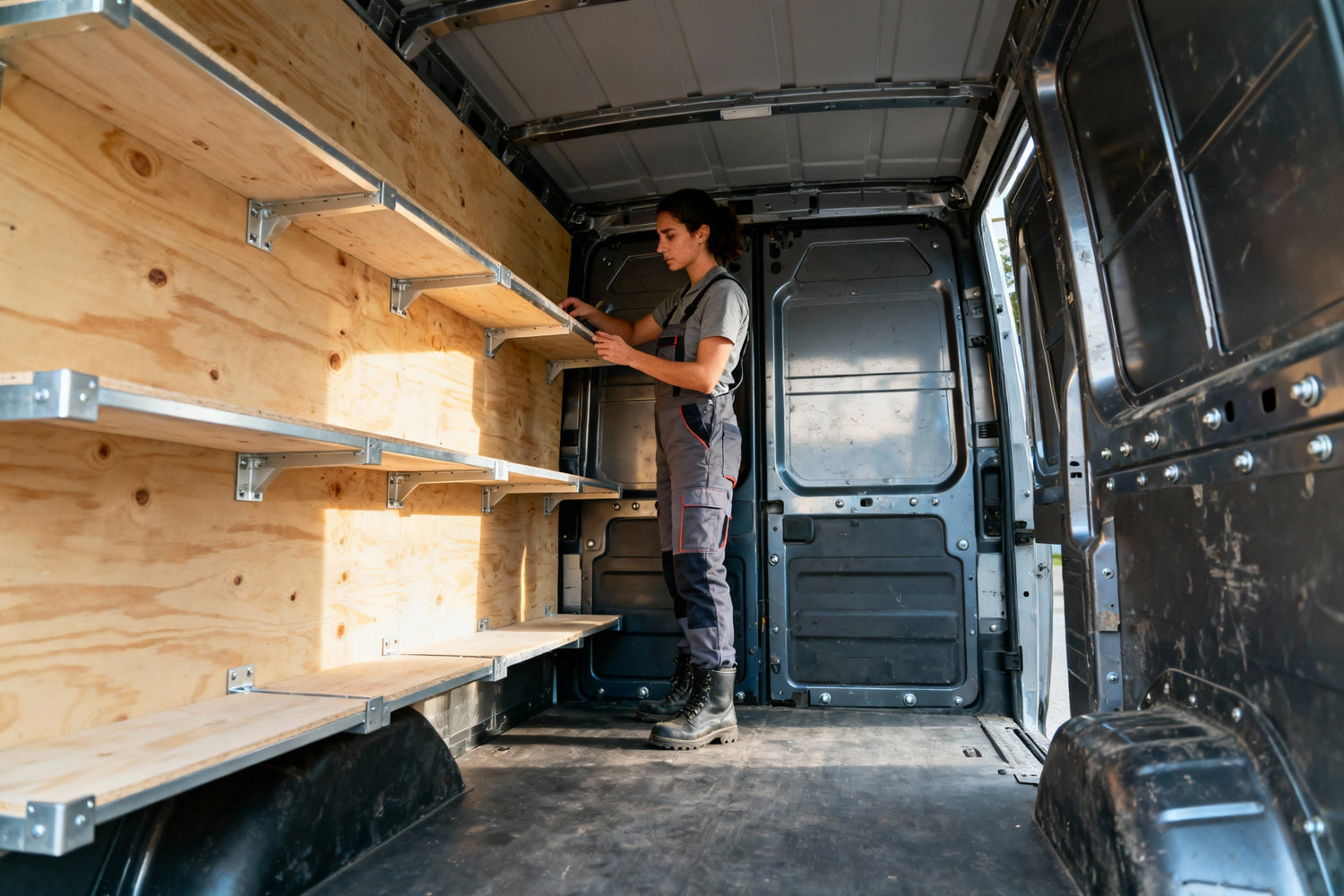
Materials also matter. Plywood van shelving remains a popular choice because it is strong, practical and straightforward to use in a working vehicle. It handles day-to-day knocks well and can be configured with shelves, dividers and compartments that suit the job. The right construction should feel solid without adding unnecessary bulk.
Storage choices for different trades
There is no single best layout for every van. An electrician may prioritise small-parts storage, cable management and protected space for testers. A plumbing and heating engineer often needs quick access to fittings, sealants, hand tools and larger boxed components. Carpenters may need more clear floor space for saws, timber and site materials.
Fleet operators have another consideration: consistency. A similar layout across several vans makes it easier for staff to find stock, restock consumables and move between vehicles when needed. It also makes daily checks simpler because missing equipment is more obvious.
For owner-operators, the priority is usually a setup that earns its space. If an item only comes out once a month, it does not need the most accessible shelf. Give the best positions to the tools and consumables that save you time on almost every visit.
At Vanshelves.co.uk, model-specific categories make it easier to narrow down racking, shelving, false floors and practical storage accessories for popular working vans. Always check the listed vehicle details carefully, including model generation, wheelbase and door arrangement, before ordering any van storage system.
Make organisation easy to maintain
Even the best racking system will become messy if it takes too long to put things away. The aim is not a showroom finish at the end of every job. It is a clear, repeatable place for each category of equipment.
Use labelled boxes for fittings and consumables, and keep a small amount of spare space rather than filling every shelf to the edge. That breathing room gives you somewhere to put returns, packaging or a part removed during a repair. It also makes stock checks quicker on a Friday afternoon.
Review the layout after a few weeks of real work. You may find that one shelf is constantly overloaded while another is barely used, or that a tool you reach for daily is on the wrong side of the van. Small adjustments often improve the setup more than adding more storage.
A useful mobile workshop should make the first job of the day easier and the last one less of a chore. Start with the equipment you genuinely carry, protect the load space, keep weight sensible and leave room for the work that changes from one site to the next. That is how a working van stays organised without getting in the way.