









A builder’s van can lose time before the first job has even started. If the drill is buried beneath offcuts, sealants roll around in the back and fixings are spread across three boxes, every small task takes longer. The best van setup for builders is not about filling every panel with storage. It is about giving the tools, materials and consumables you use most a fixed, sensible place.
A working van needs to cope with changing jobs. One day it may carry power tools, hand tools and fixings for a first-fix job; the next, boards, trims, adhesives and finishing gear. The right layout protects equipment, keeps the load secure and leaves enough clear floor space for materials. Get that balance right and the van becomes a reliable mobile workspace rather than a daily frustration.
Start with the work you actually do
There is no single layout that suits every builder. A general builder carrying a wide mix of tools needs a different setup from a kitchen fitter, landscaper or property maintenance contractor. Before choosing shelving or accessories, look at what goes into the van over a typical fortnight rather than one unusually large job.
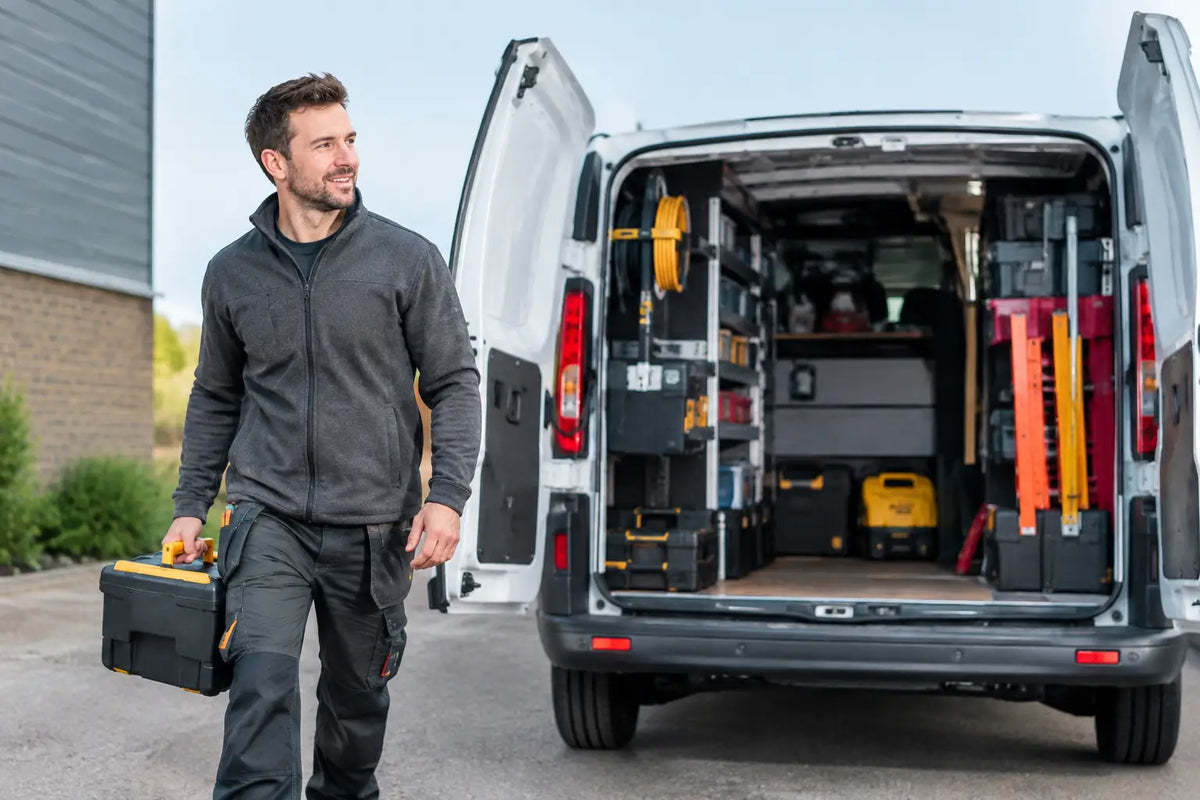
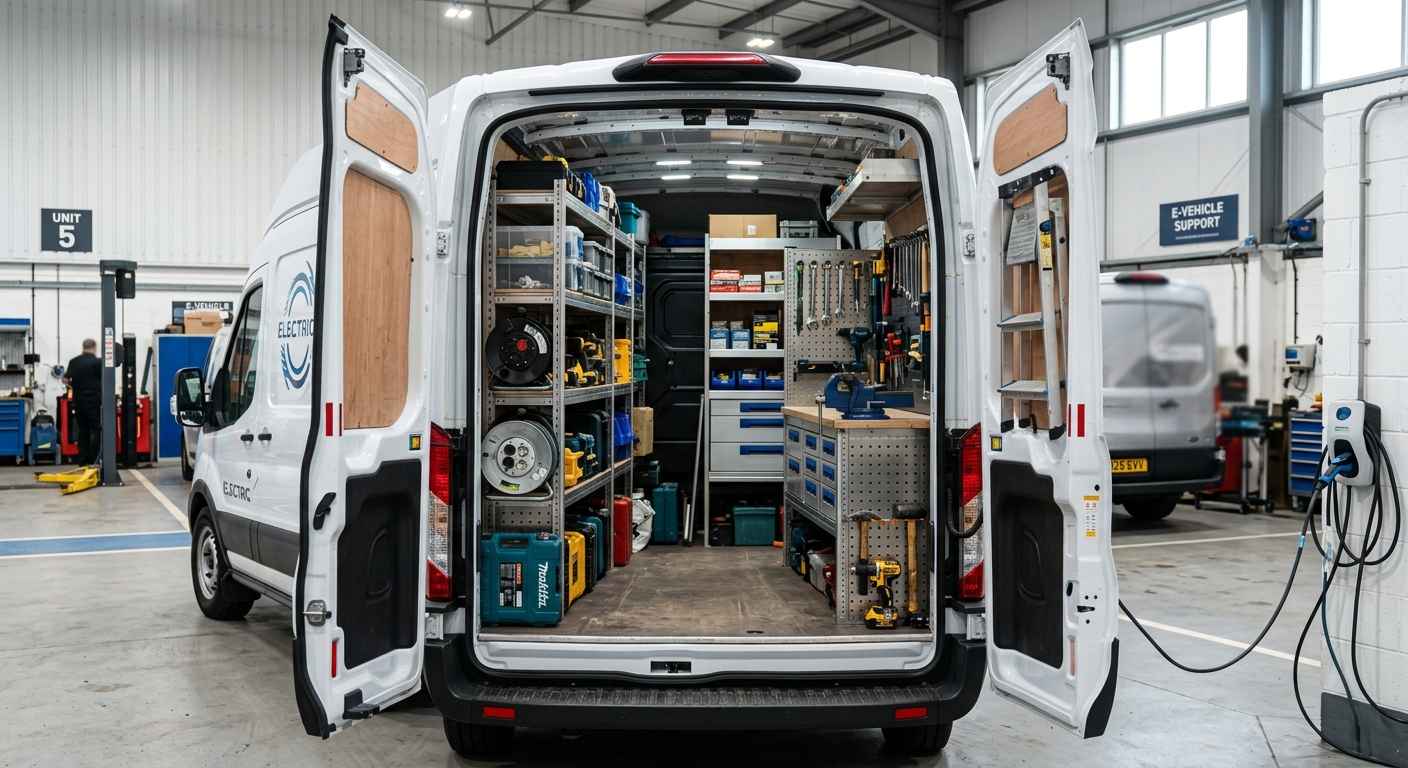
Separate your load into three groups: equipment used every day, items used regularly, and job-specific materials. Everyday equipment should be nearest the side or rear doors. Regular tools can sit in shelving bays or organised cases. Bulky materials and occasional equipment need a clear loading area, usually along the floor and towards the bulkhead.
This simple exercise prevents a common mistake: fitting plenty of shelves, then finding there is nowhere practical to put sheet materials, timber, doors or a wet vac. Storage should support your workflow, not reduce the van’s carrying usefulness.
Build the best van setup for builders around access
The most useful tool is not always the biggest or most expensive one. It is the one you need repeatedly and can reach without climbing into the van or moving five other items. Think about access from both the rear and side doors when planning the layout.
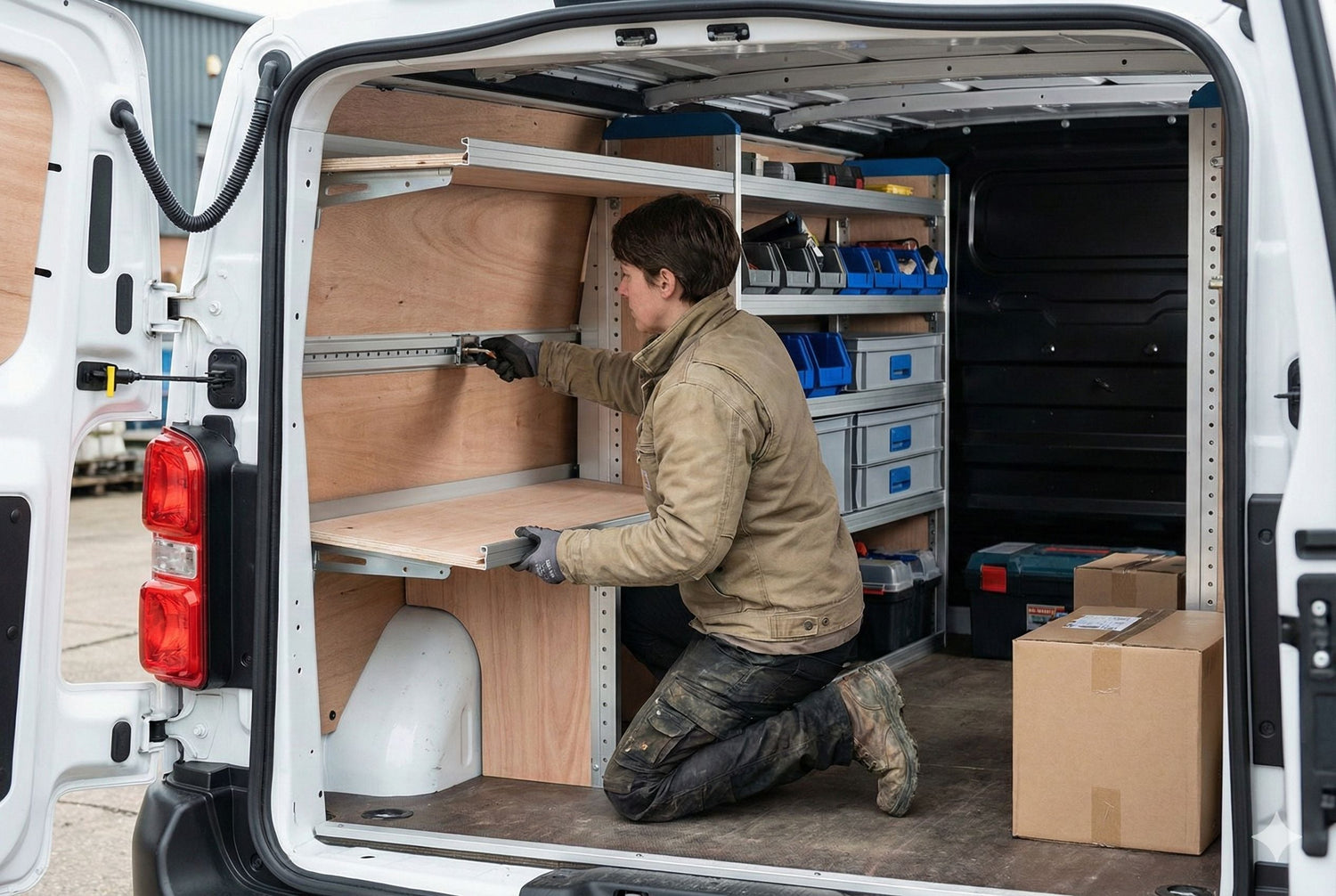
For many builders, the rear doors are best for larger tool cases, power tools and boxed equipment. The side door is ideal for hand tools, fasteners, sealants, tapes and PPE that are needed throughout the day. If you regularly park tight to another vehicle or wall, do not rely entirely on side-door access. Your rear layout should still allow you to find the essentials quickly.
Put heavy equipment low down and close to the bulkhead where possible. This helps keep the load stable and stops the van becoming awkward to work around. Lighter consumables and smaller hand tools can go higher, provided they are properly retained and cannot fall out during travel.
Make tool cases work harder
Stackable tool cases are useful only if they can be removed without unpacking the whole pile. Give your most-used cases a dedicated position near a door or on a low shelf. Less frequently used cases can be stored deeper in the load area.
Avoid loose boxes that slide across a false floor every time you brake. A tidy-looking van is useful, but a secure van is more important. Use storage that holds equipment in place and keeps the load predictable when you arrive at site.
Use shelving for small gear, not bulky materials
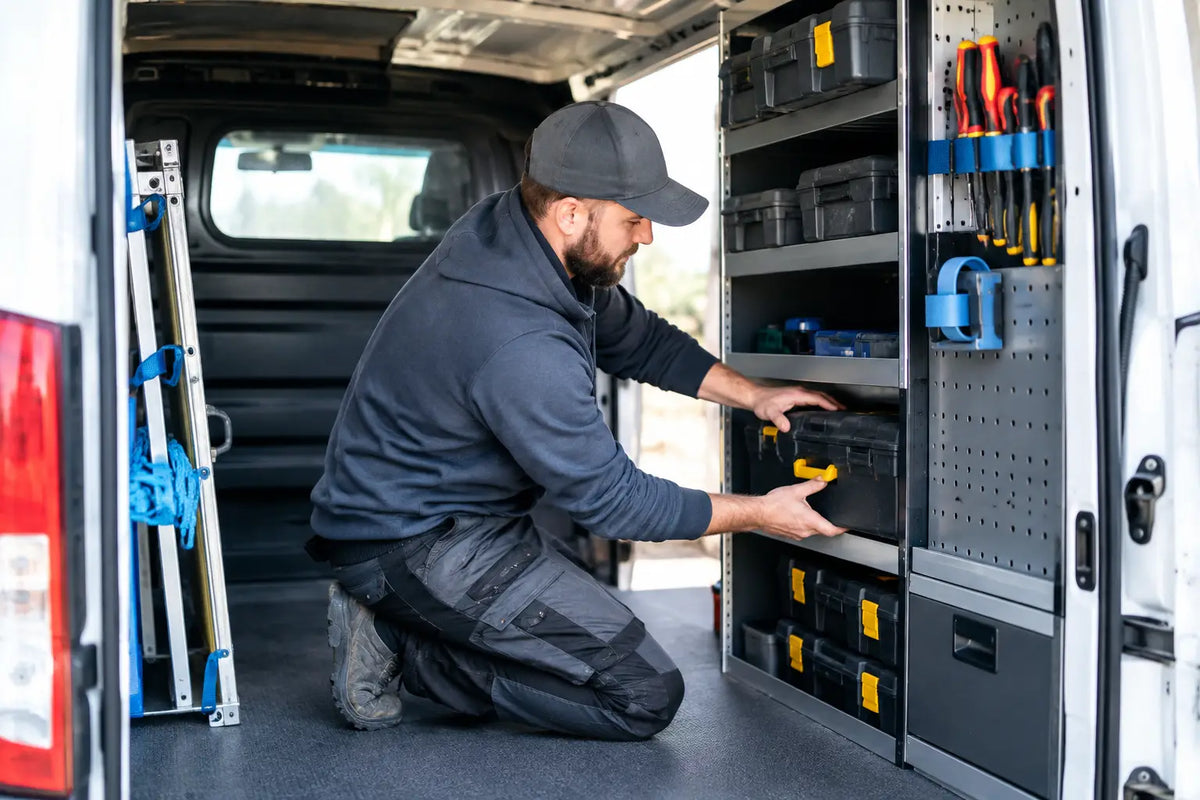
Van shelving earns its keep when it removes the constant hunt for smaller items. Fixings, drill bits, blades, tapes, adhesives, electrical fittings, PPE and hand tools are all easy to misplace when they are stored in large tubs on the floor.
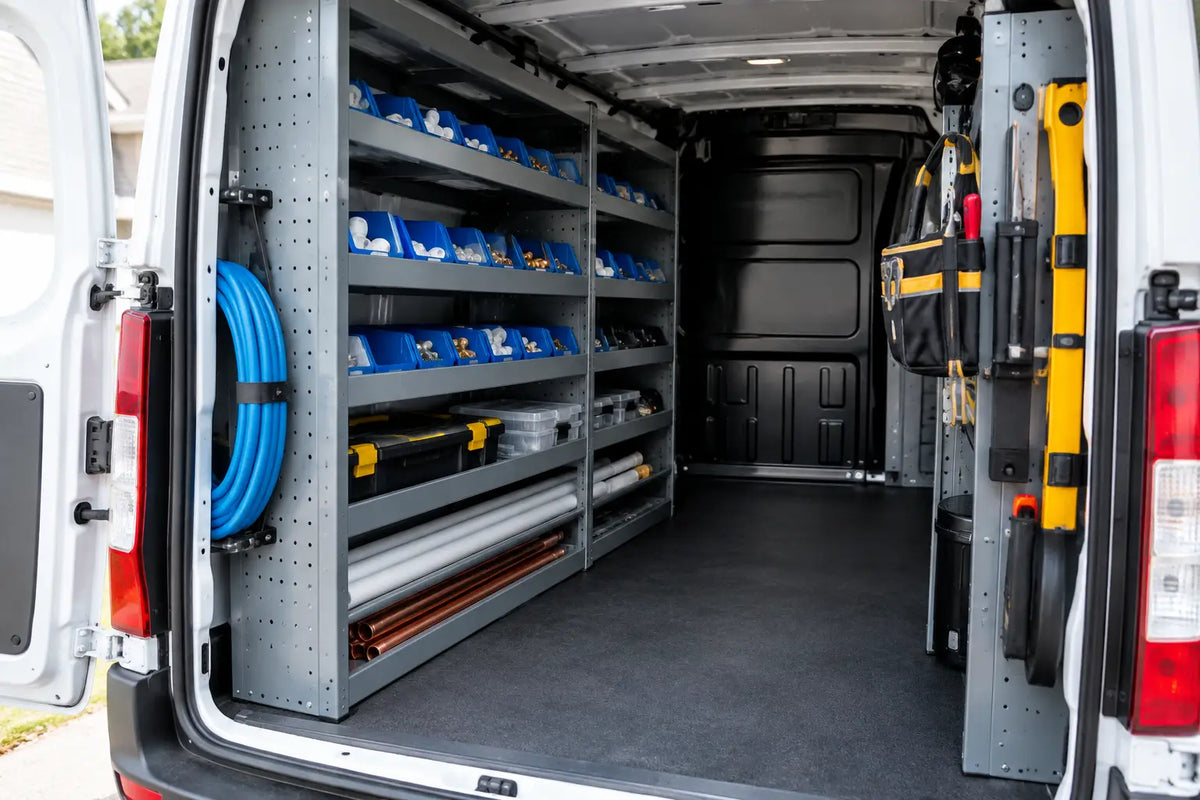
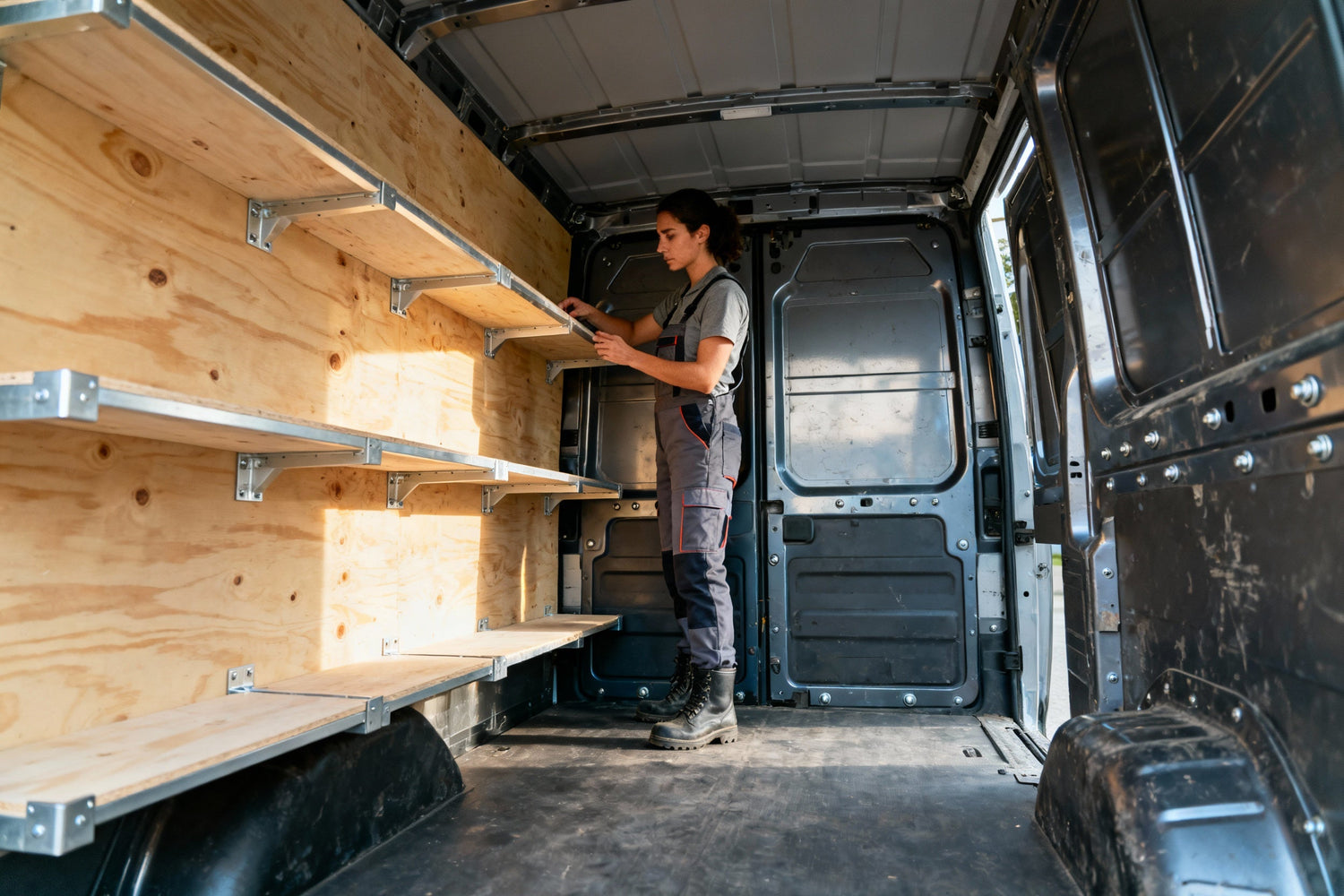
A shelving unit along one side of the van can create a clear home for those items while leaving the other side open for longer or wider loads. Shallow shelves are often more practical than deep ones for consumables because you can see what is there at a glance. Deep shelves can become a black hole for half-used packs and loose fittings.
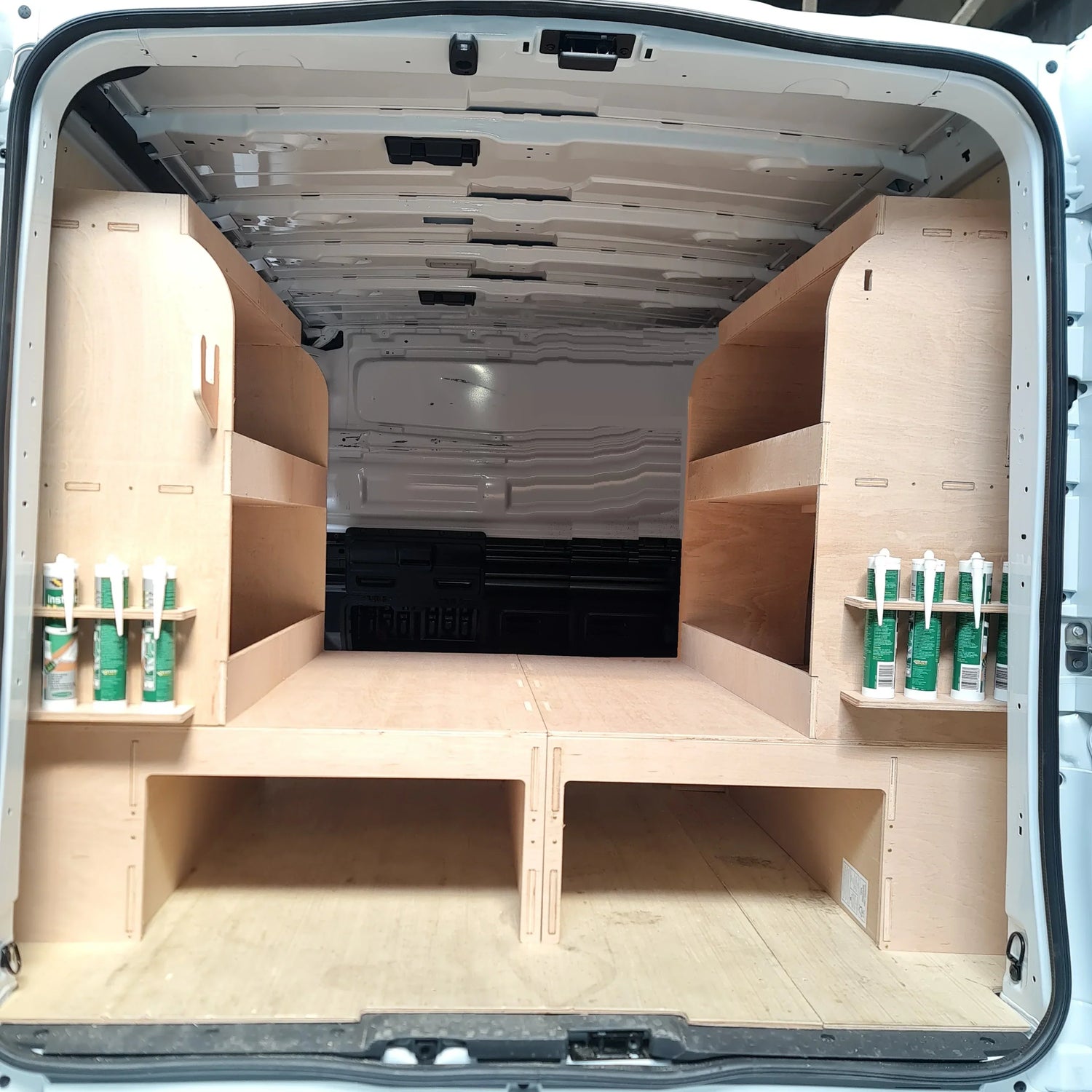
Choose storage according to the size and shape of the items you carry. Open shelves suit tool cases and larger tubs. Compartments and organisers suit screws, plugs, blades and smaller fittings. Dedicated holders for sealant tubes, wipes and gloves can save more time than expected because these are the items that tend to get thrown loose into a door pocket or toolbox.
The key is restraint. If a shelf will only be used to store random items “just in case”, it may be better left out. Every section of racking should have a job.
Fit a false floor if your work needs a clear load space
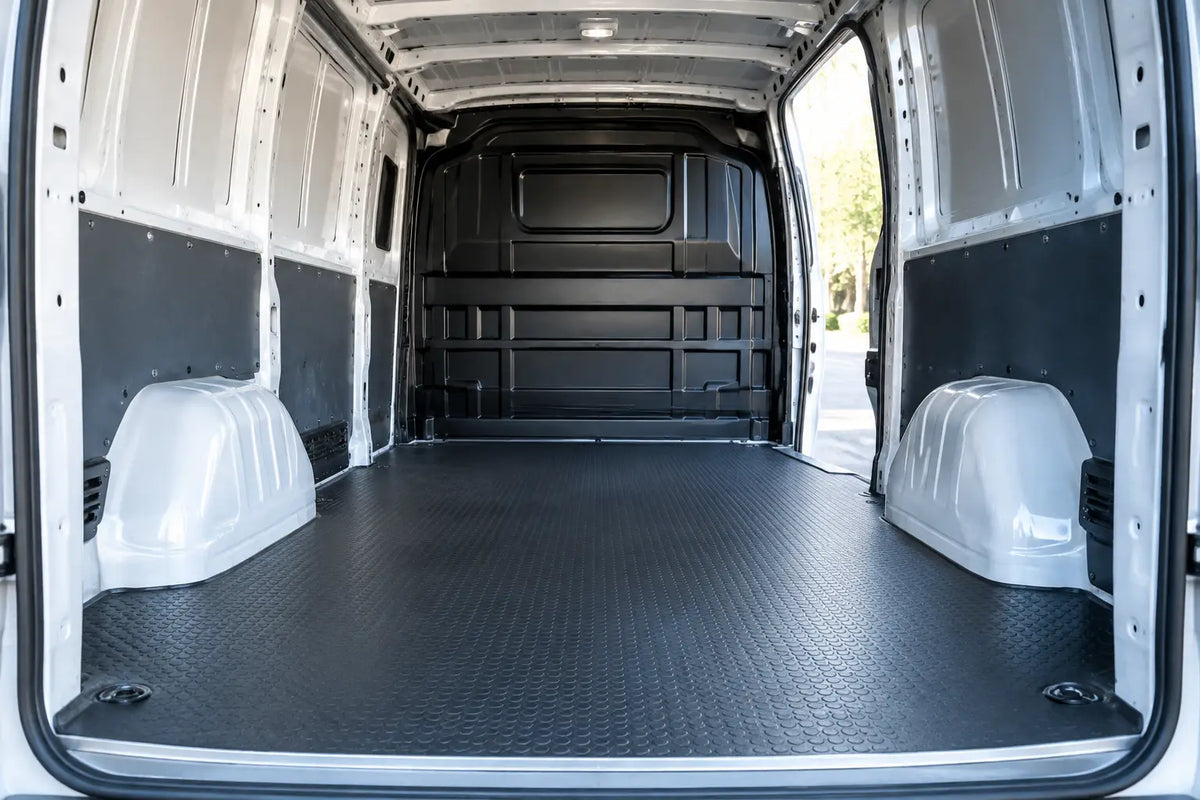
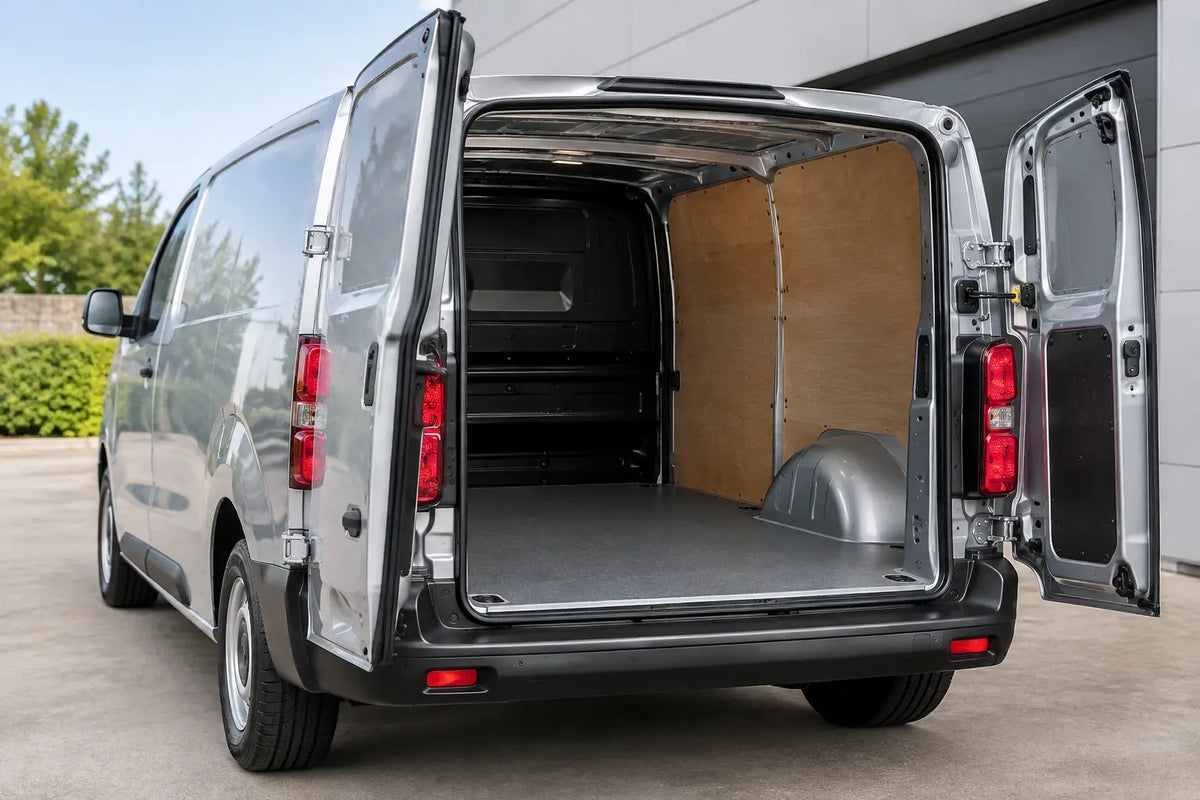
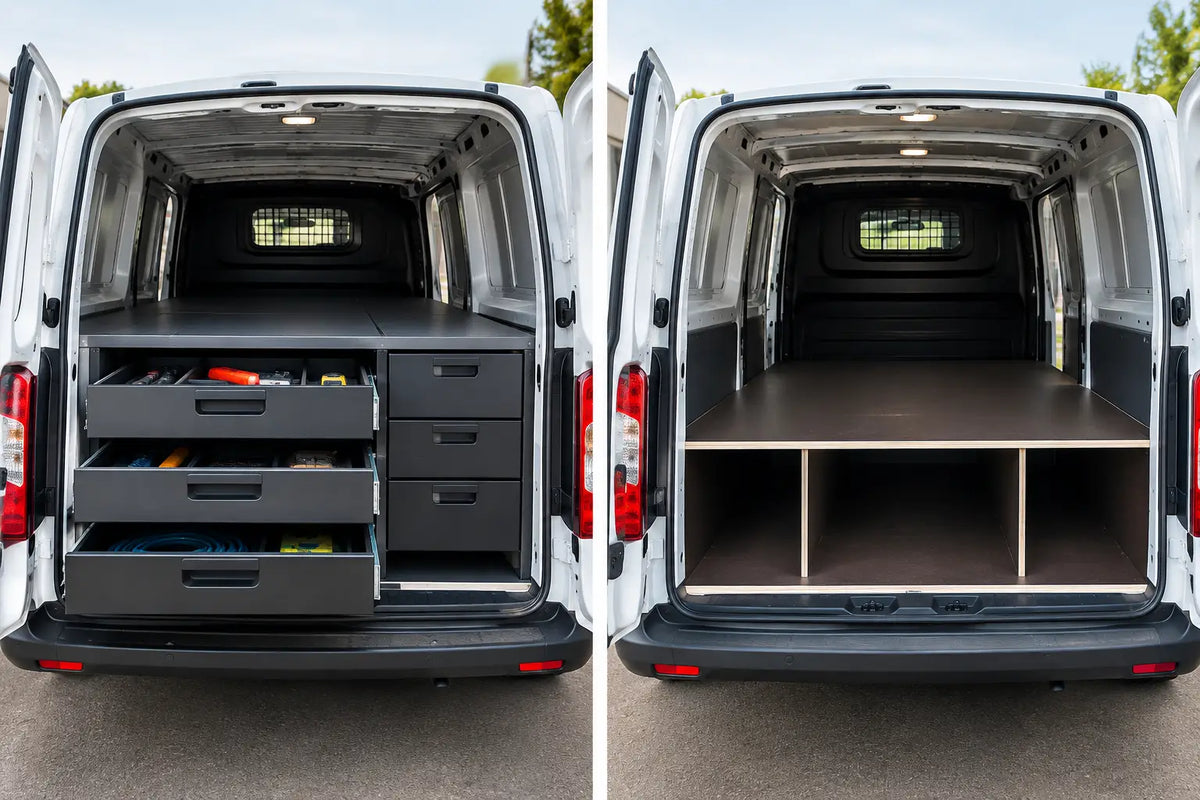
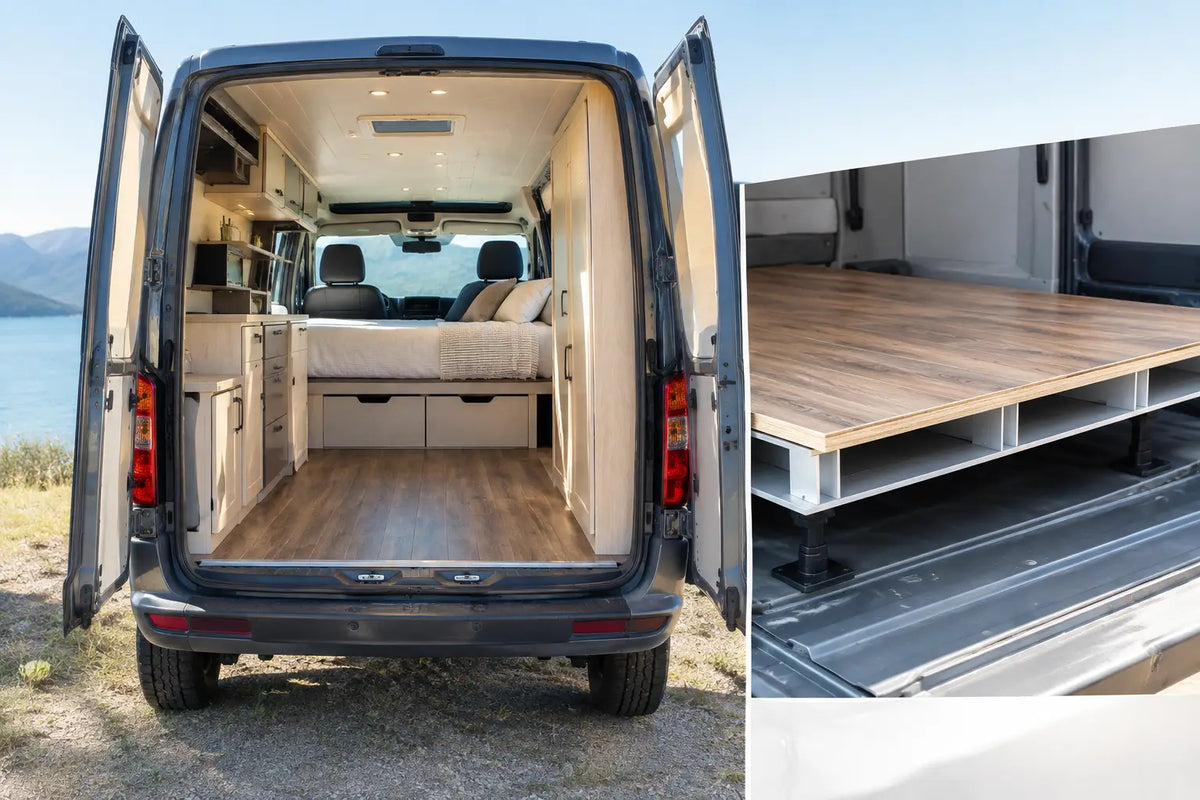
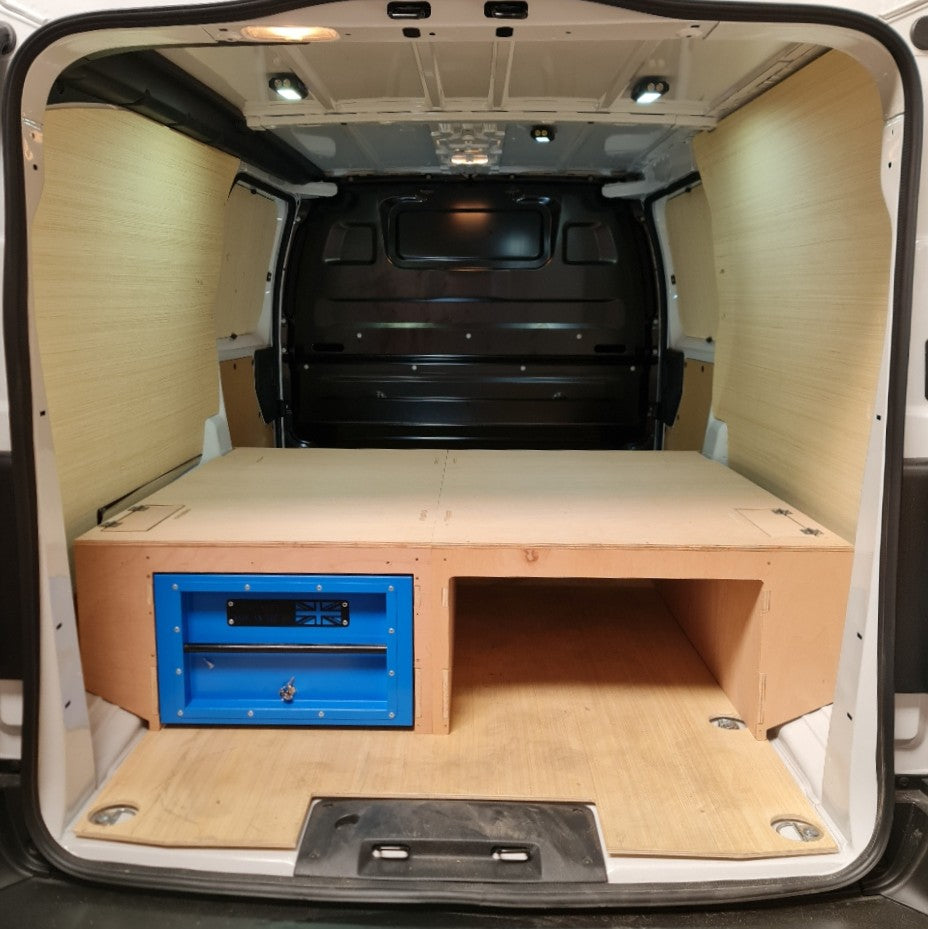
A false floor is one of the most practical foundations for a builder’s van, particularly where tools, lengths and materials share the same vehicle. It creates a flat, durable base and can help protect the original floor from daily wear. It also makes it easier to slide materials in and out without catching on uneven surfaces or exposed fixings.
The main benefit is organisation. With the floor protected and a shelving system fixed above it, the centre of the van can stay clear for job materials. That means boards, timber, bagged materials or boxed products can be loaded without being balanced on top of tools.
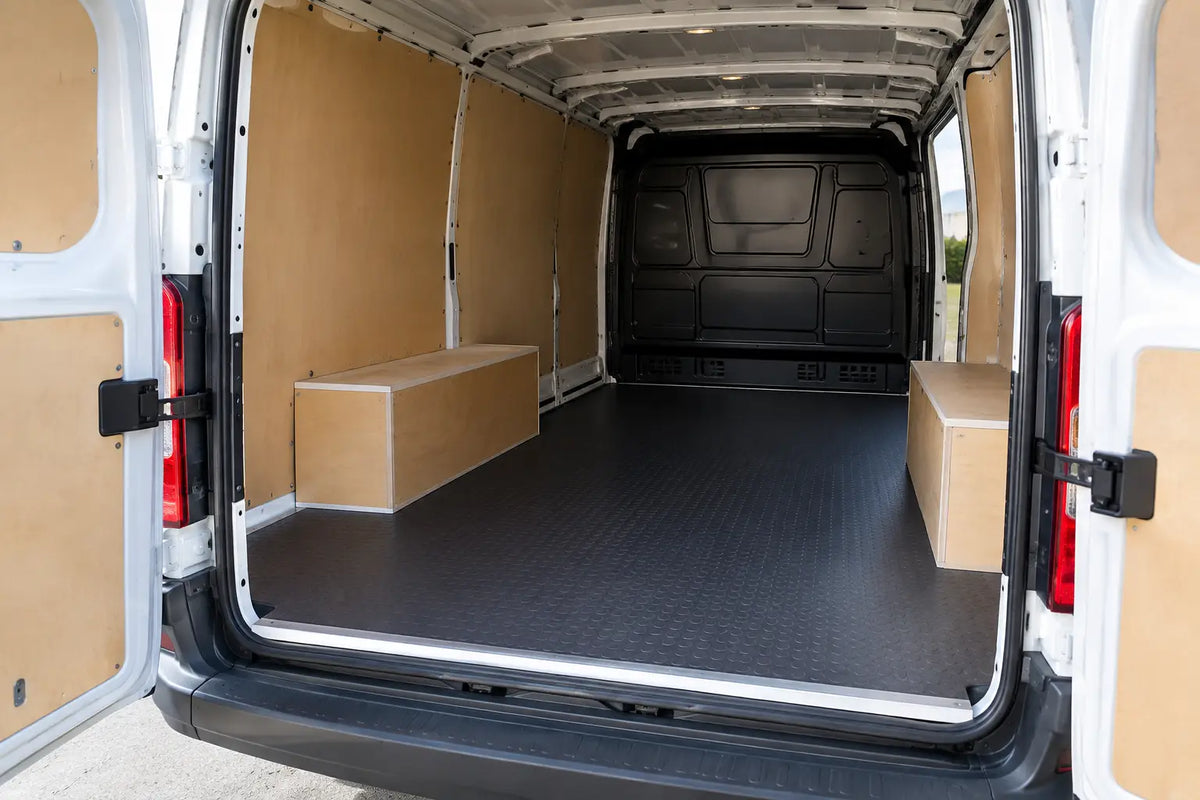
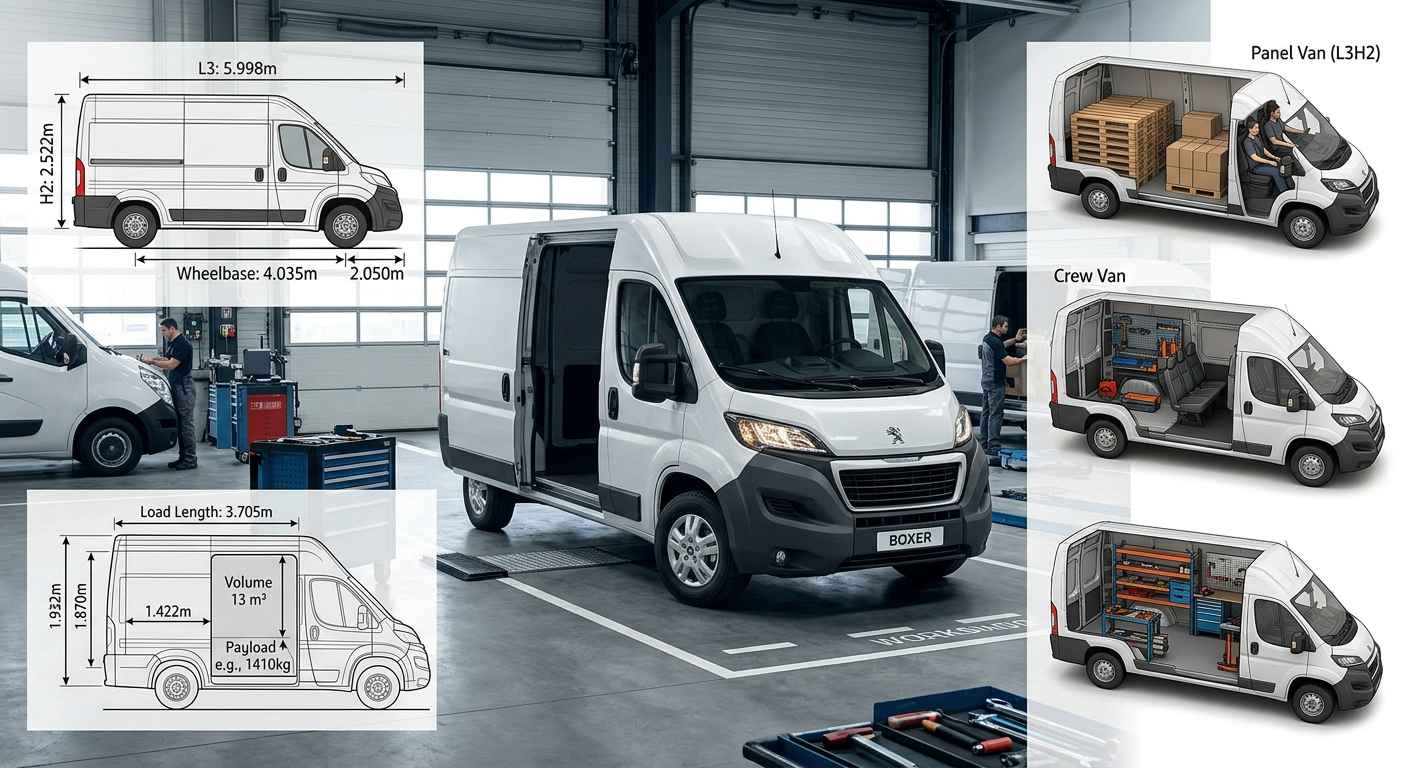
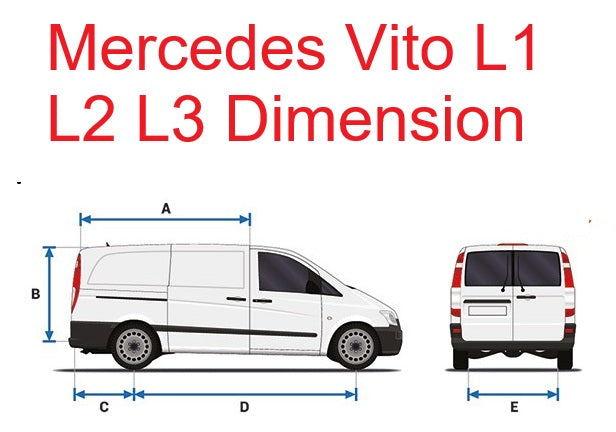
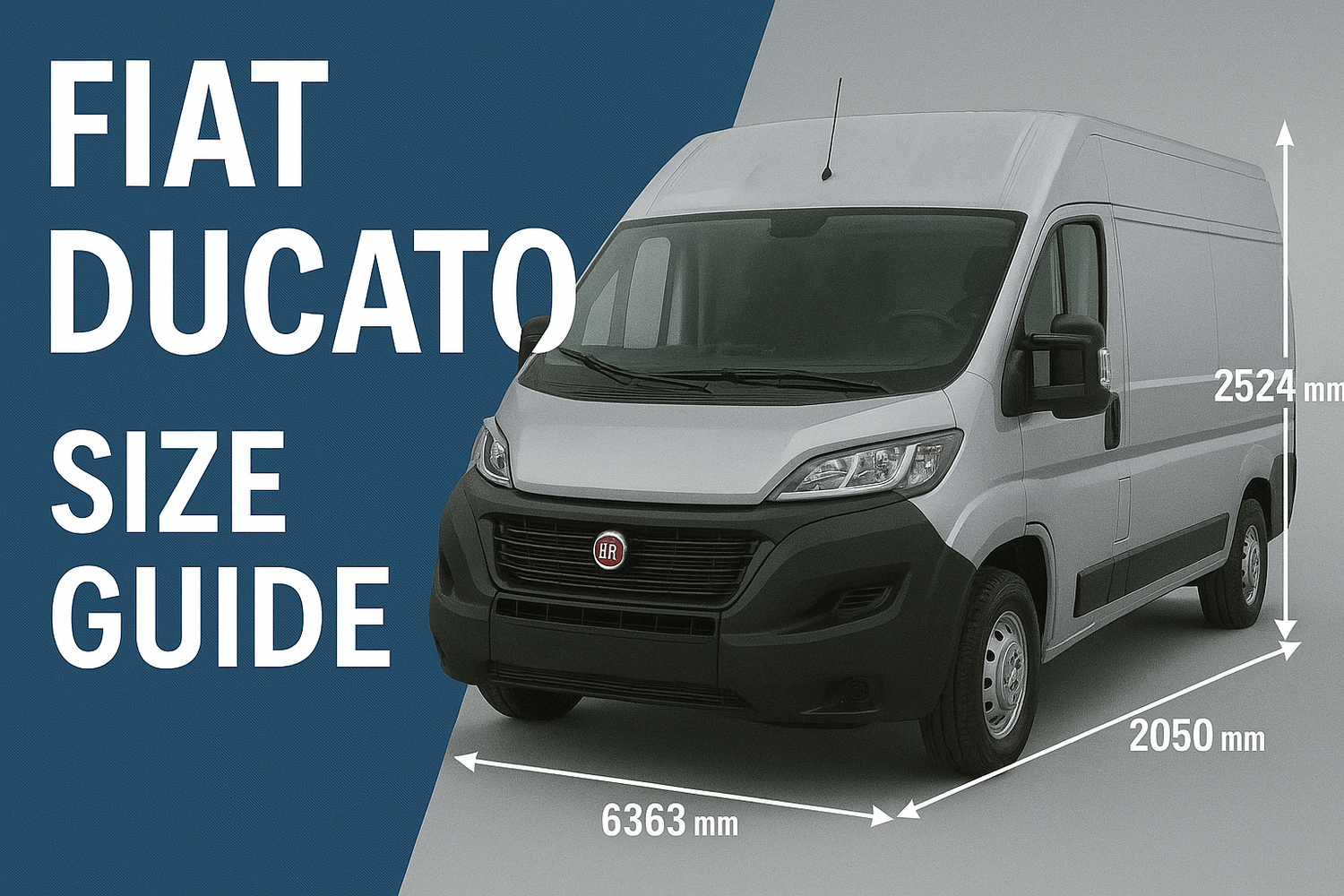
Check the available payload before adding any storage system. Shelving, false floors, tool cases and equipment all add weight, and the legal payload must still cover the materials you need to transport. It is also worth considering internal dimensions and wheel-arch position for your exact van model. A layout that works well in a long-wheelbase van may not be practical in a compact model.
Keep long items controlled
Builders often carry items that do not naturally fit into neat shelves: spirit levels, straight edges, extension leads, pipes, trims, lengths of timber and step ladders. These are the items most likely to block access or become damaged when they are simply laid across the floor.
Give long equipment a dedicated route through the van. Depending on the vehicle and your regular load, this could mean using the floor channel beside a shelving unit, a high-level storage position or a secured section along the bulkhead. The important point is that long items should not prevent rear-door access to your core tools.
Cables and extension leads also need proper consideration. A loose cable is easy to grab, but it tangles with everything around it and can be damaged by heavier gear. Keeping leads coiled and retained makes loading quicker and helps you spot damaged cable before it becomes a problem.
Plan for dirty work and daily restocking
A van setup has to survive more than the first week after fitting. Muddy boots, wet tools, dust, adhesive tubes, broken fixings and packaging all test how well the system works in real conditions. Choose easy-clean surfaces and avoid layouts with narrow gaps that quickly fill with dirt and offcuts.
Create a place for waste and used consumables near the door. It does not need to be elaborate, but it prevents empty cartridges, tape liners and food packaging accumulating in shelves intended for tools. Keep cleaning wipes, gloves and basic first-aid supplies where they can be reached without emptying a toolbox.
Restocking should be part of the setup too. When screws, blades and sealant are stored in labelled positions, you can see at the end of the day what needs replacing. That reduces unnecessary supplier runs and avoids arriving on site one tube of adhesive short.
Choose vehicle-specific storage carefully
Van dimensions, door openings, wheel arches and internal shapes vary considerably between makes and models. Always check that shelving, false floors and accessories are intended for your specific van model and body length before ordering. A product category organised by vehicle makes this process more straightforward, but it is still worth checking the listing details against your van.
Prioritise durable materials, secure mounting points and a layout you can work with every day. Easy installation matters, but so does retaining access to tie-down points, doors and any equipment already carried in the van. If you run several vehicles, standardising the basic layout across the fleet can also make it easier for staff to find tools and restock consumables.
CNC Work focuses on practical, vehicle-specific shelving, false floors and workshop-style accessories for working vans, helping tradespeople build a setup around the way they actually operate.
A practical layout to use as a starting point
For a typical builder carrying a mix of tools and materials, start with a false floor, shelving on one side and a clear central floor area. Store heavier power tools and tool cases low and towards the bulkhead. Keep fixings, sealants, tapes and hand tools in accessible shelf positions near the side door, then reserve the open floor for the day’s materials.
This is not the only answer. A fitter who carries more cases than materials may benefit from more shelving. A builder regularly moving larger boards or timber may need less racking and more open space. The best setup is the one that saves time at every stop without compromising the load you need to carry.
Treat the van like a working area, not a storage cupboard. Give the essentials a fixed place, leave room for the job in front of you, and review the layout after a few busy weeks. The right changes are usually obvious once you stop having to search for the same tool twice.