










A tube of sealant buried under a box of fittings, electrical tape rolling around the floor and an empty pack of fixings discovered halfway through a job all cost time. Knowing how to organise van consumables properly turns those small daily frustrations into a quicker, more controlled way of working. The aim is not simply to make the van look tidy. It is to make every commonly used item easy to find, easy to check and easy to replace.
For a working van, consumables need a system that matches the way you work. A plumber, electrician, fitter and maintenance engineer may carry different stock, but the principles are the same: group similar items, give them a fixed home, keep quantities visible and protect the load from damage in transit.
Start with the jobs you actually do
Before buying boxes or filling shelves, empty the consumables already in the van and sort them by the jobs they support. This is where most organisation problems become obvious. You may find three partly used rolls of tape, mixed fixings with no labels, or materials being carried for work that no longer forms part of your regular schedule.
Separate your stock into practical working groups. For many trades, that means fixings and fasteners, adhesives and sealants, tapes, electrical items, cleaning supplies, PPE and replacement parts. Keep specialist materials separate from everyday stock. There is no benefit in giving a rarely used item the same accessible space as screws, cable ties or gloves used on nearly every call-out.
Think about frequency as well as category. The items you reach for several times a day should be available from the side or rear door without climbing into the load area. Stock used once a week can sit further back, while reserve packs belong in a higher shelf, a deeper drawer or a dedicated storage area.
How to organise van consumables by zone
A good van layout works in zones. Instead of storing items wherever there is a gap, give each part of the vehicle a clear purpose. This reduces searching and makes it much easier to spot when supplies are low.
Keep fast-moving stock at the door
The area closest to your normal access point should hold the items used on most jobs. Depending on your trade, this may include fixings, tape, gloves, wipes, sealant, cable ties and marker pens. Small parts organisers, labelled storage boxes and purpose-built holders prevent these items from mixing together or ending up loose on the floor.
This is also the right place for products that are often needed unexpectedly. A wipe dispenser, for example, is far more useful when it can be reached quickly with dirty hands than when it is hidden behind tool cases. The same applies to gloves and commonly used cleaning materials.
Use shelving for clear, repeatable storage
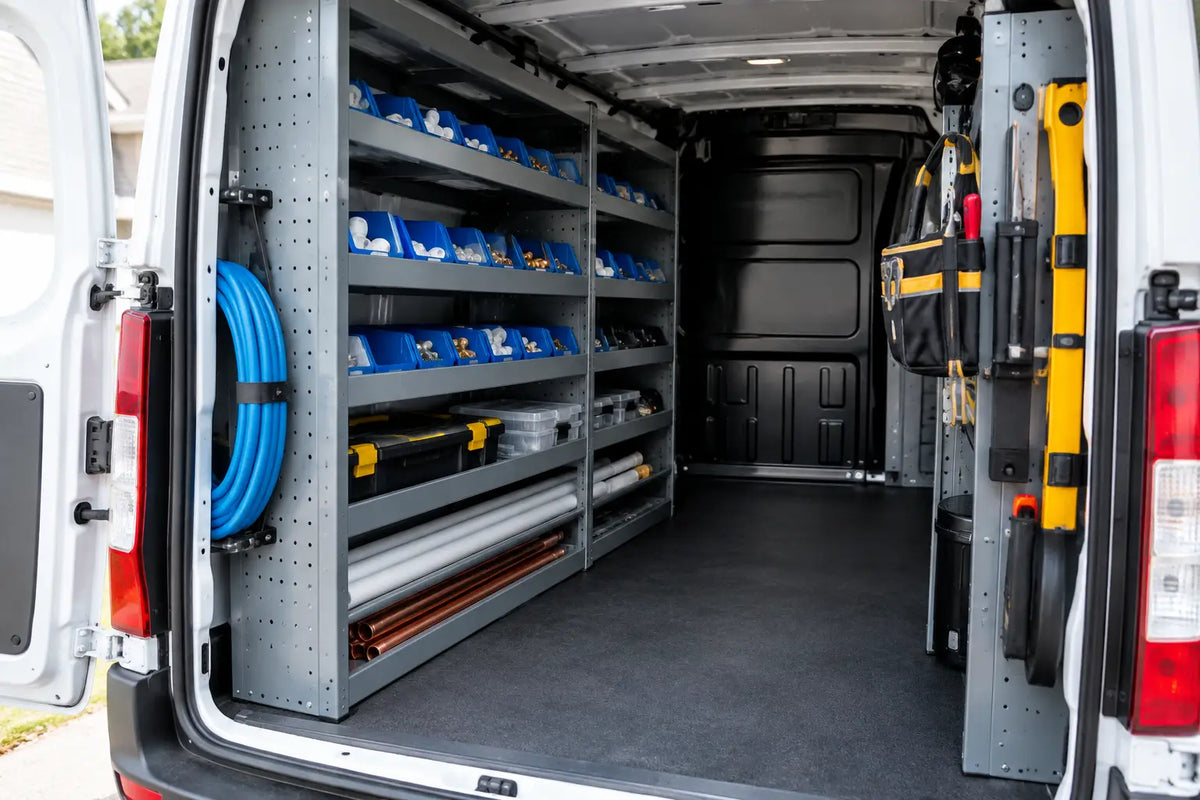
Van shelving is particularly useful for boxed consumables, spare stock and containers that need to remain upright. A shelf gives each product a defined position, which is far better than stacking packs on the floor and hoping they stay put.
Use the front edge of each shelf as a visual boundary. Keep the active pack at the front and replenishment stock behind it. When the front pack runs out, move the next one forward and add it to your restock list. This simple approach works well for sealant tubes, screws, adhesives, fittings, rolls and packaged PPE.
Avoid overfilling shelves. A tightly packed shelf can be difficult to use and encourages you to put things back in the wrong place. Leave enough room to remove an item with one hand, even when wearing gloves.
Put small parts in labelled compartments
Mixed fixings are one of the quickest ways for a van to become disorganised. If screws, plugs, bolts, washers and clips all share one tub, you lose time sorting through them and are more likely to carry excess stock.
Use compartmented boxes for small items and label each compartment or container clearly. Include the size or type, not just a broad description. For example, a label reading 5mm wall plugs is more useful than fixings. Clear lids can help with quick visual checks, but labels still matter when boxes are stacked or stored on shelves.
Keep each organiser dedicated to one category. An electrical consumables case should not become the place where spare blades, random screws and tape ends are dropped at the end of the day.
Store liquids and sealants securely
Sealants, adhesives, lubricants and cleaners need more consideration than dry stock. They can leak, split or become unusable if they are left loose or exposed to excessive heat and cold. Store them upright where possible and keep them in holders, trays or contained bins that make spills easier to manage.
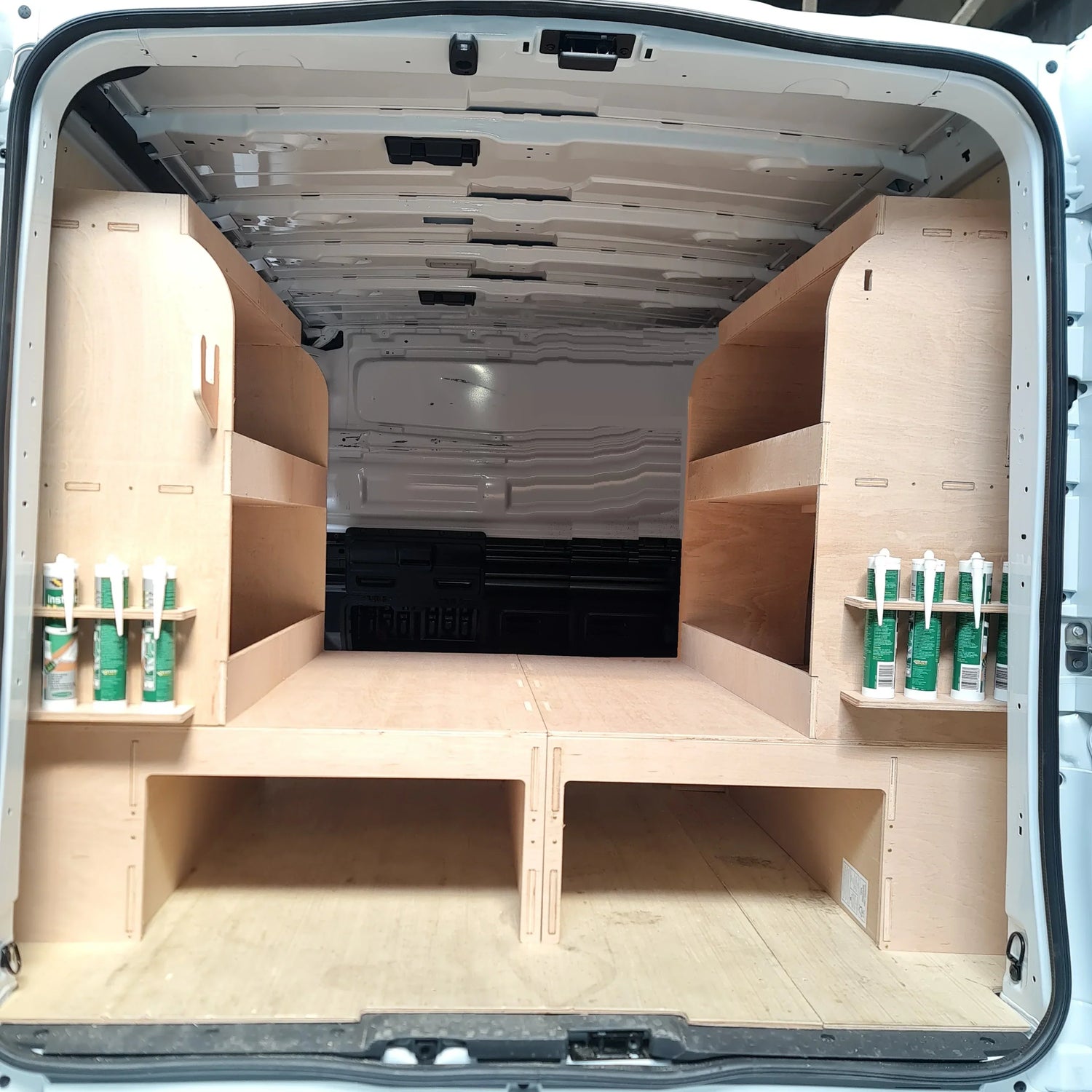
A dedicated sealant holder keeps tubes visible and stops them rolling around the van. It also gives you a fast count of colours and types before leaving for a job. Check manufacturer storage guidance for any product with temperature or safety requirements, particularly chemicals and aerosols.
Use labels that work when you are busy
Labels do not need to be complicated, but they must be easy to read at a glance. Use a clear, consistent format across boxes, bins and shelves. Large lettering is more useful than detailed descriptions, especially in poor light or when you are trying to load up quickly.
Colour coding can help where different stock groups are used by different people or for different job types. For example, one colour could identify electrical consumables and another plumbing fittings. However, colour should support a written label, not replace it. New staff, temporary drivers and anyone covering a job should be able to understand the system immediately.
If you work from more than one van, use the same naming and shelf order in each vehicle where possible. Standardisation makes restocking simpler and reduces the chance of taking the wrong item from the wrong vehicle.
Set minimum stock levels
Organisation falls apart when there is no routine for replacing what has been used. The most effective solution is to set a minimum quantity for each essential consumable. Once the stock reaches that level, it goes onto the next order or collection list.
The right minimum depends on your workload, the size of the item and how easily it can be replaced. You may need several packs of a commonly used fixing, but only one spare tube of a less frequent sealant. Carrying too much stock wastes space and payload, while carrying too little creates avoidable supplier runs and delays.
A simple stock card attached inside a cupboard door or a note on your phone can work well. Record the product, its normal quantity and its reorder point. The process matters more than the method. Make a habit of checking key consumables at the end of the week, not on the morning of a job.
Build restocking into the working week
The best time to restock is when you can see what has been used, not when a customer is waiting. Pick a regular point in your week to check consumables, remove empty packaging and put items back in their correct places. Friday afternoon or the end of the last working day often works well, but it depends on how your jobs are scheduled.
Keep a small returns or leftovers box for unused materials coming back from site. Do not put them straight into the main stock area unless they are clearly identified and in good condition. This prevents partly used packs and job-specific materials from contaminating the organised system.
It is also worth reviewing the layout every few months. Your work can change with the season, new contracts or a change in services. If a box is constantly moved out of the way, it is in the wrong zone. If you keep running out of one item, either the minimum level is too low or the storage space is not making stock levels clear enough.
Secure the whole system for the road
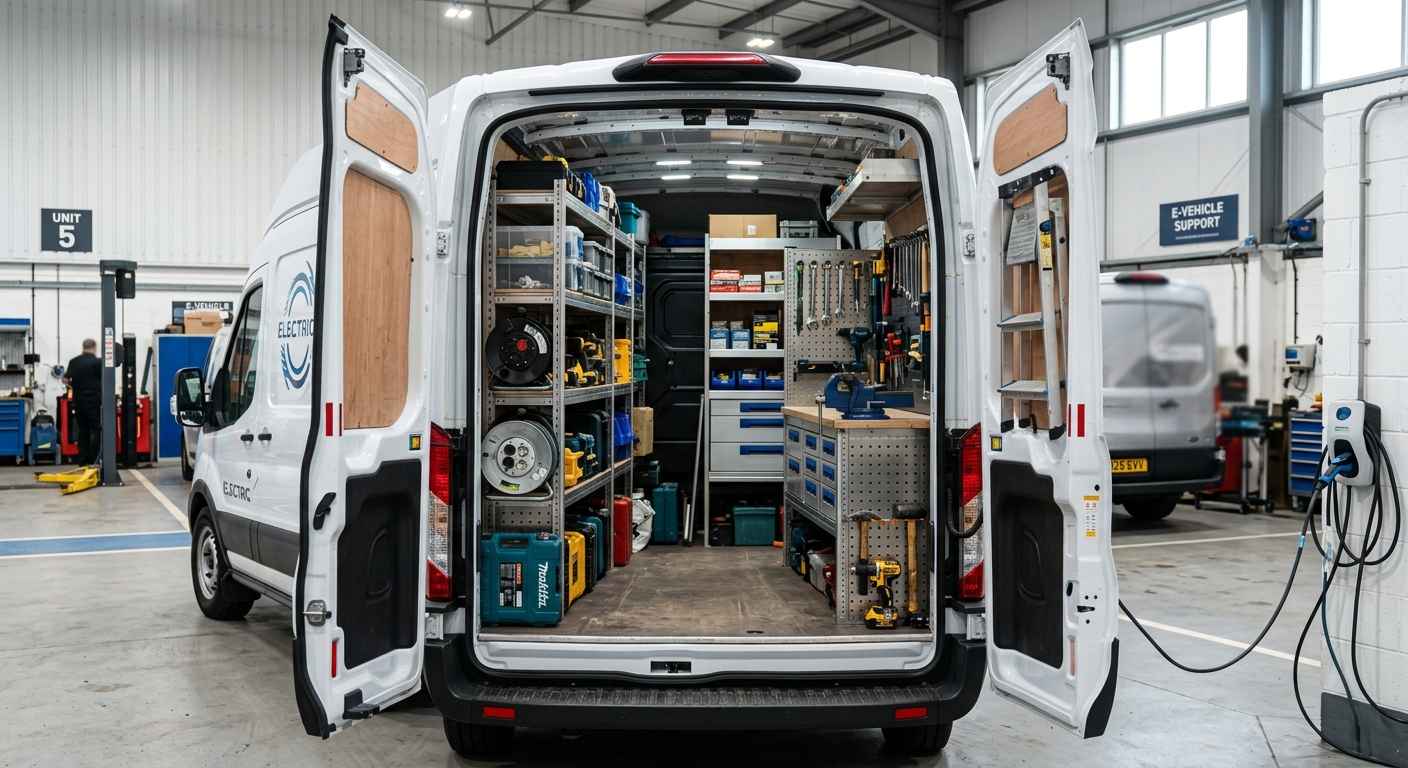
Even a well-planned storage layout will fail if boxes slide, shelves are overloaded or loose materials are left on the floor. Secure containers and organise heavier items low down to help keep the load stable. Use suitable racking, shelving and false-floor storage to make better use of the van without blocking access to the kit needed during the day.
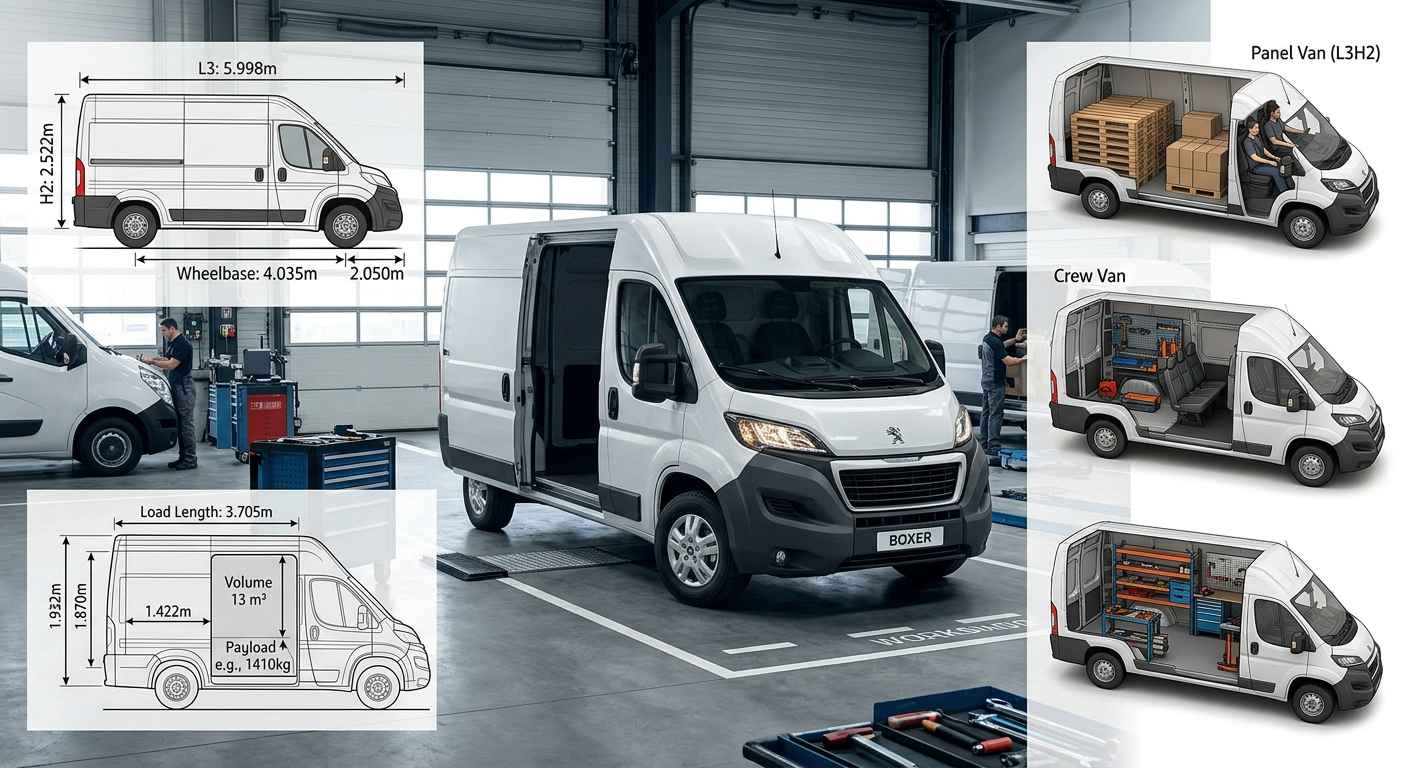
Choose storage around your specific van and its interior dimensions. A layout that suits a Ford Transit Custom may not suit a Volkswagen Transporter, Renault Trafic or Mercedes Vito in the same way. Check the available load space, door access and any existing equipment before deciding where shelving, organisers and holders should sit. Vehicle-specific storage from suppliers such as CNC Work can help create a more structured starting point, but the final arrangement should still reflect your own trade and workflow.
A consumables system should make the next job easier, not give you another process to manage. Put the items you use most where your hand naturally goes, make stock levels obvious and give everything else a secure, labelled place. When the van is set up that way, the small things stop slowing the day down.