









A van can lose you time before the first job has even started. Ten minutes spent looking for a fitting, a sealant gun or the right drill bit soon adds up across a working week. This work van accessories guide focuses on the practical additions that make a commercial van easier to load, safer to use and quicker to work from.
The right setup is not about filling every spare panel with equipment. It is about giving the tools and materials you use most a fixed, accessible place, while keeping the load area clear enough to handle larger items. Start with the jobs you do every day, then build your van around that workflow.
Start with storage that suits the work
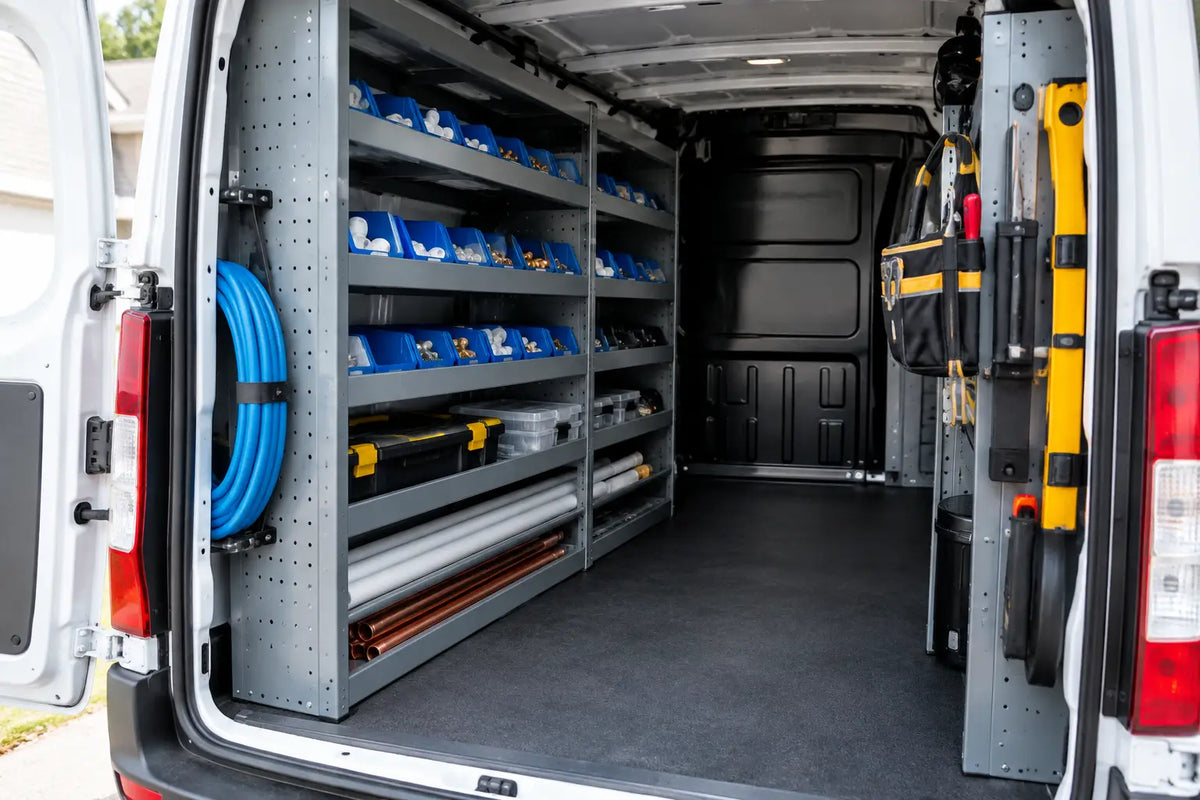
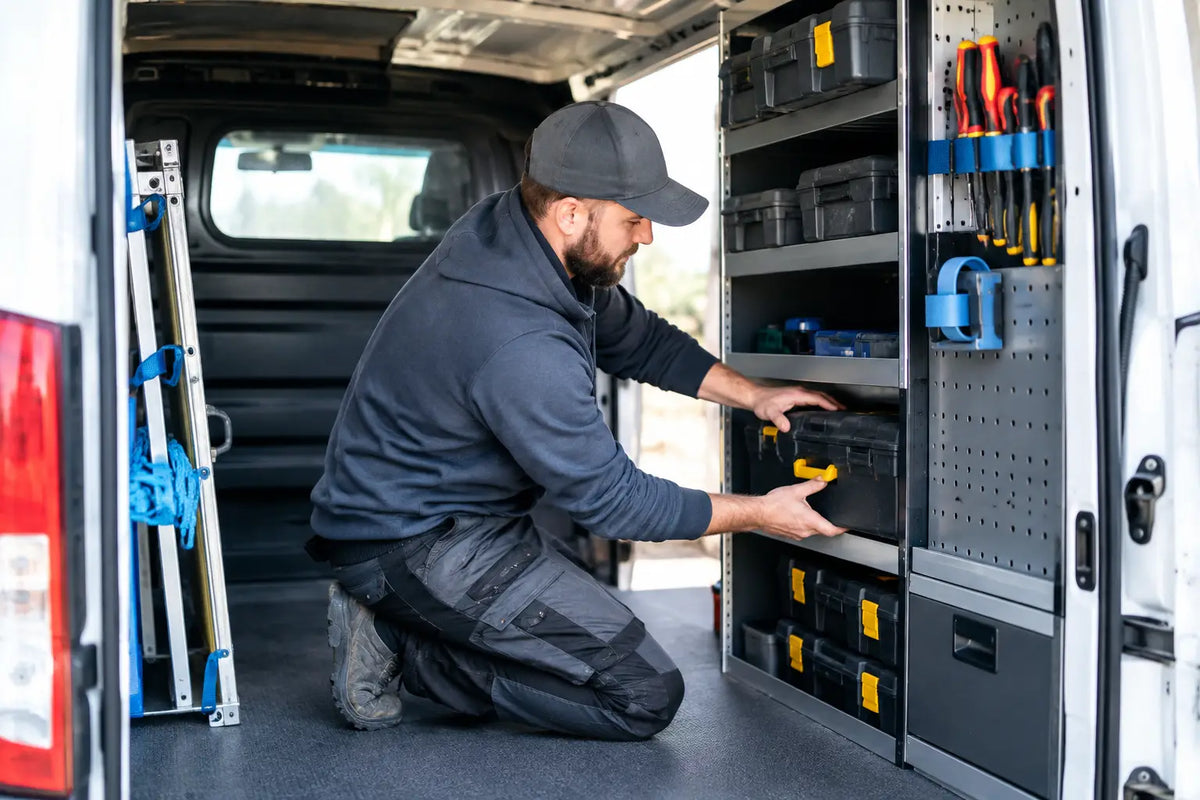
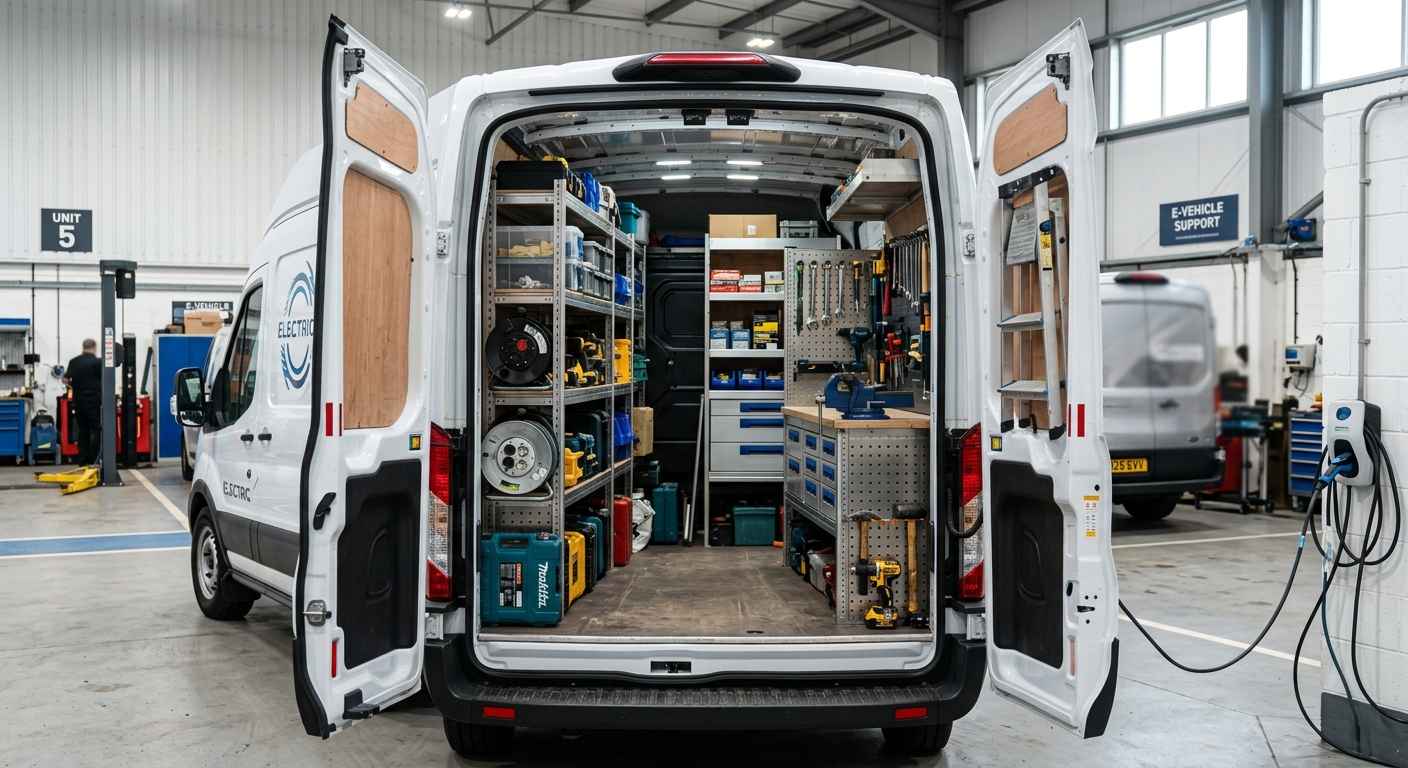
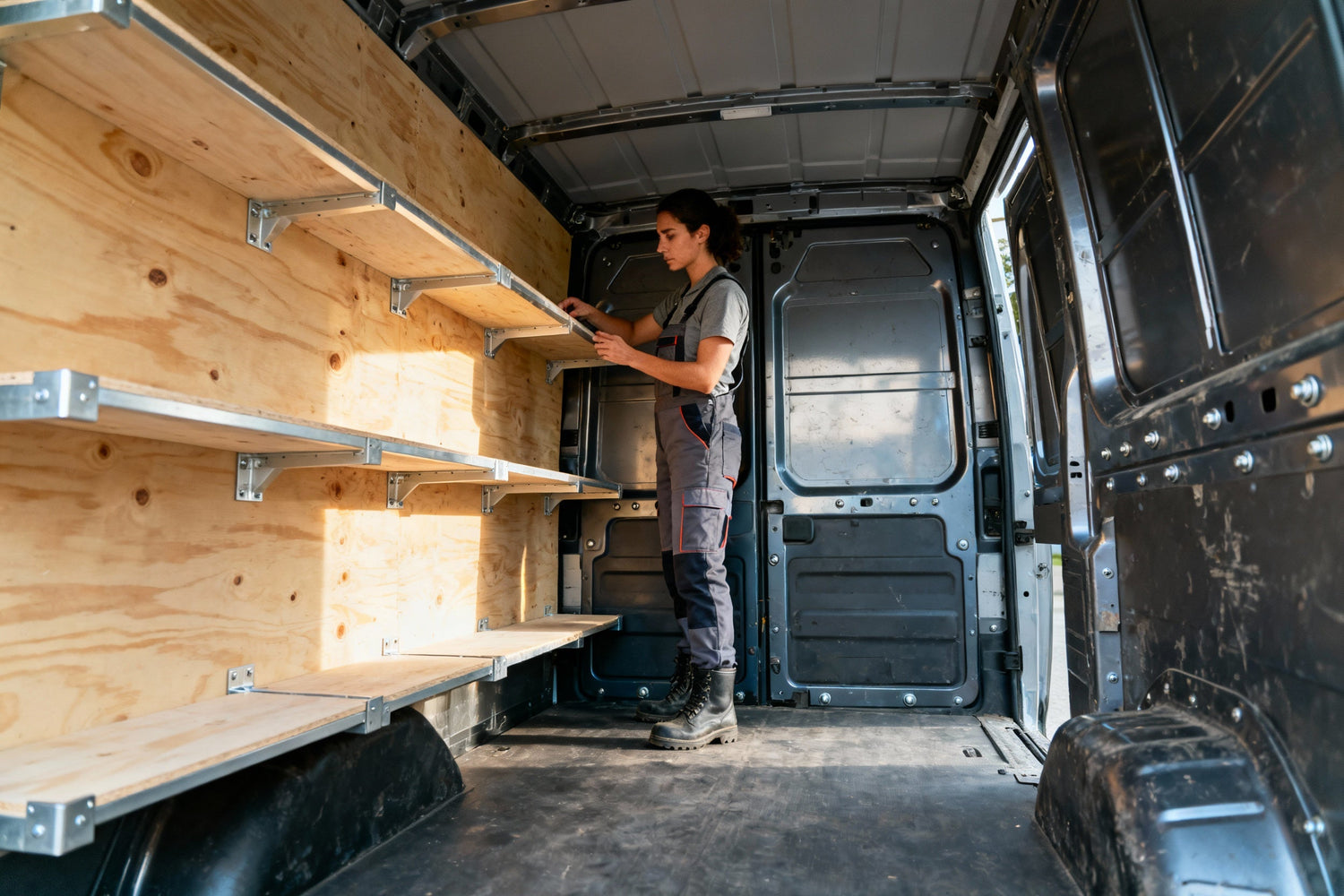
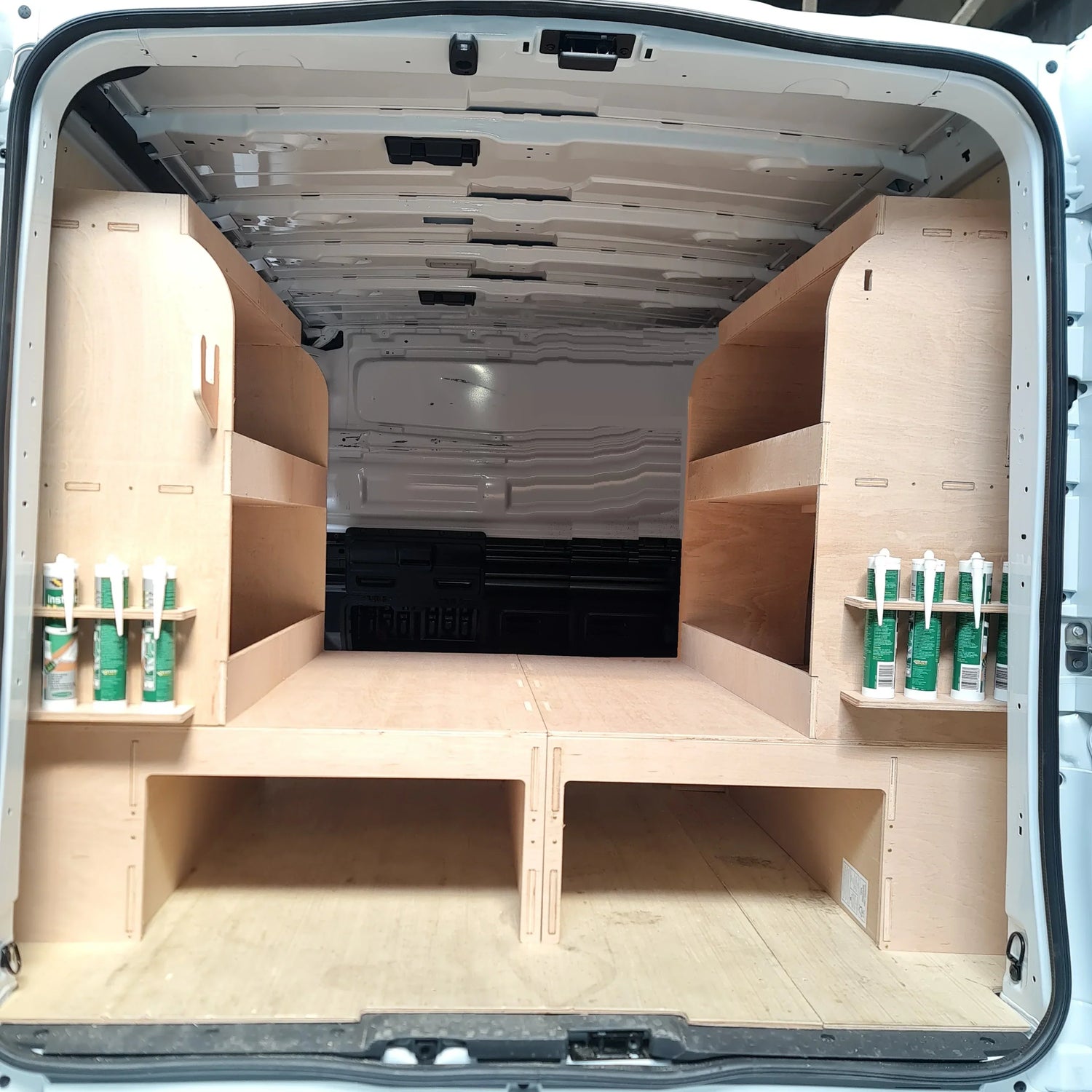
Van racking and shelving are usually the foundation of an organised load space. A plumber carrying fittings, valves and sealants needs many small, easy-to-reach storage points. A builder may need wider shelves for cases, fixings and hand tools, with clear floor space left for sheet materials or heavier equipment. An electrician may need a mix of shelving, parts bins and secure storage for testing equipment.
Before choosing a system, consider how you load the van. If you regularly work from the side door, frequently used consumables should be accessible from that position. If most loading happens through the rear doors, arrange larger cases and boxes so they can be reached without climbing into the van.
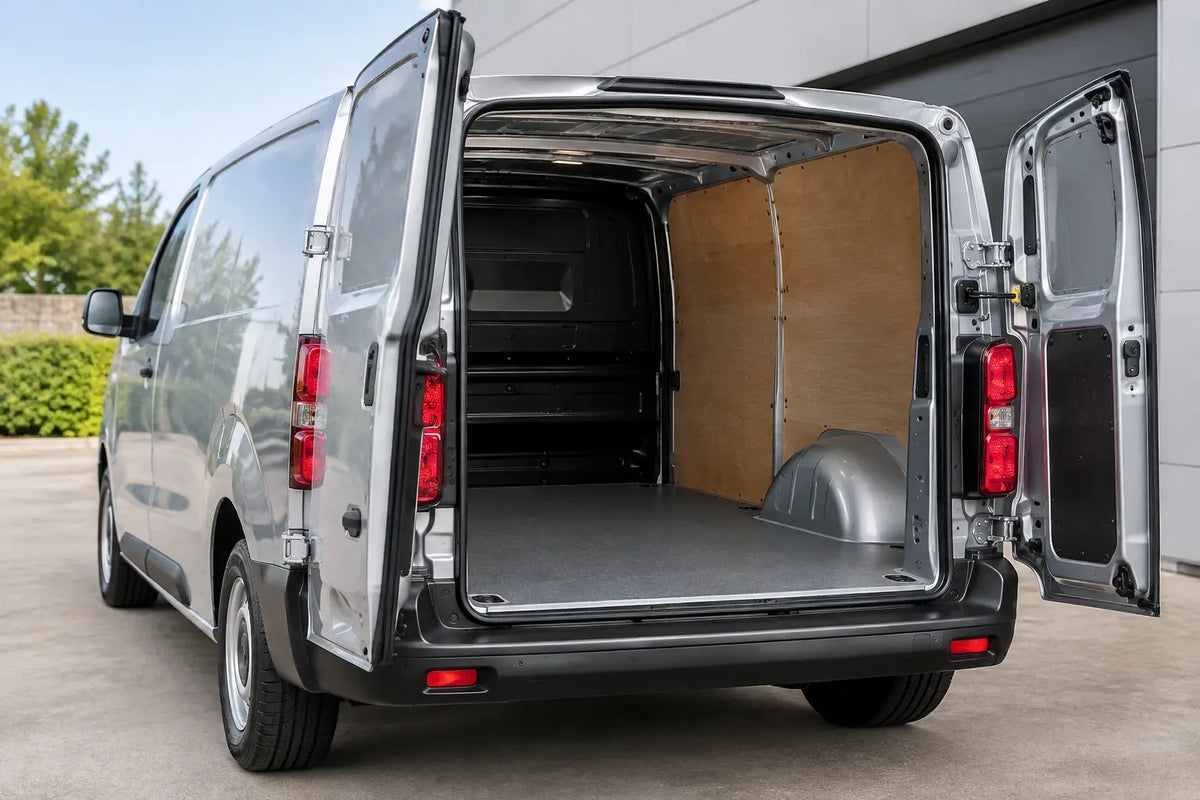
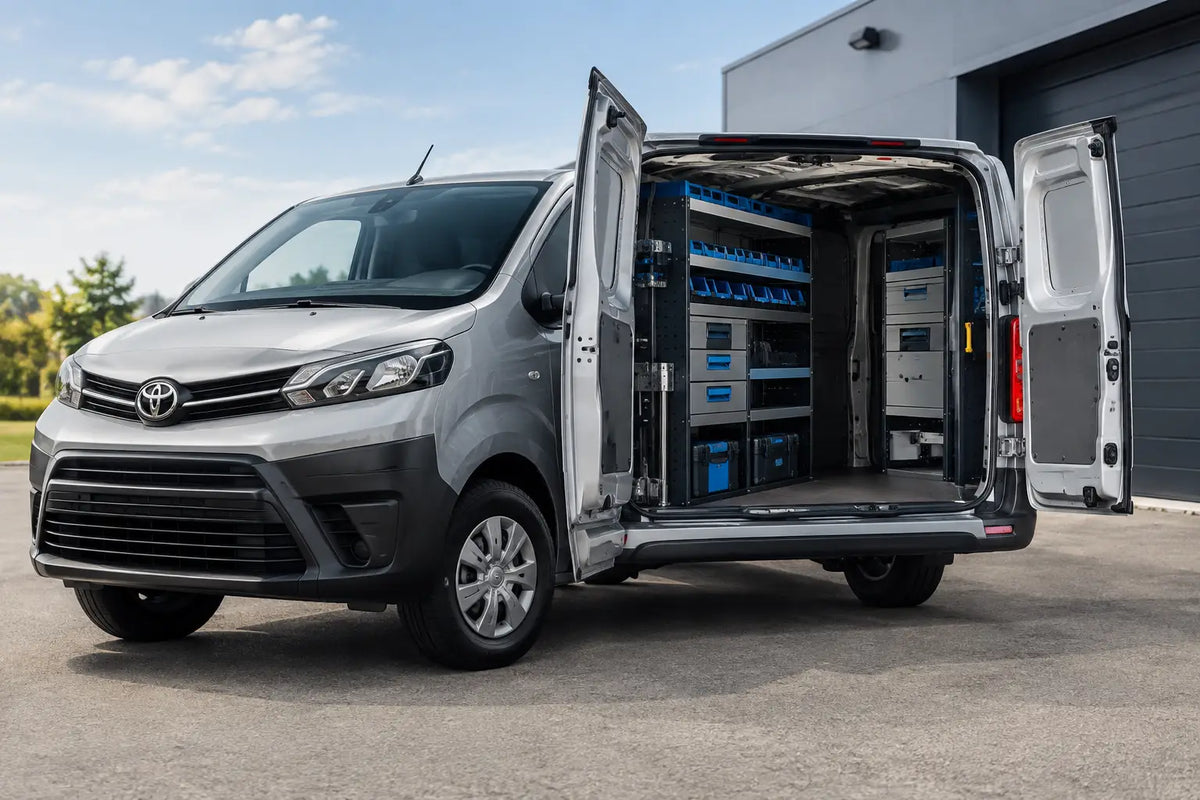
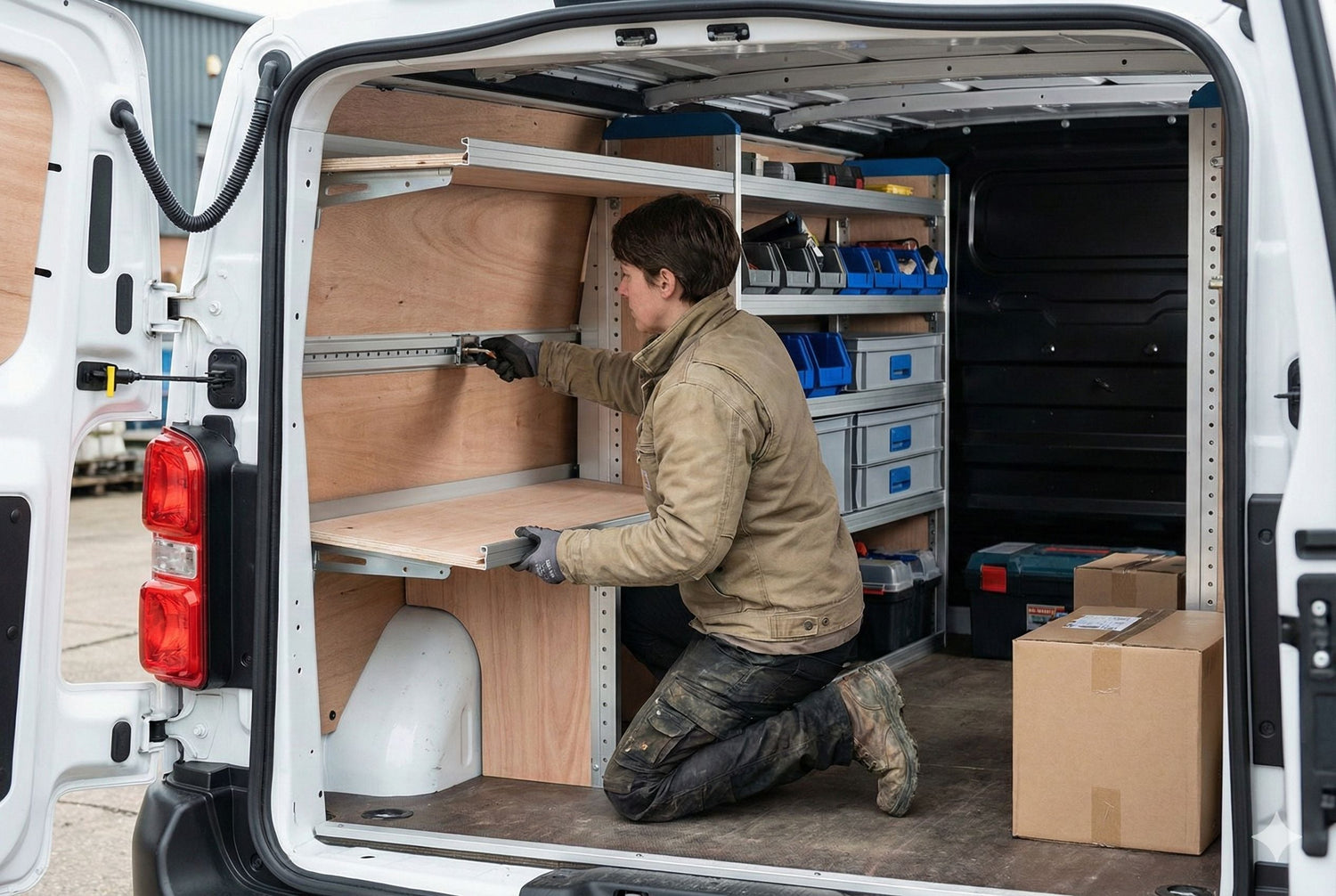
Vehicle-specific shelving matters here. The shape of the sidewalls, wheel arches, door openings and roofline varies between models, even where vans appear similar in size. Check the product details against your exact make, model, body length and year before ordering. A system designed around the van is generally easier to position properly and makes better use of the available space.
Do not turn shelving into a dumping ground
Shelves only save time when each section has a purpose. Allocate zones for hand tools, power-tool cases, fixings, plumbing parts or decorating supplies, depending on your trade. Keep the heaviest items low down and close to the vehicle centre where practical. This helps control the load and reduces the chance of a heavy case becoming difficult to retrieve.
Open shelves are fast to access, but they may not suit every item. Small loose parts can move about in transit, while expensive tools may need a more secure storage approach. The best setup often combines open shelving for regular-use stock with trays, boxes or compartments for smaller components.
Use a false floor to create usable load space
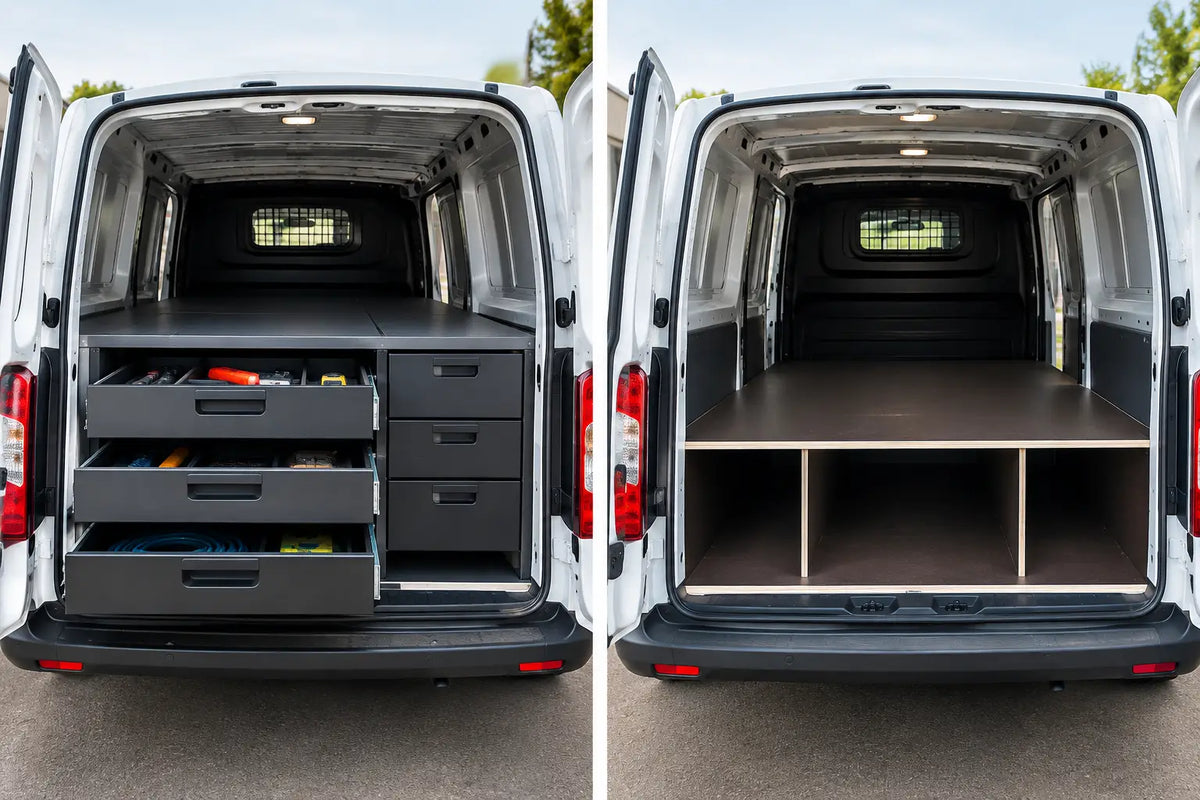
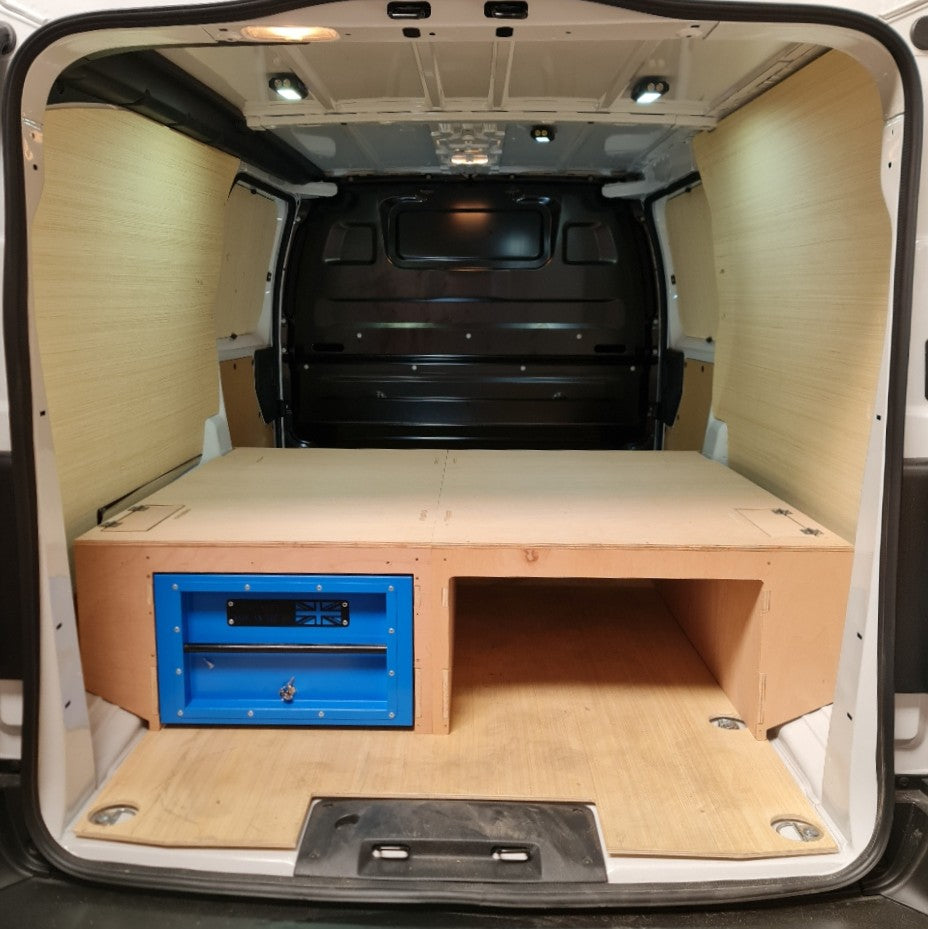
A false floor is one of the most useful upgrades for tradespeople who carry long tools, cable, pipework or materials that do not sit neatly on shelves. It creates a protected lower channel for awkward items while leaving the main floor clear for tool cases and day-to-day loading.
For an electrician, that might mean storing conduit and cable trunking below the deck. For a fitter or maintenance engineer, it could be a place for long-handled tools and extension leads. The benefit is simple: long items are contained instead of sliding across the floor or blocking access to everything else.
There is a trade-off. A raised floor takes up some vertical load height, so measure the equipment you carry and think about whether you regularly transport bulky items. If you mainly carry boxed tools and small stock, shelving may deliver more value first. If long materials are a regular frustration, a false floor can make the entire van easier to manage.
Add small accessories where they save repeated effort
The most useful van accessories are often the least noticeable. A dispenser, holder or organiser can remove a repeated nuisance from the working day. Instead of sealant tubes rolling around a shelf, wipes disappearing under a pile of equipment, or gloves being stuffed into a door pocket, they stay in a known place.
A sensible accessories plan may include:
- sealant and cartridge holders for keeping tubes upright and accessible;
- wipe dispensers near the rear or side door for quick clean-up;
- glove box organisers for paperwork, chargers and small essentials;
- storage trays or small parts organisers for screws, clips, connectors and fittings;
- tool holders for items that are otherwise left loose on the floor.
Avoid buying accessories simply because there is room for them. Every holder should solve a real problem: preventing damage, reducing search time, improving cleanliness or keeping the load area safer.
Protect tools, stock and the van interior
Organisation is not only about speed. Tools and materials that move around in transit can be damaged, and unsecured loads can make a van unpleasant and unsafe to work from. Make sure cases, stock and loose items have a method of restraint or containment suited to their weight and shape.
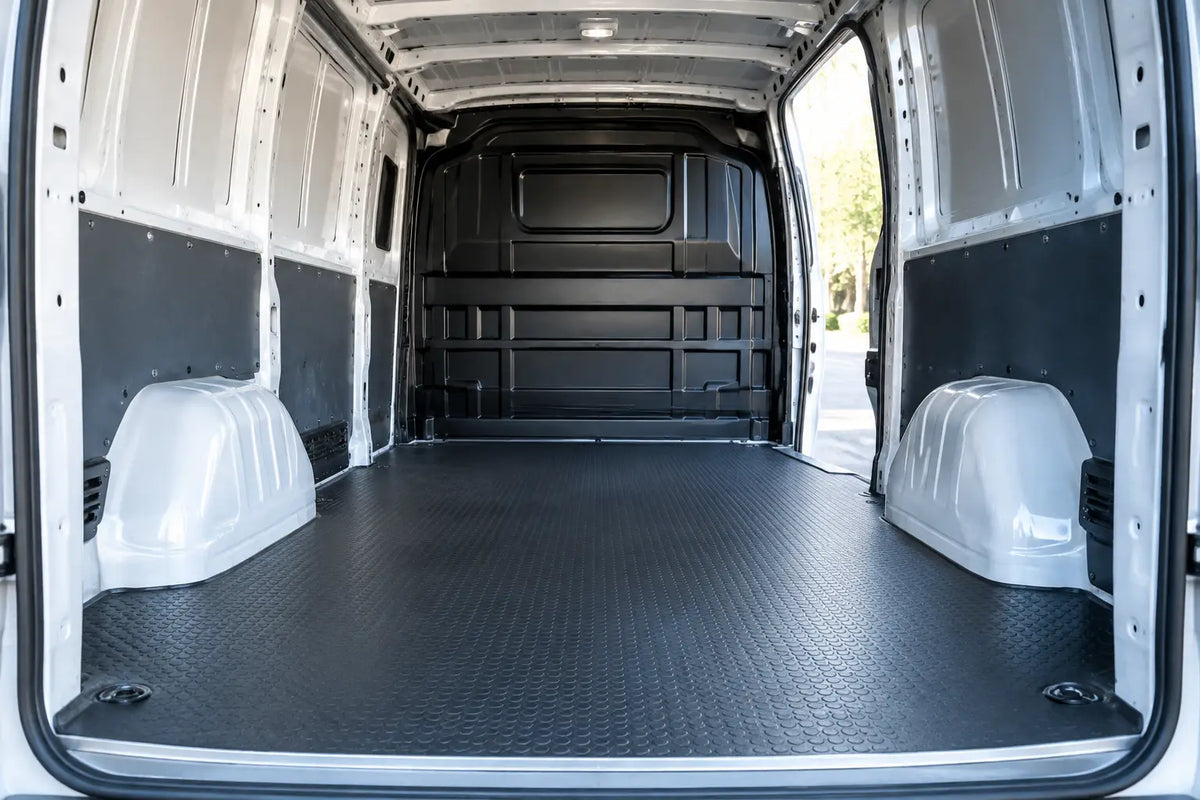
Consider the surfaces that take the hardest daily use. Floors deal with muddy boots, loaded cases and dragged materials. Shelving takes repeated knocks from toolboxes and stock. A durable, purpose-made storage system can help protect the van interior while giving equipment a more stable home.
It also pays to separate clean and dirty equipment. Decorators may want a defined area for dust sheets and rollers; engineers may need somewhere for used parts or oily consumables; landscapers and builders may need a removable container for debris. Keeping this material away from clean tools and customer-facing equipment makes the end of the day less of a sorting job.
Security needs should influence layout too. Do not leave valuable tools visible at the first opening of a door if a different arrangement can reduce exposure. At the same time, do not bury the items you need several times a day behind everything else. The practical answer depends on what you carry, where you park and whether the van is used by one person or a team.
Build the layout around your daily route
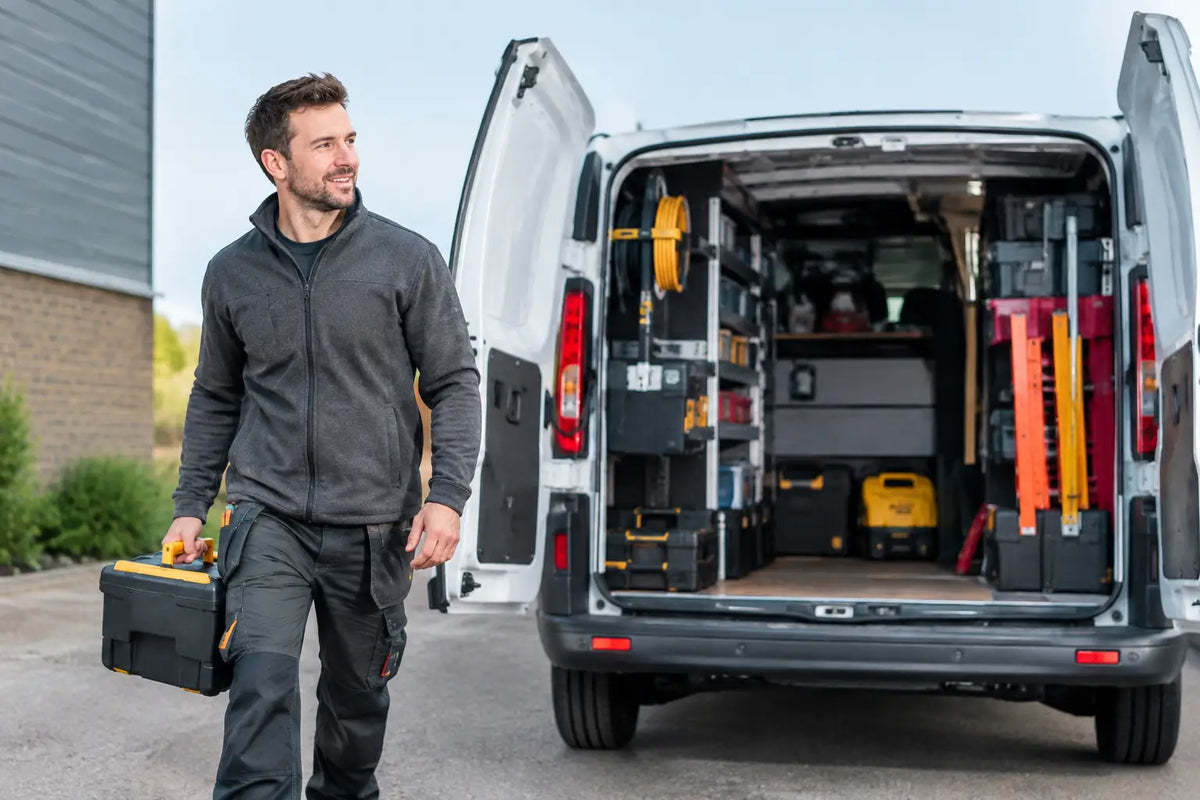
A well-organised van follows the order in which you work. Think through a normal call-out from arrival to packing up. Which tools come out first? Which consumables do you use during the job? What needs to be put away immediately so it does not get lost or left at a customer’s property?
Keep first-use equipment near the doors. Put regular consumables at waist height where possible. Store backup stock higher up or further inside. Reserve the floor for larger, heavier loads rather than allowing it to become a place for random bags and cases.
For multi-user vans, labels are worth the effort. They make restocking quicker and help stop tools drifting from one section to another. A clear label on a shelf for fixings, PPE or cable accessories is more useful than relying on everyone to remember where something was last placed.
If your work changes by season, leave some flexibility. Heating engineers might carry different stock at busy times of year, while maintenance teams may take on varied jobs requiring changing equipment. Modular shelving, removable boxes and sensible empty space are often more valuable than a layout packed to its limit.
Choosing accessories for your vehicle
The most expensive setup is not always the most productive one. Start with the problem that costs you the most time: poor access to tools, loose materials, no space for long items or too much clutter in the cab. Solve that first, then add accessories as the need becomes clear.
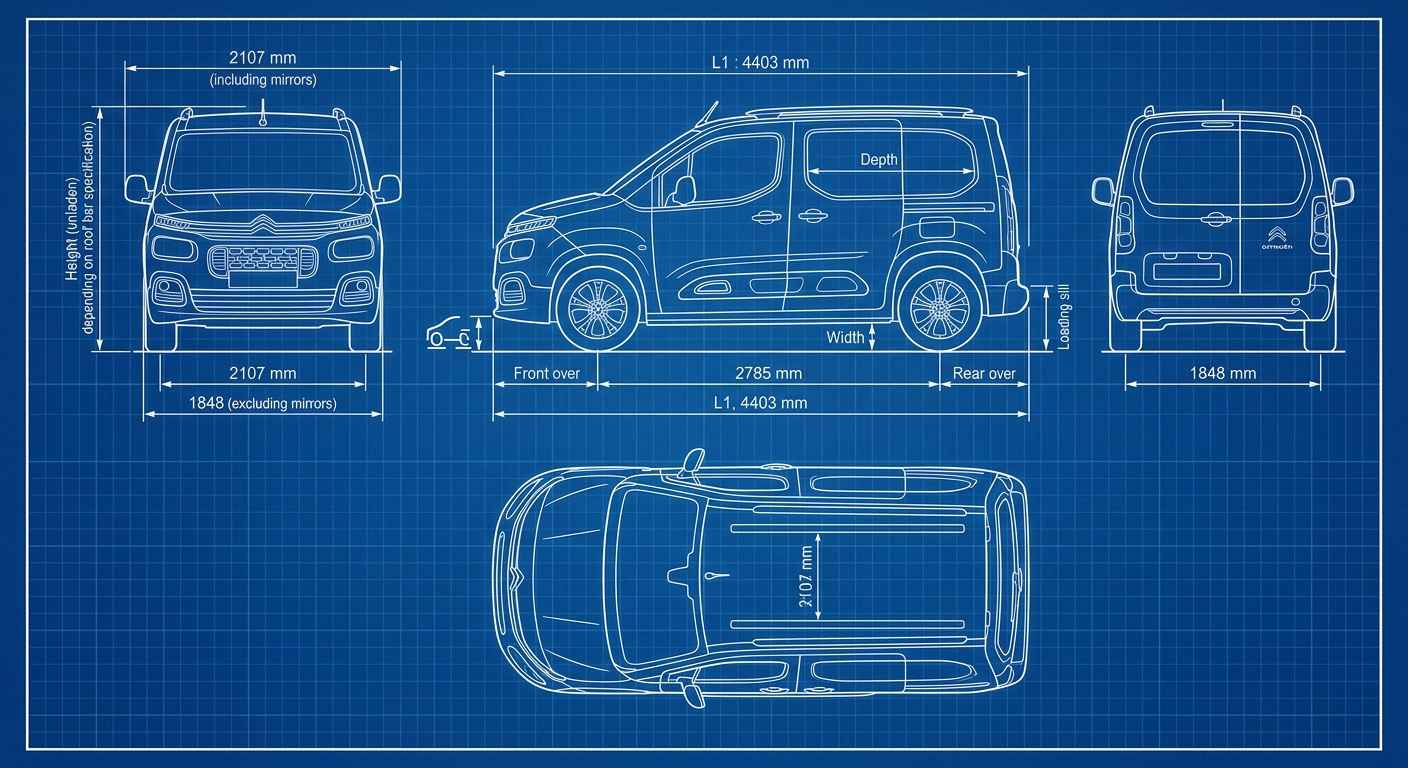
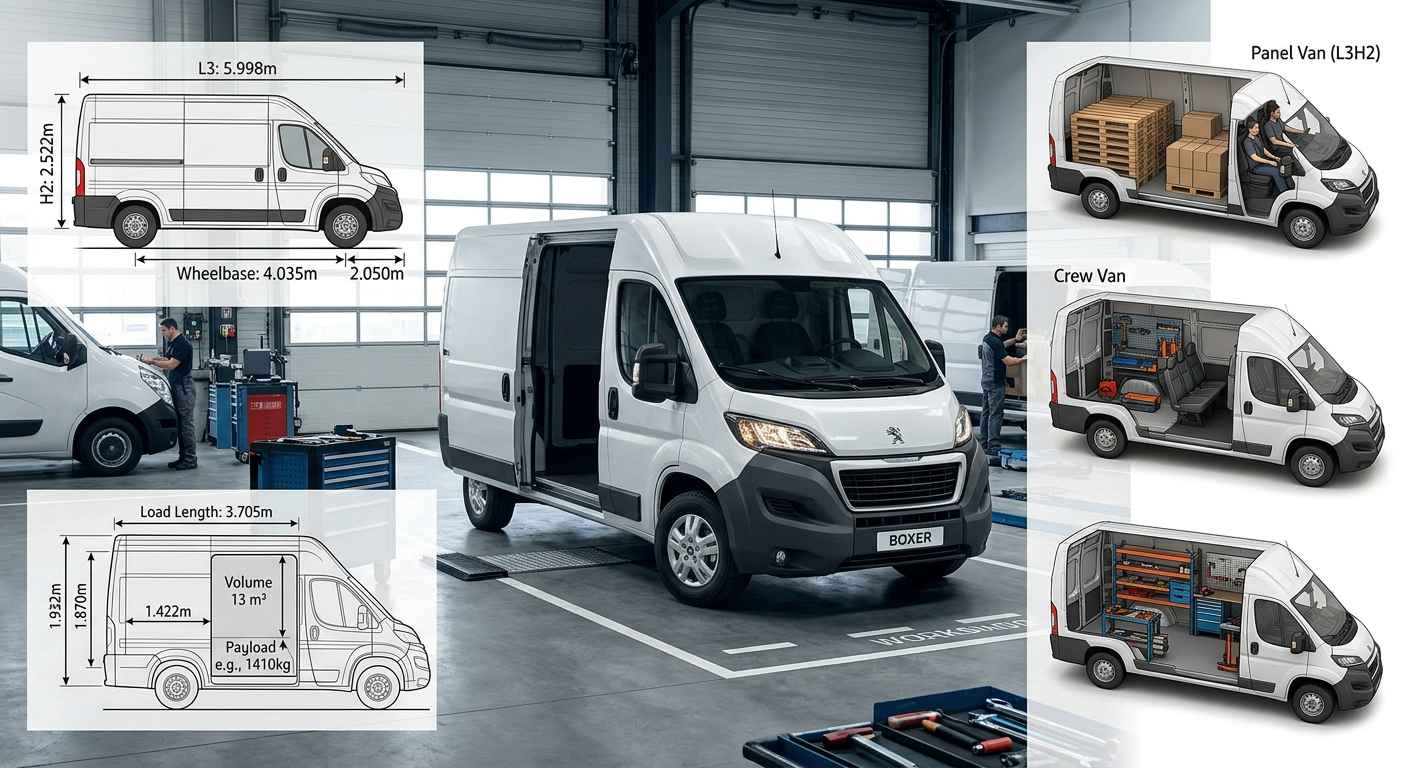
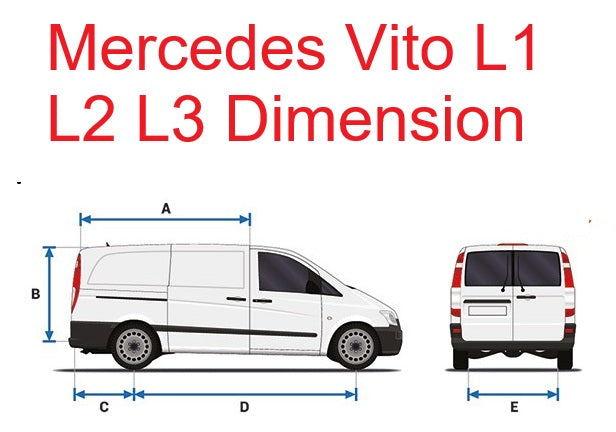
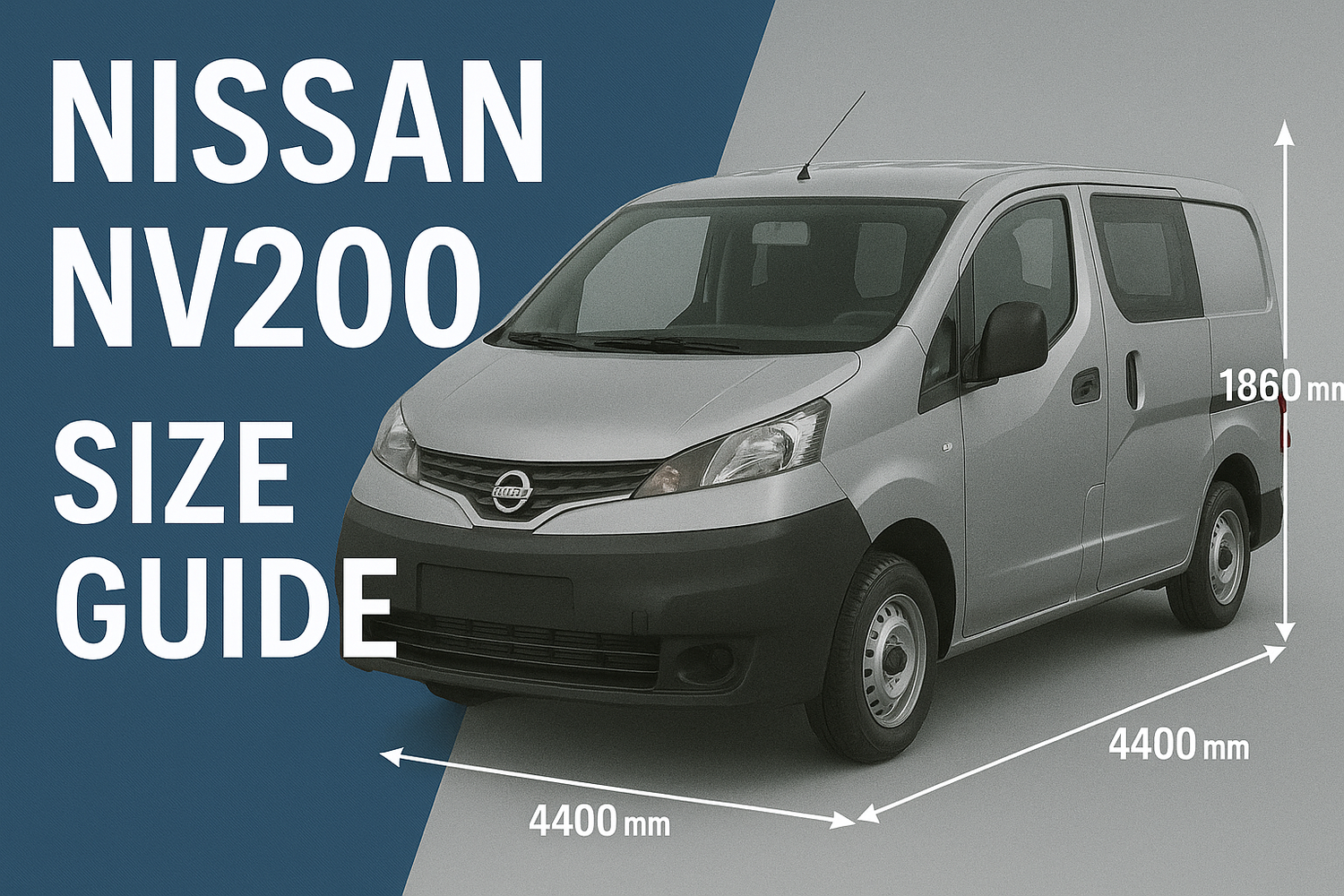
Measure the load area and check your vehicle details carefully. A Ford Transit Custom, Renault Trafic, Vauxhall Vivaro, Mercedes Vito and Volkswagen Transporter each have different internal dimensions and layout considerations. Even within one model range, the wheelbase, roof height and model year can affect what is suitable.
When comparing options, look for clear fitment information, practical installation guidance and storage features that match how you actually earn your living. CNC Work focuses on trade-ready shelving, false floors and workshop-style accessories for working vans, helping make the selection process more straightforward.
A work van accessories guide that stays useful
Once the van is fitted out, review it after a few weeks of real jobs. You will quickly spot the shelf that is too high, the accessory you use constantly, or the section that gathers clutter. Small adjustments can make a larger difference than adding more equipment.
The aim is a van where every regular item has a home, loading is straightforward and you can get to work without a daily hunt for tools. Choose the accessories that remove friction from your own jobs, and your van will keep paying back time on every call-out.