










A well-racked van can save time on every call-out, but it still has to carry its weight. So, does van racking reduce payload? Yes. Any shelving, false floor, drawer unit, bulkhead accessory or tool storage fitted to a van becomes part of the load. The real question is whether the weight is sensible for the work you do and leaves enough capacity for your tools, stock, passengers and job materials.
For many trades, properly chosen racking uses only a manageable part of the available payload. The trouble starts when a van is fitted out without checking the vehicle’s limits, then loaded with heavy power tools, fittings, cable drums, adhesive, water containers or building materials. Payload is not just a number on a brochure. It is a daily working limit that affects safety, legality and how your van performs.
Does van racking reduce payload in practice?
Van racking reduces the remaining payload because it adds permanent weight to the vehicle. It does not alter the vehicle’s plated gross vehicle weight, also known as its maximum authorised mass. That limit stays the same. What changes is the amount you have left to carry once the van has been fitted out.
Put simply, if your van has a 1,000kg payload and you add 100kg of shelving, flooring and accessories, you have around 900kg left before allowing for the driver, passengers, fuel and everything else carried in the vehicle. The precise figure depends on how the manufacturer states payload and kerb weight, so always check the handbook and vehicle plate rather than relying on a generic figure.
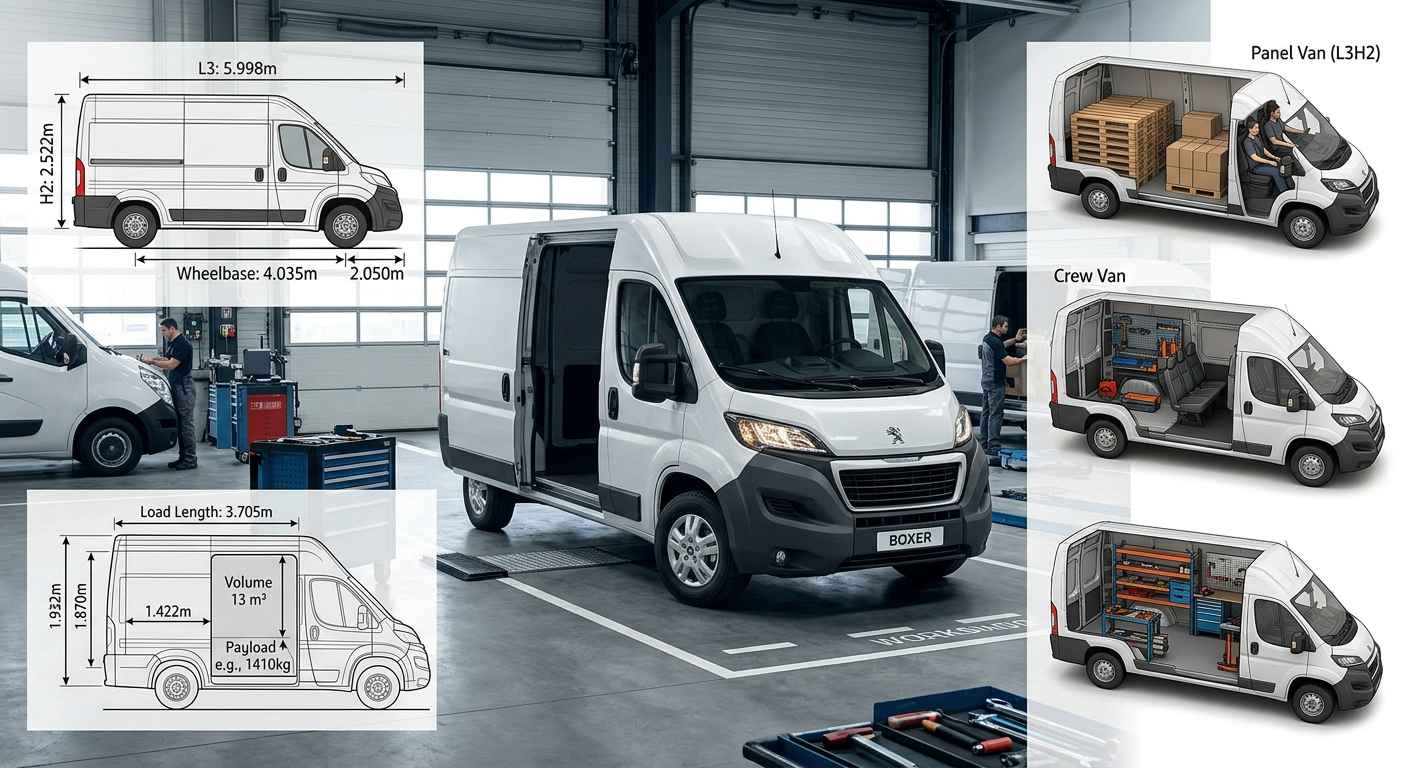
This is why two vans with the same model name can have different real-world carrying capacity. Engine choice, wheelbase, roof height, factory options, automatic gearboxes, tow bars, air conditioning and seating arrangements can all affect kerb weight. A higher-spec van may have less payload available than a more basic version.
What counts towards your van’s payload?
Everything added after the vehicle’s quoted kerb weight needs to be considered. That includes the obvious items, such as racking and tools, but several everyday loads are easy to overlook.
The driver counts. So do passengers, fuel if it is not included in the manufacturer’s stated kerb weight, and personal items in the cab. Add a full set of hand tools, battery tools and chargers, fixings, workwear, consumables and waste materials from a job, and the total can rise quickly.
For some trades, stock is the main weight. Plumbers may carry pipe, fittings, valves and water-based products. Electricians can have cable reels, containment and distribution equipment. Builders and fitters may load sheet goods, timber, tile adhesive, plaster, machinery or bags of materials. A shelving system might weigh far less than the tools and stock it is designed to organise, but it must still be included in the total.
Why racking is often worth the weight
Looking only at kilograms can lead to the wrong decision. An empty van has maximum space on paper, but loose equipment is harder to find, more likely to be damaged and more likely to move under braking or cornering. It also encourages tools and materials to pile up in the load area without a clear system.
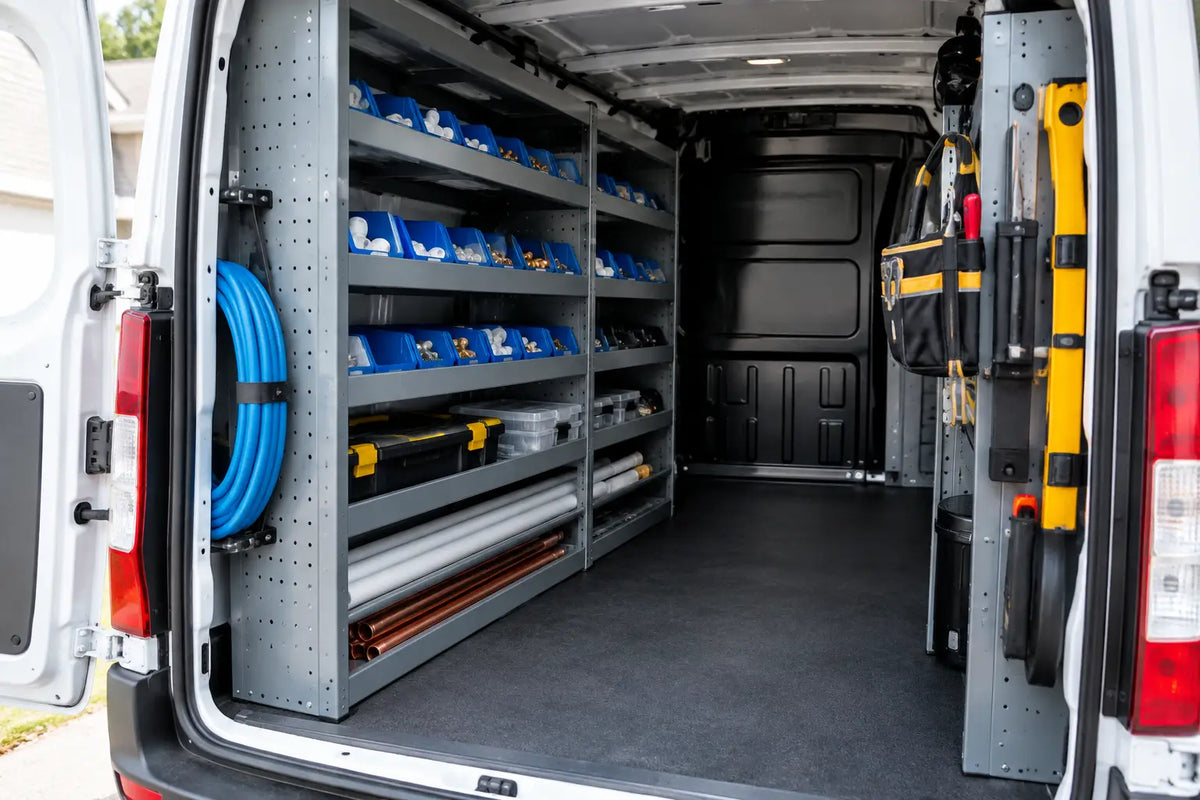
A properly planned racking layout gives equipment a fixed place. That can cut down the time spent searching for the right bit, replacing damaged items or unloading half the van to reach a single case. It can also help keep heavier items low down and close to the vehicle’s centre line, where they are less likely to upset handling.
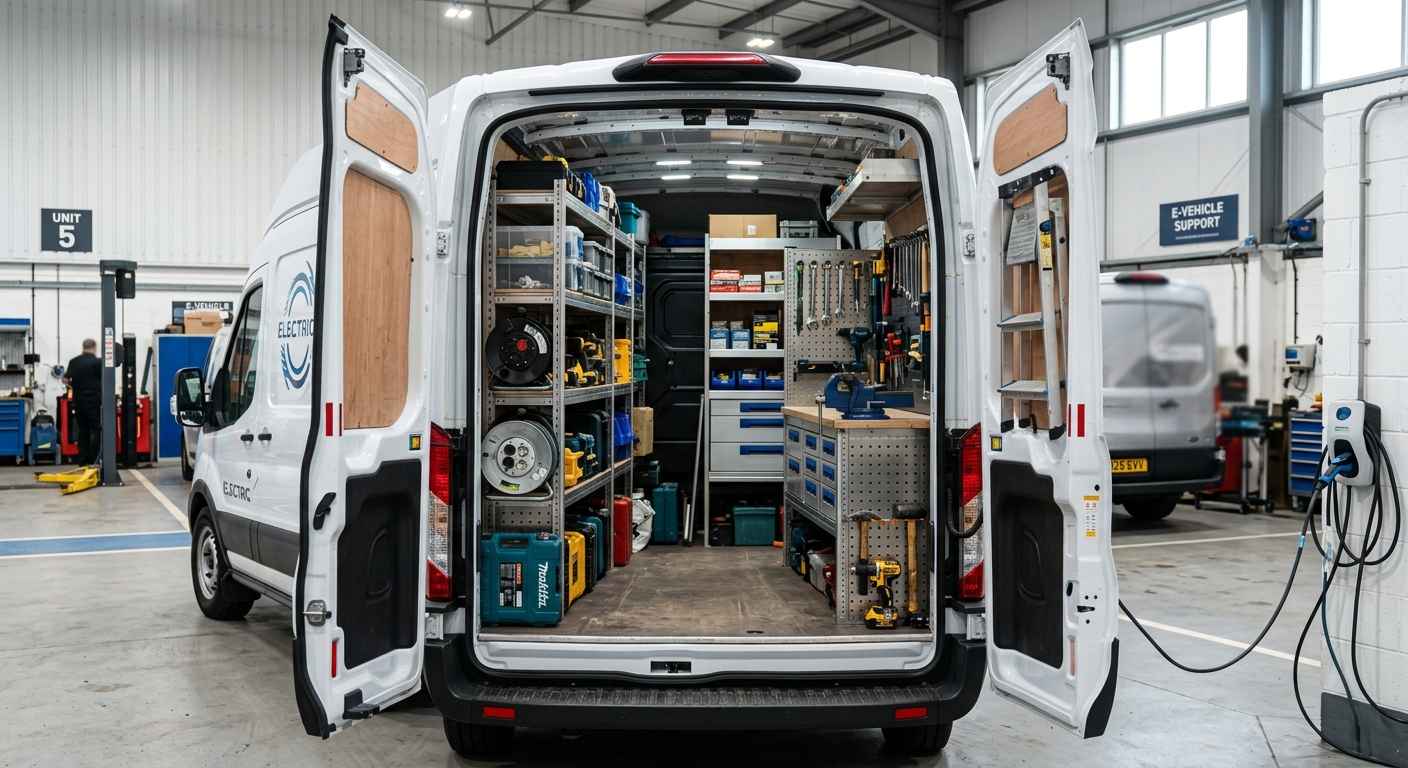
The aim is not to fit the most storage possible. It is to fit useful storage with a weight and layout that suit the van’s actual work. Lightweight shelving can be a practical choice for an electrician carrying lots of smaller parts. A mobile engineer with heavier diagnostic equipment may need fewer shelves, stronger low-level storage and more open floor space.
Check weight distribution, not just the total
Being below the maximum payload does not automatically mean a van is loaded correctly. Every vehicle has axle limits as well as a gross vehicle weight limit. Put too much weight at the rear, for example, and it may be possible to overload the rear axle before reaching the van’s overall permitted weight.
This matters with full-height racking, large drawer systems and heavy materials stored behind the rear doors. It also matters when a van is towing, as towbar nose weight adds load to the rear axle. The relevant axle limits are shown on the vehicle identification plate, usually found around a door opening, under the bonnet or in the handbook.
Keep dense items low where possible, secure them properly and spread weight sensibly from side to side. Try not to store all heavy stock on one shelving bank while leaving the other side empty. A tidy layout is not only easier to work from. It gives you a better chance of loading consistently and spotting when the van is becoming too heavy.
Racking design makes a difference
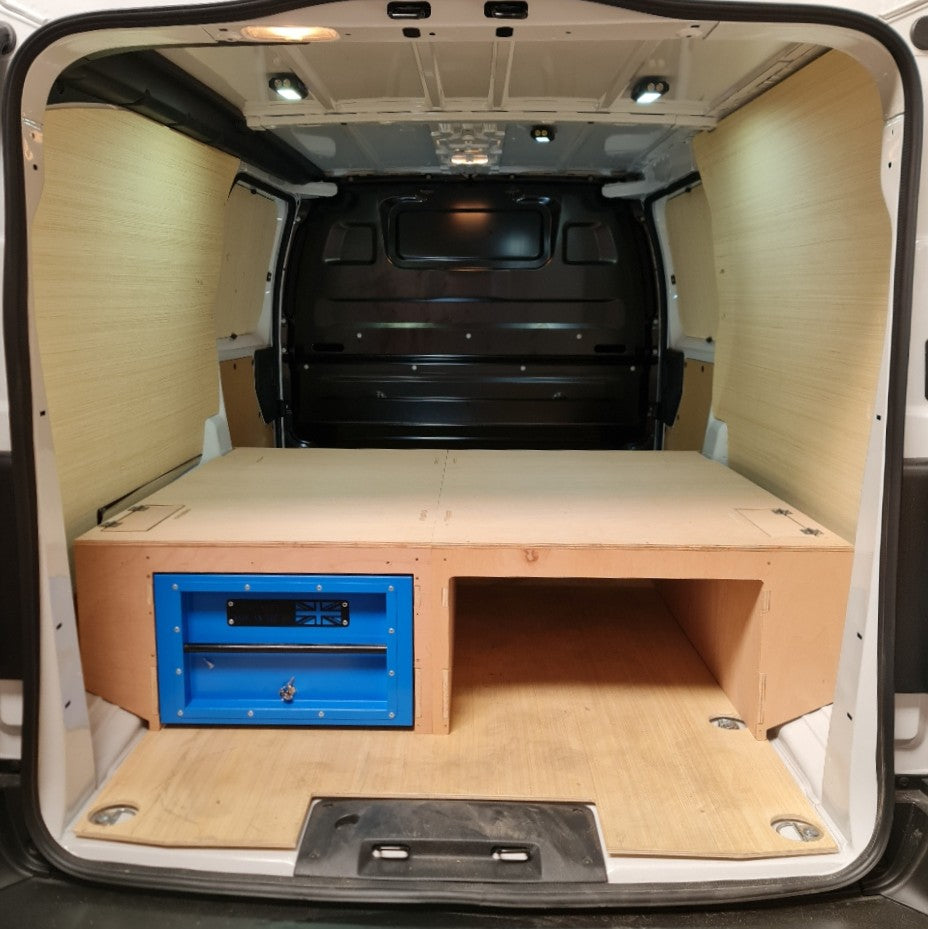
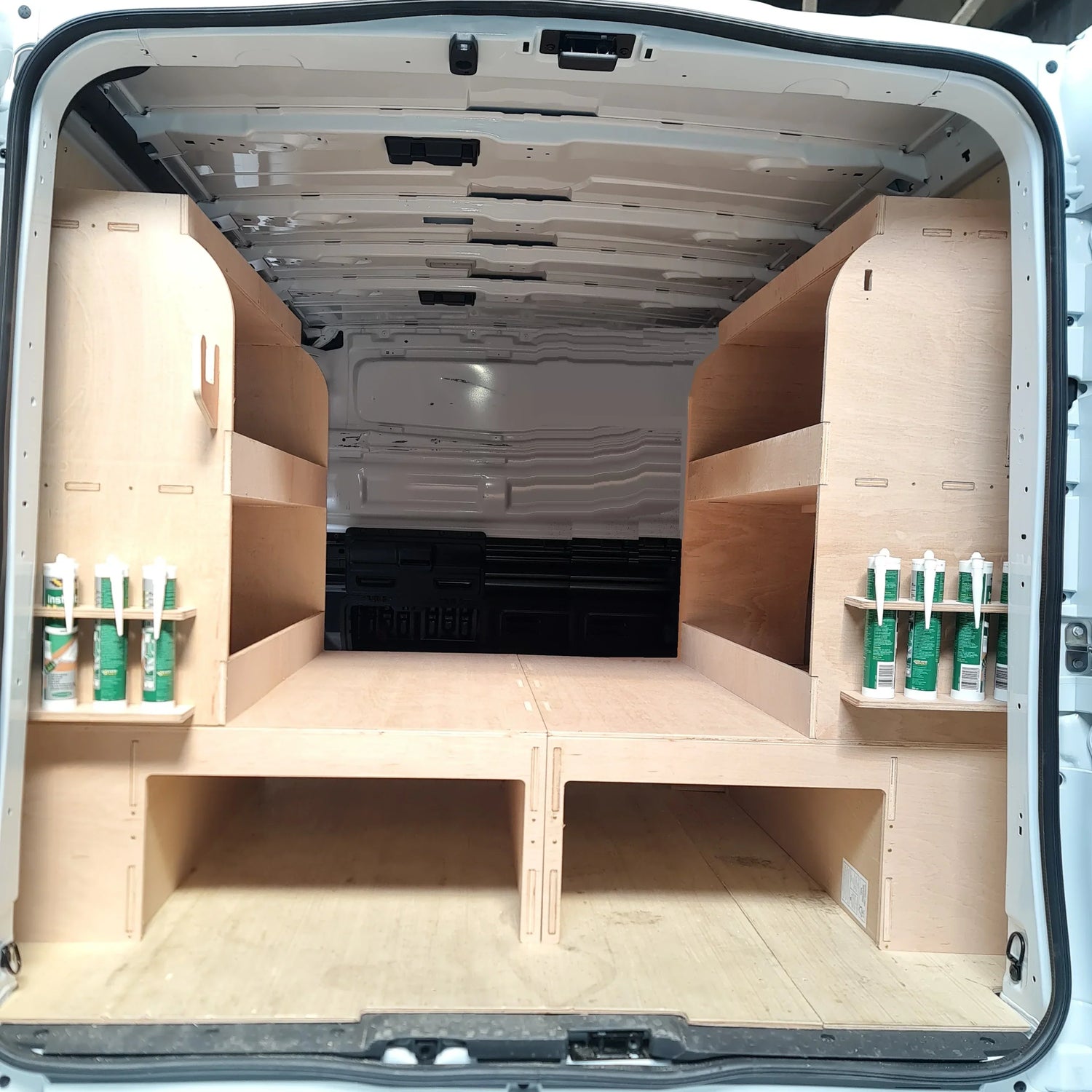
The material, size and specification of the system affect its weight. A basic side-shelving setup will not weigh the same as a full workshop conversion with false floor, long drawers, cabinets, roof storage and multiple accessories. There is no single racking weight that applies to every van or trade.
Vehicle-specific storage is useful because it helps make the best use of the available load space without unnecessary material or awkward gaps. Before ordering, check the stated weight of the individual components and consider the combined weight of the whole planned setup. CNC Work provides model-specific categories to help buyers choose storage designed around the dimensions of their working van, but the final payload check remains the owner’s responsibility.
If carrying capacity is tight, prioritise the equipment you use every day. A smaller, organised system can be more productive than filling every wall with storage that holds rarely used gear. It also leaves room to adapt the load for larger jobs.
How to work out your remaining payload
Start with the vehicle’s official payload figure or calculate it from the plated gross vehicle weight and the manufacturer’s specified kerb weight. Then subtract the fitted racking, flooring, accessories, regular tools, stock, driver and any passengers. Be realistic about the heaviest normal working day, not just the average day.
A simple written list is useful, but a public weighbridge gives the clearest answer. Weigh the van once it is fitted out and loaded as it would be for work. If your loads vary, weigh it again before a heavier job. This is particularly worthwhile for fleets, where different drivers may add equipment over time without anyone seeing the full picture.
Do not forget future additions. A rack for ladders, extra battery packs, a generator, a vice, a water tank or a second row of drawers may each seem minor on their own. Together, they can eat into the margin that keeps the van flexible and compliant.
Signs your van setup needs reviewing
If the van feels unsettled under braking, rides low at the rear, handles poorly on bends or regularly reaches the bump stops, do not assume that is normal for a working vehicle. It may be a sign of overloading, poor load distribution or suspension wear. Check the load first and arrange a mechanical inspection if there is any doubt.
A setup also needs reviewing when the work changes. Taking on more maintenance contracts, carrying a wider stock range or adding a second person to the van can turn a suitable layout into an overloaded one. The answer may be to remove unused gear, reorganise the storage, make more frequent stock collections or use a van with a higher payload rating.
Choose storage around the work you actually do
Van racking does reduce the remaining payload, but that does not make it a drawback by default. The right system can make a van safer to load, quicker to work from and easier to keep professional. The key is to treat racking as part of the load from day one, rather than an invisible permanent addition.
Before fitting anything, check your vehicle plate, list what you genuinely carry and allow for the heaviest realistic day. A storage layout that keeps your tools secure while leaving a sensible payload margin will serve the job better than the biggest setup you can physically fit.