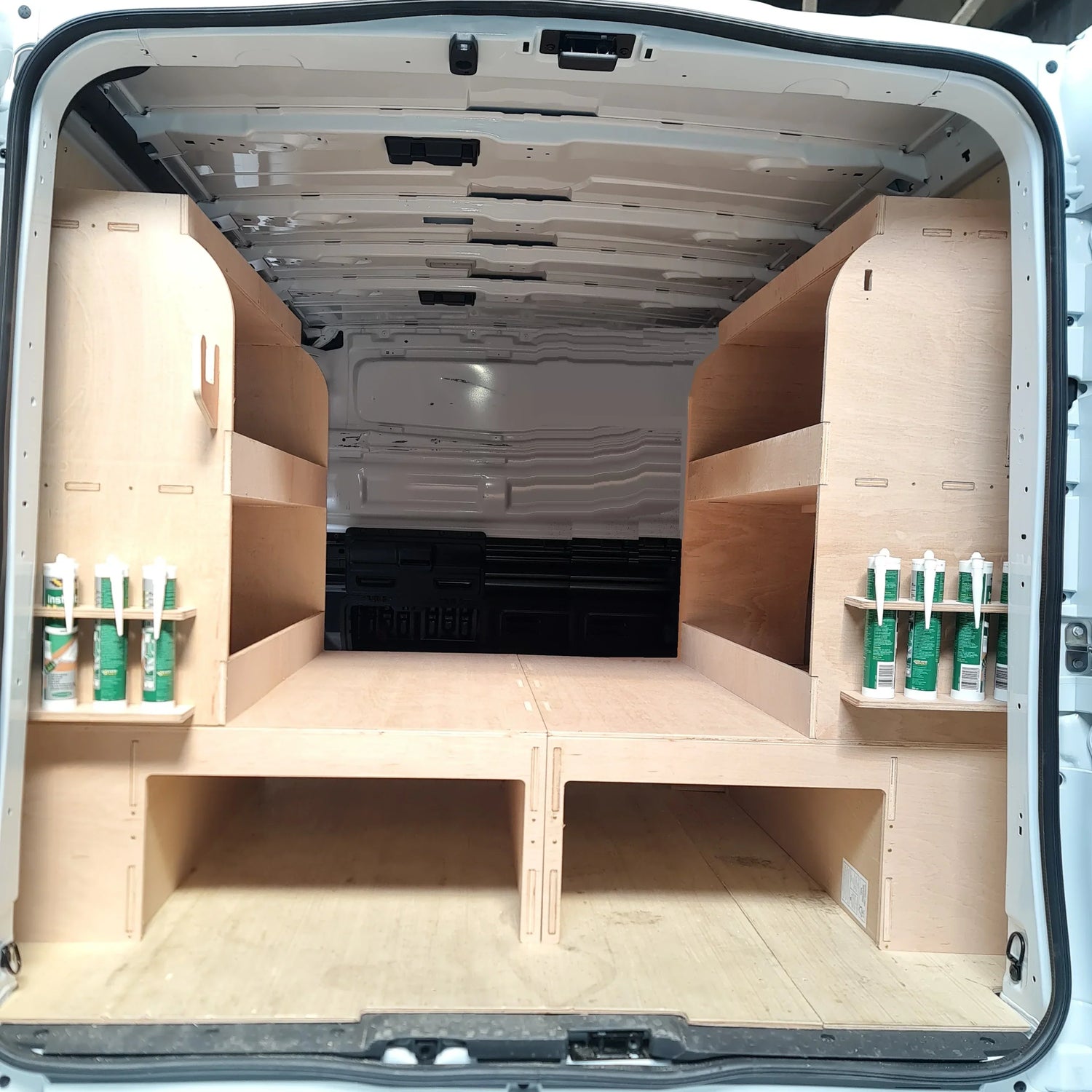











A working van can either make the day run smoothly or cost you time at every call-out. If you are working out how to create a mobile workshop, start with the jobs you do most often, not with a wish list of accessories. The right layout puts daily tools, parts and consumables where you can reach them quickly, while keeping heavier equipment secure and the load area usable.
For plumbers, electricians, fitters, maintenance engineers and contractors, the aim is simple: less searching, less lifting, fewer damaged tools and a more professional way to work on site.
Start with your actual work routine
Before measuring shelves or fitting a false floor, look at what happens between arriving at a job and getting started. Which tools come out first? Which parts do you use every day? What tends to end up loose on the floor by Friday afternoon?
A mobile workshop should support that sequence. An electrician may need immediate access to testers, fixings, cable accessories and hand tools. A plumber may prioritise fittings, sealants, pipe tools and a secure space for larger equipment. A property maintenance van often needs a flexible mix of tools and materials for different trades.
Separate your contents into three groups: equipment used on nearly every job, stock needed regularly, and occasional or bulky items. The first group deserves the most accessible position, usually near the side or rear doors. Regular stock can live in labelled shelves, drawers or storage boxes. Occasional items should sit deeper in the van or in a dedicated section so they do not obstruct everyday work.
This planning stage also stops a common mistake: filling every available wall with storage. Maximum storage is not always maximum efficiency. You still need room to load awkward materials, stand inside the van where practical and reach the items at the back without unloading half your kit.
Choose storage around your van model
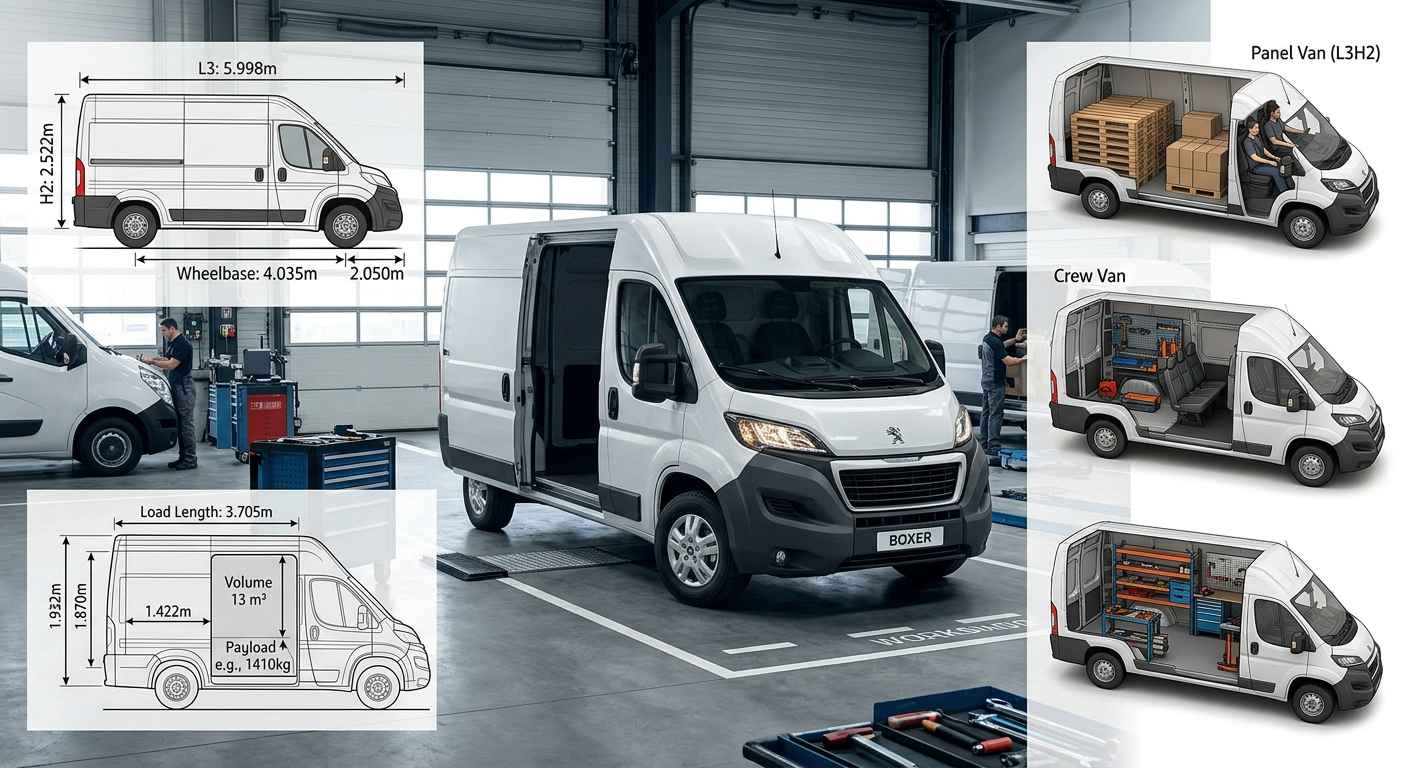
A van racking system should suit the vehicle as well as the trade. Load length, wheel arch position, roof height, door openings and tie-down points differ between models, even where vans look similar externally. Check the exact make, model, year and body length before choosing shelving, false floors or accessories.
Vehicle-specific racking is useful because it makes better use of the load area and avoids the compromise of trying to adapt a one-size arrangement. Measure your own van too, especially if it has ply lining, existing equipment or a bulkhead that reduces available space.
Build from the floor up
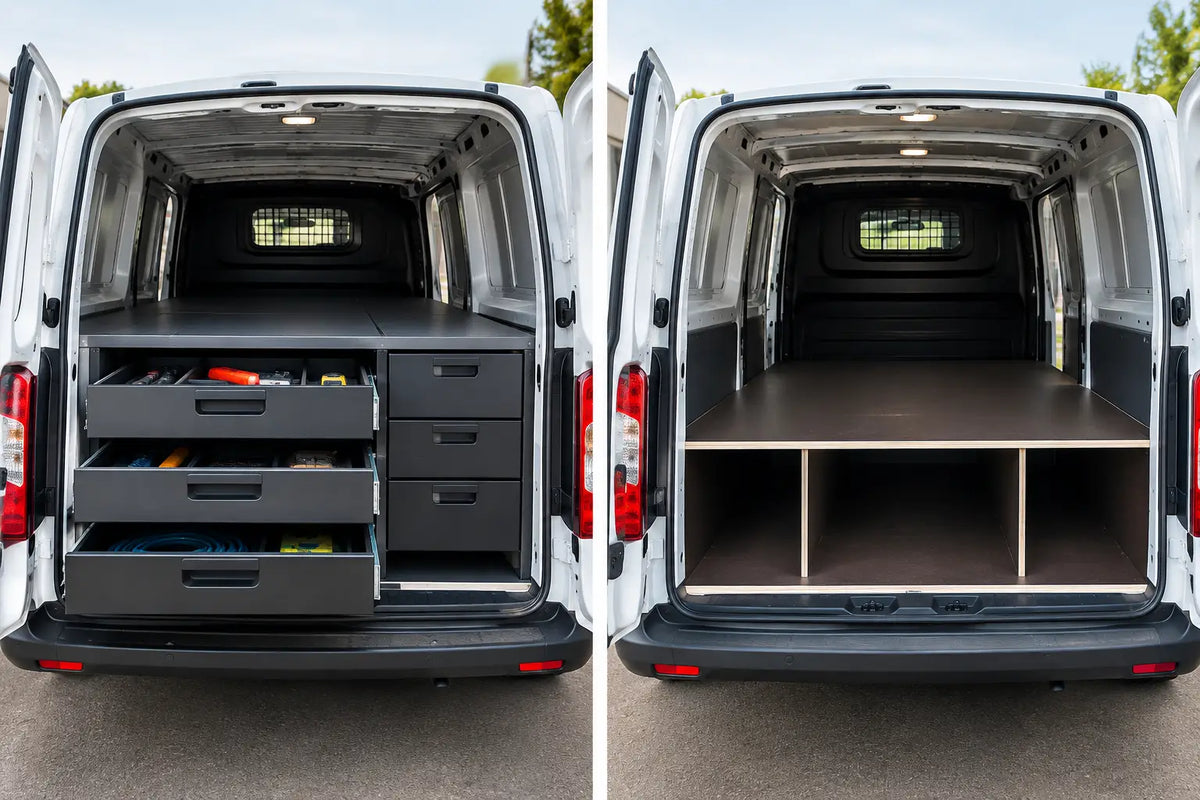
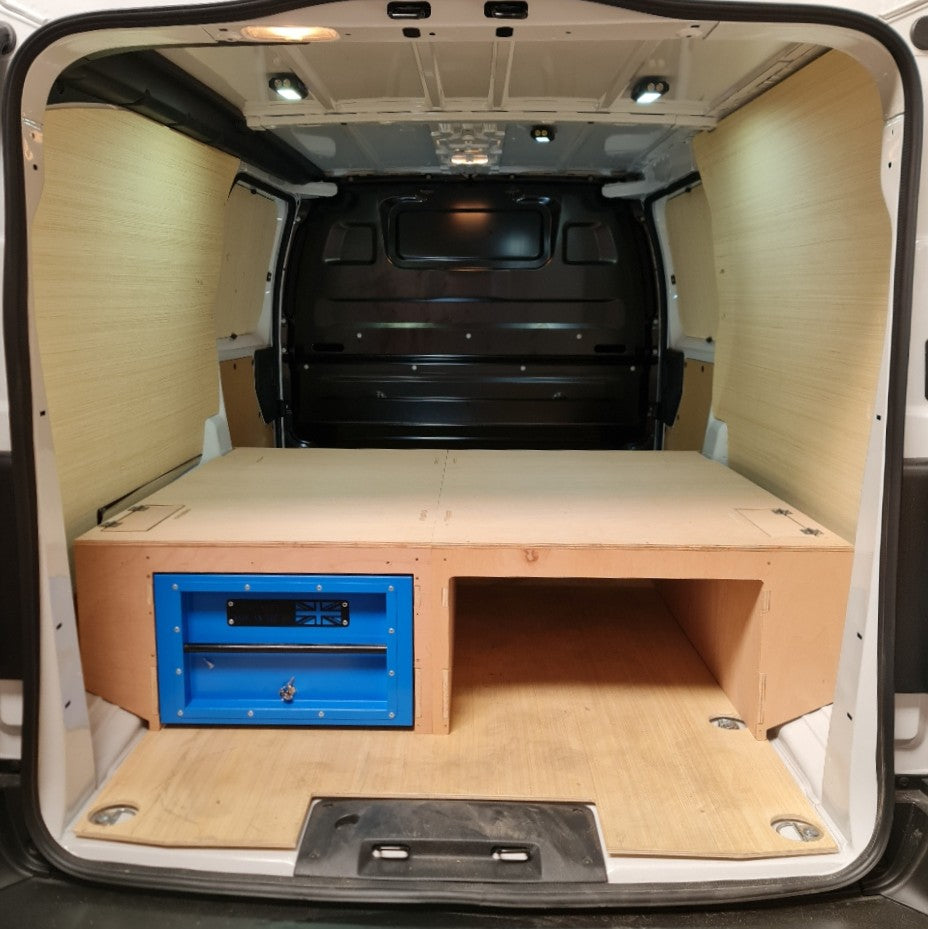
A false floor creates a strong, level base and helps protect the van’s load area from daily wear. It can also provide a clean foundation for shelving and boxes, while making the space easier to sweep out at the end of the week.
For many trades, the floor is where the heaviest kit belongs. Tool cases, generators, cable reels, vacuums and larger equipment should be kept low to help manage the vehicle’s centre of gravity. Secure them using suitable load restraints rather than relying on shelving to hold them in place.
If you carry dirty, wet or sharp materials, choose a floor finish that can stand up to the work. Protecting the van early can also make it easier to keep the workspace presentable as the vehicle ages.
Use shelving for stock, not just tools
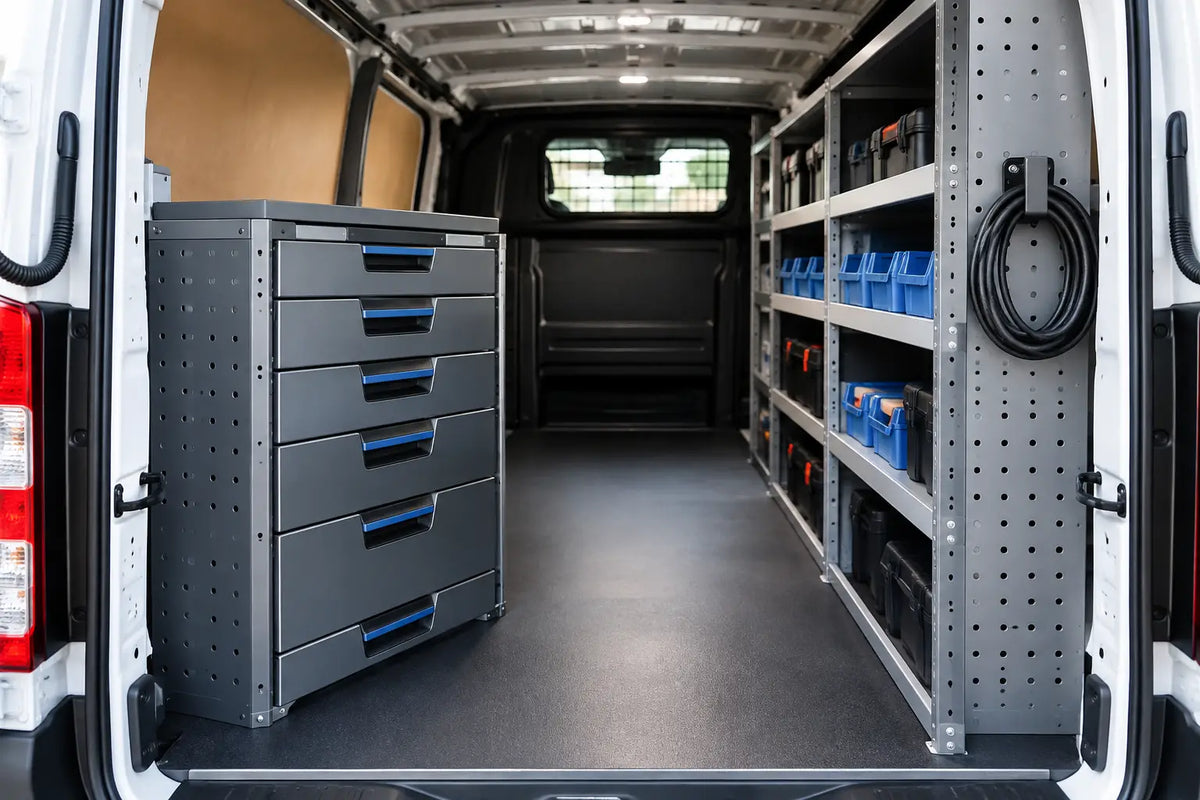
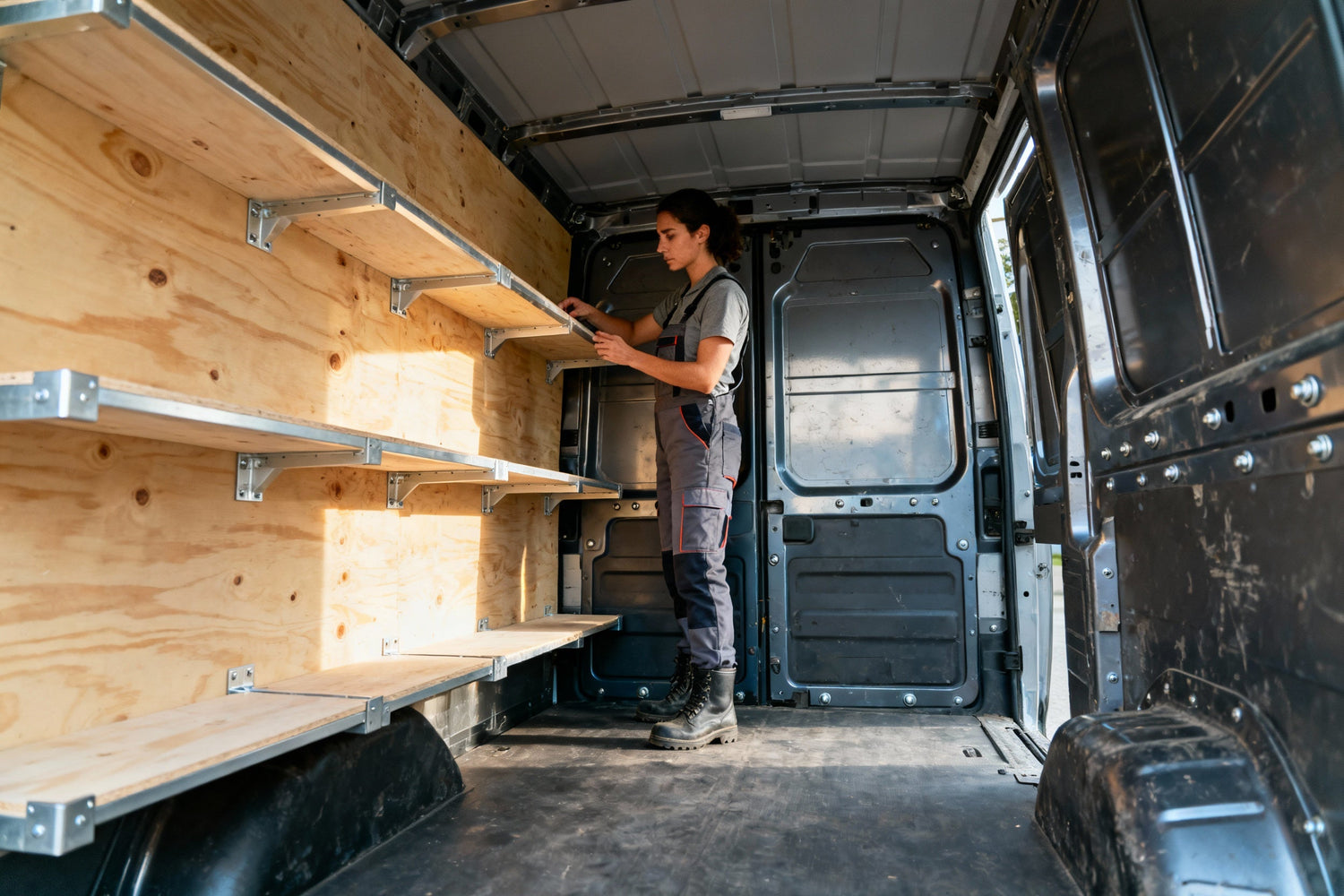
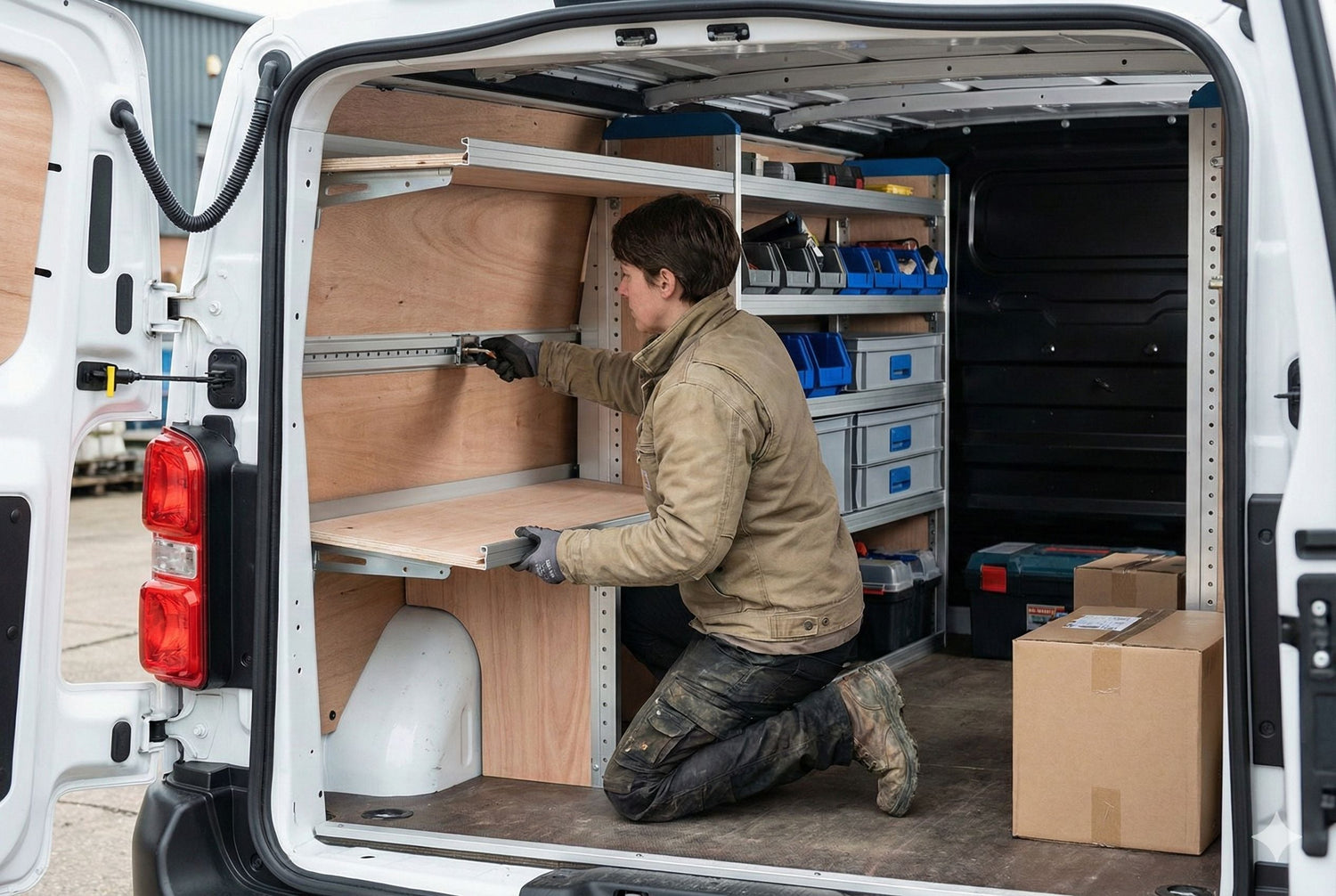
Open shelving is one of the quickest ways to improve access to fittings, fixings and consumables. It works well when each shelf has a clear purpose: one area for electrical accessories, another for plumbing fittings, another for adhesives, tapes or cleaning supplies.
However, open shelves are only useful if stock stays in them. Storage bins, dividers and purpose-made holders reduce movement in transit and make replenishing easier. Transparent bins can help identify contents quickly, while labels are better for boxes that contain similar-looking parts.
Do not make shelves too deep simply because the space is available. Deep shelves can turn into a pile of old stock at the back and current stock at the front. Shallow, clearly divided storage is often quicker to work from.
Create clear working zones
The best mobile workshops have zones rather than one general storage area. This makes it easier to return items to the same place and lets anyone in a fleet find what they need without guessing.
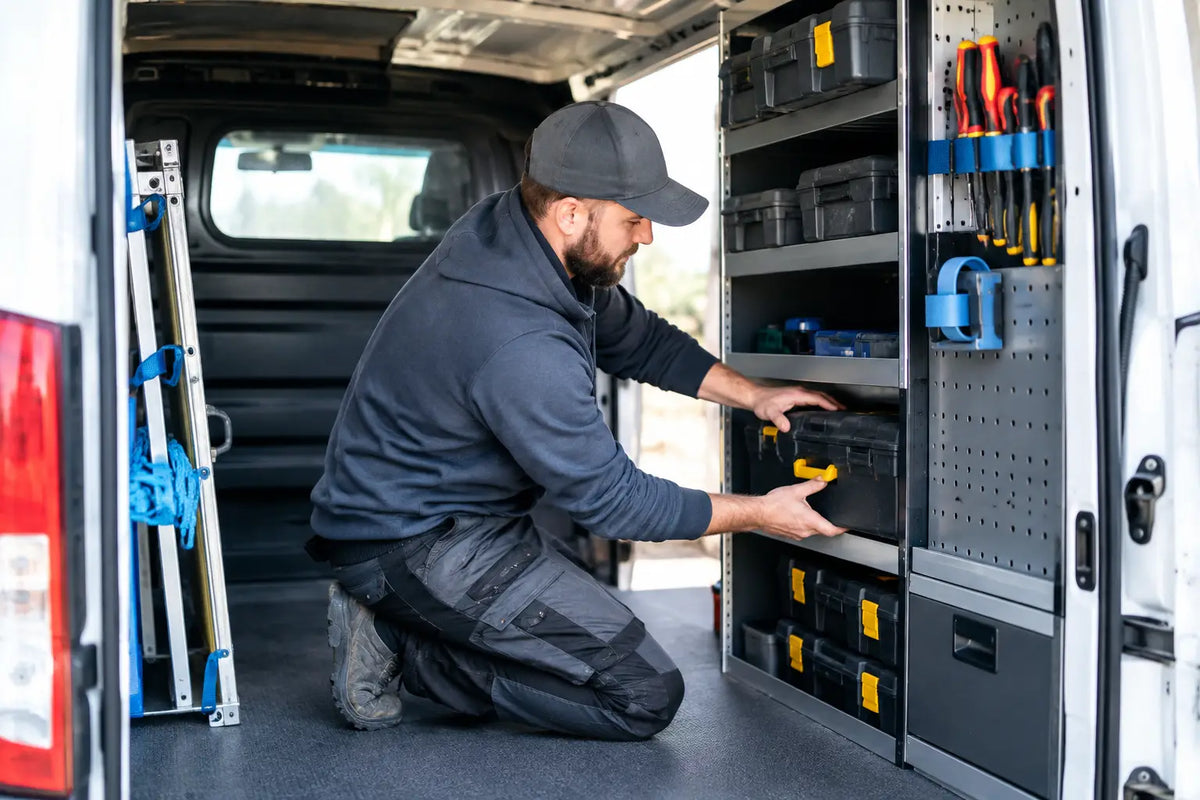
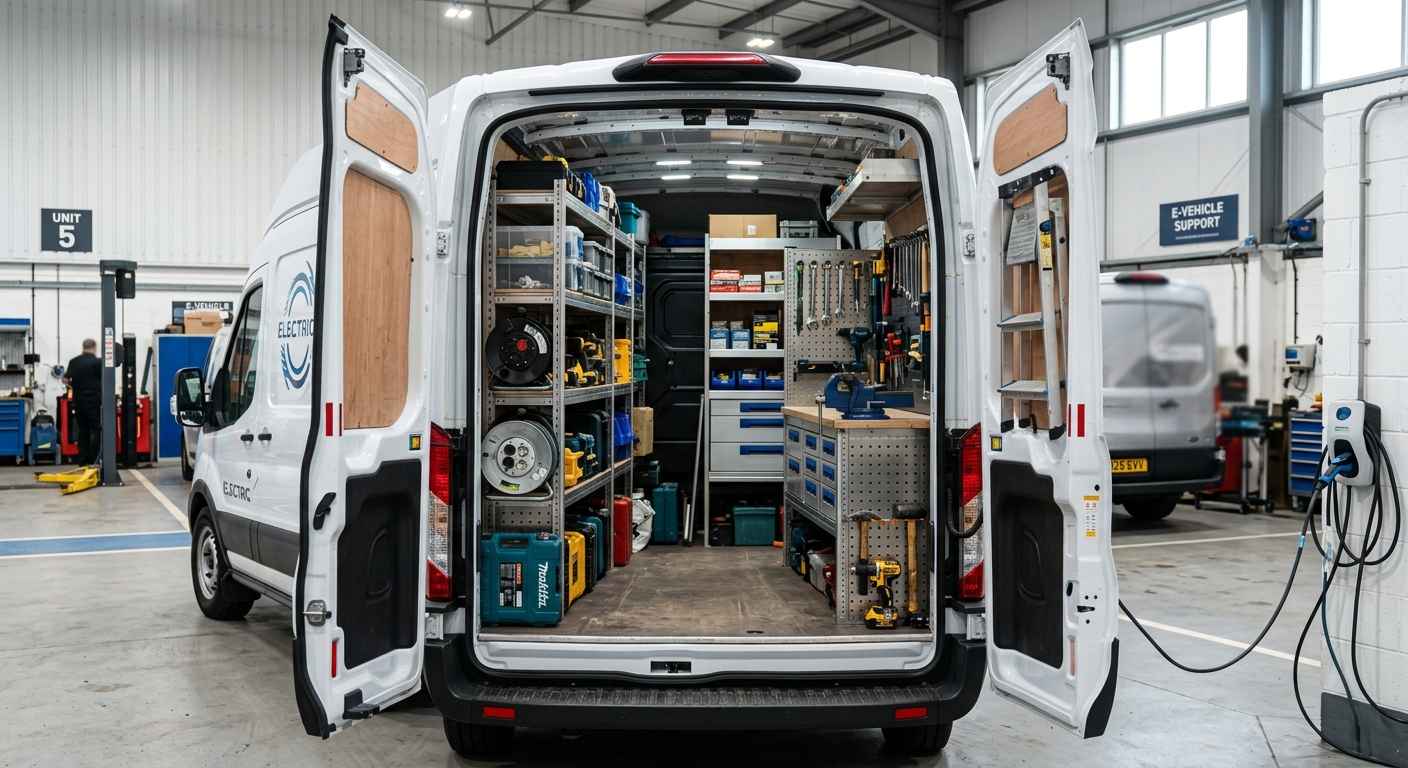
A practical layout may include a rear-door zone for fast-access hand tools and daily consumables, a side-door zone for equipment needed at the kerbside, and a central or forward zone for bulk stock. Keep delicate tools and cases in a protected position where loose materials cannot strike them during braking or cornering.
Small accessories matter more than they appear. A sealant holder prevents tubes rolling around the floor. A wipe dispenser keeps cleaning materials close to hand. A glove box organiser can reduce the clutter of paperwork, chargers and small essentials in the cab. These are simple additions, but they remove the minor frustrations that waste time repeatedly through the working week.
Where space allows, leave a small clear area as a preparation point. It might be enough room to open a tool case, cut a cable tie or sort fittings before going into a property. It does not need to be a full bench. In a compact van, a clean, accessible patch of floor can be more useful than another narrow shelf.
Keep safety and payload in the plan
A tidy van is safer, but a mobile workshop needs more than tidy-looking storage. Every item must be restrained appropriately. Unsecured equipment can become dangerous under hard braking, and even small boxes can cause damage when they shift around.
Put heavier items low down and distribute weight across the van as evenly as your workload allows. Avoid loading too much weight on one side, particularly if one racking unit is carrying tools, stock and cases. Check your vehicle’s payload and remember that racking, lining, false floors, tools, passengers, fuel and materials all count towards it.
Keep emergency items easy to reach. Your first-aid kit, fire extinguisher where carried, warning equipment and basic PPE should not be buried behind stock. The same applies to anything you may need at short notice, such as a torch, charger or spare gloves.
Consider visibility too. A badly arranged load area can block windows or create a hazard when rear doors are opened. Arrange taller items so they cannot fall towards you, and secure long materials properly rather than balancing them across shelves.
Make restocking part of the system
Organisation falls apart when the van is treated as a dumping ground after a busy day. A mobile workshop only saves time if it can be reset quickly.
Give each tool and stock item a fixed home. If an item does not have a place, it will end up on the floor, in the cab or buried in the wrong box. A label system does not have to be complicated. Clear names, sensible categories and repeatable positions are enough.
Set a short end-of-day routine: return tools, remove rubbish, check key consumables and make a note of anything that needs replacing. For a sole trader, this could take five minutes. For a fleet, standardising shelf locations and stock labels across matching vans makes handovers, inspections and vehicle changes much easier.
It is also worth reviewing the layout after a few weeks of real work. If you repeatedly reach over equipment for a tool, move that tool. If one shelf is always empty and another is overloaded, rebalance the space. A practical van setup should evolve with the jobs you take on.
Spend where it saves time every day
Not every mobile workshop needs every accessory from the start. Begin with a safe floor, secure storage for the tools and stock you use most, and a layout that allows you to work without constant unloading. Add smaller organisers once you know where the pressure points are.
Durable, vehicle-appropriate racking and shelving are generally a better investment than cheap containers that crack, slide about or need replacing after a season. The right system also makes it easier to present yourself professionally when customers see the back of your van.
A well-organised van will not make a difficult job easy, but it can remove the avoidable delays around it. Build the workspace around your own daily routine, keep the load safe, and let every shelf earn its place.