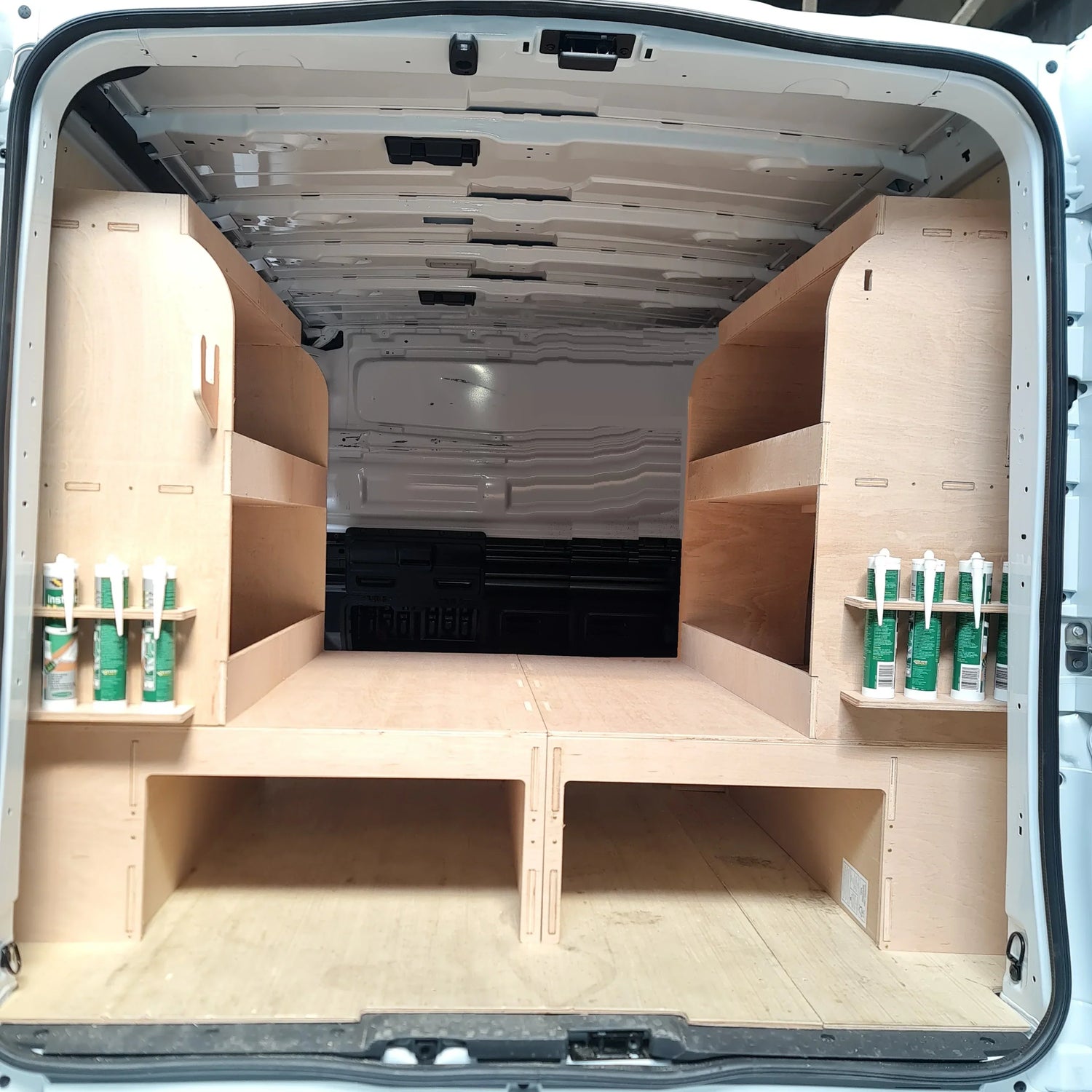











A Ford Transit can carry a serious amount of kit, but capacity alone does not make it an efficient work van. Loose cases, sealants rolling across the floor and fixings buried under larger tools all cost time at every job. This Ford Transit shelving review looks at what makes a shelving setup genuinely useful for UK tradespeople - and what to check before choosing one.
The right answer is rarely the tallest or most heavily loaded shelving unit available. It is the layout that suits the jobs you do, the tools you carry and the exact Transit body you own. A well-planned system keeps frequently used items visible, protects equipment in transit and leaves enough floor space for the materials that change from one job to the next.
Ford Transit shelving review: start with the exact van
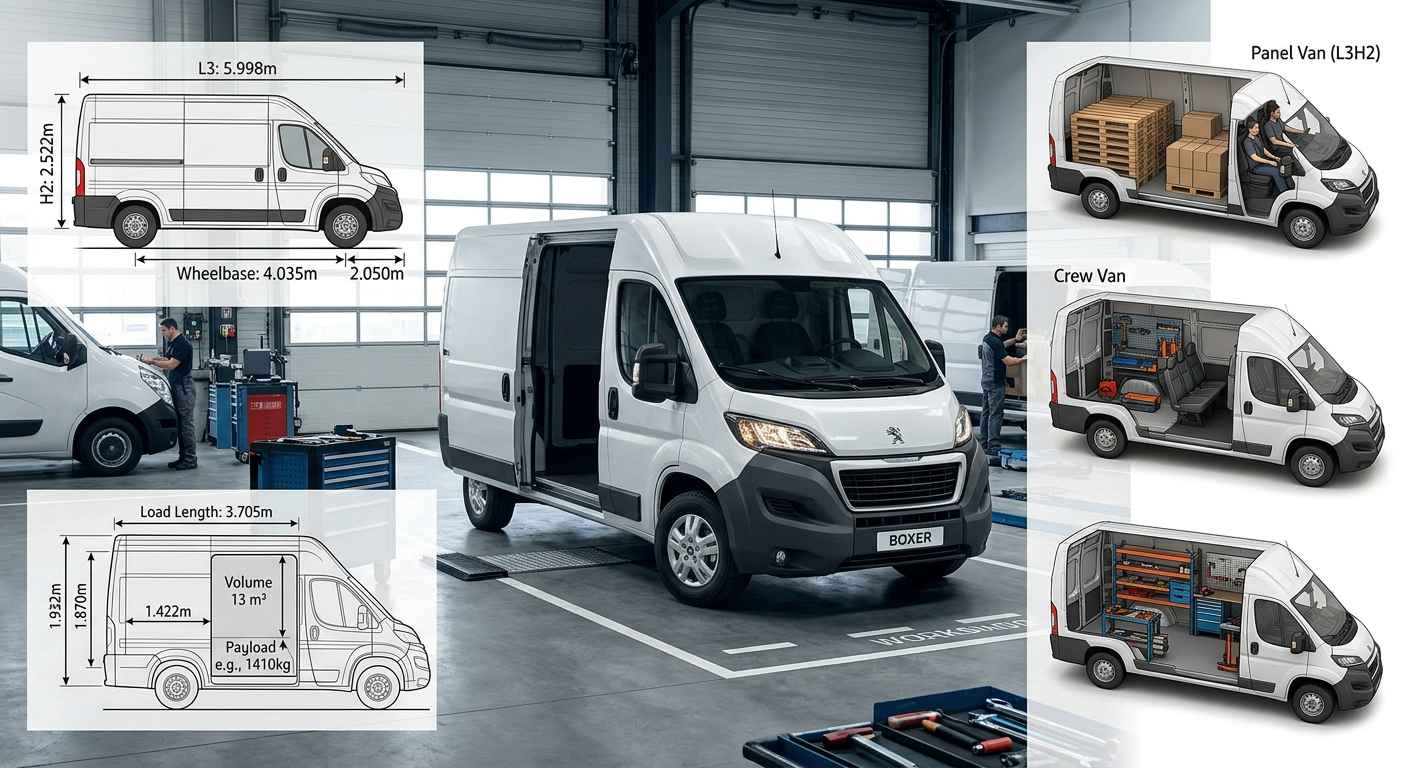
Ford Transit is a broad name, not one single load space. Full-size Transit panel vans come in different lengths and roof heights, while the Ford Transit Custom is a separate model with different internal dimensions and fixing positions. Shelving made for a Transit Custom should not be assumed to fit a full-size Transit, and the reverse is equally true.
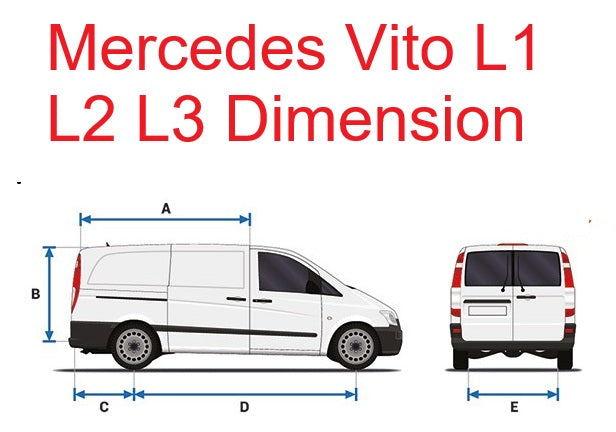
Before comparing layouts, confirm the vehicle model, year, wheelbase, roof height and whether the van has a factory lining, bulkhead or other existing equipment. These details affect usable width, rear-door access and the room available around wheel arches. They also decide whether a particular shelving unit will work with the side loading door, which matters a great deal for electricians, maintenance engineers and fitters who need to reach consumables from the kerbside.
Measure the load area if anything is already fitted. A ply lining can take up useful millimetres, and a false floor changes the height available under shelves and near the rear opening. Vehicle-specific shelving is the sensible route, but it still pays to check the product information against your own van before ordering.
What good shelving changes during a working day
The strongest reason to fit shelving is not simply to make the rear of the van look tidy. It is to make stock, tools and consumables quicker to find and easier to put back. That is where wasted minutes are removed: not on one large job, but across every call-out, collection and end-of-day restock.
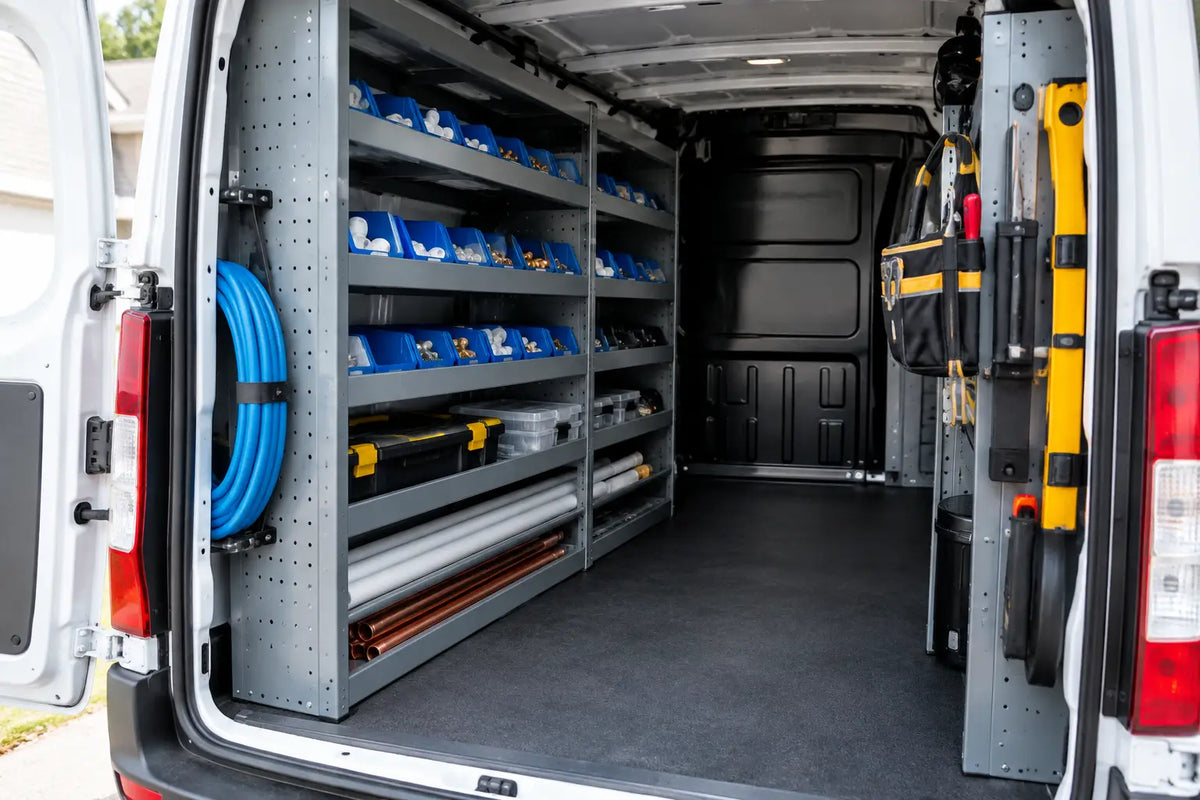
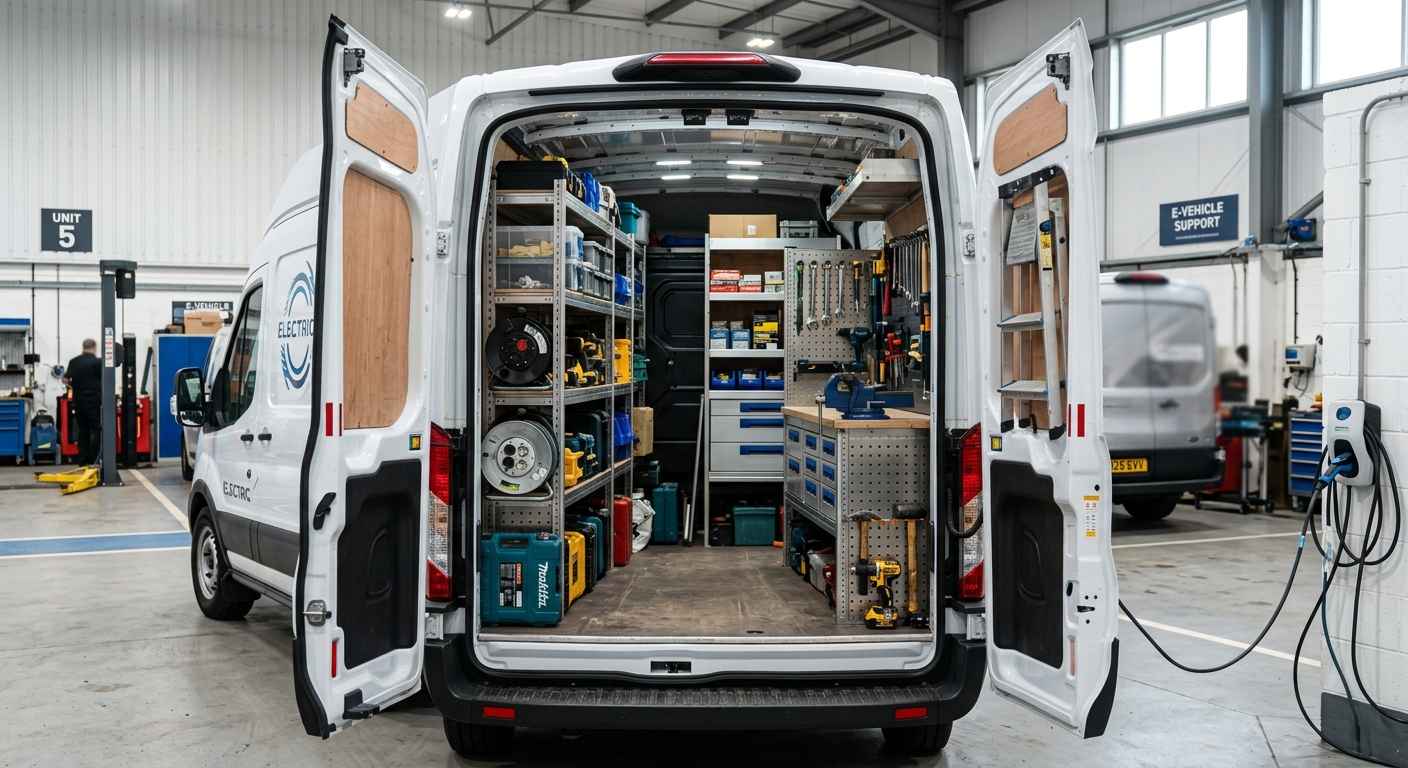
For a plumber, lower shelves may be best used for boxed fittings, pipe clips and sealants, with heavier power tools kept low down. An electrician may need shallow, clearly divided storage for cable accessories, testers and fixings, plus a clear floor route for cable drums. A decorator may value room for dust sheets, rollers and fillers without sacrificing access to longer equipment. There is no universal perfect layout because the working kit is different.
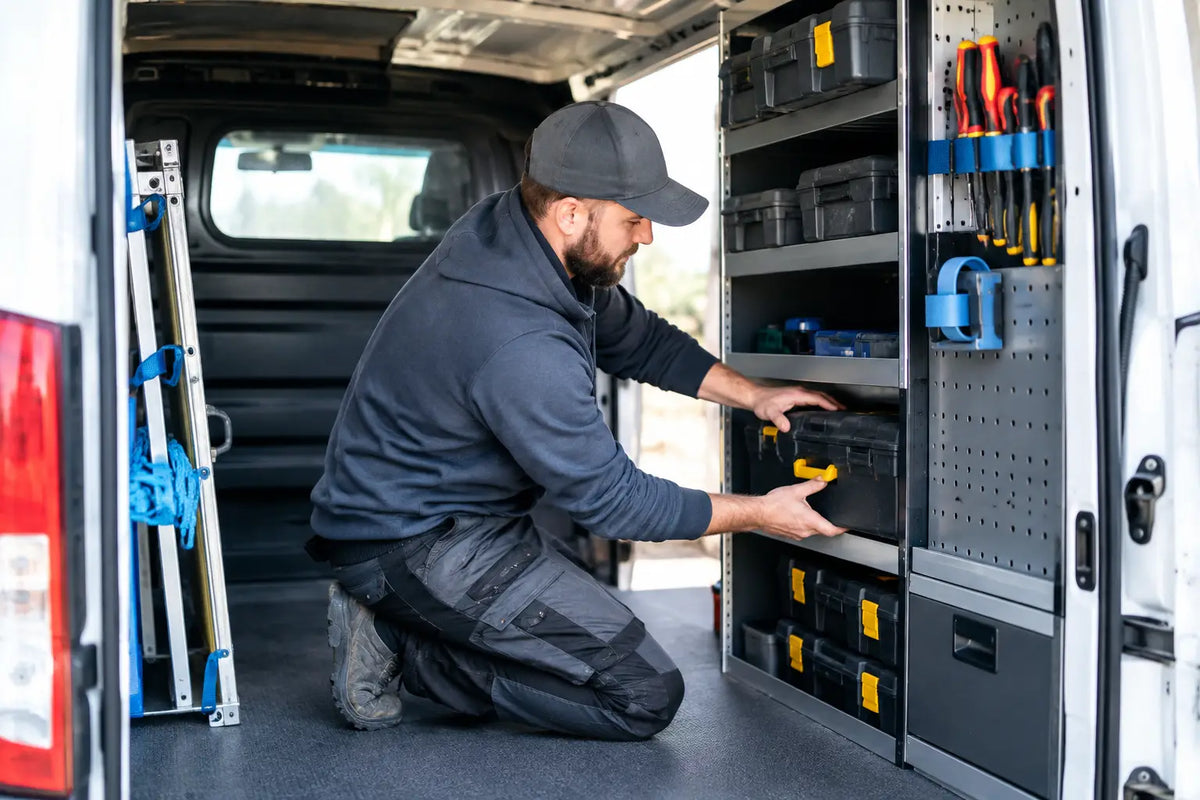
Shelving also helps protect stock. Small boxes left loose can split or get wet when a door is opened in poor weather. Tool cases slide about, and unrestrained items can be damaged or become a safety issue under braking. Shelves, bins, retaining lips and suitable straps give each item a defined place. The aim is controlled storage rather than cramming every gap full.
Accessibility matters more than maximum capacity
A common mistake is choosing deep shelving everywhere. Deep shelves can hold plenty, but anything at the back soon becomes forgotten stock. For fast-moving parts, shallow shelves or compartments are normally more practical. Keep the items you use daily between knee and shoulder height where possible, with less frequently used stock higher up or towards the front of the load area.
Think about how you approach the van too. If most of your work starts from the rear doors, a rear-facing arrangement makes sense. If the side door is used constantly, plan access around it. A good layout should allow you to collect the usual tools without climbing into the van or moving other equipment first.
Materials, construction and real-world durability
Shelving needs to handle vibration, damp workwear, dirty tool cases and the occasional rushed reload. Look beyond the number of shelves and consider how the unit is put together. The shelf edges, joints, fixings and mounting points all matter when a van is used every day.
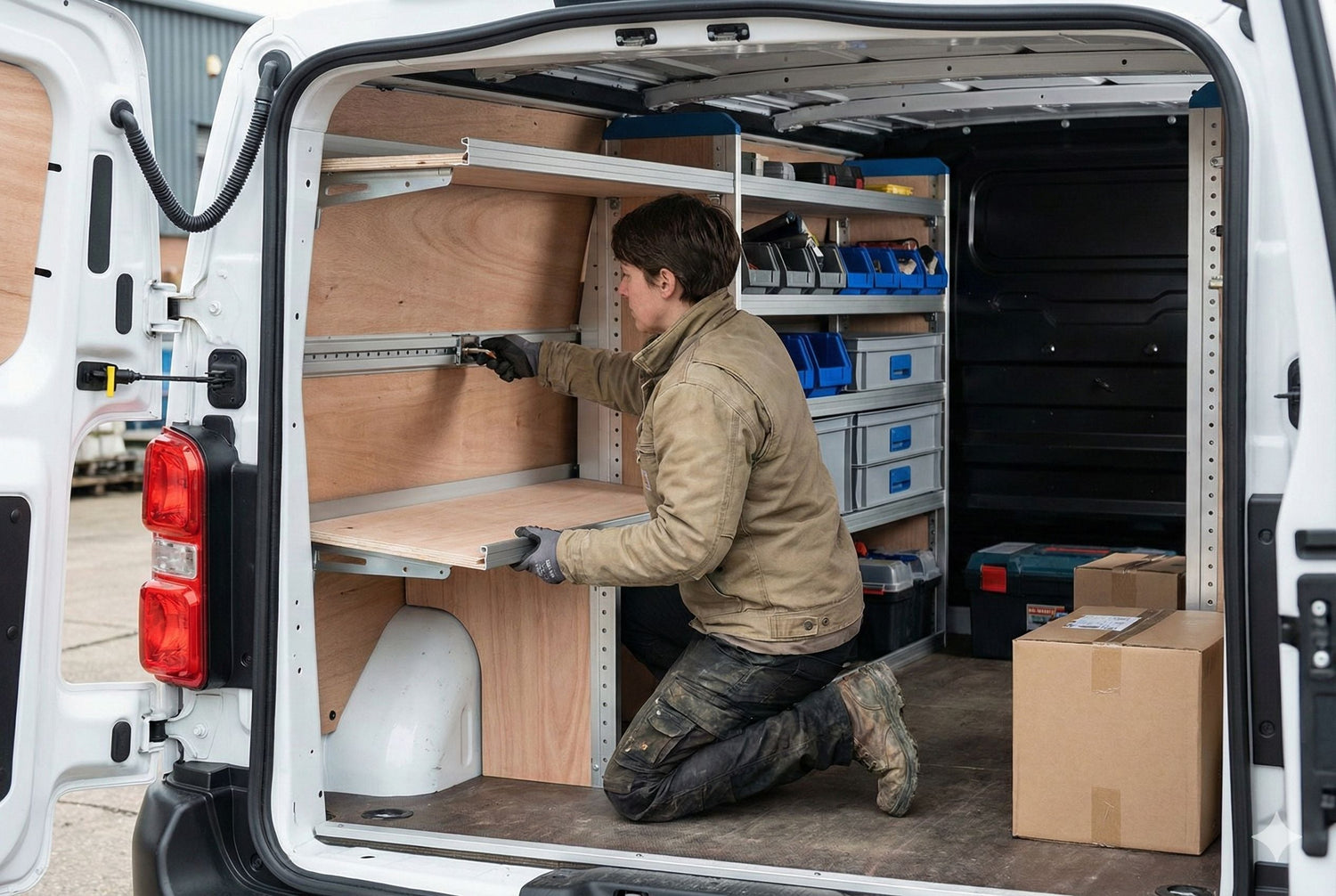
Plywood-based shelving remains a practical choice for many trade vans. It is generally quieter than bare metal when tools are loaded, and it can provide a solid, workshop-style surface. Quality varies, though. The board should be appropriate for commercial vehicle use, with tidy edges and sensible reinforcement where weight will be concentrated.
Metal systems can offer a different balance of strength, weight and cleanability. They may suit users who want adjustable storage or who regularly deal with wet or messy materials. The trade-off can be more rattling if the layout is not properly secured, and open metal shelves often benefit from bins or boxes to stop small items moving around.
Whichever material you choose, do not judge durability by appearance alone. Consider the load you intend to place on each shelf, whether heavy cases will sit low down, and how the unit attaches to the van. A shelving system should be fitted according to its instructions, with all supplied restraint and fixing hardware used correctly.
Layout decisions that are worth making before you buy
Start by emptying the van and grouping what you actually carry. Separate daily tools, weekly tools, consumables, bulky materials and items that must remain clean or secure. This exposes duplicate stock and shows which items deserve the easiest access.
A practical setup often combines side shelving with a clear central walkway. This gives you organised small-item storage while preserving space for boxes, ladders, pipe, sheet materials or job-specific equipment. In a short-wheelbase van, protecting that flexible floor area is especially important. Filling both sides with shelving may look efficient on paper but can leave no room for the work that pays for the van.
Weight distribution should be part of the plan. Put heavier equipment low and spread it sensibly across the vehicle rather than stacking it high on one side. Check the van's payload and do not treat shelving capacity as extra payload. The system itself, tools, passengers, fuel and materials all contribute to the vehicle's working weight.
It is also worth allowing for growth without overbuilding on day one. A few open spaces or compatible accessories can be more useful than a fixed compartment for every possible item. Add-ons such as sealant holders, glove box organisers and wipe dispensers can keep frequently used essentials close to hand without using valuable shelf space.
False floors and lining can complete the workspace
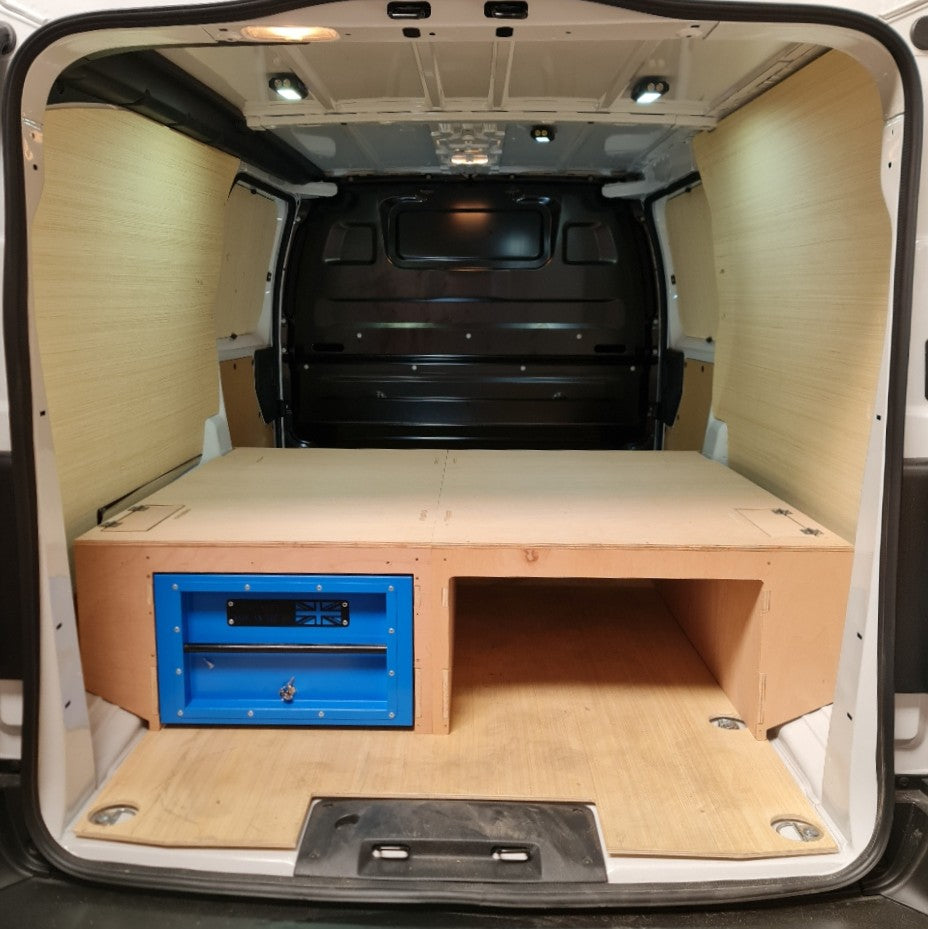
Shelving works better when the floor is organised as well. A false floor can create protected storage below deck for long tools, leads or equipment that would otherwise block the load area. It is particularly useful where keeping the central floor clear makes loading easier.
However, a false floor raises the working surface. Check that taller cases will still fit beneath shelving and that the rear threshold remains practical for loading. Side and floor lining can also help protect the van body, but every layer should be considered as part of the total available space rather than added as an afterthought.
Installation and safety checks
Easy installation is valuable, but it should never mean rushed installation. Read the fitting instructions before starting, lay out the components and make sure the relevant areas of the van are clean and accessible. If the product specifies particular mounting points or hardware, follow that guidance rather than substituting fixings without checking suitability.
Once fitted, test the doors, side loading access and bulkhead clearance before loading up. Check that shelves are level, all fasteners are secure and drawers, bins or doors close properly. Then load the heaviest items first and use restraints where needed. A quick check after the first few days of driving is sensible, as it gives you the chance to spot a loose fastener or a layout issue before it becomes frustrating.
Avoid loading shelves with loose items that can fly forward or sideways. Storage should support safe driving as well as quicker work. If your load changes regularly, keep a simple routine: return core tools to the same positions, restock consumables at the end of the week and remove broken packaging before it becomes clutter.
Is Ford Transit shelving worth it?
For a working van, shelving is worth the space when it reduces handling, protects your kit and makes the next item easy to reach. It is less worthwhile when it is chosen purely to fill the load area, leaving no capacity for materials or creating shelves that are awkward to use.
The best buying decision comes from matching the system to the exact Transit, the way you enter the van and the equipment that earns its place every day. Choose vehicle-specific storage, keep weight low and sensible, and leave room for the jobs that do not look the same twice. A van that is easy to reset after each job stays useful long after the first tidy-up.