










A van that makes you climb over toolboxes, hunt for fittings and shift loose equipment before every job is costing you time. Effective tool storage for vans puts the items you reach for most where they belong, protects expensive kit in transit and gives your business a more professional start at every customer’s door.
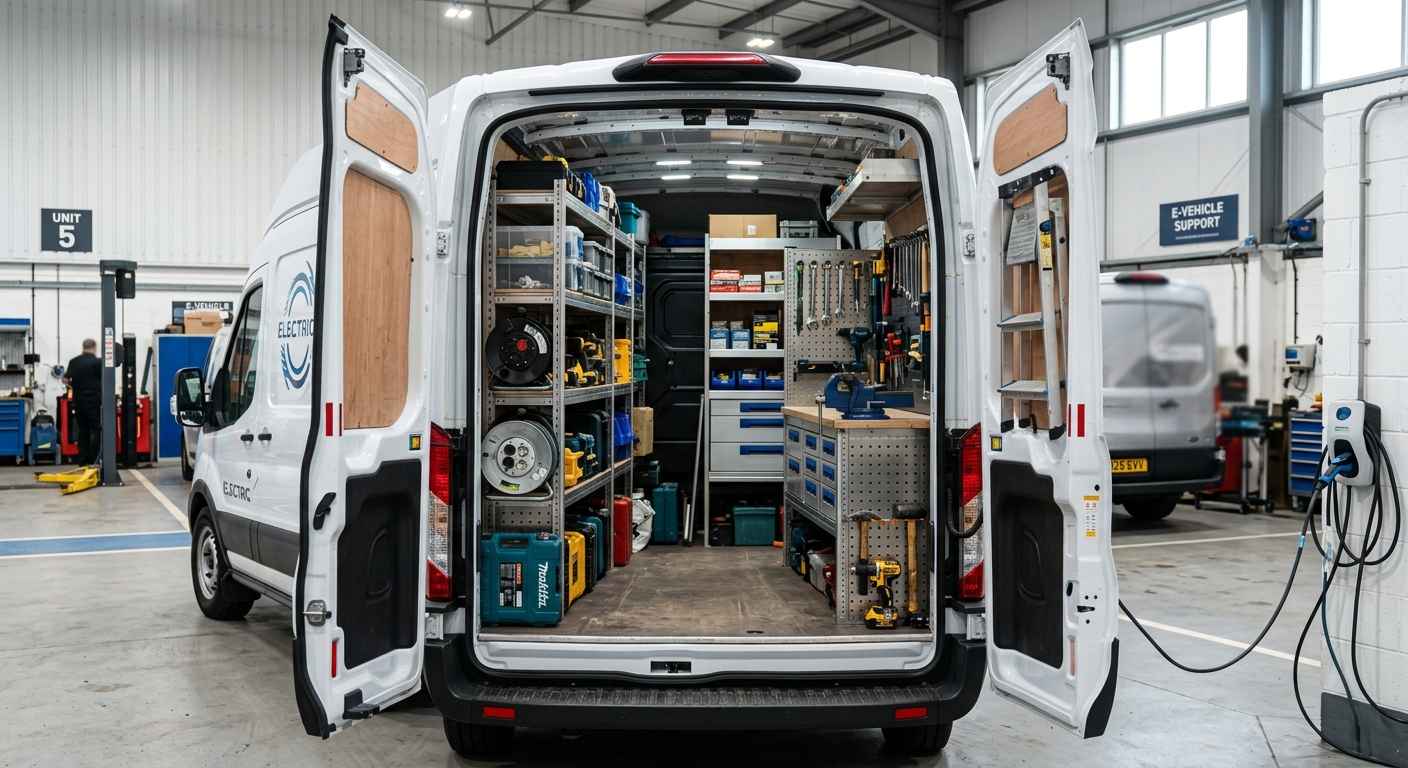
The right setup is not simply about filling every gap with shelves. It is about matching the layout to your trade, your vehicle and the way you work through a normal week. An electrician carrying testers, cable, fixings and conduit has different priorities from a plumber with pipe fittings, sealants and power tools. Start with the work, then build the storage around it.
Start with Your Daily Workflow
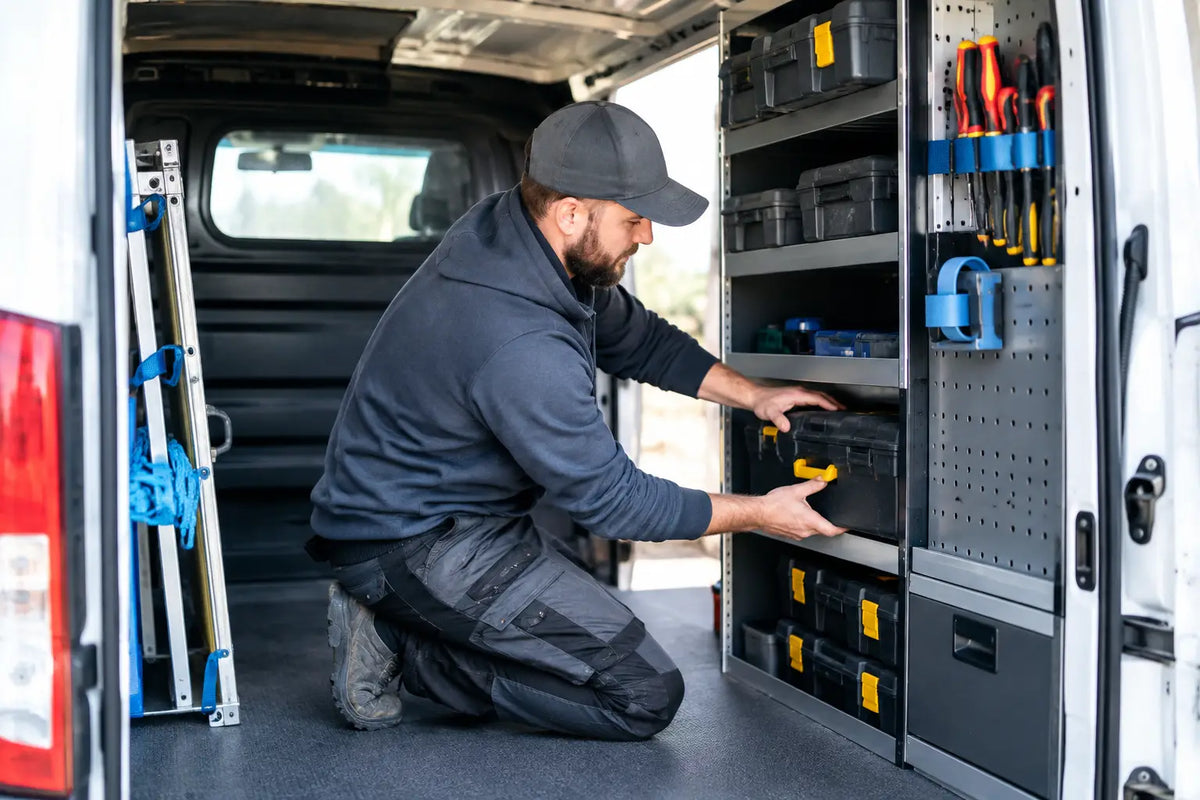
Before choosing van shelving or racking, take a proper look at what comes in and out of the van most often. The tools used on nearly every call should be accessible from the rear or side door without moving other equipment. Items used occasionally can sit higher up or further forward in the load area.
Think about your working day in order. What do you need when you first arrive? What needs to be carried into a property? What gets replenished at the end of the day? This quickly reveals where time is being lost. A box of mixed fittings buried beneath larger tools might only add a few minutes per job, but that time adds up across a working month.
Weight is just as important as access. Keep heavier equipment low and close to the vehicle floor where possible. Lighter consumables, small cases and regularly used hand tools can be stored on shelving at a comfortable reaching height. A sensible layout is easier to use and helps keep the van stable when fully loaded.
Choose Tool Storage for Vans by Vehicle and Trade
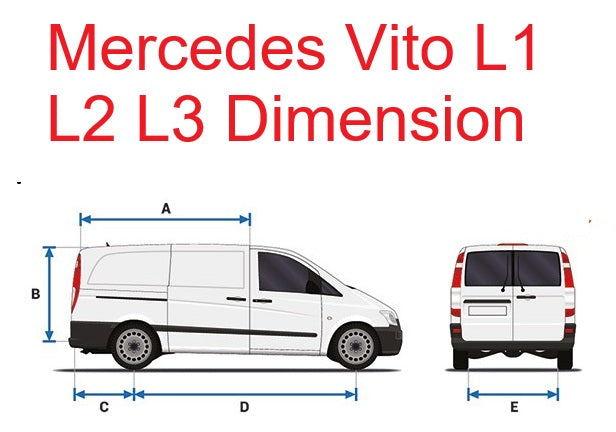
Commercial vans vary considerably in width, wheel-arch position, door openings and load length. A system that suits one van may be impractical in another, even where the vehicles appear similar. Always begin with the specific make, model and wheelbase of your van before selecting racking, shelving or a false floor.
Vehicle-specific categories make this process more straightforward. Whether you run a Ford Transit Custom, Renault Trafic, Vauxhall Vivaro, Mercedes Vito, Volkswagen Transporter, Peugeot Expert, Citroen Dispatch, Toyota Proace, Nissan Primastar or Fiat Scudo, check the product information against your exact vehicle before ordering. Model details matter, particularly if you have a bulkhead, factory lining or an unusual internal layout.
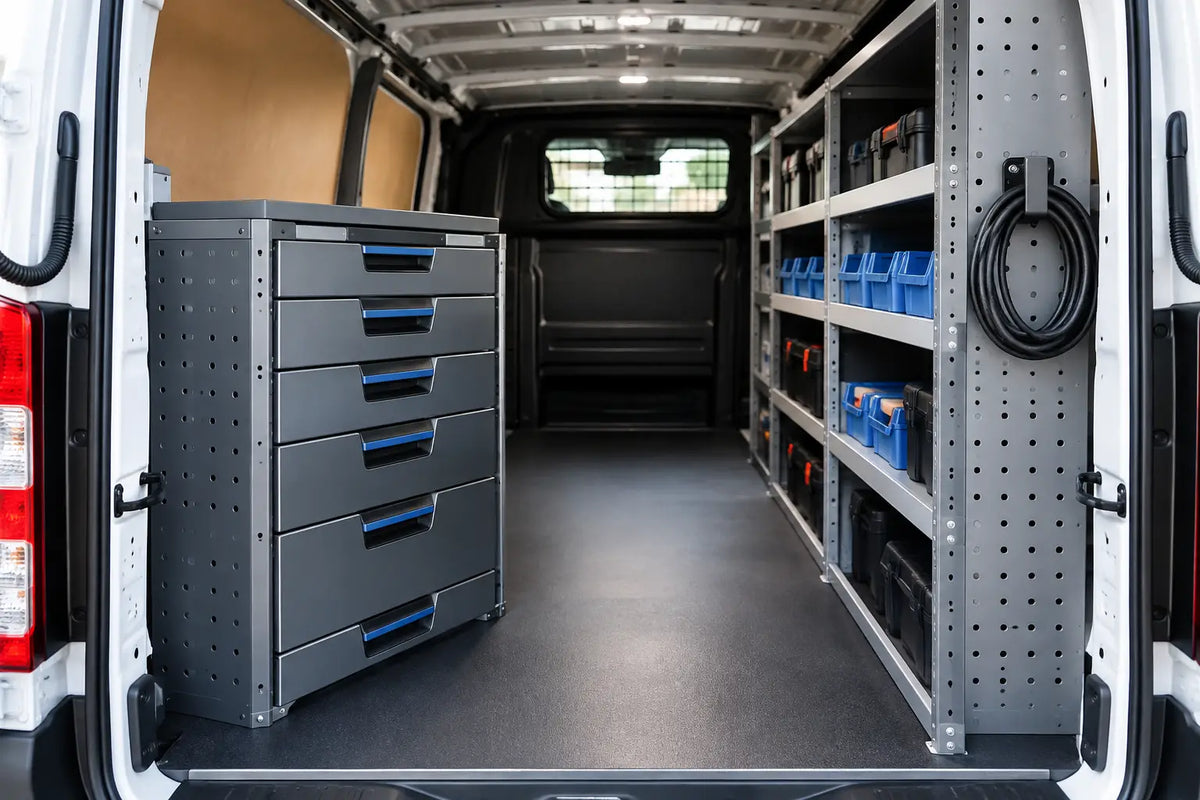
Your trade should shape the final choice too. A maintenance engineer may need open shelving for parts bins and cases, while a decorator may need clear space for larger equipment alongside places for rollers, tapes and sealants. Builders and fitters often benefit from a more flexible arrangement that leaves a central loading channel for longer materials.
Do not assume more shelving is always better. Overfilling the load area can make larger jobs harder to load and reduce the useful space you need for materials. The aim is controlled storage around the edges, with enough open floor area for the work you actually carry.
Build the Layout from the Floor Up
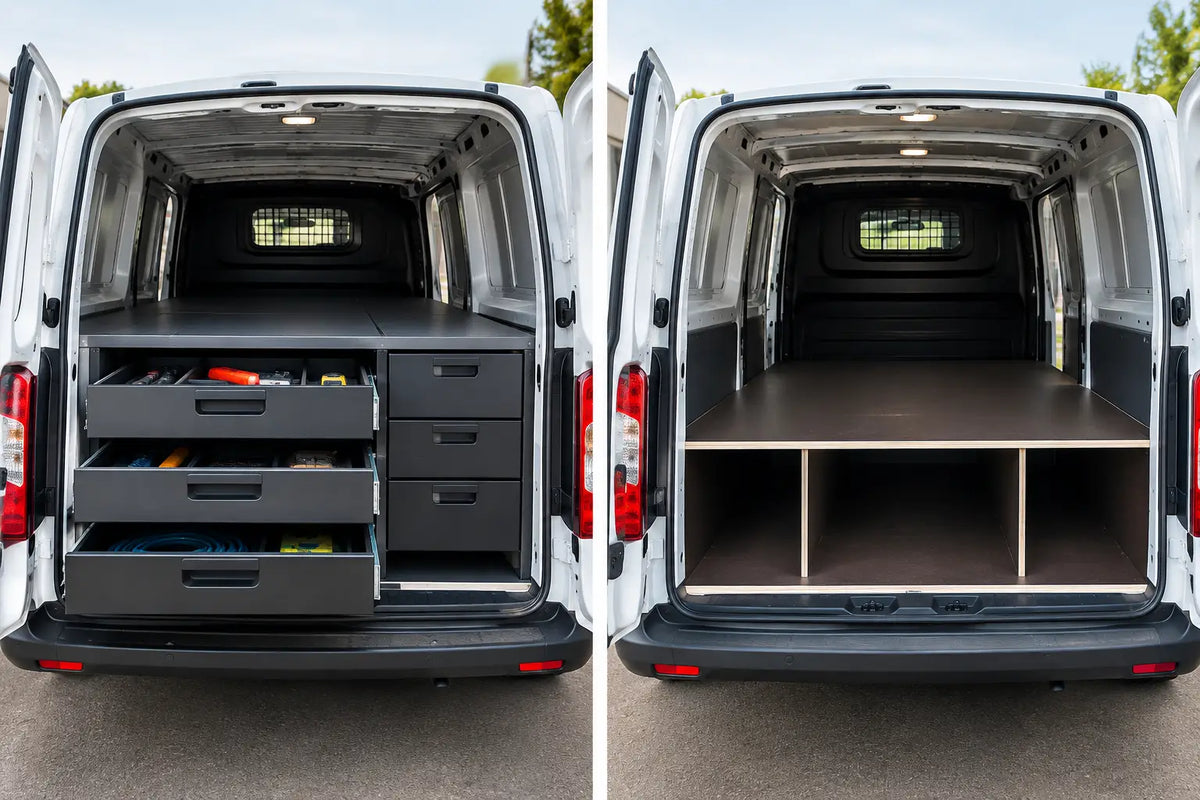
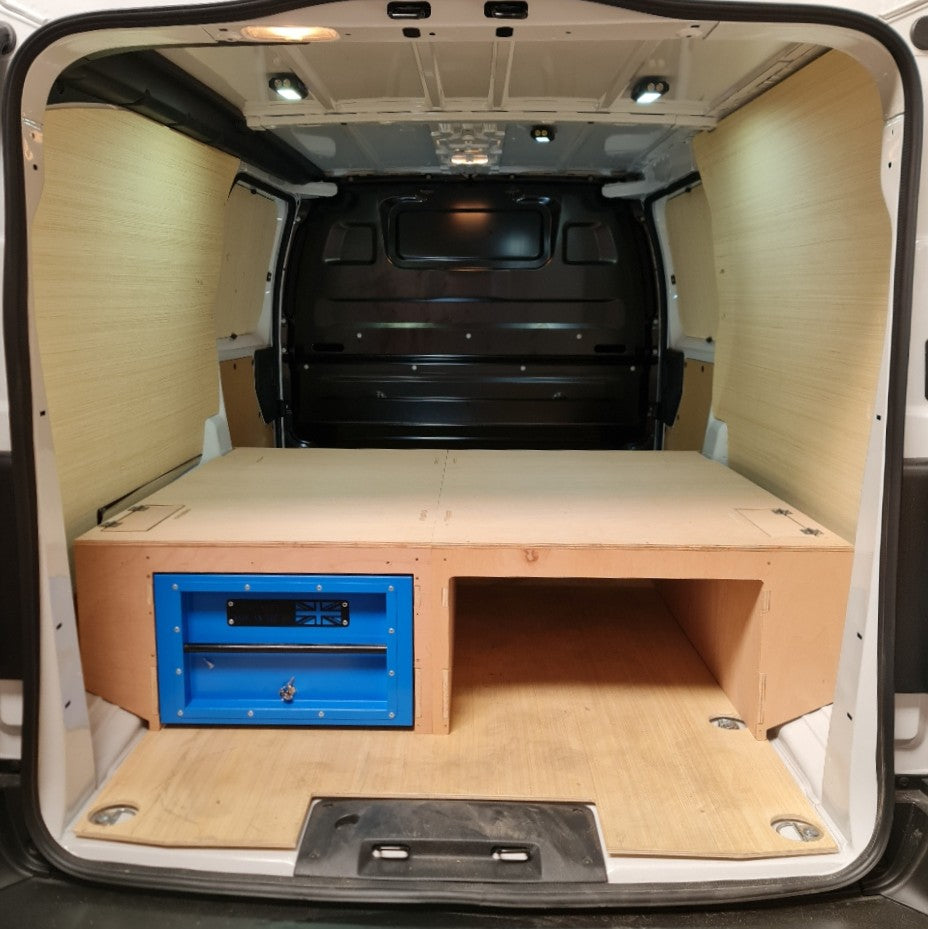
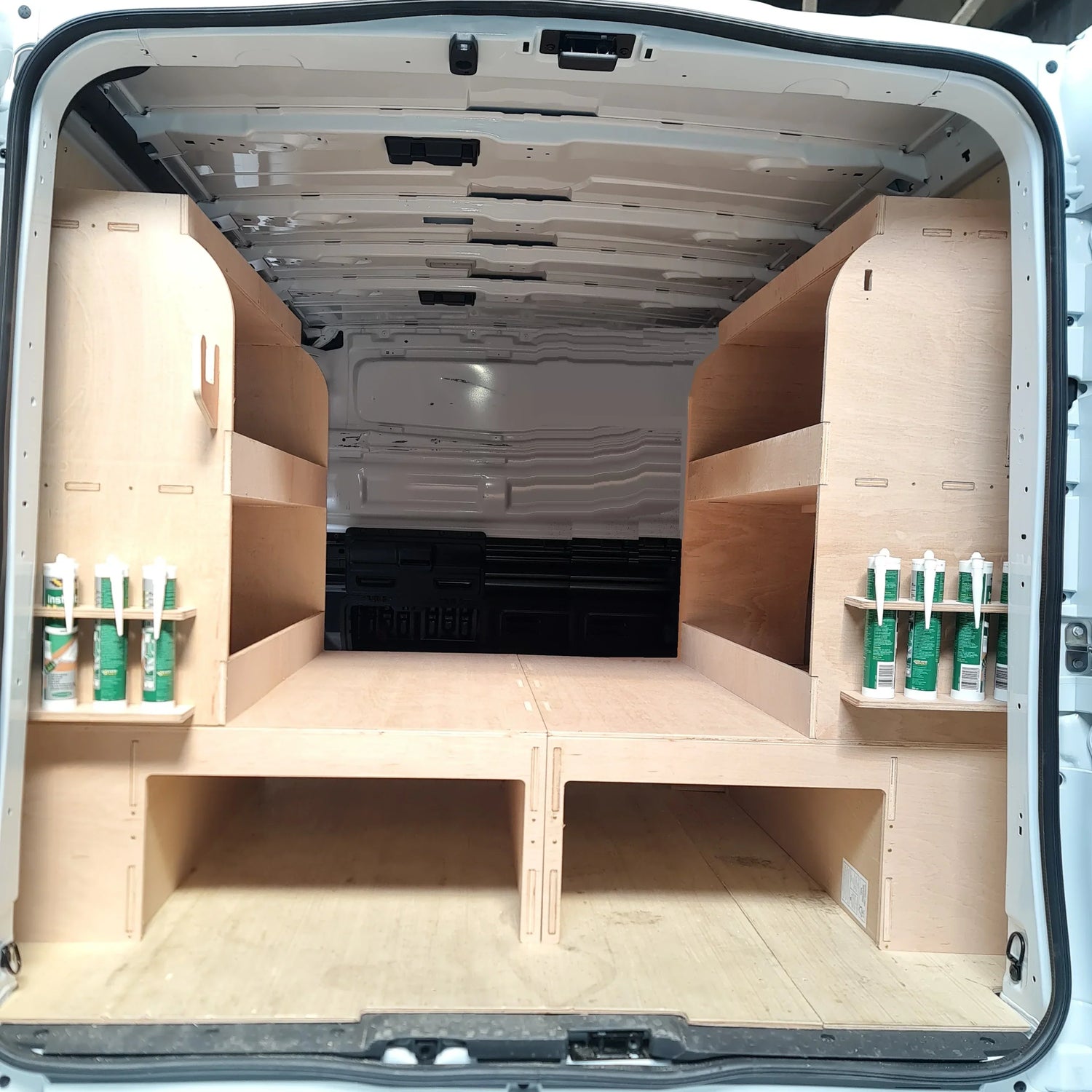
A false floor is often a practical starting point for a working van. It creates a level, hard-wearing base and can protect the original load floor from day-to-day damage. More importantly, it gives you a clean foundation for a layout that needs to cope with heavy use.
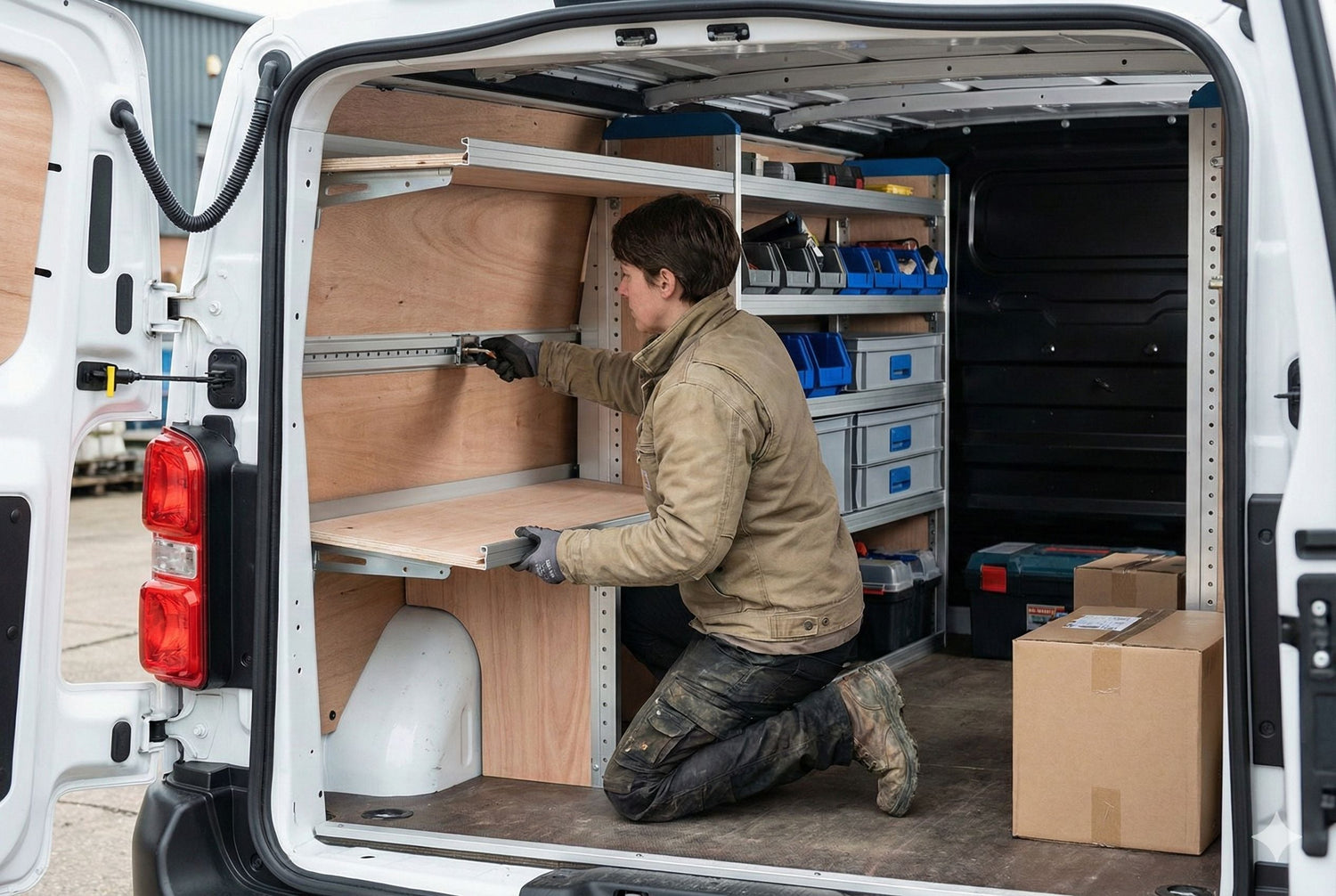
With the floor sorted, consider the space around the wheel arches. These areas can otherwise become awkward gaps where loose boxes and bags collect. Properly planned shelving can turn them into useful positions for cases, containers and consumables while keeping the main walkway clearer.
Side racking is useful for stock that needs to be visible at a glance. Open shelves let you identify what is running low before leaving for the next job, reducing unnecessary returns to the merchant. However, open storage needs discipline. Use suitable containers and keep stock grouped by task, size or material rather than allowing shelves to become a general dumping ground.
A rear-access setup suits tradespeople who mainly work from the back doors. If you regularly park in tight streets or need quick access at the kerbside, it can make sense to reserve frequently used items for the sliding-door side. There is no single best configuration. The best layout is the one that fits your parking, access and loading routine.
Give every item a fixed home
Organisation only lasts when it is simple to maintain. Keep electrical fittings with electrical fittings, plumbing consumables with plumbing consumables, and cleaning or finishing products separate from core tools. If an item has no fixed place, it will end up on the floor.
Small storage accessories make a noticeable difference here. Sealant holders keep tubes upright and easy to identify. Wipe dispensers prevent loose packets being crushed under equipment. Glove box organisers can also help keep paperwork, small essentials and regularly used items from disappearing into the cab.
These details may seem minor beside racking and false floors, but they support the same goal: less searching, less clutter and fewer wasted movements during the day.
Protect Tools and Keep the Load Area Safe
Tools are an investment, so storage should reduce the knocks, rubbing and loose movement that happen on the road. Power-tool cases need a stable position where they cannot slide into other equipment. Loose hand tools and fittings should be contained rather than left in open bags or on the floor.
A tidy van is also easier to inspect. You can spot an empty fittings box, a damaged case or a missing tool much sooner when everything has a clear location. That helps with stock control and avoids finding out on site that a key item has been left behind.
Avoid placing heavy items on high shelves or loading one side of the vehicle far more heavily than the other. Secure storage components correctly and follow the supplied fitting guidance. If you are unsure whether a product suits your vehicle, check compatibility before you buy rather than trying to force a general-purpose solution into place.
It is worth reviewing the layout after a few weeks of real use. A rack that looked right on paper may need a change once you see which tools are used daily and which supplies take up more room than expected. Small improvements, such as moving a frequently used case closer to the door, can have a real effect on your routine.
Make Restocking Part of the System
Even the best tool storage for vans will fail if the van is only organised on the day it is fitted. Build a short restocking check into the end of the day or week. Return tools to their positions, clear rubbish, check key consumables and replace anything that is running low.
A simple visual approach works well. Keep one type of fitting or consumable in each container and do not mix leftovers from different jobs. When the container is nearly empty, it is obvious what needs replacing. This is faster than searching through several half-full boxes when you are already on the way to a job.
For small teams and fleet users, a consistent layout across similar vans can make handovers easier. Staff know where to find common equipment, and supervisors can carry out quicker checks. There will still be trade-specific differences, but a shared approach to the basics helps maintain standards.
Buy for Working Use, Not Just First Impressions
When comparing storage options, focus on practical fitment, usable shelf space, material strength and whether the layout supports your actual load. A low price is only good value if the system helps you work efficiently and continues to suit the van as your workload changes.
It is also sensible to plan in stages if needed. Start with the floor and essential shelving, then add accessories once you know where small items naturally accumulate. This avoids buying parts that look useful but do not solve a genuine storage problem.
Vanshelves.co.uk focuses on practical, vehicle-led storage choices for working vans, helping tradespeople find racking, shelving, false floors and accessories suited to the way commercial vehicles are used.
A well-organised van does not need to look complicated. It needs to let you open the door, find what you need and get on with the job. Start with the tools and materials that slow you down most, give them a proper home, and let the rest of the layout follow.