








When your van is your workshop, wasted space costs time. Ford Transit Custom van racking is not just about making the back look tidy - it is about getting to fittings, fixings, tools and stock quickly enough to keep the day moving.
For plumbers, electricians, fitters, builders and maintenance teams, the Transit Custom is popular for good reason. It is a practical size, easy to live with and big enough to carry a serious load without feeling oversized on tight streets or awkward jobs. But the standard load area only gets you so far. Without proper shelving and storage, even a well-kept van turns into a pile of cases, tubs, offcuts and loose consumables.
Why Ford Transit Custom van racking makes a difference
The biggest gain is not appearance. It is efficiency. If you spend ten minutes a day looking for drill bits, screws, pipe fittings, test gear or sealants, that time adds up fast over a week. Good racking gives everything a place, which means fewer delays, fewer damaged items and less frustration when the weather is poor or the site is under pressure.
There is also a professional benefit. Customers notice when you open the doors and can get straight to work instead of shifting boxes around on the floor. That matters for sole traders trying to look sharp, and it matters just as much for fleets where consistency reflects on the business.
A well-organised van can also help with stock control. When shelves, trays and compartments are planned properly, it is easier to spot what needs replacing before a job is held up by something small and annoying. A missing connector or the wrong tube of adhesive should not be what slows down a full day of work.
Choosing the right Ford Transit Custom van racking layout
Not every trade needs the same setup, and that is where plenty of buyers go wrong. They look at van racking as a single product rather than a working layout. The best arrangement depends on what you carry every day, what you only need occasionally, and whether you need space left clear for materials, machines or larger tools.
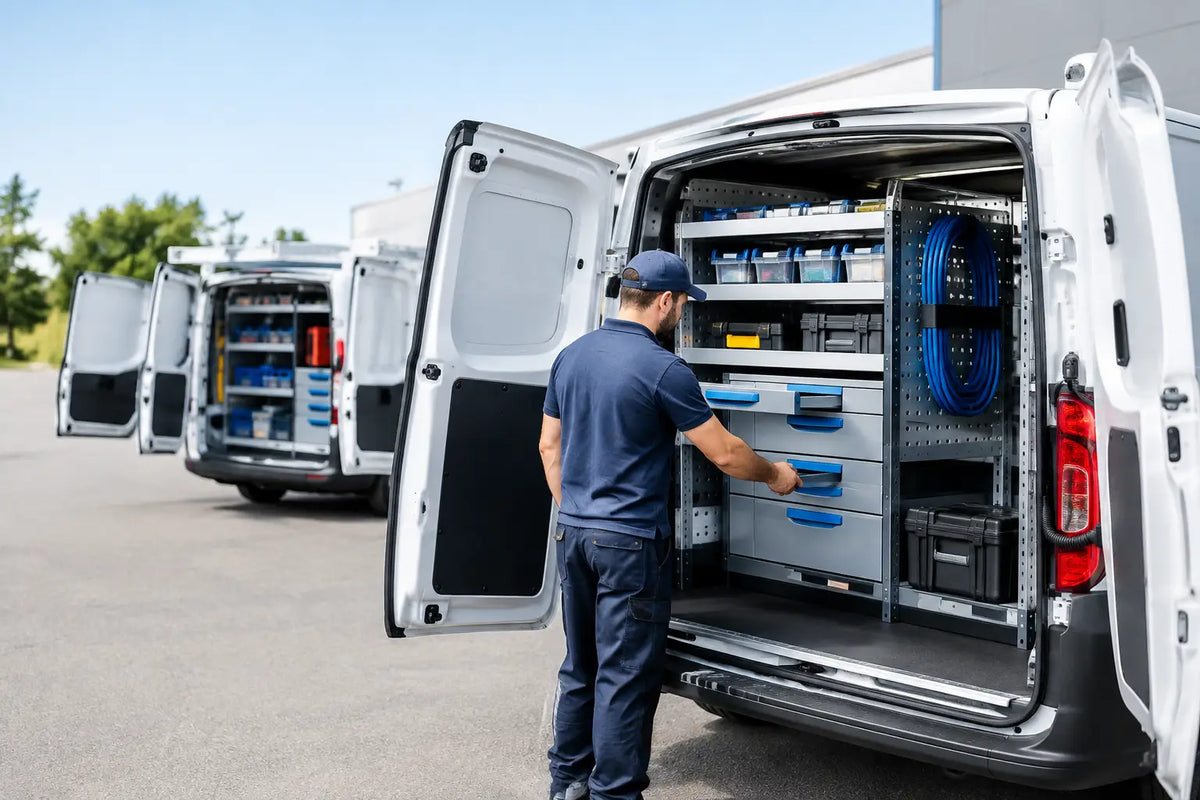
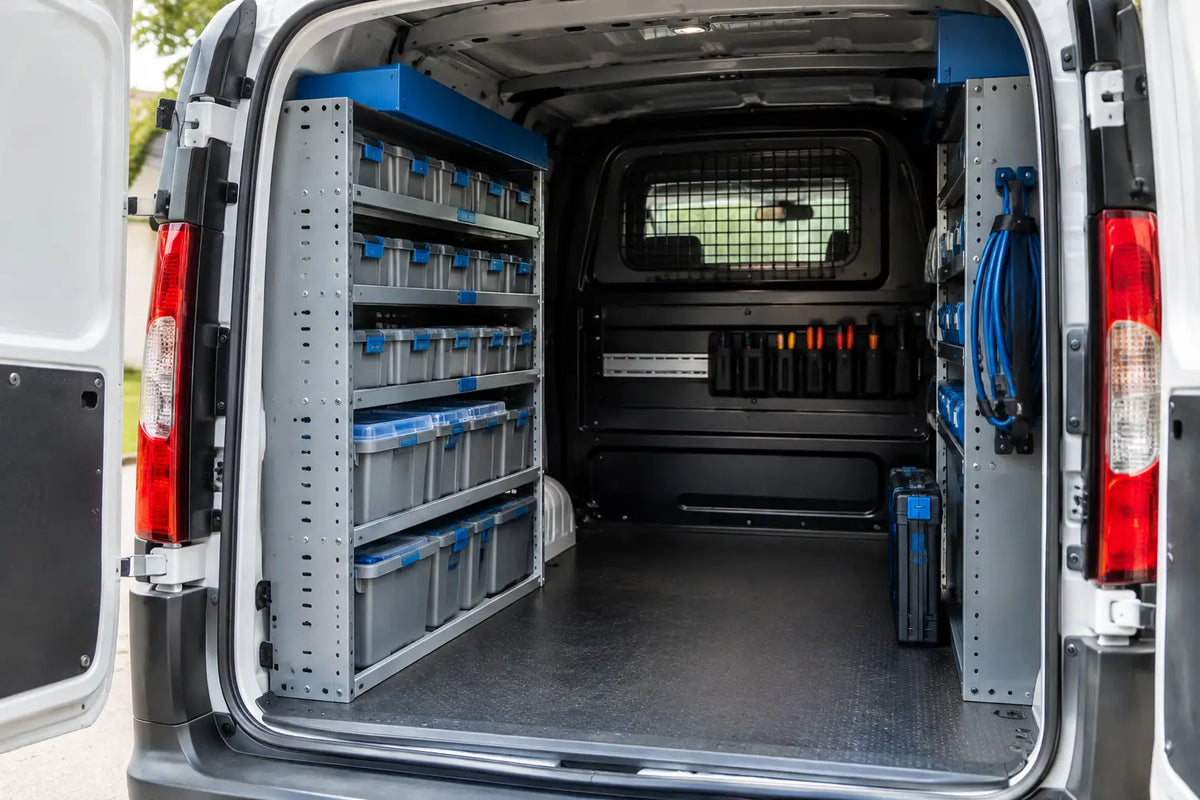
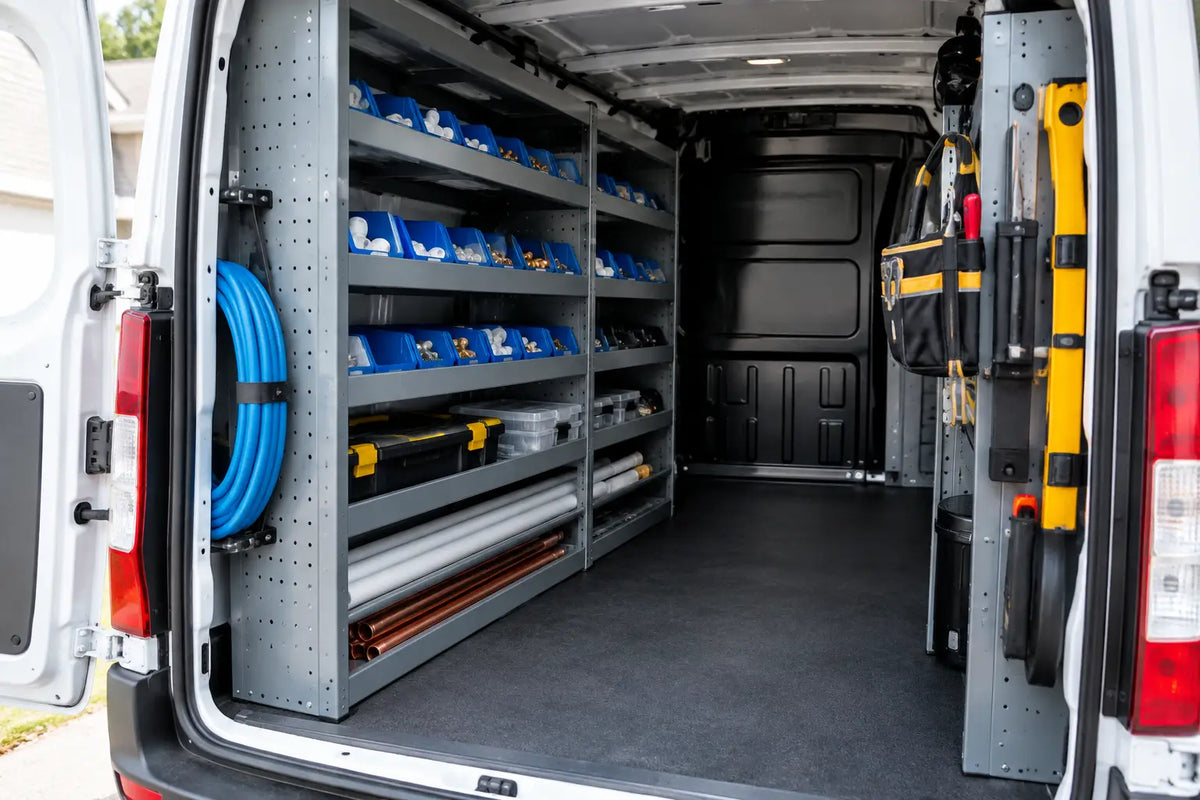
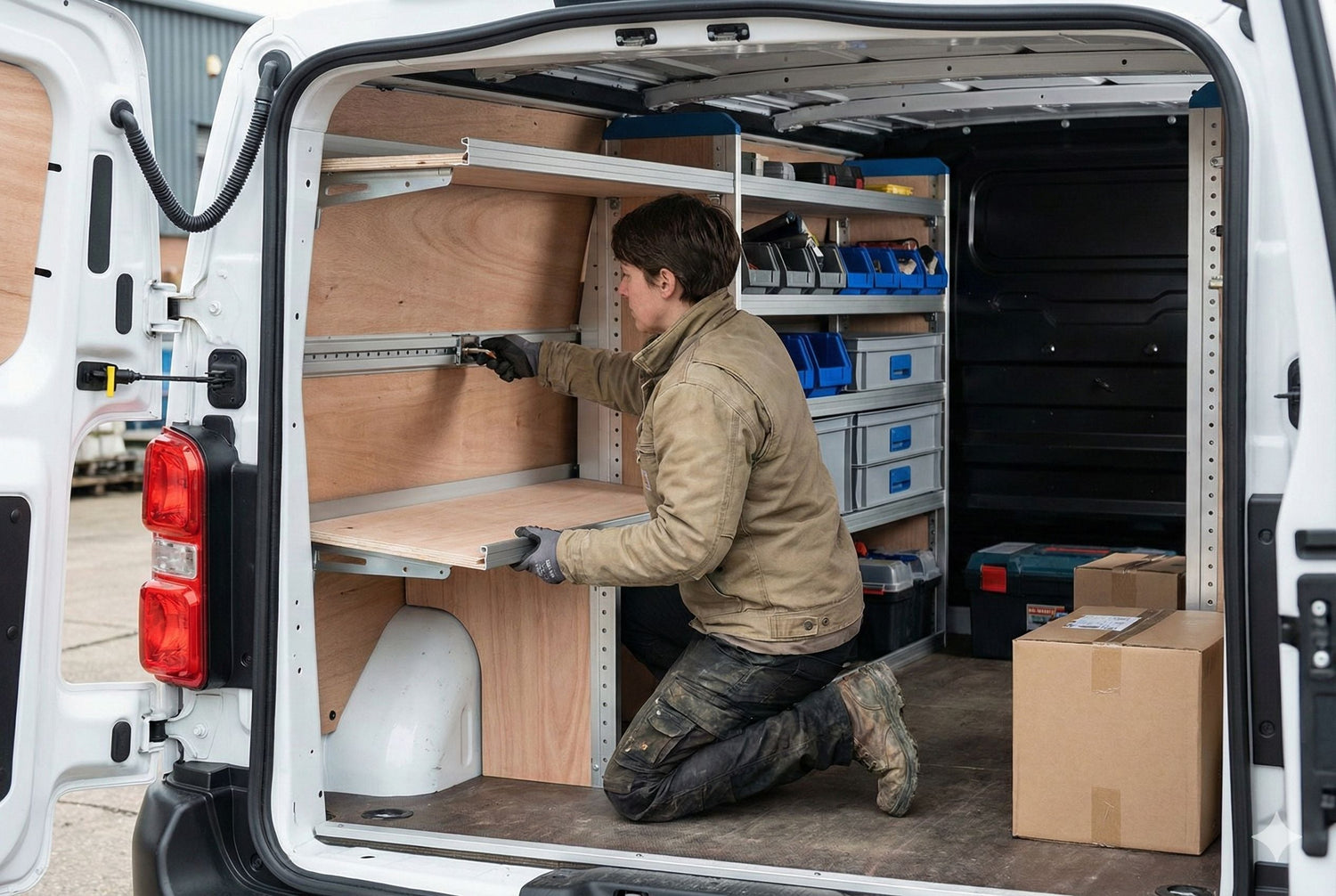
If you mainly carry hand tools, fittings and consumables, side shelving can make the most sense. It keeps parts visible and easy to reach while leaving a central walkway or open floor area. This suits electricians, service engineers and maintenance teams who need fast access more than maximum bulk storage.
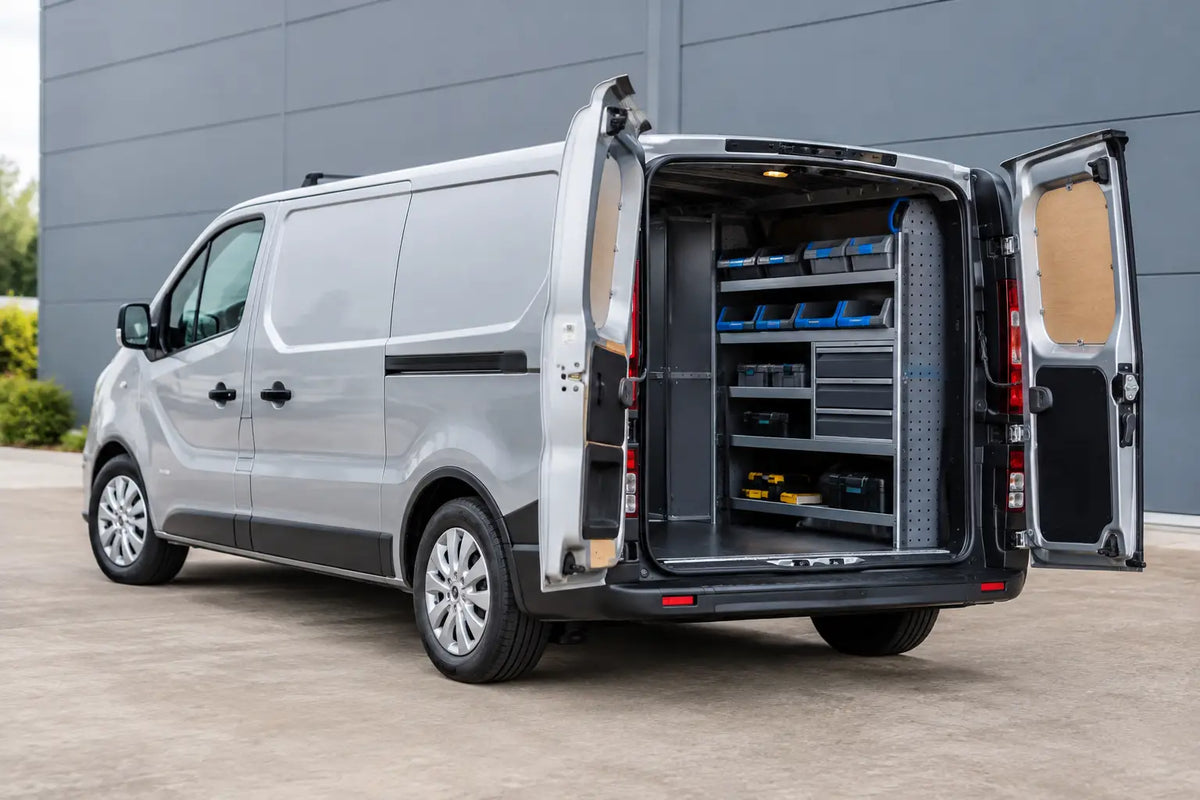
If your work involves longer items, power tools, boxes of stock and site gear, you may need a more balanced setup. Shelving on one side and open space on the other often works better than trying to fill every inch with racks. More storage is not always better if it makes loading awkward.
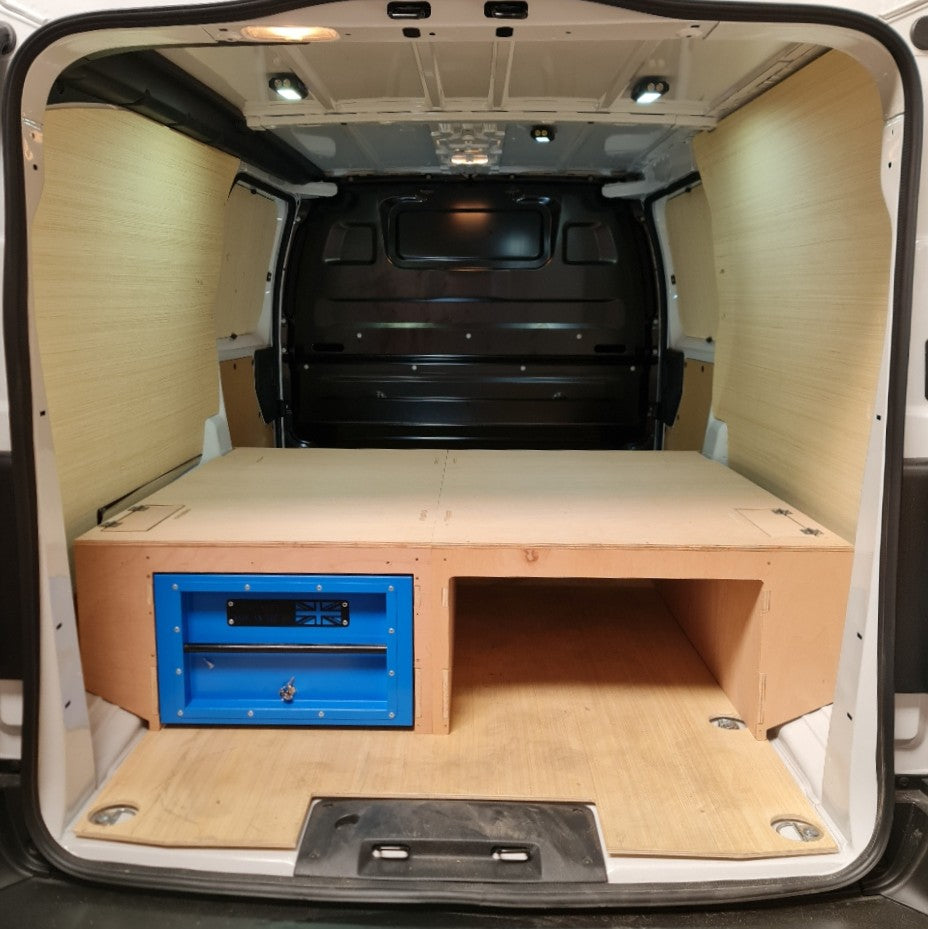
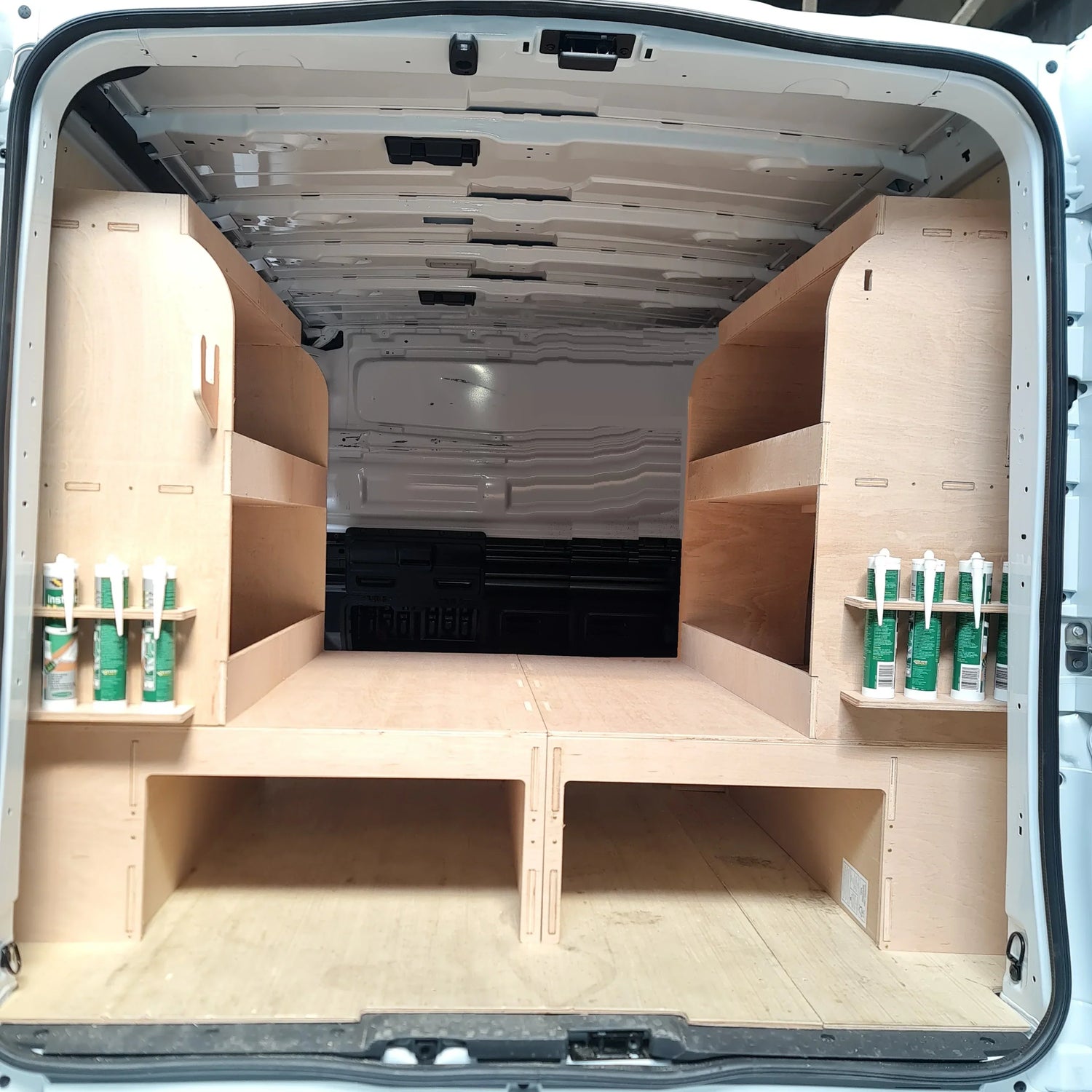
False floors can also change how the van works. They are useful when you need to carry long tools, trunking, lengths of pipe or other slim materials without letting them roll about in the main load space. That can free up the upper area for shelving and tool access while keeping the van cleaner and safer.
What a good racking system should include
Strength matters, but so does usability. A rack that can carry weight is only half the job if the shelf heights are wrong or the compartments are too awkward to use quickly. In daily trade use, the best systems are simple, solid and easy to work from.
Shelves need to be deep enough for cases, boxes and common site items without wasting usable width. Smaller compartments help separate fixings, consumables and stock that would otherwise get mixed together. Raised shelf edges or storage bins can stop items sliding when the van is on the move, which is especially useful if you are in and out of urban traffic all day.
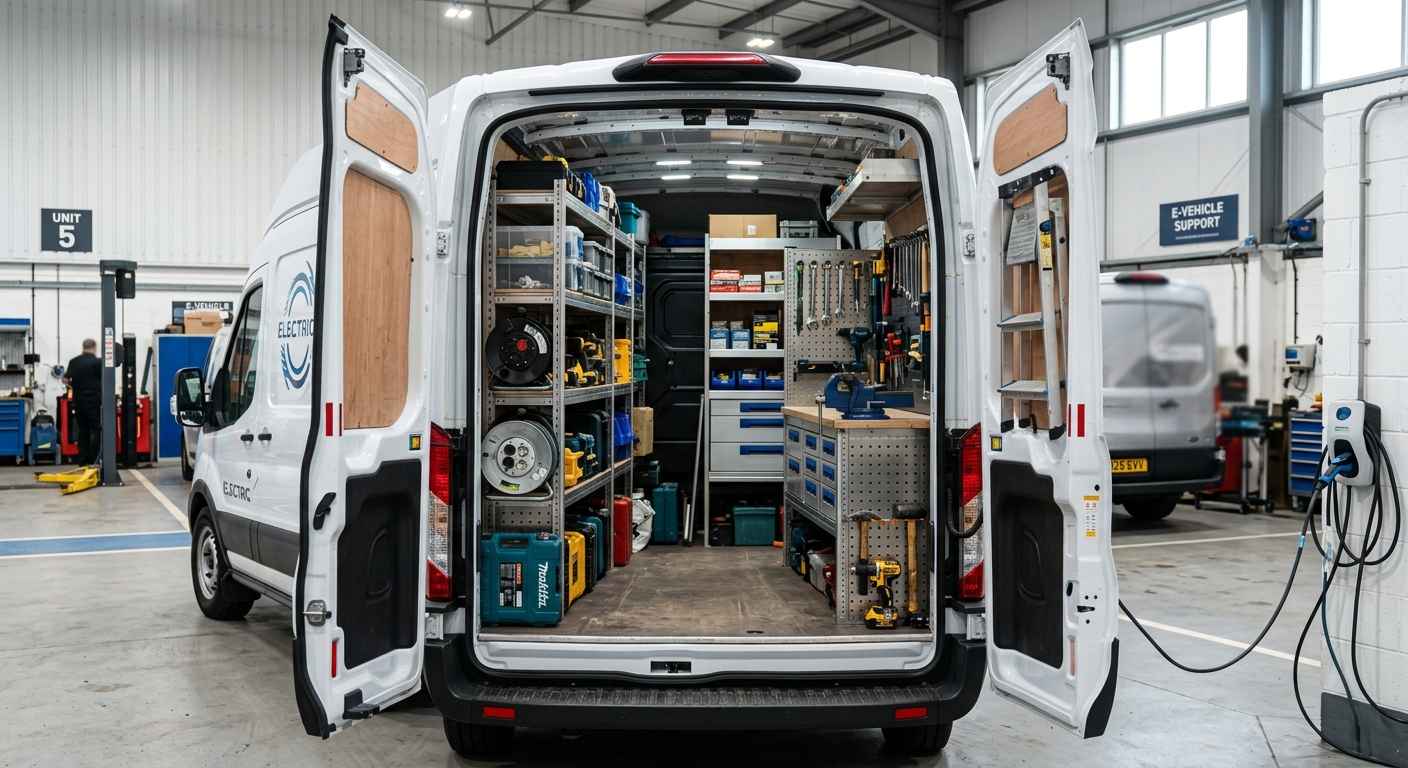
Accessory options make a difference too. Sealant holders, paper roll mounts, glove box organisers and wipe dispensers can sound minor until you use them every day. They cut clutter and stop essentials being buried under larger kit. For many trades, these smaller organisational details are what turn basic shelving into a proper mobile workspace.
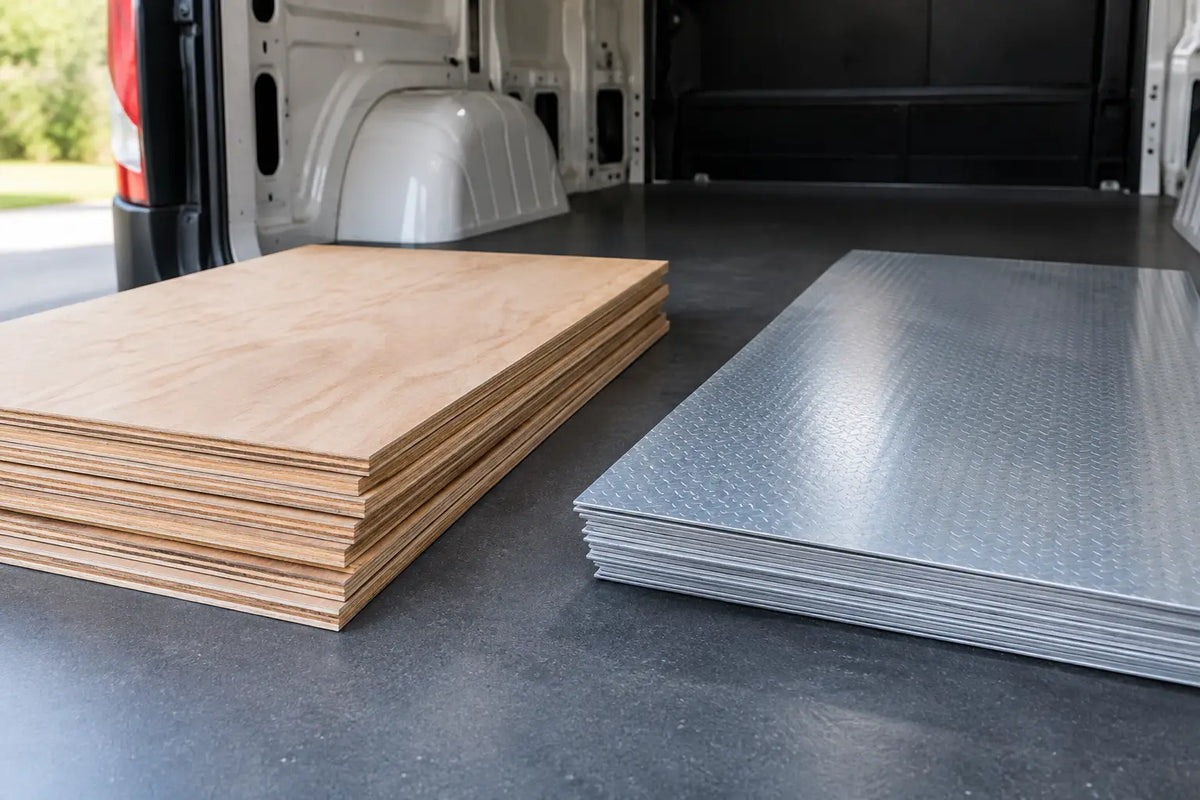
Material choice is another practical point. Heavy-duty plywood systems remain popular because they offer a strong balance of durability, weight and value. They stand up well to hard use and are well suited to working vans that earn their keep rather than sitting polished on a drive.
Think about weight, access and the jobs you actually do
There is always a trade-off between storage capacity and flexibility. A fully fitted van looks impressive, but if it leaves no room for boilers, plasterboard, cable drums, ladders or tool chests, it may not suit the reality of your week.
That is why it pays to think in terms of working patterns rather than ideal layouts. Ask yourself what stays in the van every day, what comes in only for certain jobs, and what tends to get dumped on the floor because there is nowhere sensible for it to go. Those are usually the items that should shape your racking choice.
Access matters just as much as capacity. Rear-door access is vital if you want to grab your most-used items quickly. Side-door access is useful if you work kerbside, in car parks or in tight spaces where opening the back fully is not always practical. A good layout respects how the van is parked and used, not just how it looks when empty.
Weight should not be ignored either. Storage systems need to be durable, but the van still has payload limits and job-specific demands. A sensible racking setup should improve carrying efficiency without making the vehicle less practical overall.
Ford Transit Custom van racking for different trades
An electrician will usually want a different layout from a plumber, and both will need something different from a general builder. That sounds obvious, but it is where model-specific and task-specific planning becomes valuable.
Electricians often benefit from multiple shelf levels, smaller storage areas and room for testers, drills, fixings and cable-related stock. Visibility matters because the kit is varied and often used in short bursts across several jobs in a day.
Plumbers may need a mix of bins, tool storage and open floor space for longer parts, larger fittings and boxed components. Decorators might prioritise storage for tapes, abrasives, fillers and consumables while keeping room for sheets, steps or longer tools. Builders and fitters often need a tougher compromise between shelving and clear load space because no two days are exactly alike.
For fleets, consistency is often just as important as the layout itself. If each van is set up the same way, drivers and engineers waste less time adapting. It also helps with stock control, vehicle handovers and keeping standards up across the business.
Installation and long-term value
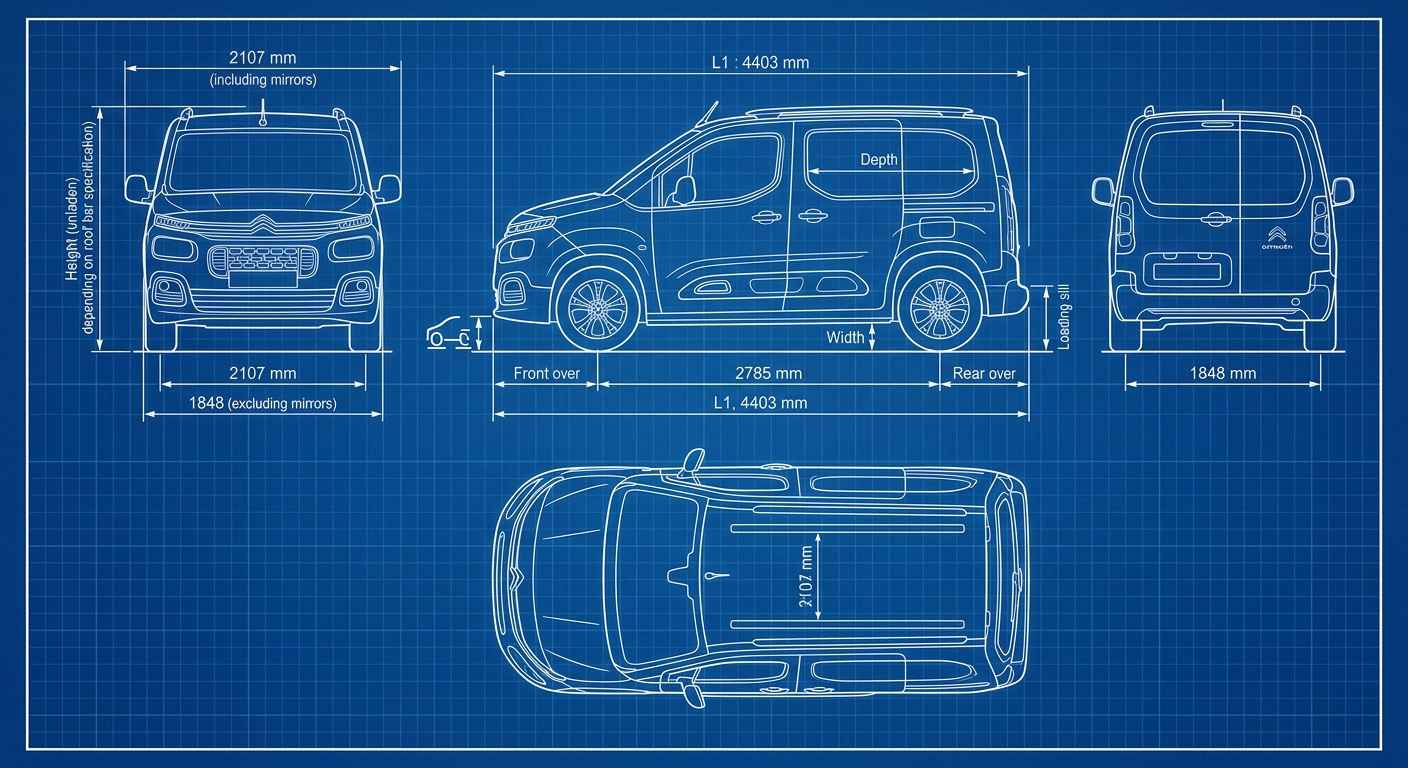
One reason vehicle-specific systems appeal to working users is straightforward fitment. A racking kit designed for the Ford Transit Custom should make better use of the van's dimensions and contours than a generic arrangement pieced together from whatever is available.
That matters not only for appearance, but for stability and usable space. Better fit means fewer awkward gaps, better shelf alignment and a more secure finished result. It usually saves time at installation too, which is important if the van needs to stay on the road.
Long-term value comes from day-to-day use rather than the initial look. A decent racking system earns its place by reducing wasted time, protecting equipment and helping the van stay organised under pressure. Cheap storage that shifts, rattles, wears quickly or does not suit the work is not really cheaper if it needs replacing or constantly annoys the driver.
For buyers who want practical options at sensible prices, specialist suppliers such as CNC Work focus on exactly this sort of fit-for-purpose setup - storage designed around real vans and real trade use, not generic one-size-fits-all shelving.
Getting the most from your van
The best Ford Transit Custom van racking is the setup that makes the working day easier. Not the one with the most compartments, and not the one that looks the busiest in a product photo. The right system gives you clear access, proper organisation and enough flexibility to handle the work you actually do.
If your tools are stacked on the floor, your consumables are mixed together and every busy day starts with a search through the back of the van, the problem is not the van. It is the layout. Sort that, and the Transit Custom becomes what it should be - a reliable, organised workspace that helps you get on with the job.